A weaker dollar coupled with range-bound oil prices led to a continued decline in the USD/CAD exchange rate.
2026-08-10 15:36:55
The USD/CAD pair rebounded at the start of the week, returning to around 1.3950 during Asian trading hours, after a sharp drop to the 1.3925 area on Friday, hitting a near two-month low. Currently, market factors are mixed, with safe-haven demand for the US dollar and rising oil prices acting as a counterbalancing force on the Canadian dollar, limiting the upward momentum of the USD/CAD pair.  Weak US employment data initially pushed the dollar lower. US non-farm payrolls fell by 23,000 in July, while June's figure was revised down to 20,000 from the previously reported 57,000, indicating a cooling labor market. However, the dollar gradually gained support as the market refocused on global risk factors. The situation between the US and Iran remains a significant factor influencing market risk appetite. While negotiations surrounding the resumption of shipping in the Strait of Hormuz have released some positive signals, the market remains concerned about energy transport security. Geopolitical risks have increased demand for the dollar as a safe haven, limiting further downside for the USD/CAD pair. Meanwhile, relatively strong oil prices have provided support for the Canadian dollar. Given the high correlation between the Canadian economy and energy exports, rising oil prices typically benefit the Canadian dollar. Uncertainty remains regarding the reopening of the Strait of Hormuz, and the market remains focused on oil supply risks, pushing oil prices to maintain a risk premium. US interest rate expectations are also a significant factor influencing the dollar. Although the employment data lowered expectations for a short-term Fed rate hike, the market remains concerned that rising energy prices could reignite inflationary pressures, increasing the likelihood of the Fed continuing to tighten policy before the end of the year. This expectation provided some support for the US dollar and helped USD/CAD rebound from its lows. In Canada, strong employment data further strengthened the Canadian dollar's resilience. Recent improvements in the Canadian economy have reduced market bets on further easing by the Bank of Canada. Therefore, investors have not actively chased the USD/CAD pair higher, but are waiting for clearer directional signals. The market focus will now be on US inflation data. If US CPI figures are lower than expected, the US dollar may come under renewed pressure, pushing USD/CAD to test lower levels again; if inflation rebounds or energy prices continue to rise, expectations of Fed policy could improve the dollar's performance. Furthermore, changes in the Middle East situation may still affect the Canadian dollar's movement through oil prices. From a daily chart perspective, USD/CAD recently corrected from its annual high above 1.4200 and is currently consolidating around 1.3950. The 100-day moving average is currently around 1.3917, becoming a key short-term support area. If the exchange rate holds above this level, there is still a chance for a rebound, with resistance levels to watch at 1.4000, 1.4050, and 1.4100. A break below the 100-day moving average could lead to a further decline to around 1.3850. Overall, the daily trend remains in a correction phase, and the strength of the rebound needs further confirmation. Looking at the 4-hour chart, USD/CAD has seen a short-term rebound from its lows, with technical indicators suggesting some easing selling pressure, but upward momentum remains limited. A break above 1.4000 could lead to further testing of the 1.4050-1.4100 resistance level; a failed rebound followed by a break below 1.3917 could reopen downside potential. Short-term movements will depend on changes in the US dollar index, oil price performance, and the impact of US inflation data.
 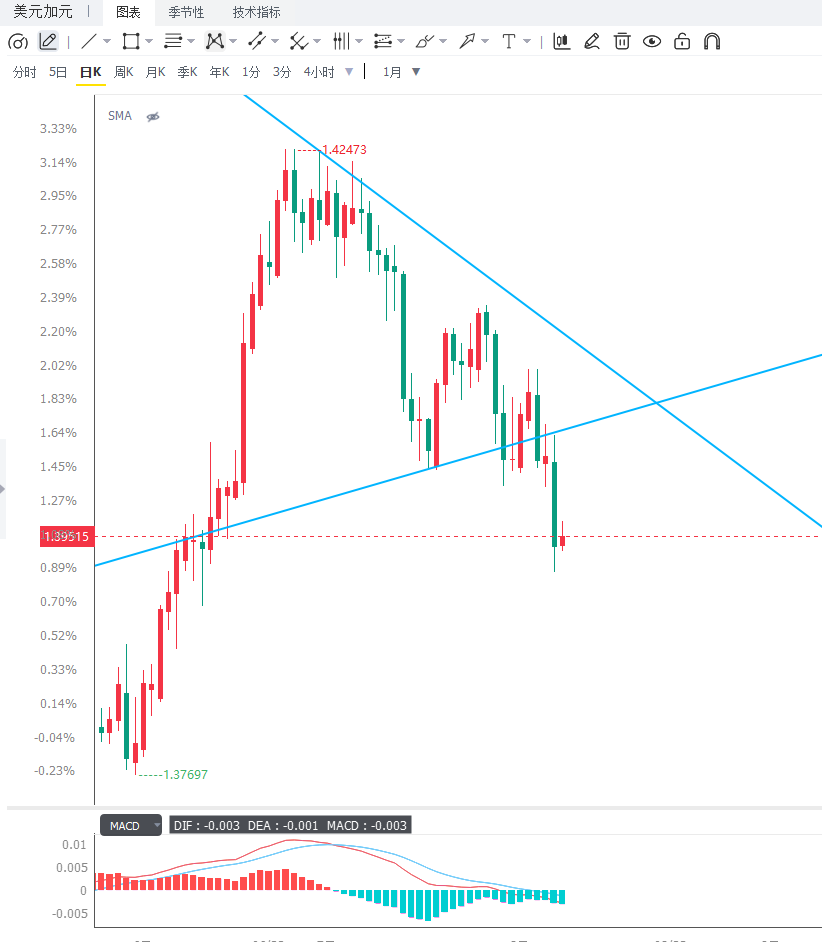 Editor's Summary: The USD/CAD pair is currently in a balancing act between safe-haven support from the US dollar and support from rising oil prices. Weak US employment data is limiting the dollar's gains, but geopolitical risks and potential inflationary pressures continue to provide protection. Meanwhile, strong oil prices are helping the Canadian dollar remain resilient, limiting the upside potential of USD/CAD. In the short term, the support area around 1.3917 is crucial. If this level holds, the pair may maintain its oscillating rebound; if it falls, it may continue its previous downward trend. Investors should pay close attention to US inflation data, changes in the oil market, and global risk sentiment.
Weak US employment data initially pushed the dollar lower. US non-farm payrolls fell by 23,000 in July, while June's figure was revised down to 20,000 from the previously reported 57,000, indicating a cooling labor market. However, the dollar gradually gained support as the market refocused on global risk factors. The situation between the US and Iran remains a significant factor influencing market risk appetite. While negotiations surrounding the resumption of shipping in the Strait of Hormuz have released some positive signals, the market remains concerned about energy transport security. Geopolitical risks have increased demand for the dollar as a safe haven, limiting further downside for the USD/CAD pair. Meanwhile, relatively strong oil prices have provided support for the Canadian dollar. Given the high correlation between the Canadian economy and energy exports, rising oil prices typically benefit the Canadian dollar. Uncertainty remains regarding the reopening of the Strait of Hormuz, and the market remains focused on oil supply risks, pushing oil prices to maintain a risk premium. US interest rate expectations are also a significant factor influencing the dollar. Although the employment data lowered expectations for a short-term Fed rate hike, the market remains concerned that rising energy prices could reignite inflationary pressures, increasing the likelihood of the Fed continuing to tighten policy before the end of the year. This expectation provided some support for the US dollar and helped USD/CAD rebound from its lows. In Canada, strong employment data further strengthened the Canadian dollar's resilience. Recent improvements in the Canadian economy have reduced market bets on further easing by the Bank of Canada. Therefore, investors have not actively chased the USD/CAD pair higher, but are waiting for clearer directional signals. The market focus will now be on US inflation data. If US CPI figures are lower than expected, the US dollar may come under renewed pressure, pushing USD/CAD to test lower levels again; if inflation rebounds or energy prices continue to rise, expectations of Fed policy could improve the dollar's performance. Furthermore, changes in the Middle East situation may still affect the Canadian dollar's movement through oil prices. From a daily chart perspective, USD/CAD recently corrected from its annual high above 1.4200 and is currently consolidating around 1.3950. The 100-day moving average is currently around 1.3917, becoming a key short-term support area. If the exchange rate holds above this level, there is still a chance for a rebound, with resistance levels to watch at 1.4000, 1.4050, and 1.4100. A break below the 100-day moving average could lead to a further decline to around 1.3850. Overall, the daily trend remains in a correction phase, and the strength of the rebound needs further confirmation. Looking at the 4-hour chart, USD/CAD has seen a short-term rebound from its lows, with technical indicators suggesting some easing selling pressure, but upward momentum remains limited. A break above 1.4000 could lead to further testing of the 1.4050-1.4100 resistance level; a failed rebound followed by a break below 1.3917 could reopen downside potential. Short-term movements will depend on changes in the US dollar index, oil price performance, and the impact of US inflation data. Editor's Summary: The USD/CAD pair is currently in a balancing act between safe-haven support from the US dollar and support from rising oil prices. Weak US employment data is limiting the dollar's gains, but geopolitical risks and potential inflationary pressures continue to provide protection. Meanwhile, strong oil prices are helping the Canadian dollar remain resilient, limiting the upside potential of USD/CAD. In the short term, the support area around 1.3917 is crucial. If this level holds, the pair may maintain its oscillating rebound; if it falls, it may continue its previous downward trend. Investors should pay close attention to US inflation data, changes in the oil market, and global risk sentiment.- Risk Warning and Disclaimer
- The market involves risk, and trading may not be suitable for all investors. This article is for reference only and does not constitute personal investment advice, nor does it take into account certain users’ specific investment objectives, financial situation, or other needs. Any investment decisions made based on this information are at your own risk.