"Peace signals" and "death attacks" arrive on the same day: the oil market experiences an extreme rollercoaster ride, and who is being slaughtered by both bulls and bears?
2026-08-11 20:12:56
On Tuesday (August 11), the situation in the Middle East presented an unusual two-way tug-of-war. On the one hand, the joint mediation between Pakistan and Qatar/Oman sent a clear signal that the US and Iran were close to negotiations, causing oil prices to plummet during the session; on the other hand, the first confirmation of a Houthi attack in the Red Sea that killed three crew members instantly ignited shipping risk premiums. Brent crude oil experienced a rollercoaster ride, while gold oscillated between safe-haven demand and inflation expectations, and the market entered a period of violent volatility driven by geopolitical news.  Today's market narrative is filled with a sharp contrast between "peaceful hopes" and "war realities." Intensive diplomatic efforts have forced some oil bulls to take profits, but the first civilian death of a crew member in the Red Sea signifies a qualitative shift in the intensity of the conflict. For traders, this is no longer a simple "buy the rumor, sell the fact" game—when signs of de-escalation and evidence of escalation arrive simultaneously, position management becomes more important than directional judgment. This article will dissect how these two forces are tearing asset pricing and hint at the next storm lurking behind tomorrow night's US CPI.
 These two pieces of information directly hit the core logic behind the previous price surge. Last Monday, Brent crude surged 5% in a single day, and on Tuesday morning it rose more than 2%, with the market pricing in an extreme scenario of a sharp drop in traffic in the Strait of Hormuz to single digits and a full-blown confrontation between the US and Iran. However, the simultaneous efforts of diplomatic channels from Pakistan and Qatar forced the market to reassess the probability—the return to the negotiating table was no longer out of reach, leading to a concentrated round of profit-taking on the geopolitical premium for crude oil. But the bears' logic also has cracks. The Houthi attacks on Red Sea merchant ships have escalated dangerously : the Tanzanian-flagged cargo ship Tihamah was hit by an unidentified projectile near the port of Moka, killing three crew members, including two Pakistanis and one Indonesian. This is the first confirmed civilian crew member death in a ship attack since the conflict began. The Houthis had previously announced an expanded blockade of Saudi Arabia, and this death could very well be the trigger for further aggressive actions from all sides. The support for crude oil has not collapsed, but rather shifted its anchor—from the "Hormuz blockade expectation" to the "Red Sea shipping premium." The core dilemma traders currently face is that both news paths are true and progressing simultaneously, and any one-way bet is at risk of being hit by reverse news.
Today's market narrative is filled with a sharp contrast between "peaceful hopes" and "war realities." Intensive diplomatic efforts have forced some oil bulls to take profits, but the first civilian death of a crew member in the Red Sea signifies a qualitative shift in the intensity of the conflict. For traders, this is no longer a simple "buy the rumor, sell the fact" game—when signs of de-escalation and evidence of escalation arrive simultaneously, position management becomes more important than directional judgment. This article will dissect how these two forces are tearing asset pricing and hint at the next storm lurking behind tomorrow night's US CPI.Core Analysis
Crude oil: A dual narrative tears the market apart, revealing a pattern of losses for both bulls and bears.
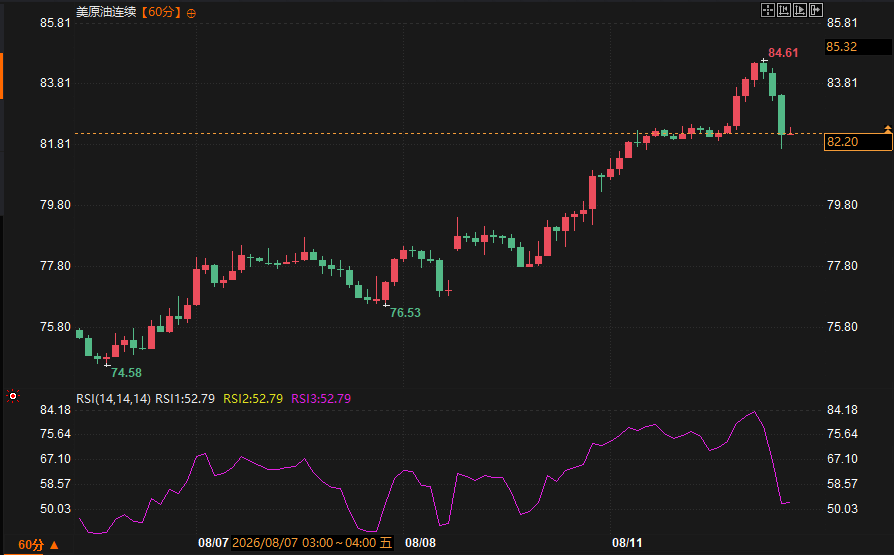
The sharp drop in Brent crude oil prices over the past two hours has been quite damaging. After reaching a high near the psychological level of $90, it plunged by about $2 to a low of $87.17. The trigger came from two consecutive diplomatic news items: the spokesperson for the Qatari Foreign Minister stated that negotiations between Oman and Iran had entered an "advanced phase" and that positive feedback had been received from both sides ; meanwhile, the Pakistani Defense Minister publicly assessed that signals from the US and Iran were "evolving in a direction favorable to peace," and the Pakistani Interior Minister had arrived in Tehran to mediate. These two pieces of information directly hit the core logic behind the previous price surge. Last Monday, Brent crude surged 5% in a single day, and on Tuesday morning it rose more than 2%, with the market pricing in an extreme scenario of a sharp drop in traffic in the Strait of Hormuz to single digits and a full-blown confrontation between the US and Iran. However, the simultaneous efforts of diplomatic channels from Pakistan and Qatar forced the market to reassess the probability—the return to the negotiating table was no longer out of reach, leading to a concentrated round of profit-taking on the geopolitical premium for crude oil. But the bears' logic also has cracks. The Houthi attacks on Red Sea merchant ships have escalated dangerously : the Tanzanian-flagged cargo ship Tihamah was hit by an unidentified projectile near the port of Moka, killing three crew members, including two Pakistanis and one Indonesian. This is the first confirmed civilian crew member death in a ship attack since the conflict began. The Houthis had previously announced an expanded blockade of Saudi Arabia, and this death could very well be the trigger for further aggressive actions from all sides. The support for crude oil has not collapsed, but rather shifted its anchor—from the "Hormuz blockade expectation" to the "Red Sea shipping premium." The core dilemma traders currently face is that both news paths are true and progressing simultaneously, and any one-way bet is at risk of being hit by reverse news.Shipping: Fatalities are altering the nature of risk, and pricing power for freight rates is shifting.
The Red Sea attack has shifted shipping risk from "insurable commercial disruption" to "a significant threat to personnel safety." The confirmation of the three crew members' deaths will trigger shipowners and insurance companies to reassess the risk boundaries of shipping routes , making a jump in premiums and an increase in crew risk allowances almost inevitable. Coupled with the reality that traffic in the Strait of Hormuz has already dropped to single digits, the volatility of VLCC and product tanker freight rates is rising sharply. In the medium to long term, if the Red Sea blockade expands and the obstruction of Hormuz passage resonates, the global oil supply chain will face a double squeeze of tonnage shortages and increased shipping distances. This is not just a matter of rising freight rates; it could also create regional bottlenecks in refined oil supply—the delayed restart of Saudi Arabia's Aramco Jazan refinery (400,000 barrels/day) until August 30 due to the Houthi attacks is a micro-level example.Precious Metals and Forex: Safe-Haven Demand Held Hostage by Oil Price Volatility
Gold's performance today fully exposed its helplessness in the current environment. It surged in the early morning driven by geopolitical safe-haven demand, trading between 4360 and 4430, but subsequently faced double pressure from falling oil prices and a slight increase in dollar yields. Silver performed relatively stronger, indicating that some funds were trading on inflation expectations rather than simply seeking safe haven. Gold traders need to be wary that when oil prices plummet due to easing geopolitical tensions, gold also loses an important inflation trading anchor , lacking independent upward momentum in the short term. On the forex front, the dollar index strengthened slightly to around 99.8. Inflation concerns driven by oil prices are being transmitted to the dollar through the yield channel. The yen weakened to around 159, indicating the fading effect of previous intervention and also suggesting that the market is allowing sufficient room for reaction to tomorrow night's US CPI data. If inflation data is overly bullish, the strength of the dollar will further compress the breathing space for precious metals.Trend Outlook
In the short term, leading up to early next week, the market will remain largely controlled by Middle Eastern news. If Pakistan and Qatar's diplomatic efforts lead to a clear statement that the US and Iran are substantially back on the negotiating table, Brent crude could quickly return to the $83-$85 range, putting downward pressure on gold. Conversely, if the Red Sea attack deaths trigger further retaliatory actions or an expanded blockade, oil prices could retest $90 and potentially reach higher levels, with shipping rates entering a non-linear upward trend. The real catalyst to break this geopolitical news monopoly is Wednesday's US July CPI data . The market generally expects a moderate reading; if the actual data is consistent with this or even softer, it will provide support for risk assets and precious metals independent of oil prices. If the data is overbought, the inflation narrative will resonate with geopolitical risks, further amplifying commodity volatility. In the current environment, positions with excessive exposure to one side in futures are far more vulnerable than usual.Frequently Asked Questions
Why did the statement about the "advanced stage" of US-Iran negotiations trigger a sharp drop in oil prices? This statement, coming from Qatar and Oman, the two main mediators, indicates that diplomatic progress has moved from "probing" to "substantive contact." The market had previously priced in a very high percentage of the standoff and blockade premium, and any sign of easing tensions triggered concentrated profit-taking by long positions, hence the sharp intraday reaction. Why is the death of three crew members in the Red Sea more important than previous attacks? Previous Houthi attacks mainly resulted in damage to ships; the confirmation of civilian deaths changes the legal and moral dimension of the conflict. This will force shipowners, insurance companies, and navies of various countries to address personnel protection at higher costs, thus shifting the pricing benchmark for shipping risk premiums upward. Domestic political pressure from escalating conflict will also increase sharply in the relevant countries. What role does Pakistan play between the US and Iran? Pakistan borders Iran and maintains long-standing military and diplomatic ties with the US, making it one of the few countries capable of effective dialogue with high-level officials from both sides. Its Interior Minister's visit to Tehran carries a stronger signal than ordinary diplomatic notes, providing both sides with a probing channel to bypass direct contact. What is the biggest risk currently facing crude oil trading? The repeated fluctuations in the dual-track news flow. With easing and escalating signals advancing simultaneously, any one-way bet could be wiped out by contrarian news within hours. This worsens the risk-reward ratio of directional trading, making volatility itself, rather than price direction, the core trading variable. How will Wednesday's CPI data affect the currently geopolitically driven market? If the data is weak, the market will receive support from easing expectations independent of geopolitics, providing a respite for a market already exhausted by geopolitical volatility. If it's strong, inflation concerns will create a self-reinforcing cycle with oil prices, a stronger dollar will suppress gold prices, and the macro narrative of energy costs will be reinforced, exacerbating overall volatility.- Risk Warning and Disclaimer
- The market involves risk, and trading may not be suitable for all investors. This article is for reference only and does not constitute personal investment advice, nor does it take into account certain users’ specific investment objectives, financial situation, or other needs. Any investment decisions made based on this information are at your own risk.