GDP data is stable, but the pound is falling. Is this all due to energy prices?
2026-08-13 15:08:55
On Thursday (August 13) during Asian trading hours, the pound was under pressure against the dollar for the second consecutive trading day, currently trading around 1.3480, down about 0.1%. The dollar was supported by oil-price-driven inflation concerns – the market is repricing expectations for a Fed rate hike, while geopolitical uncertainty stemming from the US-Iran standoff also provided buying opportunities for the safe-haven dollar. 
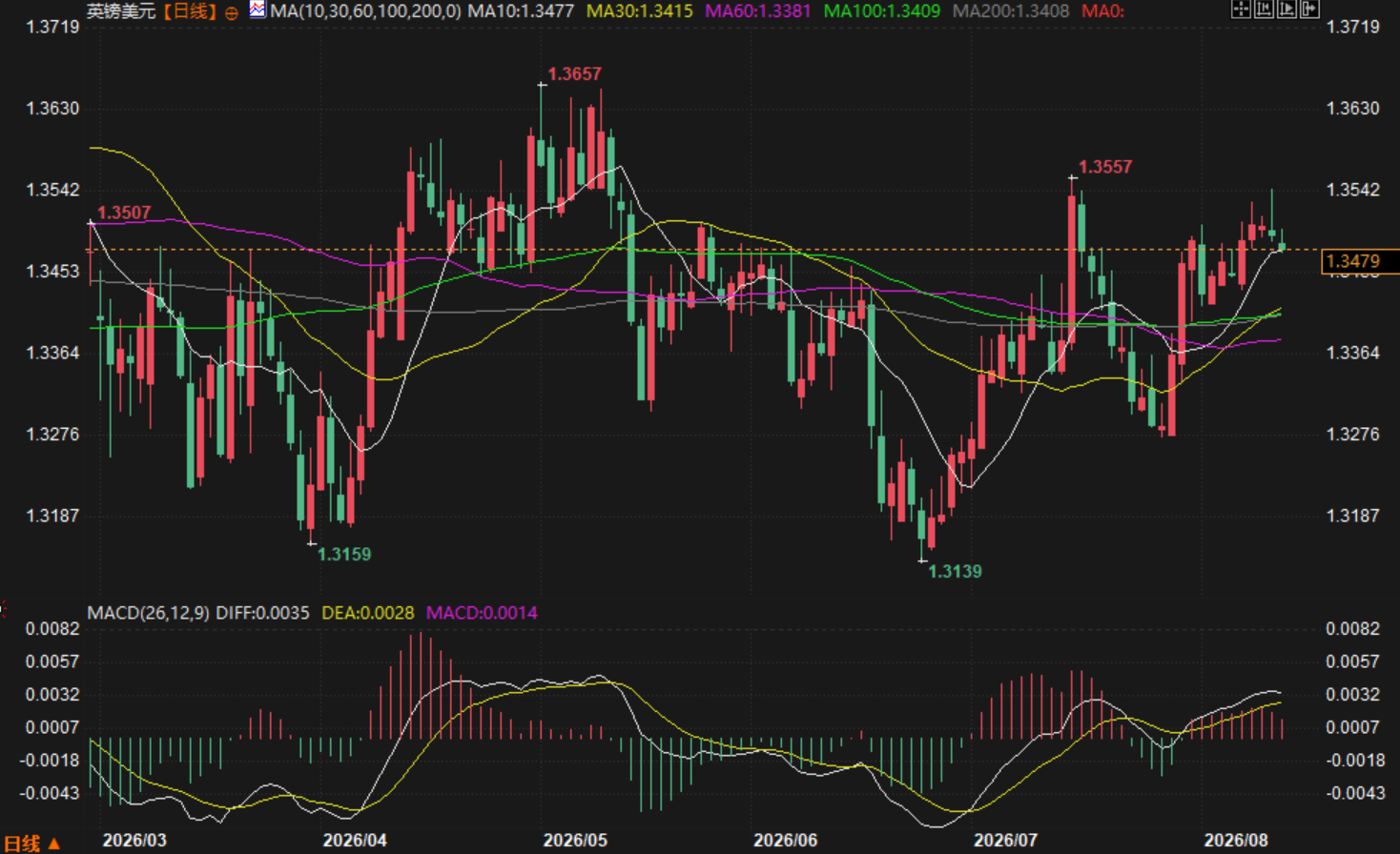 (GBP/USD daily chart, source: FX678) At 15:05 Beijing time on August 13, GBP/USD was trading at 1.3481/82.
A stronger dollar is putting downward pressure on the pound: oil price inflation and geopolitical safe-haven demand are providing support.
The pound sterling weakened against the dollar for the second consecutive day, primarily driven by external factors, including: oil-price-driven inflation concerns: Continued tensions in the Middle East have pushed up oil prices, exacerbating market concerns about global inflationary pressures. This has reignited expectations of a Federal Reserve rate hike, providing support for the dollar in terms of interest rate differentials. Geopolitical risks from the US-Iran standoff: Negotiations between the US and Iran on the Gulf issue have stalled, and uncertainty surrounding the Strait of Hormuz persists. As the world's primary safe-haven currency, the dollar has thus received additional buying interest. These two factors combined have propelled the dollar index to rebound from its lows following Wednesday's CPI data release, becoming the main force suppressing the pound against the dollar.UK Q2 GDP met expectations
Following the release of the UK's Q2 GDP data, the pound sterling weakened slightly by about 0.1% in the short term. Data from the UK Office for National Statistics showed that June GDP unexpectedly grew by 0.3% month-on-month (far exceeding expectations of being flat), and the preliminary Q2 GDP figure showed a 0.4% quarter-on-quarter growth (in line with expectations, but slower than Q1's 0.6%), with a year-on-year growth of 1.2% (higher than Q1's 0.9% and the estimated 1.1%). The data was generally robust, with the service sector contributing significantly, and did not show the significant weakness previously feared by the market. However, the pound fell by about 0.1% against the dollar after the data release, failing to receive a significant boost. Market interpretations suggest that although the Q2 performance was acceptable, the accelerated year-on-year growth was mainly due to the base effect, and the energy prices driven up by the conflict involving Iran will continue to squeeze business and household budgets in the second half of the year, with the risk of a slowdown in growth remaining. At the same time, the relatively strong dollar further limited the pound's upside potential.Institutional Views
In its August report, Mitsubishi UFJ Financial Group stated that the pound strengthened against both the dollar and the euro in July. The Bank of England maintained its yield curve unchanged at 3.75% in July, but the yield advantage may weaken in the future. The dollar remains supported in the short term by interest rates and geopolitical risks such as those in the Middle East, but with declining inflation and the closure of the Fed's policy window, the dollar will enter a depreciation cycle in 2027, thus driving a rebound in the pound against the dollar. Overall, the pound is still relatively strong among G10 currencies, but significant upside potential is unlikely in the short term, requiring signals of a weakening dollar. HSBC believes the pound is mainly driven by cyclical factors, including weak UK economic data, limited policy space at the Bank of England, a narrowing relative interest rate advantage, and a generally strong dollar. Political uncertainty coupled with weakening macroeconomic fundamentals further exacerbates downside risks. HSBC maintains a medium-term bullish view on the dollar (especially on the euro and the pound), believing that the Fed's stance and the resilience of the US economy continue to support the dollar, while domestic factors in the UK are unlikely to provide sufficient hedging. Therefore, the pound is expected to gradually decline to around 1.27 against the dollar.in conclusion
The UK's second-quarter GDP data was generally solid, with a better-than-expected 0.3% month-on-month growth in June. However, the pound fell slightly in the short term, reflecting market concerns about the impact of energy prices and slower growth in the second half of the year. Coupled with the US dollar being supported by inflation expectations and safe-haven demand, the pound's upside potential is limited in the short term, and its trend remains volatile. (GBP/USD daily chart, source: FX678) At 15:05 Beijing time on August 13, GBP/USD was trading at 1.3481/82.
- Risk Warning and Disclaimer
- The market involves risk, and trading may not be suitable for all investors. This article is for reference only and does not constitute personal investment advice, nor does it take into account certain users’ specific investment objectives, financial situation, or other needs. Any investment decisions made based on this information are at your own risk.