The USD/CAD pair rebounded from 1.39 to 1.3950, but oil prices rose in tandem. How far can this rebound go?
2026-08-13 15:50:57
On Thursday (August 13), the USD/CAD pair traded higher in the European session, hovering around 1.3950, poised for a second consecutive day of gains, continuing the rebound from around 1.3900 (a two-month low) the previous day. The overall strengthening of the US dollar was the core driver of the exchange rate's rise – renewed inflation concerns stemming from oil price volatility reignited expectations of a Federal Reserve rate hike, coupled with continued geopolitical tensions between the US and Iran in the Strait of Hormuz providing safe-haven buying for the dollar. However, the simultaneous rise in oil prices may provide some support for the Canadian dollar, making caution necessary before establishing further long positions in USD/CAD. 
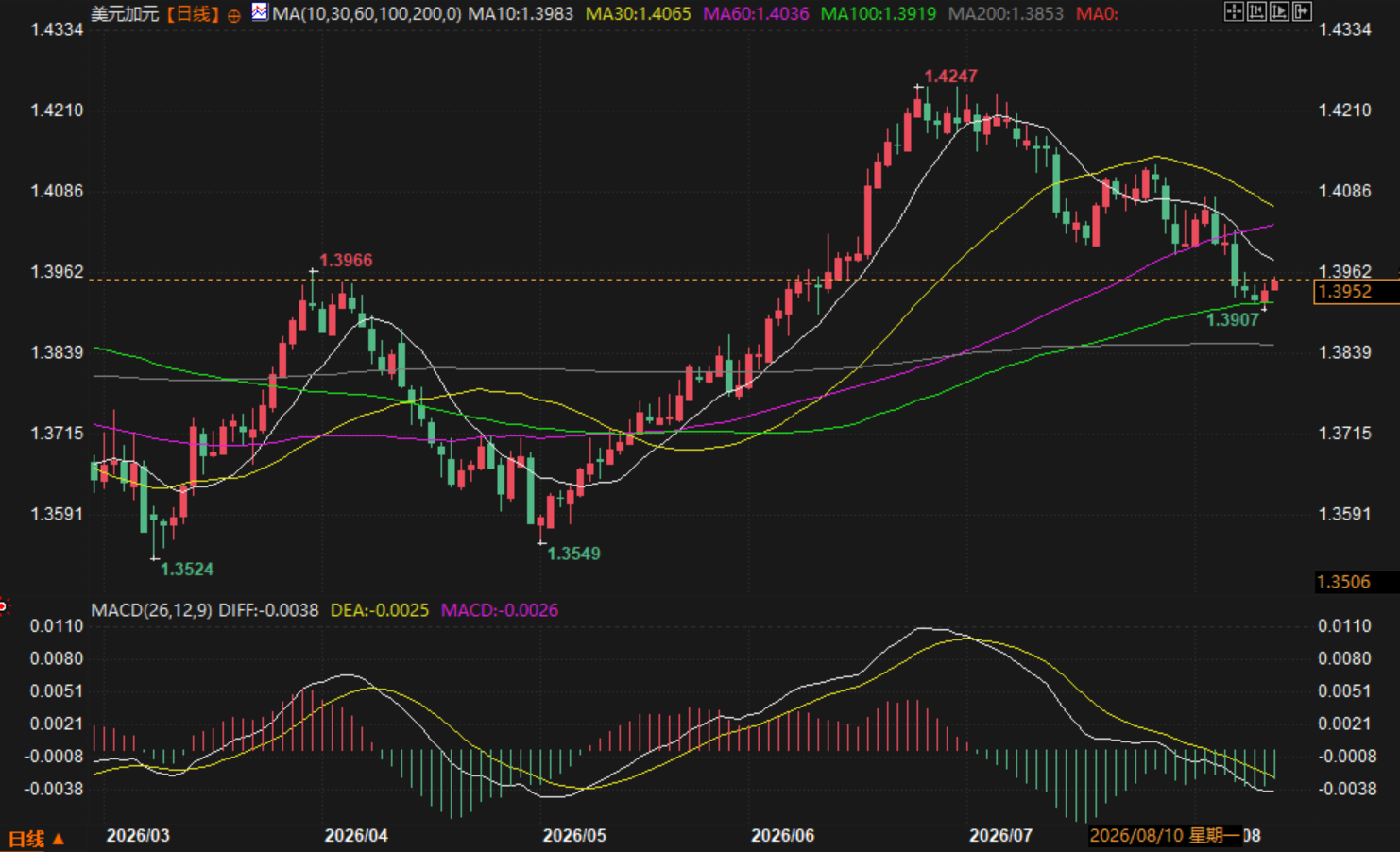 (USD/CAD daily chart, source: EasyForex) At 15:39 Beijing time on August 13, the USD/CAD exchange rate was 1.3951/52.
Dollar strengthens: Inflation concerns reignite expectations of interest rate hikes
The US dollar index (DXY) rose for the fourth consecutive trading day, hitting a two-week high. The main driver was oil price-driven inflation expectations: Oil price volatility and inflation risks: Continued tensions in the Middle East have pushed up oil prices, exacerbating market concerns about global inflationary pressures. The CME FedWatch tool shows that traders are still pricing in a near 80% probability of a Fed rate hike before the end of the year. This expectation has provided sustained interest rate differential support for the dollar. The dollar rebounded from its post-CPI lows: After the release of US CPI data on Wednesday, the dollar weakened initially but quickly rebounded from its lows and continued its gains on Thursday, reflecting that market concerns about inflation risks have not dissipated due to a single data release.Middle East geopolitical risks: Safe-haven funds continue to flow into the US dollar
The ongoing standoff between the US and Iran in the Strait of Hormuz has provided additional safe-haven buying support for the US dollar: Trump claims "complete control": US President Trump declared that the US has complete control over the strategic waterway, while Iran vowed to keep the strait closed until all its demands are met. Houthi attacks escalate: The Iranian-backed Houthi rebels in Yemen have intensified their attacks on ships in the Red Sea and the Bab el-Mandeb Strait, further increasing the security risk premium in the Middle East. These geopolitical tensions have prompted a continued inflow of safe-haven funds into the US dollar, becoming another important factor supporting the strength of the US dollar against the Canadian dollar.Higher oil prices provided support for the Canadian dollar, limiting its upside potential.
It's worth noting that while Middle East tensions are supporting the US dollar, they are also pushing up oil prices. As a commodity currency, the Canadian dollar is highly correlated with oil prices; rising oil prices typically boost the Canadian dollar, thus offsetting to some extent the effect of a stronger US dollar on the USD/CAD exchange rate. Therefore, despite the USD/CAD pair rising for two consecutive days, traders should still consider the supporting role of oil prices for the Canadian dollar before establishing further aggressive long positions.This week's focus: US PPI and initial jobless claims data.
Thursday's release of a plethora of US economic data will be a key driver of short-term price movements: The US July PPI report: As a leading indicator of inflation, PPI data will further influence market expectations regarding the Federal Reserve's policy path. Higher-than-expected PPI could further boost interest rate hike expectations, benefiting USD/CAD; conversely, lower-than-expected PPI could limit the dollar's upside potential. Weekly initial jobless claims: Providing the latest updates on the US labor market, this could also influence dollar sentiment. FOMC member speeches: Public statements from Federal Reserve officials will also provide the market with more policy clues. Furthermore, any new developments in the Middle East situation could trigger oil price volatility, thus providing new trading momentum for USD/CAD.Summarize
The USD/CAD pair is poised for a second consecutive day of rebound, rising above 1.3950, primarily driven by a stronger US dollar. Renewed inflation concerns fueled by oil prices have fueled expectations of a Fed rate hike, while ongoing geopolitical tensions between the US and Iran continue to provide safe-haven buying for the dollar. However, the simultaneous rise in oil prices is also providing support for the Canadian dollar, limiting its upside potential. In the short term, market focus shifts to US PPI and initial jobless claims data, as well as speeches by FOMC members and new developments in the Middle East. The pair is biased towards strength in the short term, but whether it can effectively break through the 1.4000 level still requires further support from data and geopolitical factors. (USD/CAD daily chart, source: EasyForex) At 15:39 Beijing time on August 13, the USD/CAD exchange rate was 1.3951/52.
- Risk Warning and Disclaimer
- The market involves risk, and trading may not be suitable for all investors. This article is for reference only and does not constitute personal investment advice, nor does it take into account certain users’ specific investment objectives, financial situation, or other needs. Any investment decisions made based on this information are at your own risk.