The "jobless boom" has arrived in the United States: stock market betting is accelerating, but employment is not keeping pace.
2026-08-13 19:54:55
The US economy is entering a new state of "jobless prosperity." While the stock market and corporate profits are signaling accelerated growth, the job market is virtually stagnant. The latest July employment data further confirms this trend: job growth is weak, but the unemployment rate remains stable due to a continued contraction in the labor supply. 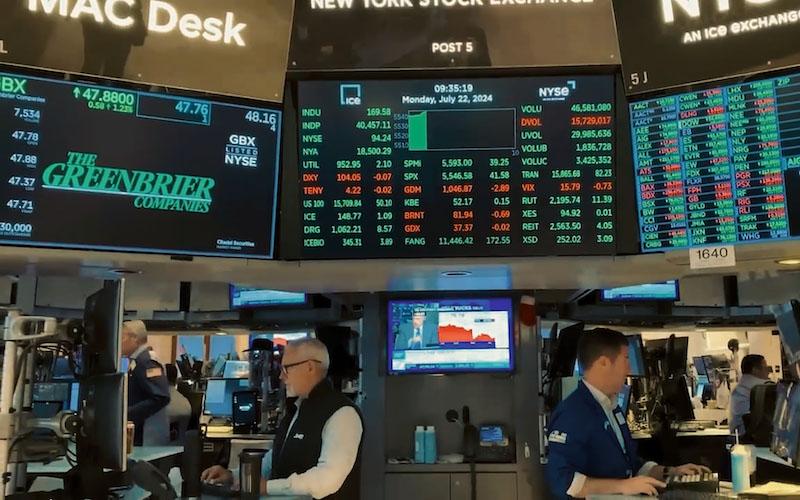 An Optimistic Picture for Stocks and Earnings Despite lackluster real GDP growth—averaging around 2.1% over the past year and only 1.5% annualized in the second quarter—the stock market has risen about 13% year-to-date, repeatedly hitting new highs. It has largely ignored tariffs, geopolitical conflicts, oil price volatility, and weak GDP data. Earnings performance has been even more impressive: earnings growth has outpaced stock price growth over the past year, while price-to-earnings ratios have actually declined. Excluding some investment income, second-quarter earnings growth was significant, with the median earnings growth for S&P 500 companies accelerating from 8% two years ago to 13%. Adjusted revenue growth has also significantly outpaced GDP. This isn't just an AI or tech story. Banks and small-cap stocks (more sensitive to economic cycles) have even outperformed the "Big Seven" this year. The term "broad base" has appeared frequently in earnings calls. Bill Demchak, CEO of PNC Financial Services, stated that while acknowledging the impact of AI on GDP, the industry and geographic diversity indicates that loan growth is not a single driver. Overall, companies are seeing solid demand translating into strong profits and revenue. The Other Side of Employment: Hiring Nearly Stagnant But hiring hasn't kept pace. Nonfarm payrolls fell by 23,000 in July, the fifth contraction in the past 12 months. Private sector monthly growth over the past year has been just over 50,000, a trend extremely rare in non-recessionary times. Job vacancies remain at post-pandemic lows, and annual income growth is only 3.2%, the lowest since before the pandemic, indicating employers are not fiercely competing for talent. The unemployment rate, however, hovers slightly above 4% (latest at 4.1%). The reason is simple: the labor force is shrinking. The baby boomer generation continues to retire, and immigration inflows have slowed, leading to a further decline in labor force participation. Slower job growth hasn't pushed up the unemployment rate because the labor supply itself is contracting. Demographic factors have suppressed the rise in the unemployment rate, but labor demand is equally weak. This is an early sign of the "AI optimism" scenario: artificial intelligence significantly increases economic output while simultaneously making some workers redundant. A previous survey by Stripe CEO Patrick Collison on X showed that respondents expected economic growth to double to an average of 4.3% over the next five years, while employment could decline by about 8%. While the likelihood of this extreme prediction coming true is extremely low, the direction is no longer out of reach—we seem to be right in the middle of it. Goldman Sachs' Observations and Potential Risks Goldman Sachs describes the current economy as being at "stallspeed": near-zero job growth coupled with a shrinking labor supply, resulting in a significant slowdown in momentum. However, the institution also emphasizes that inflation data remains more important to policy than employment. Consumer demand is currently being sustained by lower savings rates, and private investment is heavily reliant on billions of dollars in debt-financed data centers. These two supports are unlikely to last forever, but they can continue in the short term, especially if AI achieves even a small fraction of what optimists expect. Incidentally, weak hiring and a stable low unemployment rate do not automatically signal a recent rate cut by the Federal Reserve; the market and most analysts remain more focused on the inflation path. Overall, companies are seeing strong demand across economic sectors and translating it into extraordinary profits, but not into corresponding hiring. The stock market is betting on accelerated growth, while the job market has already entered a low-growth equilibrium. If this "jobless boom" becomes the norm, it will redefine our understanding of economic health and the labor market.
An Optimistic Picture for Stocks and Earnings Despite lackluster real GDP growth—averaging around 2.1% over the past year and only 1.5% annualized in the second quarter—the stock market has risen about 13% year-to-date, repeatedly hitting new highs. It has largely ignored tariffs, geopolitical conflicts, oil price volatility, and weak GDP data. Earnings performance has been even more impressive: earnings growth has outpaced stock price growth over the past year, while price-to-earnings ratios have actually declined. Excluding some investment income, second-quarter earnings growth was significant, with the median earnings growth for S&P 500 companies accelerating from 8% two years ago to 13%. Adjusted revenue growth has also significantly outpaced GDP. This isn't just an AI or tech story. Banks and small-cap stocks (more sensitive to economic cycles) have even outperformed the "Big Seven" this year. The term "broad base" has appeared frequently in earnings calls. Bill Demchak, CEO of PNC Financial Services, stated that while acknowledging the impact of AI on GDP, the industry and geographic diversity indicates that loan growth is not a single driver. Overall, companies are seeing solid demand translating into strong profits and revenue. The Other Side of Employment: Hiring Nearly Stagnant But hiring hasn't kept pace. Nonfarm payrolls fell by 23,000 in July, the fifth contraction in the past 12 months. Private sector monthly growth over the past year has been just over 50,000, a trend extremely rare in non-recessionary times. Job vacancies remain at post-pandemic lows, and annual income growth is only 3.2%, the lowest since before the pandemic, indicating employers are not fiercely competing for talent. The unemployment rate, however, hovers slightly above 4% (latest at 4.1%). The reason is simple: the labor force is shrinking. The baby boomer generation continues to retire, and immigration inflows have slowed, leading to a further decline in labor force participation. Slower job growth hasn't pushed up the unemployment rate because the labor supply itself is contracting. Demographic factors have suppressed the rise in the unemployment rate, but labor demand is equally weak. This is an early sign of the "AI optimism" scenario: artificial intelligence significantly increases economic output while simultaneously making some workers redundant. A previous survey by Stripe CEO Patrick Collison on X showed that respondents expected economic growth to double to an average of 4.3% over the next five years, while employment could decline by about 8%. While the likelihood of this extreme prediction coming true is extremely low, the direction is no longer out of reach—we seem to be right in the middle of it. Goldman Sachs' Observations and Potential Risks Goldman Sachs describes the current economy as being at "stallspeed": near-zero job growth coupled with a shrinking labor supply, resulting in a significant slowdown in momentum. However, the institution also emphasizes that inflation data remains more important to policy than employment. Consumer demand is currently being sustained by lower savings rates, and private investment is heavily reliant on billions of dollars in debt-financed data centers. These two supports are unlikely to last forever, but they can continue in the short term, especially if AI achieves even a small fraction of what optimists expect. Incidentally, weak hiring and a stable low unemployment rate do not automatically signal a recent rate cut by the Federal Reserve; the market and most analysts remain more focused on the inflation path. Overall, companies are seeing strong demand across economic sectors and translating it into extraordinary profits, but not into corresponding hiring. The stock market is betting on accelerated growth, while the job market has already entered a low-growth equilibrium. If this "jobless boom" becomes the norm, it will redefine our understanding of economic health and the labor market.
- Risk Warning and Disclaimer
- The market involves risk, and trading may not be suitable for all investors. This article is for reference only and does not constitute personal investment advice, nor does it take into account certain users’ specific investment objectives, financial situation, or other needs. Any investment decisions made based on this information are at your own risk.