UK inflation rose to 2.9% in July, reinforcing expectations of an interest rate hike, and the pound rebounded against the dollar to near its previous high.
2026-08-19 14:56:57
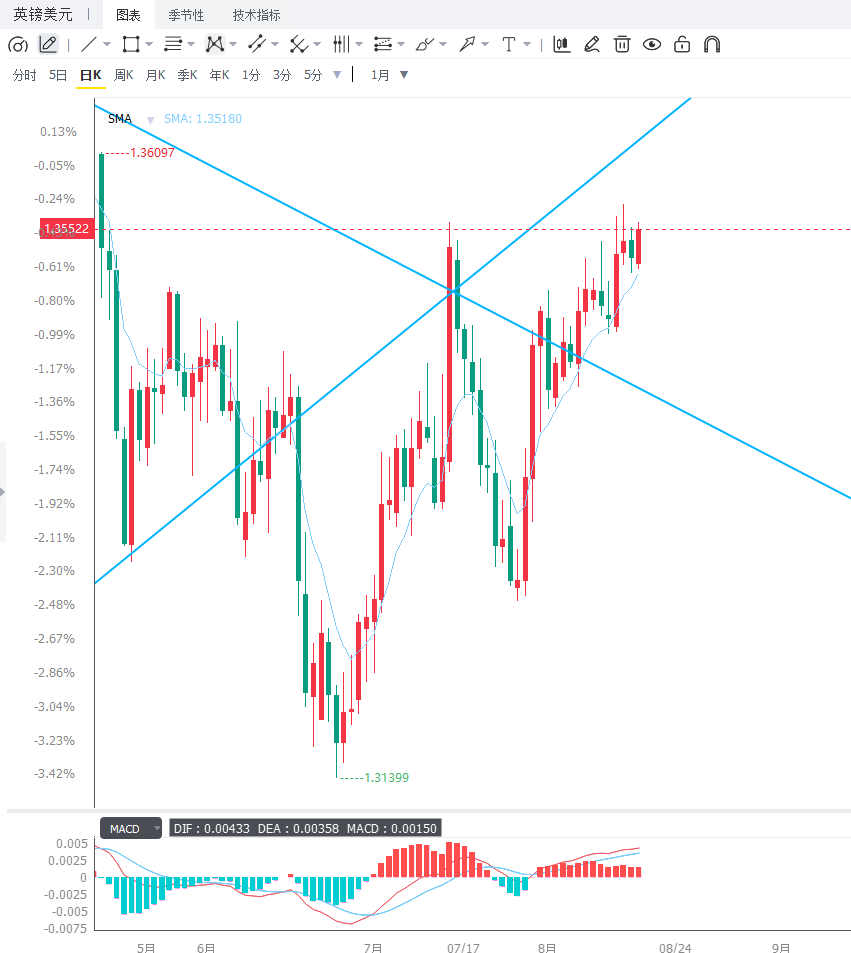
Data released by the UK Office for National Statistics on Wednesday showed that the UK's Consumer Price Index (CPI) rose 2.9% year-on-year in July, a significant acceleration from 2.6% in June, and in line with market expectations. This is an important signal of a continued rebound in overall UK inflation, and also means that the increase in consumer prices is once again significantly higher than the Bank of England's policy target of 2%. Looking at the monthly data, the UK's CPI rose 0.3% month-on-month in July, higher than 0.1% in June, in line with market expectations. Although the monthly increase did not significantly exceed expectations, combined with the year-on-year growth rate rebounding to 2.9%, the market is beginning to pay more attention to whether UK inflation is experiencing a phase of rebound, rather than just a temporary change caused by short-term energy price fluctuations.  Core inflation also warrants attention. Excluding volatile items such as food and energy, the UK's core CPI rose 2.6% year-on-year in July, unchanged from June but higher than the market expectation of 2.5%. This means that even excluding energy prices, domestic price pressures in the UK have not shown significant signs of easing. For the Bank of England, the resilience of core inflation is more important than a simple rise in overall CPI, as it reflects broader underlying price pressures. The energy market remains a crucial variable in the future trajectory of UK inflation. Recent significant increases in crude oil prices have reignited concerns about global energy supply. Rising energy costs will not only directly push up fuel and energy-related prices but may also be passed on to broader consumer sectors through transportation, manufacturing, and service sector costs. If oil prices remain high for an extended period, the decline in UK inflation may be slower than previously expected. The Bank of England has already signaled its vigilance regarding upside risks to inflation. Policymakers are particularly focused on service sector prices and wage growth, as these factors are typically more persistent. If rising energy prices generate a second round of effects, further intensifying service price and wage pressures, a more cautious policy stance from the Bank of England at its September meeting would be more reasonable. From a policy perspective, the Bank of England currently faces a clear dilemma. On the one hand, the UK economy remains under pressure, and maintaining high interest rates could further suppress household consumption and business investment; on the other hand, renewed inflation limits the central bank's room for rapid easing. At its July meeting, the Bank of England kept the policy rate at 3.75%, and the Monetary Policy Committee voted 6-3 to hold it steady, indicating a significant division within the policy-making body. Therefore, the July inflation data will have a significant impact on policy expectations for September. If future data on services inflation, wages, and core prices continue to be strong, the market may further increase the probability that the Bank of England will maintain a restrictive policy or even raise interest rates again. Conversely, if the July CPI is only driven by short-term factors such as energy prices, and core inflation subsequently declines, the market may still believe that the Bank of England does not need to re-enter a rate hike cycle. The pound's initial performance after the data release was relatively positive. GBP/USD rose to around 1.3550 in the short term, with a daily increase of about 0.08%. However, since the overall inflation rate of 2.9% was in line with market expectations, and the core CPI was only slightly higher than expected, the direct impact of the data on the pound was limited. The market is more concerned about whether subsequent inflation data can be sustained and whether the Bank of England will change its policy rhetoric as a result. At the same time, the trend of the US dollar itself will also determine the upside potential of GBP/USD. Recent weak US employment and inflation data have reduced market expectations for further tightening by the Federal Reserve. If the US dollar index continues to be under pressure, even if UK inflation only rises moderately, the pound may receive additional support against the dollar. Conversely, if US long-term Treasury yields continue to rise and drive a dollar rebound, the upside potential of the pound may be limited. From a market sentiment perspective, the pound is currently supported by two factors: first, UK inflation is higher than the policy target, limiting the Bank of England's room for rapid easing; second, the dollar is facing pressure from cooling expectations of US interest rates. However, high inflation also means that UK residents' real income and consumption are under pressure, so investors will not simply interpret rising inflation as a positive for the pound. Subsequent economic growth data and the sustainability of inflation will be important indicators for judging the medium-term trend of the pound. From a daily chart perspective, GBP/USD currently maintains a relatively clear short-term bullish pattern, with the price trading above the dense area of major daily moving averages, indicating that the previous upward trend has not been broken. The 14-day RSI is around 62, in a slightly bullish but not yet severely overbought zone, suggesting that the bulls still hold the initiative. In the short term, the first resistance level to watch is the psychological barrier of 1.3600. If this level is effectively broken and held, the next target will be the interim high near 1.3658. A break above 1.3658 could open up further upside potential for the pound. On the downside, the first support level to watch is the dense support area around 1.3420, which is close to the 21-day, 100-day, and 200-day moving averages, representing a crucial defense line for the current bullish structure. If the price retraces but holds this level, the overall upward structure remains intact. If 1.3420 is breached, the next support level to watch is the 50-day moving average near 1.3381; a further break below this level would significantly weaken the short-term bullish trend. From a 4-hour chart perspective, GBP/USD maintains a slightly bullish, oscillating structure, with the 1.3500 level providing some short-term support. If the price can continue to hold above 1.3500 and break through the 1.3570-1.3600 area, the short-term bullish momentum may strengthen again, further testing the 1.3658 area. Conversely, if the exchange rate fails to break through 1.3600 and experiences a rapid pullback, a break below 1.3500 could lead to a retest of the key support around 1.3420. Currently, short-term momentum remains bullish, but after approaching the important resistance level of 1.3600, a technical correction due to profit-taking should be anticipated.
  Editor's Summary: The UK's July CPI rose to 2.9%, while core inflation remained at 2.6%, indicating that inflationary pressures in the UK have not completely subsided and limit the Bank of England's room for further easing. In the short term, the inflation data is beneficial for stabilizing expectations for the pound, but since the overall CPI was in line with market expectations, the market still needs more evidence to confirm whether inflation will continue to rise. The GBP/USD pair currently has a bullish technical structure, with 1.3600 being a key short-term breakout level and 1.3420 being an important downside support level. Going forward, key attention should be paid to UK service sector inflation, wage growth, energy prices, and policy signals from the Bank of England, while also monitoring the inverse impact of changes in the US dollar and US Treasury yields on the GBP/USD pair.
Core inflation also warrants attention. Excluding volatile items such as food and energy, the UK's core CPI rose 2.6% year-on-year in July, unchanged from June but higher than the market expectation of 2.5%. This means that even excluding energy prices, domestic price pressures in the UK have not shown significant signs of easing. For the Bank of England, the resilience of core inflation is more important than a simple rise in overall CPI, as it reflects broader underlying price pressures. The energy market remains a crucial variable in the future trajectory of UK inflation. Recent significant increases in crude oil prices have reignited concerns about global energy supply. Rising energy costs will not only directly push up fuel and energy-related prices but may also be passed on to broader consumer sectors through transportation, manufacturing, and service sector costs. If oil prices remain high for an extended period, the decline in UK inflation may be slower than previously expected. The Bank of England has already signaled its vigilance regarding upside risks to inflation. Policymakers are particularly focused on service sector prices and wage growth, as these factors are typically more persistent. If rising energy prices generate a second round of effects, further intensifying service price and wage pressures, a more cautious policy stance from the Bank of England at its September meeting would be more reasonable. From a policy perspective, the Bank of England currently faces a clear dilemma. On the one hand, the UK economy remains under pressure, and maintaining high interest rates could further suppress household consumption and business investment; on the other hand, renewed inflation limits the central bank's room for rapid easing. At its July meeting, the Bank of England kept the policy rate at 3.75%, and the Monetary Policy Committee voted 6-3 to hold it steady, indicating a significant division within the policy-making body. Therefore, the July inflation data will have a significant impact on policy expectations for September. If future data on services inflation, wages, and core prices continue to be strong, the market may further increase the probability that the Bank of England will maintain a restrictive policy or even raise interest rates again. Conversely, if the July CPI is only driven by short-term factors such as energy prices, and core inflation subsequently declines, the market may still believe that the Bank of England does not need to re-enter a rate hike cycle. The pound's initial performance after the data release was relatively positive. GBP/USD rose to around 1.3550 in the short term, with a daily increase of about 0.08%. However, since the overall inflation rate of 2.9% was in line with market expectations, and the core CPI was only slightly higher than expected, the direct impact of the data on the pound was limited. The market is more concerned about whether subsequent inflation data can be sustained and whether the Bank of England will change its policy rhetoric as a result. At the same time, the trend of the US dollar itself will also determine the upside potential of GBP/USD. Recent weak US employment and inflation data have reduced market expectations for further tightening by the Federal Reserve. If the US dollar index continues to be under pressure, even if UK inflation only rises moderately, the pound may receive additional support against the dollar. Conversely, if US long-term Treasury yields continue to rise and drive a dollar rebound, the upside potential of the pound may be limited. From a market sentiment perspective, the pound is currently supported by two factors: first, UK inflation is higher than the policy target, limiting the Bank of England's room for rapid easing; second, the dollar is facing pressure from cooling expectations of US interest rates. However, high inflation also means that UK residents' real income and consumption are under pressure, so investors will not simply interpret rising inflation as a positive for the pound. Subsequent economic growth data and the sustainability of inflation will be important indicators for judging the medium-term trend of the pound. From a daily chart perspective, GBP/USD currently maintains a relatively clear short-term bullish pattern, with the price trading above the dense area of major daily moving averages, indicating that the previous upward trend has not been broken. The 14-day RSI is around 62, in a slightly bullish but not yet severely overbought zone, suggesting that the bulls still hold the initiative. In the short term, the first resistance level to watch is the psychological barrier of 1.3600. If this level is effectively broken and held, the next target will be the interim high near 1.3658. A break above 1.3658 could open up further upside potential for the pound. On the downside, the first support level to watch is the dense support area around 1.3420, which is close to the 21-day, 100-day, and 200-day moving averages, representing a crucial defense line for the current bullish structure. If the price retraces but holds this level, the overall upward structure remains intact. If 1.3420 is breached, the next support level to watch is the 50-day moving average near 1.3381; a further break below this level would significantly weaken the short-term bullish trend. From a 4-hour chart perspective, GBP/USD maintains a slightly bullish, oscillating structure, with the 1.3500 level providing some short-term support. If the price can continue to hold above 1.3500 and break through the 1.3570-1.3600 area, the short-term bullish momentum may strengthen again, further testing the 1.3658 area. Conversely, if the exchange rate fails to break through 1.3600 and experiences a rapid pullback, a break below 1.3500 could lead to a retest of the key support around 1.3420. Currently, short-term momentum remains bullish, but after approaching the important resistance level of 1.3600, a technical correction due to profit-taking should be anticipated. Editor's Summary: The UK's July CPI rose to 2.9%, while core inflation remained at 2.6%, indicating that inflationary pressures in the UK have not completely subsided and limit the Bank of England's room for further easing. In the short term, the inflation data is beneficial for stabilizing expectations for the pound, but since the overall CPI was in line with market expectations, the market still needs more evidence to confirm whether inflation will continue to rise. The GBP/USD pair currently has a bullish technical structure, with 1.3600 being a key short-term breakout level and 1.3420 being an important downside support level. Going forward, key attention should be paid to UK service sector inflation, wage growth, energy prices, and policy signals from the Bank of England, while also monitoring the inverse impact of changes in the US dollar and US Treasury yields on the GBP/USD pair.
- Risk Warning and Disclaimer
- The market involves risk, and trading may not be suitable for all investors. This article is for reference only and does not constitute personal investment advice, nor does it take into account certain users’ specific investment objectives, financial situation, or other needs. Any investment decisions made based on this information are at your own risk.