UK inflation rose to 2.9%, but the market reduced its bets on interest rate hikes. What happened behind the scenes?
2026-08-19 15:46:58
On Wednesday, August 19th, the latest UK inflation data reshaped discussions in the interest rate market regarding the Bank of England's policy path. The Consumer Price Index (CPI) rose 2.9% year-on-year in July, up from 2.6% in June, ending a brief decline and reaching its highest level since March. The data was largely in line with market expectations, but slightly higher than the Bank of England's previous forecast of 2.8%. Meanwhile, the Bank of England's policy rate remained unchanged at 3.75%, with a 6-3 vote at the July meeting to hold it steady. The next interest rate decision will be announced on September 17th. Following the data release, the interest rate swap market further reinforced pricing in a unchanged rate in September, with the market's implied probability of a 25 basis point rate hike in September falling from approximately 27% to approximately 18%. On the surface, this seems contradictory to the rebound in inflation, but from the perspective of the inflation structure, the core of market trading is not the overall figure of 2.9%, but rather whether this round of price increases is due to external energy shocks or is spreading to domestic wages and service prices in the UK. The most direct driver of the July inflation increase came from residential energy costs. The UK energy price ceiling was raised by 13% from July, resulting in a significant increase in natural gas costs, which directly boosted the CPI for electricity and gas projects. Lower-than-usual discounts on furniture and clothing also contributed to the upward pressure.  This distinguishes the current inflation rebound from traditional inflation driven by sustained expansion in wages and consumer demand. Energy is a typical supply-side shock, making it difficult for monetary policy to directly suppress energy prices. The Bank of England's July meeting also clearly stated that what policy really needs to control is the extent to which rising energy prices spread to wages, service prices, and inflation expectations, rather than mechanically responding to energy prices themselves. Therefore, the 2.9% figure needs to be analyzed in detail. Core inflation was 2.6%, slightly higher than the market's previous expectation of 2.5%, but without any obvious signs of spiraling out of control. Food prices rose by only 1.3% year-on-year, a further decline from 1.7% in June. In other words, current UK inflation shows a clear structural divergence: energy is pushing up the overall index, while the pressure on some residents' high-frequency consumer prices has actually eased. In recent years, the Bank of England has paid close attention to service inflation because service prices are more closely linked to domestic wages, labor costs, and demand intensity. In July, service inflation fell from 3.6% to 3.4%, a stark contrast to the rise in overall CPI from 2.6% to 2.9%. This is also an important reason why the market did not simply price the data according to the logic that "rising CPI equals further policy tightening." However, service inflation cannot be judged solely by a single overall indicator. The decline in some service prices is influenced by highly volatile items such as airfares; therefore, the Bank of England still needs to observe the prices of basic services after adjusting for volatility and regulatory pricing. The July Monetary Policy Report already indicated that while the UK's basic service inflation indicator has cooled significantly, it remains roughly in the 3.5% to 4% range, higher than the level consistently aligned with the 2% inflation target. In other words, while it can be confirmed that domestic inflationary pressures are easing, it is not yet sufficient to prove that inflation stickiness has completely disappeared. This situation suggests that policy discussions are more likely to revolve around "how long to maintain the restrictive interest rate" rather than simply making judgments based on a single month's CPI. To determine whether the energy shock can evolve into sustained inflation, wage and employment data are more crucial than a single month's CPI. The latest labor market data shows that the UK unemployment rate remains at 4.9%, job vacancies have fallen to approximately 707,000, near the lowest level since 2021, and private sector wage growth continues to slow. Previously released data has already shown that the supply and demand relationship in the labor market is weakening significantly. The policy implications are that businesses' ability to pass on energy costs to end consumers may be limited. If the labor market is tight, rising energy prices could increase wage demands through higher living costs, which in turn would drive businesses to raise prices, ultimately creating a cycle between energy prices, wages, and service prices. However, current employment and wage data do not yet show a significant strengthening of this mechanism. This also explains the divisions within the Bank of England. At the July meeting, six members supported maintaining the 3.75% threshold, while three advocated for an increase of 25 basis points to 4%. Compared to the 7-2 vote at the June meeting, one more member supported further tightening, indicating that policymakers have actually become more vigilant about the secondary effects of energy. The core issue facing the Bank of England is whether to tolerate temporary excess inflation driven by primary energy or to prevent its solidification. The July Monetary Policy Report already predicted that rising energy prices will continue to be transmitted to household bills for the remainder of the year. The Bank of England's own assessment also emphasizes that the strength of policy will be determined by the size and duration of the energy shock, as well as the extent to which it spreads to the UK economy through wages, prices, and financial conditions. Therefore, the variable that the market needs to pay attention to going forward is not the isolated CPI, but a complete transmission chain, including energy costs, business input prices, wage growth, service inflation, and long-term inflation expectations.
 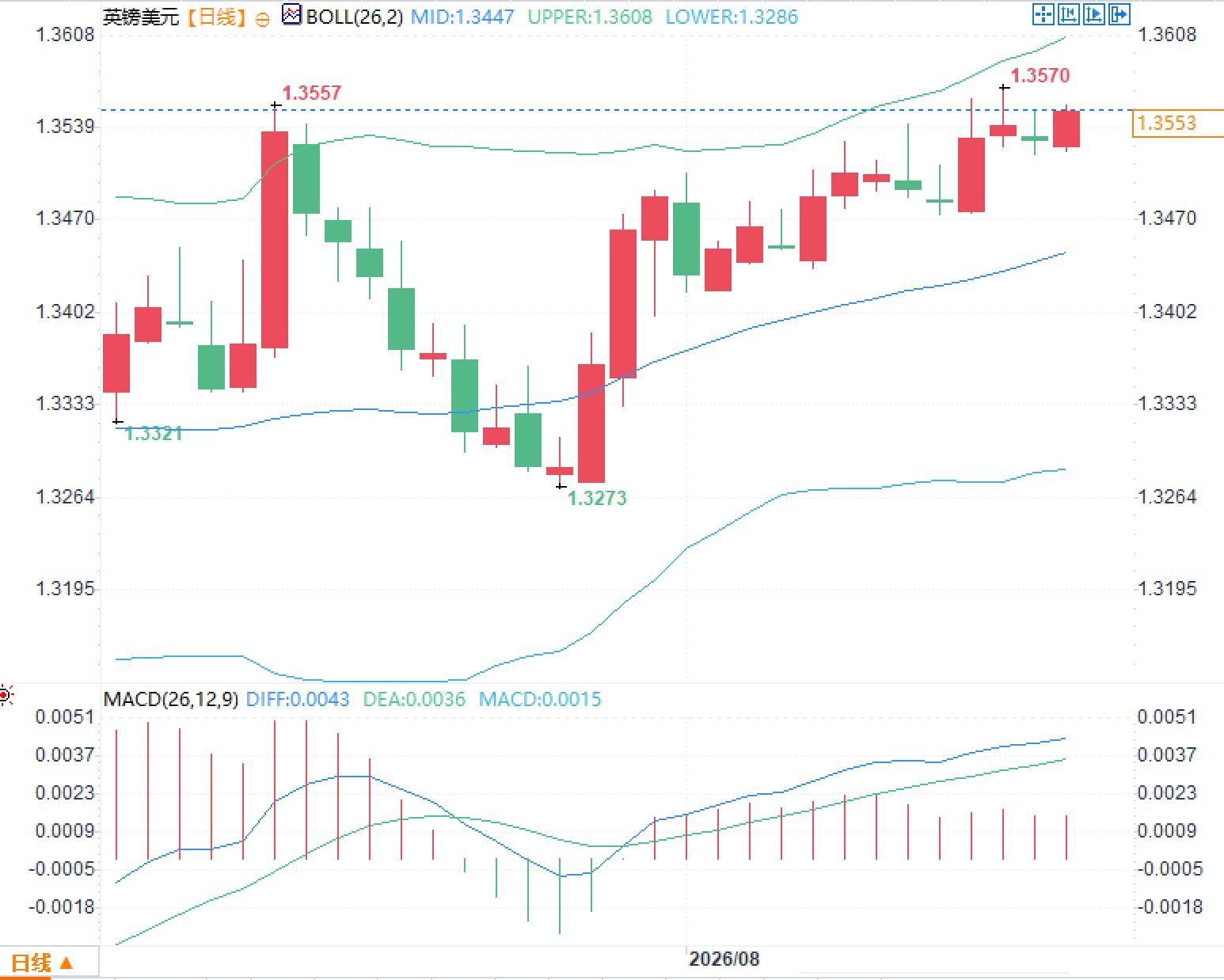 The July CPI reaching 2.9% does not, in itself, answer whether this transmission chain has formed. The current data combination is closer to "overall inflation being driven up by external energy shocks, but domestic price pressures are still slowly cooling." This also explains why, after the inflation data was released, the pound and the UK interest rate market did not experience a sharp repricing commensurate with the CPI increase.
This distinguishes the current inflation rebound from traditional inflation driven by sustained expansion in wages and consumer demand. Energy is a typical supply-side shock, making it difficult for monetary policy to directly suppress energy prices. The Bank of England's July meeting also clearly stated that what policy really needs to control is the extent to which rising energy prices spread to wages, service prices, and inflation expectations, rather than mechanically responding to energy prices themselves. Therefore, the 2.9% figure needs to be analyzed in detail. Core inflation was 2.6%, slightly higher than the market's previous expectation of 2.5%, but without any obvious signs of spiraling out of control. Food prices rose by only 1.3% year-on-year, a further decline from 1.7% in June. In other words, current UK inflation shows a clear structural divergence: energy is pushing up the overall index, while the pressure on some residents' high-frequency consumer prices has actually eased. In recent years, the Bank of England has paid close attention to service inflation because service prices are more closely linked to domestic wages, labor costs, and demand intensity. In July, service inflation fell from 3.6% to 3.4%, a stark contrast to the rise in overall CPI from 2.6% to 2.9%. This is also an important reason why the market did not simply price the data according to the logic that "rising CPI equals further policy tightening." However, service inflation cannot be judged solely by a single overall indicator. The decline in some service prices is influenced by highly volatile items such as airfares; therefore, the Bank of England still needs to observe the prices of basic services after adjusting for volatility and regulatory pricing. The July Monetary Policy Report already indicated that while the UK's basic service inflation indicator has cooled significantly, it remains roughly in the 3.5% to 4% range, higher than the level consistently aligned with the 2% inflation target. In other words, while it can be confirmed that domestic inflationary pressures are easing, it is not yet sufficient to prove that inflation stickiness has completely disappeared. This situation suggests that policy discussions are more likely to revolve around "how long to maintain the restrictive interest rate" rather than simply making judgments based on a single month's CPI. To determine whether the energy shock can evolve into sustained inflation, wage and employment data are more crucial than a single month's CPI. The latest labor market data shows that the UK unemployment rate remains at 4.9%, job vacancies have fallen to approximately 707,000, near the lowest level since 2021, and private sector wage growth continues to slow. Previously released data has already shown that the supply and demand relationship in the labor market is weakening significantly. The policy implications are that businesses' ability to pass on energy costs to end consumers may be limited. If the labor market is tight, rising energy prices could increase wage demands through higher living costs, which in turn would drive businesses to raise prices, ultimately creating a cycle between energy prices, wages, and service prices. However, current employment and wage data do not yet show a significant strengthening of this mechanism. This also explains the divisions within the Bank of England. At the July meeting, six members supported maintaining the 3.75% threshold, while three advocated for an increase of 25 basis points to 4%. Compared to the 7-2 vote at the June meeting, one more member supported further tightening, indicating that policymakers have actually become more vigilant about the secondary effects of energy. The core issue facing the Bank of England is whether to tolerate temporary excess inflation driven by primary energy or to prevent its solidification. The July Monetary Policy Report already predicted that rising energy prices will continue to be transmitted to household bills for the remainder of the year. The Bank of England's own assessment also emphasizes that the strength of policy will be determined by the size and duration of the energy shock, as well as the extent to which it spreads to the UK economy through wages, prices, and financial conditions. Therefore, the variable that the market needs to pay attention to going forward is not the isolated CPI, but a complete transmission chain, including energy costs, business input prices, wage growth, service inflation, and long-term inflation expectations. The July CPI reaching 2.9% does not, in itself, answer whether this transmission chain has formed. The current data combination is closer to "overall inflation being driven up by external energy shocks, but domestic price pressures are still slowly cooling." This also explains why, after the inflation data was released, the pound and the UK interest rate market did not experience a sharp repricing commensurate with the CPI increase.
- Risk Warning and Disclaimer
- The market involves risk, and trading may not be suitable for all investors. This article is for reference only and does not constitute personal investment advice, nor does it take into account certain users’ specific investment objectives, financial situation, or other needs. Any investment decisions made based on this information are at your own risk.