The Fed minutes were released early this morning, but the real suspense wasn't about those three dissenting votes at all.
2026-08-19 17:00:58
On Wednesday, August 19th, the global interest rate market re-entered a highly sensitive window. The US dollar index is currently around 99.4, down approximately 0.2% intraday; the 10-year US Treasury yield is around 4.686%, and the 30-year yield is around 5.268%. The market awaits the release of the Federal Reserve's July policy meeting minutes at 2:00 AM on Thursday. Current interest rate futures reflect a probability of approximately 67% for maintaining the current rate in September and a probability of approximately 33% for a 25 basis point rate hike. This means that pricing in tightening expectations has cooled significantly, but the possibility of another rate hike has not been completely ruled out. On July 29th, the Federal Reserve voted 9-3 to maintain the target range for the federal funds rate at 3.50% to 3.75%, with Hammark, Kashkari, and Logan supporting a 25 basis point rate hike. Looking at the final vote alone, it was a clear majority vote to hold rates steady. However, for the market, the importance of the July minutes lies not in reaffirming these three dissenting votes, but in determining how many of the non-dissenting members were close to the rate hike camp. If the minutes show that, besides the three dissenters, a number of members believed a rate hike was justified and were only temporarily accepting the maintenance of the rate, then the apparent 9-3 vote may underestimate the tightening inclination within the committee. Conversely, if support for further tightening is highly concentrated among the three dissenters, then the market's previous downward pricing of a September rate hike has a more solid internal policy basis.  In other words, what needs to be observed is not the vote count itself, but the "second tier" of policy preferences. This directly affects how the market interprets the committee's future reaction function. Data released after the Fed's July meeting has changed the fundamental environment for policy discussions. The latest jobs report shows that US non-farm payrolls decreased by 23,000 in July, with the unemployment rate at 4.1%, compared to an average monthly increase of only 34,000 over the previous 12 months. The labor force participation rate was 61.4%. These data do not indicate new signs of overheating in the labor market; instead, they reinforce the marginal slowdown in employment demand. Inflation data also showed some easing. The US Consumer Price Index (CPI) rose 3.4% year-on-year in July, lower than June's 3.5%; the core CPI rose 2.5% year-on-year, lower than the previous 2.6%. However, energy prices rose 14.7% year-on-year, meaning the overall price environment is still affected by energy shocks, and a single month's cooling cannot be simply equated with the complete disappearance of price pressures. Meanwhile, the latest complete data for the Personal Consumption Expenditures (PCE) price index, which the Fed heavily relies on, is still from June, when it rose 3.7% year-on-year. The next data release will be on August 26. Since taking office, Federal Reserve Chairman Kevin Warsh has significantly reduced traditional forward guidance. At a press conference on July 29, he stated that the committee does not want to rely on any single data point, but rather focuses on data trends, emphasizing that reducing forward guidance is to allow financial market prices to more directly reflect economic information. Regarding the upcoming Jackson Hole meeting, he described the speeches as still "a blank slate," without concrete judgments yet to be made. More notably, Warsh emphasized that when discussing the policy response function, central banks tend to tighten policy when core inflation rises and loosen it when core inflation falls; furthermore, while the Fed continues to use personal consumption expenditure inflation as its official target indicator, its actual assessment will observe broader price data. This means that the current market analysis framework is shifting from "finding clues for the next move" to "identifying policy triggers." Therefore, the discussions in the July minutes regarding core inflation, energy prices, wages, employment demand, inflation expectations, and financial conditions may be more important than any single statement about the September meeting. Currently, cross-asset pricing is not entirely consistent. The US dollar index is around 99.4, near multi-month lows, while the yields on 10-year and 30-year US Treasury bonds remain at relatively high levels of approximately 4.686% and 5.268%, respectively. The significant rise in long-term yields, in particular, indicates that long-term pricing incorporates not only policy rate factors but also variables such as inflation risk, term premium, fiscal financing pressures, and global bond supply.
 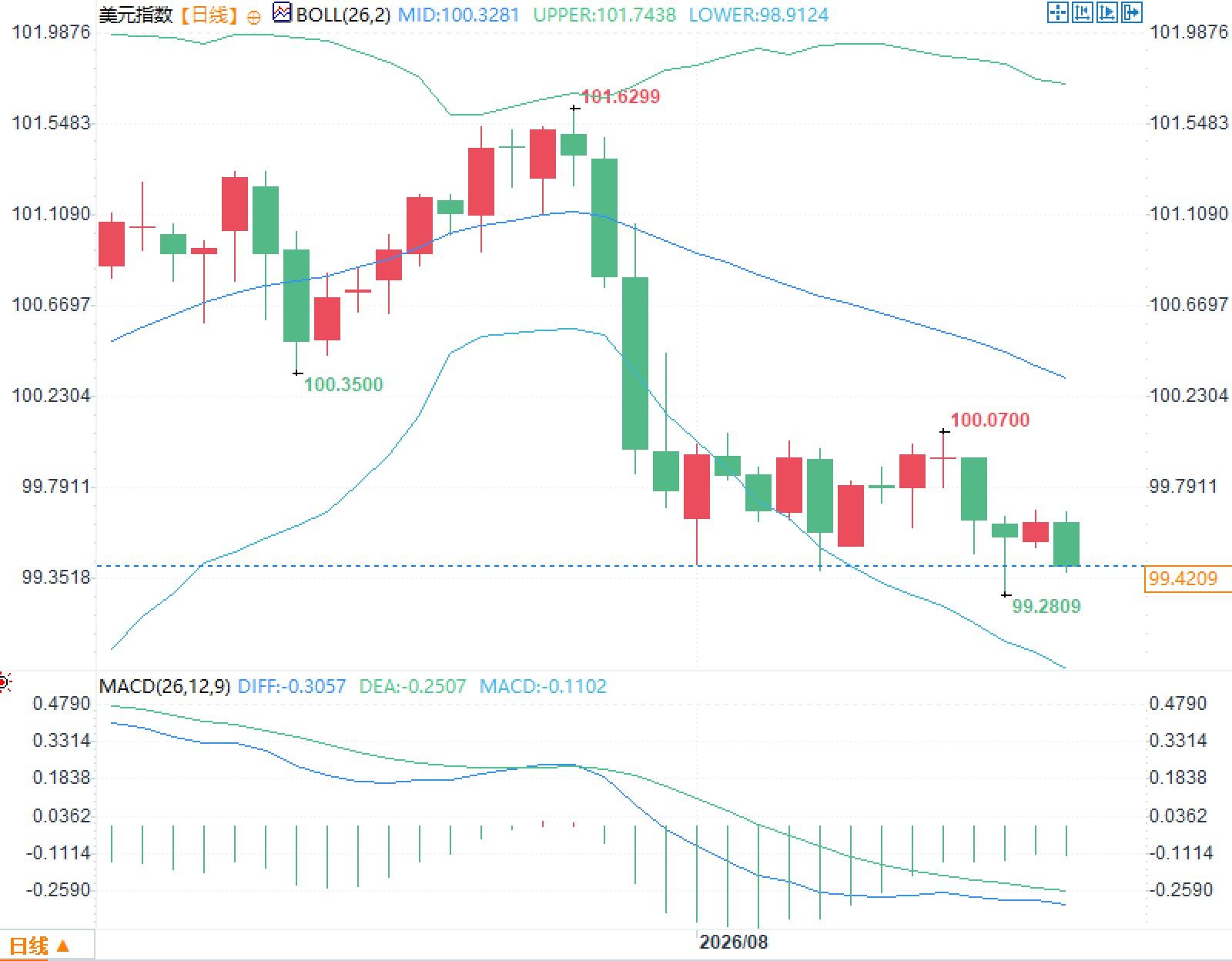 From a technical perspective, the most prominent feature of the current market is not a one-sided trend, but rather the divergence in the sensitivity of assets with different maturities to policy information. Short-term assets more directly reflect the probability of the September meeting, while long-term assets simultaneously price inflation and term risks; gold is influenced by real interest rates, the US dollar, and safe-haven demand. Therefore, even if price changes after the release of the meeting minutes are significant, it's necessary to distinguish whether they stem from a repricing of the policy path or a readjustment of term premiums and risk appetite. The current approximately 33% probability of a September rate hike precisely illustrates the lack of a highly consistent policy consensus in the market. The core role of the July minutes was to help the market further estimate the internal policy distribution within the Federal Reserve, rather than providing a definitive answer to the next course of action.
In other words, what needs to be observed is not the vote count itself, but the "second tier" of policy preferences. This directly affects how the market interprets the committee's future reaction function. Data released after the Fed's July meeting has changed the fundamental environment for policy discussions. The latest jobs report shows that US non-farm payrolls decreased by 23,000 in July, with the unemployment rate at 4.1%, compared to an average monthly increase of only 34,000 over the previous 12 months. The labor force participation rate was 61.4%. These data do not indicate new signs of overheating in the labor market; instead, they reinforce the marginal slowdown in employment demand. Inflation data also showed some easing. The US Consumer Price Index (CPI) rose 3.4% year-on-year in July, lower than June's 3.5%; the core CPI rose 2.5% year-on-year, lower than the previous 2.6%. However, energy prices rose 14.7% year-on-year, meaning the overall price environment is still affected by energy shocks, and a single month's cooling cannot be simply equated with the complete disappearance of price pressures. Meanwhile, the latest complete data for the Personal Consumption Expenditures (PCE) price index, which the Fed heavily relies on, is still from June, when it rose 3.7% year-on-year. The next data release will be on August 26. Since taking office, Federal Reserve Chairman Kevin Warsh has significantly reduced traditional forward guidance. At a press conference on July 29, he stated that the committee does not want to rely on any single data point, but rather focuses on data trends, emphasizing that reducing forward guidance is to allow financial market prices to more directly reflect economic information. Regarding the upcoming Jackson Hole meeting, he described the speeches as still "a blank slate," without concrete judgments yet to be made. More notably, Warsh emphasized that when discussing the policy response function, central banks tend to tighten policy when core inflation rises and loosen it when core inflation falls; furthermore, while the Fed continues to use personal consumption expenditure inflation as its official target indicator, its actual assessment will observe broader price data. This means that the current market analysis framework is shifting from "finding clues for the next move" to "identifying policy triggers." Therefore, the discussions in the July minutes regarding core inflation, energy prices, wages, employment demand, inflation expectations, and financial conditions may be more important than any single statement about the September meeting. Currently, cross-asset pricing is not entirely consistent. The US dollar index is around 99.4, near multi-month lows, while the yields on 10-year and 30-year US Treasury bonds remain at relatively high levels of approximately 4.686% and 5.268%, respectively. The significant rise in long-term yields, in particular, indicates that long-term pricing incorporates not only policy rate factors but also variables such as inflation risk, term premium, fiscal financing pressures, and global bond supply. From a technical perspective, the most prominent feature of the current market is not a one-sided trend, but rather the divergence in the sensitivity of assets with different maturities to policy information. Short-term assets more directly reflect the probability of the September meeting, while long-term assets simultaneously price inflation and term risks; gold is influenced by real interest rates, the US dollar, and safe-haven demand. Therefore, even if price changes after the release of the meeting minutes are significant, it's necessary to distinguish whether they stem from a repricing of the policy path or a readjustment of term premiums and risk appetite. The current approximately 33% probability of a September rate hike precisely illustrates the lack of a highly consistent policy consensus in the market. The core role of the July minutes was to help the market further estimate the internal policy distribution within the Federal Reserve, rather than providing a definitive answer to the next course of action.
- Risk Warning and Disclaimer
- The market involves risk, and trading may not be suitable for all investors. This article is for reference only and does not constitute personal investment advice, nor does it take into account certain users’ specific investment objectives, financial situation, or other needs. Any investment decisions made based on this information are at your own risk.