The dollar fell to a three-month low, and this was not solely due to changes in the Federal Reserve's expectations.
2026-08-20 17:50:58
On Thursday, August 20th, the core conflict in the global interest rate market shifted from simply discussing Federal Reserve policy to the interplay between fiscal financing pressures and debt management tools. Previously, long-term US Treasuries had faced significant selling pressure, with the 30-year yield rising to 5.327% this week, reaching its highest level since 2007, and the 10-year yield also rising to 4.747%. On August 19th, after the US Treasury announced an expansion of its long-term Treasury liquidity support repurchase program, the 30-year yield fell back to approximately 5.21%, and the 10-year yield dropped to approximately 4.65%. Simultaneously, the US dollar index weakened significantly in a single day and remains in a weak range, trading around 98.6. The key to the US Treasury's adjustment lies in the repurchase targets and scale. Starting September 9th, the maximum single-transaction size for liquidity support repurchases of 10- to 20-year and 20- to 30-year nominal Treasury bonds will be increased from $2 billion to at least $4 billion, with the arrangement temporarily continuing until November 4th. The Treasury's official reason is to enhance long-term bond liquidity, emphasizing that long-term bond repurchase operations continue to receive a large number of high-quality offers.  It's important to distinguish this from traditional quantitative easing. The Treasury did not create base money; its operations primarily altered the liquidity structure and maturity supply-demand relationship of existing bonds. Therefore, the market is truly reassessing the term premium. The previous rapid rise in the 30-year yield was not merely a reflection of future short-term policy rates. Fiscal deficits, debt supply, inflation risks, and large corporate bond financing collectively increased the compensation investors demand for holding long-term assets. Currently, the total US federal debt has exceeded $40 trillion, of which approximately $32.3 trillion is publicly held, making long-term financing costs a crucial variable in macroeconomic pricing. The Treasury's expanded repurchase operations send a message to the market: when there is significant pressure on long-term market liquidity and financing conditions, debt management policies may employ more proactive structural tools. The dollar's reaction is evident and not difficult to understand. One of the important foundations of currency pricing is cross-market interest rate differentials and real returns. When long-term US Treasury yields fall rapidly while interest rates in other major economies do not change by the same magnitude, the existing yield advantage narrows, and the dollar index fell to around 98.85 on August 19th.
 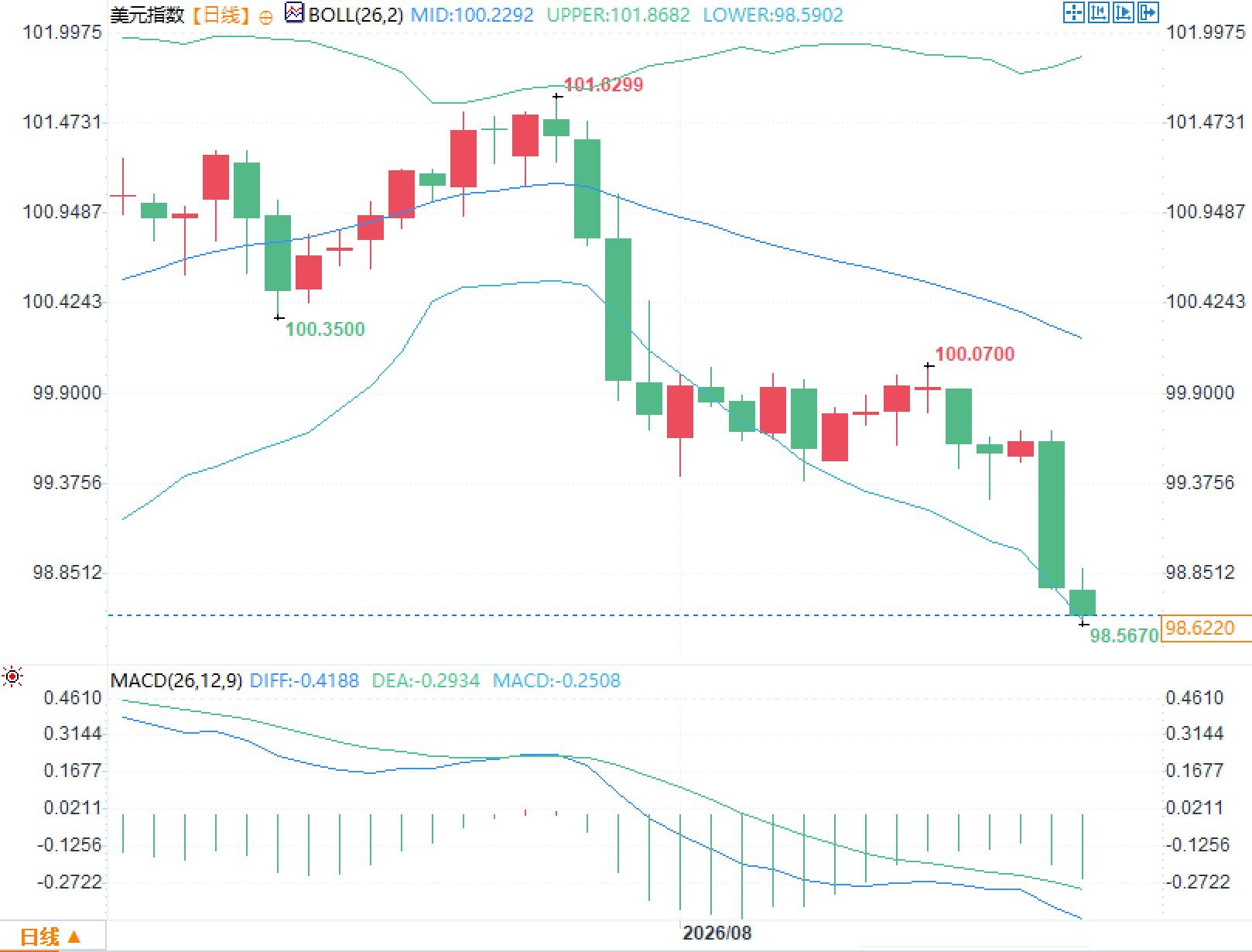 More noteworthy is the market's renewed understanding of policy functions. Previously, investors typically attributed dollar carry trades primarily to the Federal Reserve, but now the Treasury's debt management is also entering the exchange rate pricing model. This is what distinguishes this round of market activity from ordinary interest rate declines. The market is not only trading in the decline in yields themselves, but also reassessing why yields are falling and whether policymakers are willing to continue influencing the term structure. The core issue facing the Treasury is that repurchase agreements can improve trading conditions, but cannot eliminate debt supply. Currently, the size of the US Treasury market is far greater than the billions of dollars in a single repurchase transaction, so in absolute terms, new operations remain limited. Its greater role is to influence marginal liquidity, market expectations, and term premiums, rather than directly absorbing large-scale new financing. This means the market needs to observe three variables separately. The first is liquidity. If the rise in yields mainly comes from a decline in the depth of the long-term bond market, trading congestion, or a liquidity discount on existing bonds, then repurchase tools may have a more direct effect. The second is inflation compensation. If energy prices and inflation risks rise again, investors' demand for long-term nominal yields will continue to include a higher inflation premium. Currently, US crude oil has returned to around $87 per barrel, and energy prices remain a significant variable affecting long-term pricing. Thirdly, there's the fiscal term premium. As long as debt stock, annual financing needs, and interest payments continue to expand, the logic of investors demanding higher risk compensation for long-term bonds won't disappear simply due to liquidity operations. US Treasury Secretary Bessant emphasized in November 2025 that Treasury bond issuance should adhere to a "regular and predictable" framework, as a stable issuance system can reduce supply uncertainty and lower long-term financing costs. This increased repurchase activity hasn't changed the issuance principles, but it indicates that debt management is adding a stronger secondary market adjustment function. Therefore, what's truly worth observing now is not a single yield decline, but whether the Treasury is developing a more proactive long-term market management mechanism.
It's important to distinguish this from traditional quantitative easing. The Treasury did not create base money; its operations primarily altered the liquidity structure and maturity supply-demand relationship of existing bonds. Therefore, the market is truly reassessing the term premium. The previous rapid rise in the 30-year yield was not merely a reflection of future short-term policy rates. Fiscal deficits, debt supply, inflation risks, and large corporate bond financing collectively increased the compensation investors demand for holding long-term assets. Currently, the total US federal debt has exceeded $40 trillion, of which approximately $32.3 trillion is publicly held, making long-term financing costs a crucial variable in macroeconomic pricing. The Treasury's expanded repurchase operations send a message to the market: when there is significant pressure on long-term market liquidity and financing conditions, debt management policies may employ more proactive structural tools. The dollar's reaction is evident and not difficult to understand. One of the important foundations of currency pricing is cross-market interest rate differentials and real returns. When long-term US Treasury yields fall rapidly while interest rates in other major economies do not change by the same magnitude, the existing yield advantage narrows, and the dollar index fell to around 98.85 on August 19th. More noteworthy is the market's renewed understanding of policy functions. Previously, investors typically attributed dollar carry trades primarily to the Federal Reserve, but now the Treasury's debt management is also entering the exchange rate pricing model. This is what distinguishes this round of market activity from ordinary interest rate declines. The market is not only trading in the decline in yields themselves, but also reassessing why yields are falling and whether policymakers are willing to continue influencing the term structure. The core issue facing the Treasury is that repurchase agreements can improve trading conditions, but cannot eliminate debt supply. Currently, the size of the US Treasury market is far greater than the billions of dollars in a single repurchase transaction, so in absolute terms, new operations remain limited. Its greater role is to influence marginal liquidity, market expectations, and term premiums, rather than directly absorbing large-scale new financing. This means the market needs to observe three variables separately. The first is liquidity. If the rise in yields mainly comes from a decline in the depth of the long-term bond market, trading congestion, or a liquidity discount on existing bonds, then repurchase tools may have a more direct effect. The second is inflation compensation. If energy prices and inflation risks rise again, investors' demand for long-term nominal yields will continue to include a higher inflation premium. Currently, US crude oil has returned to around $87 per barrel, and energy prices remain a significant variable affecting long-term pricing. Thirdly, there's the fiscal term premium. As long as debt stock, annual financing needs, and interest payments continue to expand, the logic of investors demanding higher risk compensation for long-term bonds won't disappear simply due to liquidity operations. US Treasury Secretary Bessant emphasized in November 2025 that Treasury bond issuance should adhere to a "regular and predictable" framework, as a stable issuance system can reduce supply uncertainty and lower long-term financing costs. This increased repurchase activity hasn't changed the issuance principles, but it indicates that debt management is adding a stronger secondary market adjustment function. Therefore, what's truly worth observing now is not a single yield decline, but whether the Treasury is developing a more proactive long-term market management mechanism.
- Risk Warning and Disclaimer
- The market involves risk, and trading may not be suitable for all investors. This article is for reference only and does not constitute personal investment advice, nor does it take into account certain users’ specific investment objectives, financial situation, or other needs. Any investment decisions made based on this information are at your own risk.