The US dollar hovers near a three-month low, with institutions showing significant disagreement about its future path.
2026-08-21 11:09:01
On Friday (August 21) during Asian trading hours, the US dollar index weakened again after a slight rebound overnight, currently trading around 98.70, hovering near its lowest level since mid-May. The continued cooling of expectations for a Fed rate hike is the core drag on the dollar, but geopolitical risks and inflationary pressures have provided some support. The news of the US Treasury expanding its long-term bond repurchase program quickly faded from the market's initial boost, and energy prices rose driven by escalating tensions between the US and Iran, with inflation risks once again becoming the focus of market attention. The CME FedWatch tool shows that the market still prices in a probability of at least one rate hike before the end of the year at around 68%, and high US Treasury yields continue to support the dollar. Against this backdrop, the downside potential for the dollar in the short term may be limited. 
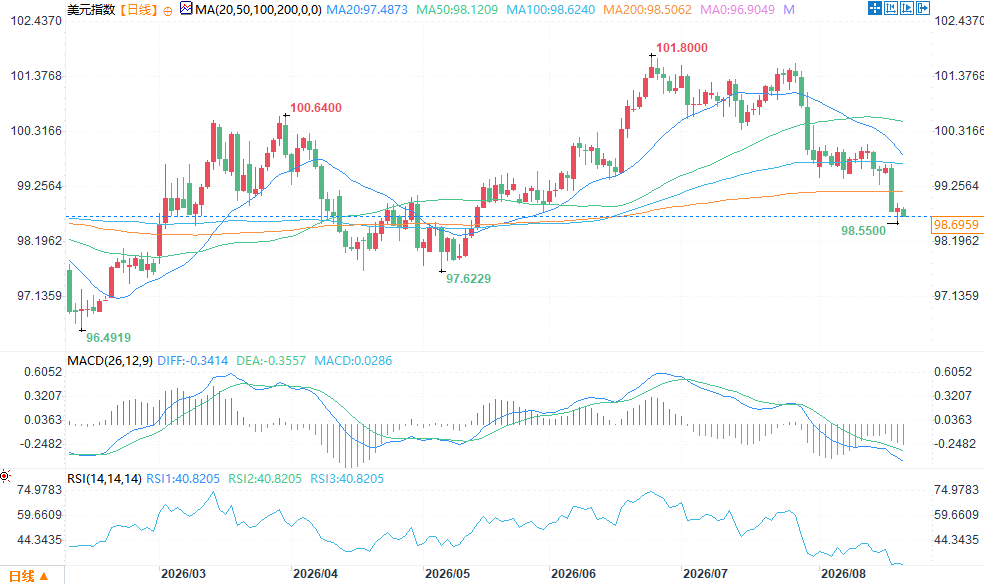 (US Dollar Index Daily Chart, Source: FX678) At 11:07 AM Beijing time on August 21, the US Dollar Index was at 98.72.
Easing expectations of interest rate hikes weighed on the dollar, but geopolitical risks provided support at the bottom.
The dollar index weakened again during the Asian session, hovering near its lowest level since mid-May. Dovish US inflation data released last week prompted investors to reduce their bets on a September rate hike by the Federal Reserve. However, geopolitical risks are providing additional support for the dollar – US President Trump stated he would take “the toughest economic action” against Iran and threatened severe penalties to any country that helps Iran circumvent sanctions. This statement perpetuates the geopolitical risk premium and may prevent traders from making aggressive short bets on the safe-haven dollar. Furthermore, the CME FedWatch tool shows that investors are still pricing in a probability of at least one rate hike before the end of the year, a prospect that continues to support high US Treasury yields and should limit further downside for the dollar index.Inflation risks resurface: The impact of repurchase agreements fades, and yields regain attention.
The market boost from the U.S. Treasury's announcement of doubling the size of some long-term bond buybacks quickly faded. Energy prices rose, driven by escalating tensions between the U.S. and Iran—crude oil prices hit a three-week high on Thursday—and inflation risks are once again becoming a focus of market attention. Against this backdrop, U.S. Treasury yields remained high, providing solid support for the dollar. Although the probability of a September rate hike has decreased significantly, the expectation of a rate hike before the end of the year remains close to 68%, meaning the market has not completely ruled out the possibility of further tightening. Given the persistent inflation risks and high geopolitical uncertainty, dollar bears need to remain cautious.Institutional Views
A recent research report from Citi's currency strategists indicates that the US dollar index will decline to around 98.30 over the next three months. Key reasons include market preparations for a weakening of the Federal Reserve's hawkish stance, the US midterm elections, and the Treasury's expansion of long-term Treasury bond repurchase agreements. Strategists point out that Bessant's repurchase measures to lower long-term borrowing costs may come at the expense of a weaker dollar. In recent months, the team's stance on the dollar has shifted to "more neutral," and they warn of increased downside risks in the coming months. Citi believes that fiscal-driven liquidity changes are pushing the dollar narrative from a rate hike cycle to a depreciation phase. HSBC, in its latest foreign exchange outlook, believes that although the dollar has recently weakened due to yen intervention and Fed policy risks, it is expected to regain its upward trend supported by strong US economic growth and favorable interest rate differentials. HSBC expects the dollar to not appreciate rapidly, but given the still significant interest rate differentials, there is still room for gradual appreciation in the medium to long term. However, important economic data ahead of the September Fed meeting will cause fluctuations in the dollar's trajectory.Summarize
The US dollar index hovered near a three-month low, with waning expectations of a Federal Reserve rate hike being the main drag. However, geopolitical risks and inflationary pressures provided a floor for the dollar. The impact of news of the US Treasury expanding its buyback program quickly faded, while Trump's statements regarding "the toughest economic action" against Iran pushed up energy prices and reignited inflation concerns. The approximately 68% probability of at least one rate hike before the end of the year continues to support high US Treasury yields, limiting further downside for the dollar. Against the backdrop of intertwined inflationary risks and geopolitical uncertainties, dollar bears need to remain cautious. (US Dollar Index Daily Chart, Source: FX678) At 11:07 AM Beijing time on August 21, the US Dollar Index was at 98.72.
- Risk Warning and Disclaimer
- The market involves risk, and trading may not be suitable for all investors. This article is for reference only and does not constitute personal investment advice, nor does it take into account certain users’ specific investment objectives, financial situation, or other needs. Any investment decisions made based on this information are at your own risk.