The number of ships passing through the Strait of Hormuz was halved in a single day, and crude oil prices closed positive across the board for the week, but what did the cross-market price spread reveal?
2026-08-22 14:08:58
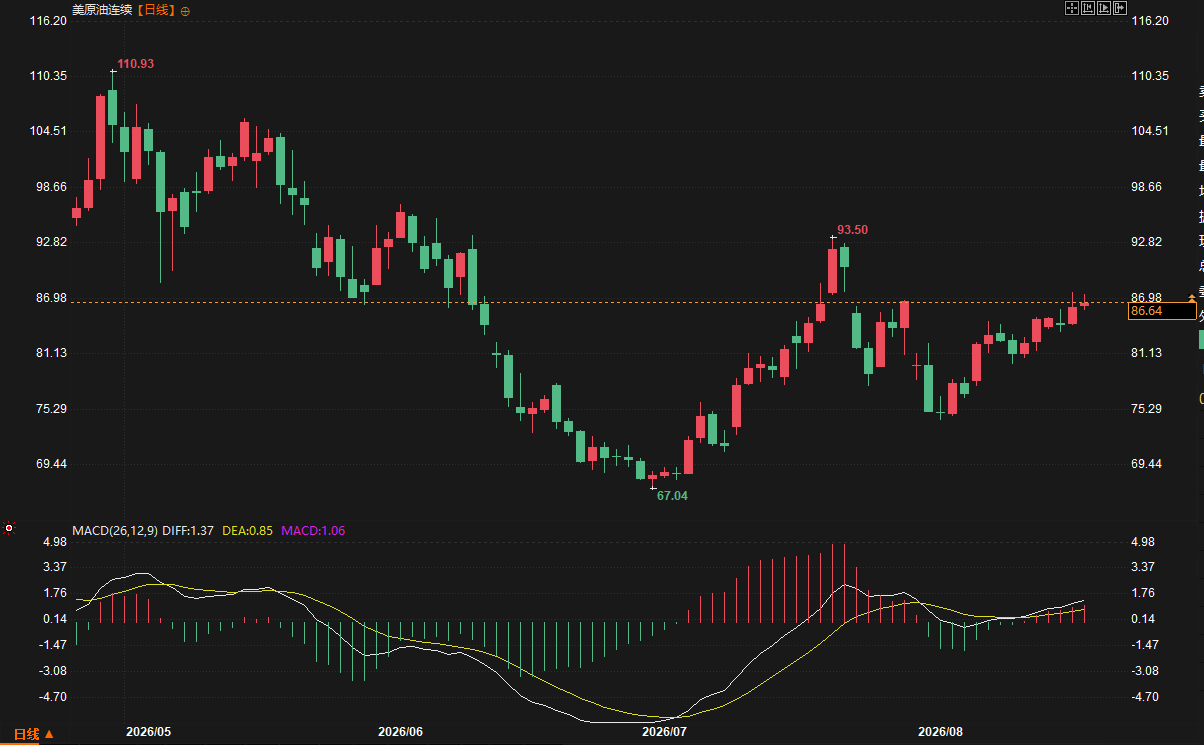
Over the past week, the commodity and interest rate markets exhibited a reflationary trading pattern characterized by strong oil and weak bonds . In the crude oil market, WTI, Brent, and SC crude all recorded weekly and monthly gains, with SC crude leading the international market with a monthly increase of nearly 9%. Brent crude saw five consecutive days of gains, approaching the resistance zone near $96. Overall, expectations of tightening supply and geopolitical disturbances supported oil prices, while strong economic data and fiscal concerns weighed on the bond market, both pointing to a macroeconomic environment where high interest rates and strong commodities coexist. 
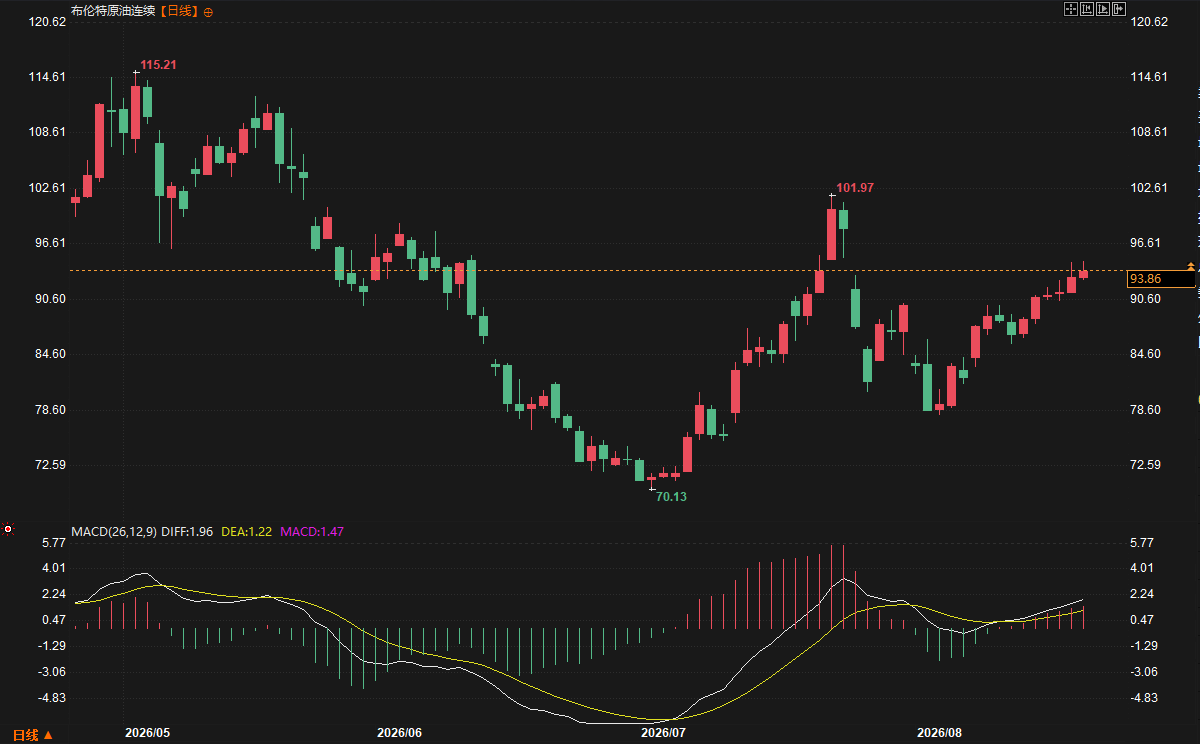
 On the news front, the US has issued tariffs against Iran's trading partners and threatened more severe financial pressure. The US-Iran peace agreement expired this week, and neither side attempted to restart negotiations. Iran stated it would respond "devastatingly" to any new threats. On the supply side, the market remains concerned about continued supply cuts by major oil-producing countries such as Saudi Arabia, Iraq, the UAE, and Kuwait. According to ship tracking data cited by a well-known foreign media outlet, only seven commodity carriers passed through the Strait of Hormuz on Thursday, half the number of the previous day. This fluctuation in traffic volume has led the market to reprice the risk of supply disruptions. However, there are also signs that pipelines, shuttle transport, and some alternative supplies are filling the gap. Some traders stated that sanctions have been the main means of pressuring Iran, but Iranian exports are already significantly restricted by the maritime blockade, so the marginal impact on supply may be limited; the real concern is the increase in maritime accidents and further disruptions to the Strait of Hormuz caused by retaliatory actions. Other analysts pointed out that while the Strait of Hormuz remains a risk point, it is no longer the only focus. Pipelines, US shale oil, Venezuelan and UAE supplies are increasing, partially offsetting the gap caused by cuts from major oil-producing countries. Overall, institutional opinions are divided between "limited sanctions premium" and "remaining geopolitical tail risks," with market sentiment leaning towards strength but not unanimously bullish. This week's rise in commodity markets does not simply reflect improved risk appetite, but rather embodies the logic of reflation. In the crude oil market, SC crude oil led the monthly gains, while Brent crude, after five consecutive months of gains, is approaching resistance levels. The market is engaged in a game of strategy surrounding tariff rhetoric, air travel, and alternative supply. In the short term, attention should be paid to Brent's technical performance around $96, as well as further guidance on interest rate expectations from the Jackson Hole meeting.
Crude oil: Tariff comments and flight disruptions drove a positive weekly close.
The crude oil market maintained an overall upward trend this week. Brent crude closed above $94 on Friday, rising approximately 5.9% for the week, with five consecutive positive days on the daily chart, clearly indicating a rebound from the July lows, and is currently approaching the resistance level near $96. WTI crude closed near $87 on Friday, rising approximately 5.0% for the week. Although there was a pullback during the week, the overall center of gravity continued to rise, and the MACD maintained a bullish structure. SC crude performed even stronger, rising approximately 6.4% on the week and approximately 8.9% on the month, breaking through the 600 yuan mark. Across markets, Brent and SC outperformed WTI, with regional supply and demand differences and pricing factors continuing to play a role. On the news front, the US has issued tariffs against Iran's trading partners and threatened more severe financial pressure. The US-Iran peace agreement expired this week, and neither side attempted to restart negotiations. Iran stated it would respond "devastatingly" to any new threats. On the supply side, the market remains concerned about continued supply cuts by major oil-producing countries such as Saudi Arabia, Iraq, the UAE, and Kuwait. According to ship tracking data cited by a well-known foreign media outlet, only seven commodity carriers passed through the Strait of Hormuz on Thursday, half the number of the previous day. This fluctuation in traffic volume has led the market to reprice the risk of supply disruptions. However, there are also signs that pipelines, shuttle transport, and some alternative supplies are filling the gap. Some traders stated that sanctions have been the main means of pressuring Iran, but Iranian exports are already significantly restricted by the maritime blockade, so the marginal impact on supply may be limited; the real concern is the increase in maritime accidents and further disruptions to the Strait of Hormuz caused by retaliatory actions. Other analysts pointed out that while the Strait of Hormuz remains a risk point, it is no longer the only focus. Pipelines, US shale oil, Venezuelan and UAE supplies are increasing, partially offsetting the gap caused by cuts from major oil-producing countries. Overall, institutional opinions are divided between "limited sanctions premium" and "remaining geopolitical tail risks," with market sentiment leaning towards strength but not unanimously bullish. This week's rise in commodity markets does not simply reflect improved risk appetite, but rather embodies the logic of reflation. In the crude oil market, SC crude oil led the monthly gains, while Brent crude, after five consecutive months of gains, is approaching resistance levels. The market is engaged in a game of strategy surrounding tariff rhetoric, air travel, and alternative supply. In the short term, attention should be paid to Brent's technical performance around $96, as well as further guidance on interest rate expectations from the Jackson Hole meeting.Market Q&A
Q: Why didn't tariff comments on Iran's trading partners trigger a larger rise in oil prices? The market may have already partially priced in restrictions on Iranian exports. Iranian crude oil exports were already affected by the maritime blockade, limiting the marginal supply impact. Meanwhile, pipelines, shale oil, and some alternative supplies filled the gap, suppressing risk premiums. However, fluctuations in the Strait of Hormuz navigation remain a tail risk; if retaliatory actions escalate, repricing cannot be ruled out. Q: Brent crude is approaching the $96 resistance level after five consecutive days of gains. What should be observed next? We need to observe the changes in the balance of power between buyers and sellers near the resistance level. If it breaks through with volume and holds, short-term momentum may continue; if it encounters resistance and profit-taking occurs, it may retrace to the previous support level. We should also pay attention to the resumption of the Strait of Hormuz navigation, the supply policies of major oil-producing countries, and changes in the US dollar and risk sentiment.- Risk Warning and Disclaimer
- The market involves risk, and trading may not be suitable for all investors. This article is for reference only and does not constitute personal investment advice, nor does it take into account certain users’ specific investment objectives, financial situation, or other needs. Any investment decisions made based on this information are at your own risk.