The US Dollar: From Debt Crisis to Currency Crisis
2026-08-24 17:52:59
The weakening dollar reflects the tension in the policy game between the U.S. Treasury and the Federal Reserve, giving rise to concerns in the market that a U.S. debt crisis could potentially evolve into a full-blown currency crisis. 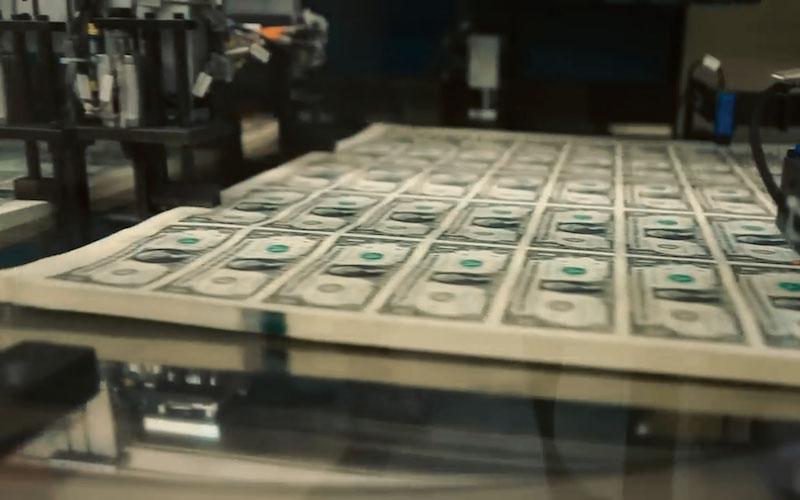 The US dollar index continues its downward trend amid a complex web of factors, and even macroeconomic conditions that should have supported the dollar have failed to reverse this weakness. Market participants' confidence in the Federal Reserve's policy stance is being eroded, and this loss of confidence continues to exert downward pressure on the dollar, becoming one of the core drivers suppressing the index. As US Treasury yields gradually stabilize, the dollar is struggling to find short-term support. Scott Bessant stated that market panic regarding the fiscal deficit is exaggerated. While fiscal revenue will increase somewhat due to tariff revenue, the total expected revenue from import tariffs in 2026 will likely be roughly the same as in 2025. The US Treasury has a full suite of policy tools to intervene and suppress debt market yields, and the current high yields in the US Treasury market lack sufficient fundamental support, further amplifying market anxiety. In the foreign exchange market, a growing consensus is emerging that the risk of a debt crisis could potentially spread outwards, eventually escalating into a currency crisis. The various intervention measures taken by the Japanese government to control government bond yields ultimately resulted in a significant depreciation of the yen. The 2022 UK debt sell-off stemmed from Prime Minister Truss's fiscal policies, which clashed sharply with the Bank of England's monetary tightening cycle, driving the pound to historic lows. Currently, the US Treasury's policy stance contradicts the direction indicated by the Federal Reserve's interest rate decisions. The Treasury's actions regarding long-term bonds are highly similar to quantitative easing, which will expand the Fed's balance sheet. In stark contrast, Kevin Warsh insists on shrinking the Fed's balance sheet. The Fed Chairman believes that rising Treasury yields can curb inflation; however, Scott Bessant seems willing to use various means to suppress Treasury yields. Policy conflicts between the Treasury and the central bank send confusing signals to the market, significantly undermining policy credibility. Such contradictions often have a destructive impact on the domestic currency; the UK pound's experience is not an isolated case. After Sanae Takashi took office in Japan, the market worried about a large-scale fiscal stimulus plan, but the Bank of Japan was simultaneously pursuing monetary tightening. This misalignment directly pushed the yen to its lowest point in 40 years. Therefore, even though the macroeconomic environment should have been favorable for the US dollar, it has still begun to decline, and this scenario is becoming increasingly likely. Normally, declining stock indices, stabilizing US Treasury yields, and Middle East geopolitical conflicts pushing up oil prices should provide strong support for safe-haven assets like the US dollar. However, in this round of market activity, traditional safe-haven logic has completely failed. The regulatory measures adopted by the Treasury Department are continuously eroding market trust in the Federal Reserve and even further shaking the foundation of global confidence in the US dollar itself. Of course, objectively speaking, no substantial catastrophic event has yet occurred. There is a significant gap between the Treasury Department's policy intentions and their actual implementation. Once market panic gradually subsides and safe-haven buying returns, the US dollar still has a chance to recover some of its previous losses.
The US dollar index continues its downward trend amid a complex web of factors, and even macroeconomic conditions that should have supported the dollar have failed to reverse this weakness. Market participants' confidence in the Federal Reserve's policy stance is being eroded, and this loss of confidence continues to exert downward pressure on the dollar, becoming one of the core drivers suppressing the index. As US Treasury yields gradually stabilize, the dollar is struggling to find short-term support. Scott Bessant stated that market panic regarding the fiscal deficit is exaggerated. While fiscal revenue will increase somewhat due to tariff revenue, the total expected revenue from import tariffs in 2026 will likely be roughly the same as in 2025. The US Treasury has a full suite of policy tools to intervene and suppress debt market yields, and the current high yields in the US Treasury market lack sufficient fundamental support, further amplifying market anxiety. In the foreign exchange market, a growing consensus is emerging that the risk of a debt crisis could potentially spread outwards, eventually escalating into a currency crisis. The various intervention measures taken by the Japanese government to control government bond yields ultimately resulted in a significant depreciation of the yen. The 2022 UK debt sell-off stemmed from Prime Minister Truss's fiscal policies, which clashed sharply with the Bank of England's monetary tightening cycle, driving the pound to historic lows. Currently, the US Treasury's policy stance contradicts the direction indicated by the Federal Reserve's interest rate decisions. The Treasury's actions regarding long-term bonds are highly similar to quantitative easing, which will expand the Fed's balance sheet. In stark contrast, Kevin Warsh insists on shrinking the Fed's balance sheet. The Fed Chairman believes that rising Treasury yields can curb inflation; however, Scott Bessant seems willing to use various means to suppress Treasury yields. Policy conflicts between the Treasury and the central bank send confusing signals to the market, significantly undermining policy credibility. Such contradictions often have a destructive impact on the domestic currency; the UK pound's experience is not an isolated case. After Sanae Takashi took office in Japan, the market worried about a large-scale fiscal stimulus plan, but the Bank of Japan was simultaneously pursuing monetary tightening. This misalignment directly pushed the yen to its lowest point in 40 years. Therefore, even though the macroeconomic environment should have been favorable for the US dollar, it has still begun to decline, and this scenario is becoming increasingly likely. Normally, declining stock indices, stabilizing US Treasury yields, and Middle East geopolitical conflicts pushing up oil prices should provide strong support for safe-haven assets like the US dollar. However, in this round of market activity, traditional safe-haven logic has completely failed. The regulatory measures adopted by the Treasury Department are continuously eroding market trust in the Federal Reserve and even further shaking the foundation of global confidence in the US dollar itself. Of course, objectively speaking, no substantial catastrophic event has yet occurred. There is a significant gap between the Treasury Department's policy intentions and their actual implementation. Once market panic gradually subsides and safe-haven buying returns, the US dollar still has a chance to recover some of its previous losses.
- Risk Warning and Disclaimer
- The market involves risk, and trading may not be suitable for all investors. This article is for reference only and does not constitute personal investment advice, nor does it take into account certain users’ specific investment objectives, financial situation, or other needs. Any investment decisions made based on this information are at your own risk.