American monetary historians are concerned about a flash collapse in confidence in the dollar and suggest reducing holdings of US Treasury bonds and allocating more to gold.
2026-08-25 11:21:03
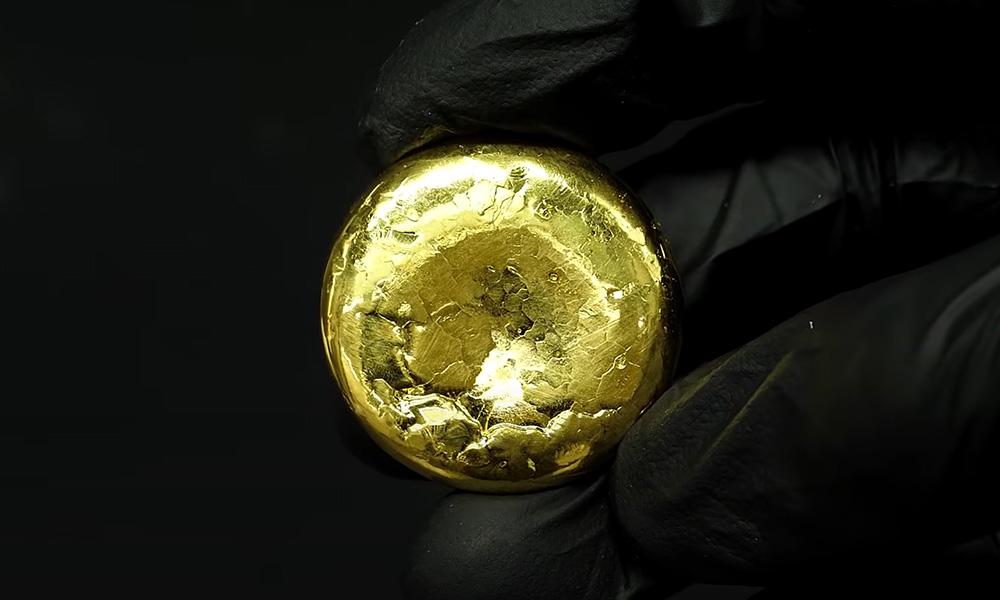
Gold closed above $4,600 an ounce on Friday (August 21), while the dollar index fell to its lowest level since May, and the US Treasury quietly suppressed its own financing costs. Meanwhile, central banks around the world have been adding more than 1,000 tons of gold to their reserves annually for several years, almost equivalent to a quarter of global annual gold production. Faced with this situation, Barry Eichengreen, an economist at the University of California, Berkeley, offered a surprising assessment: central bank gold purchases are mostly not a vote against the dollar. The scholar, who has authored authoritative histories of international monetary flows, stated, "Personally, I don't believe gold will once again become a core component of the international monetary and financial system." However, he has changed his mind on another matter, and can pinpoint the exact day of that change. He said, "I am increasingly worried about a contingency: that market confidence in the dollar will collapse before alternative currencies can emerge . This concern begins on April 2, 2025, the American Liberation Day." This is significant because Eichengreen has been a calm observer in this debate for most of his career. While others proclaim the decline of the dollar, he focuses only on the slowly declining figure: the dollar's share of global foreign exchange reserves is falling by about 0.5 percentage points per year, from over 70% at the turn of the century to less than 60% today. 
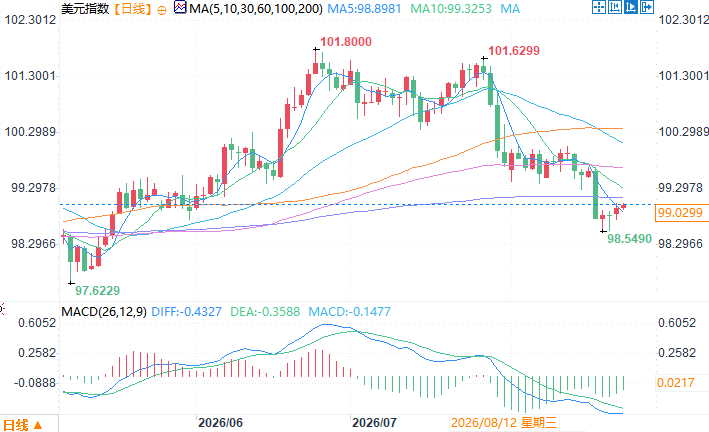 US Dollar Index Daily Chart Source: EFX At 11:18 AM Beijing Time on August 25, the US Dollar Index was at 99.03.
Who will take over the territory ceded by the US dollar?
The International Monetary Fund (IMF) has not published a detailed list of currencies absorbing the dollar's share, so Eisengreen and his co-authors had to dig through the annual reports of about 80 central banks one by one. The results were surprising: "The euro gained none of the reserve share the dollar lost in the 21st century; major Asian currencies gained about a quarter, and the remaining three-quarters were taken by these non-traditional reserve currencies." He was referring to the Australian dollar, Canadian dollar, Singapore dollar, New Zealand dollar, Nordic currencies, and the South Korean won, "all currencies of small, open, well-governed countries that generally adhere to inflation targeting." The reason for the euro's stagnation is simple: too few investable assets. Eisengreen estimates that only three Eurozone government bonds simultaneously receive AAA ratings from major rating agencies, totaling about $4 trillion, while US debt is as high as $40 trillion. He said, "German banks hold German government bonds, Dutch insurance companies hold Dutch government bonds; these markets are fragmented."Why are central banks snapping up gold?
Eisengreen traces the gold-buying spree back to the 2008 financial crisis, rather than disputes with Washington. He argues that emerging market central banks, mostly lacking inherited gold reserves, started from a very low base. He states, "I think this is largely a structural catch-up, until recently, and I'm not quite sure how to interpret this recent wave of gold purchases. It's probably a combination of structural catch-up and growing concerns about the dollar ... We've also heard rumors of unusual intervention by the US Treasury in the market." Bringing gold home isn't necessarily about sanctions. France, Germany, and the Netherlands returned their gold more out of political than financial pressure . He cites Marine Le Pen's letter to the Governor of the Bank of France about a decade ago, essentially saying, "Why are you storing our gold in London and New York? It should be in Paris." But this comes at a cost: "What they give up is the ability to use gold as collateral in financial transactions, to lend it out, and to earn interest." Therefore, those who actually do this are often countries with surplus reserves, "and central banks are doing this with their eyes open."Gold is ill-suited for the major task of payment.
Eisengreen argues, in the most rigorous way, the limitations of gold. Currency must fulfill three functions: pricing, payment, and preservation of value, while gold can only perform one. He says, "Would you want your end-of-month salary priced in ounces of gold? You might find it's worth 10% less than expected at the supermarket." He also tells a story from his new book: Sanctioned Venezuela, to pay for oil field equipment maintenance in similarly sanctioned Iran, used gold bars and then chartered two Russian planes to transport the gold from Caracas to Tehran, perfectly illustrating the difficulties of making normal payments with gold.Reducing bond holdings: The signal is already there
Ray Dalio said last Friday that investors should allocate 10% to 15% of their portfolios to gold to hedge against the U.S. debt crisis he predicts will arrive within three years; Ole Hansen of Saxo Bank suggested a 5% to 10% allocation to hard assets. Eisengreen initially responded calmly, "People like Dalio have been predicting fiscal and financial crises for a long time, and they'll keep predicting until they're right." He then shifted his focus, stating, "The US is indeed on an unsustainable fiscal trajectory, with the debt-to-GDP ratio continuing to climb, and US Treasury investors are more worried than ever." He cut to the chase: "US Treasuries have always been considered the cornerstone of a 60/40 portfolio. If they're no longer safe and highly correlated with stocks, then bonds should be reduced, and alternative assets like gold should be allocated ." However, he declined to give a specific percentage: "Giving advice like 5% or 10% is beyond my authority. If I could calculate it accurately, I wouldn't be a professor; I'd be a hedge fund manager." He added that gold is already embedded in the system, "All fully diversified global investors should have commodity exposure in their portfolios." When asked about his own holdings, he frankly admitted, "My wife and I inherited some gold jewelry from my mother, which we cherish, but frankly, we've never actively bought gold."Fragile signals and wrong bets in the US Treasury market
Eisengreen's most incisive comments have nothing to do with gold. When Washington helped support the yen last month, it used euros instead of dollars for settlement; it also pushed the Federal Reserve to expand its tools, allowing the Bank of Japan to pledge US Treasury bonds for cash without having to sell them; and a few days ago, the US Treasury doubled its long-term bond repurchase program. He asserted that these operations had not achieved the desired effect: "I don't think these tactics can fool the market; they all indicate that the Treasury and even the White House are concerned about the fragility of the US Treasury market ." He also made a unique connection: "If the US government is unwilling to allow foreign authorities to actually use the dollar, it means that dollar liquidity is not as abundant as imagined, and both government and private investors will notice." As for the historical consequences of central banks being forced to buy bonds, he bluntly stated: "Nothing good has ever happened afterward: financial repression, forcing banks and other institutions to buy up government bonds, and forcing central banks to artificially lower interest rates—none of these can appease international investors." Eisengreen also believes that the US may have bet on the wrong technology. The GENIUS Act, signed in July 2025, is the first federal law to cover payments through stablecoins. It requires issuers to back stablecoins on a one-to-one basis with cash, deposits, and short-term Treasury bills, disclose reserves monthly, and accept independent audits. This effectively hands over the digital future of the dollar to private companies holding US Treasury bonds. Meanwhile, major European and Asian countries are moving in the opposite direction, developing central bank digital currencies (CBDCs). He stated, "In the long run, betting on CBDCs may be the right move, while the US, betting on private stablecoins, may be wrong."End
Eisengreen admitted to making mistakes: "In 2011, I wrote 'Excessive Privilege,' predicting that the dollar would give way to the euro and the currencies of major Asian countries. I was wrong—funds didn't flow to the euro and the currencies of major Asian countries, but to those non-traditional reserve currencies." He quoted Keynes: "What do you do when the evidence contradicts your judgment? He said, I change my mind. What about you, young man?" This Friday (August 28), newly appointed Federal Reserve Chairman Kevin Warsh will deliver his first keynote speech since taking office in Jackson Hole. The theme of the annual meeting is financial innovation and payments, which undoubtedly puts the issues raised by Eisengreen directly in front of the Federal Reserve. US Dollar Index Daily Chart Source: EFX At 11:18 AM Beijing Time on August 25, the US Dollar Index was at 99.03.- Risk Warning and Disclaimer
- The market involves risk, and trading may not be suitable for all investors. This article is for reference only and does not constitute personal investment advice, nor does it take into account certain users’ specific investment objectives, financial situation, or other needs. Any investment decisions made based on this information are at your own risk.