Amid escalating trade tensions between the US and Canada and rising oil prices, the USD/CAD exchange rate hovered around 1.3850.
2026-08-25 14:36:59
The USD/CAD pair continued its upward trend in Asian trading on Tuesday, hovering around 1.3850 and marking its second consecutive day of gains. However, compared to its rebound from a three-month low, the bullish momentum is currently significantly weaker. Safe-haven demand for the US dollar, energy prices, and concerns about US-Canada trade are creating a tug-of-war, making the short-term direction of USD/CAD more complex. 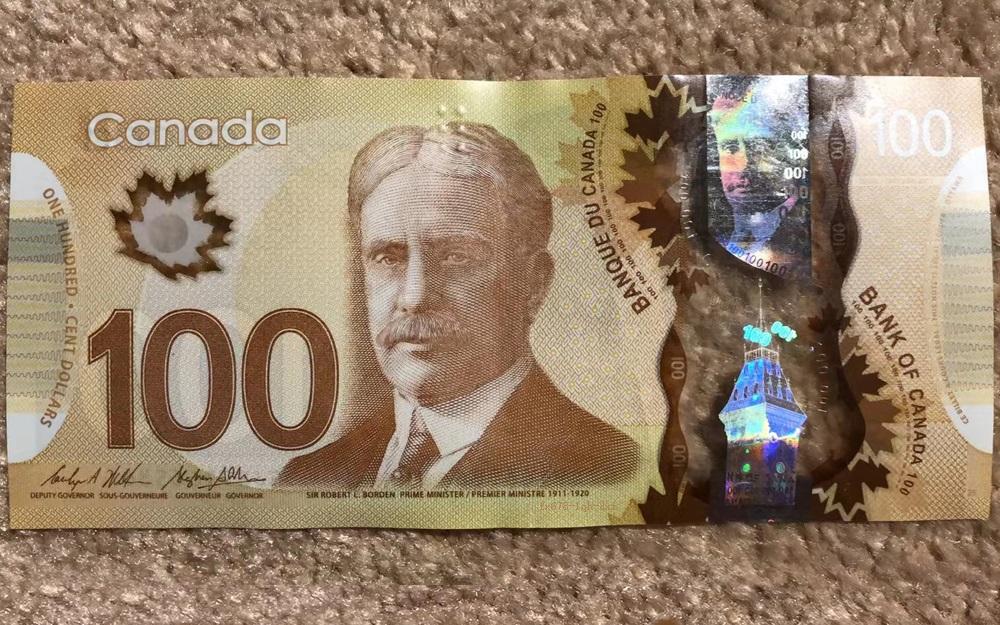 The US dollar has recently received some support, primarily due to changes in the global risk environment. Following the US expansion of secondary sanctions on Iran's economic network, the market has refocused on the potential impact of energy supply and geopolitical risks on global inflation. US Treasury Secretary Bessant stated that the US will further restrict Iranian economic activity and warned that entities doing business with Iran may face US sanctions. This renewed energy supply risk has provided some safe-haven support for the dollar, while also increasing market attention to future inflationary pressures. Rising oil prices form another important path influencing USD/CAD. The Canadian economy and the Canadian dollar are highly sensitive to the energy market; higher oil prices typically improve Canada's terms of trade and enhance the attractiveness of Canadian dollar assets. Therefore, if oil prices continue to be strong, even with safe-haven demand supporting the dollar, the upside potential for USD/CAD may be limited. Currently, the risk premium in the oil market remains high. Supply risks related to Iran, regional transportation security, and the effectiveness of sanctions enforcement could all affect future oil supply availability. If energy prices rise further, global inflation expectations may resurface, increasing market discussions about future tightening of Federal Reserve policy. Therefore, oil prices have a dual impact on USD/CAD: they can support the US dollar through inflation expectations, or they can directly strengthen the Canadian dollar. In contrast, the Canadian dollar has recently faced more pronounced domestic and international policy pressures. Negotiations between the US and Canada have progressed slower than market expectations, and after the US further increased tariffs on some Canadian goods, Canada indicated it would take corresponding countermeasures. Rising trade concerns could weaken business investment and consumer confidence, increasing uncertainty for the Canadian economy. Market strategists point out that the unexpected breakdown in US-Canada negotiations has altered the previously positive market sentiment for the Canadian dollar. The Canadian government has stated it will take reciprocal measures and is preparing to introduce further domestic support policies. If trade concerns continue to escalate, the market may lower its expectations for Canadian economic growth, thereby weakening the Canadian dollar's performance. However, the US dollar also faces its own constraints. Uncertainty exists regarding US fiscal pressure, long-term Treasury yields, and the future policy path of the Federal Reserve. While rising energy prices may increase inflation expectations, the relatively mild US inflation data in July prevented the market from forming a unified expectation of immediate policy tightening by the Federal Reserve. Therefore, the US dollar is currently more likely undergoing a phase of correction at a low level than entering a clear long-term upward cycle. This week's US PCE data will be a significant catalyst for USD/CAD. If core PCE exceeds market expectations, investors may re-price up their expectations for continued high or even further tightening of US interest rates, potentially providing new support for the US dollar and causing USD/CAD to continue testing key resistance levels. Conversely, if inflation data shows a significant cooling, US yields and the US dollar may come under pressure, while stronger oil prices could further strengthen the Canadian dollar, causing USD/CAD to readjust downwards. Furthermore, Federal Reserve Chairman Kevin Warsh's speech at the Jackson Hole symposium is also worth watching. The market will focus on his assessment of inflation, economic growth, and interest rate policy. If the policy signal is hawkish, the US dollar may strengthen further; if more attention is paid to economic growth risks, the sustainability of the short-term dollar rebound may be reduced. From a daily technical perspective, although USD/CAD has recently rebounded from a three-month low, it is still being suppressed by the 200-day exponential moving average, and the overall trend has not yet fully turned bullish. The 200-day EMA around 1.3885 is currently the most important first resistance level. A decisive break above this level would target the 38.2% Fibonacci retracement level around 1.3928, with further upside potential at the 50% retracement level around 1.3988. On the downside, the 23.6% Fibonacci retracement level around 1.3852 is the most immediate short-term support. If the price holds this level, the market may continue its rebound; however, a break below 1.3852 would significantly weaken short-term bullish momentum, with the psychological level of 1.3800 and the structural support around 1.3731 becoming key support levels. Only a retest of 1.3928 and a further break above 1.3988 would strengthen the medium-term rebound structure of USD/CAD. Looking at the 4-hour chart, USD/CAD is currently consolidating at higher levels after the rebound, with the price hovering around 1.3850, but upward momentum is weak. If the pair can break through 1.3885 and hold above it in the short term, it could open up space for a move towards 1.3928. However, if it fails to break through 1.3885 multiple times and falls below 1.3850, the pair may return to the 1.3800 area to find support. If the MACD momentum expands upwards again, it will be favorable for the continuation of the bullish trend. However, if a divergence in momentum occurs at a high level, it is necessary to be wary of the USD/CAD pair giving back its recent gains.
 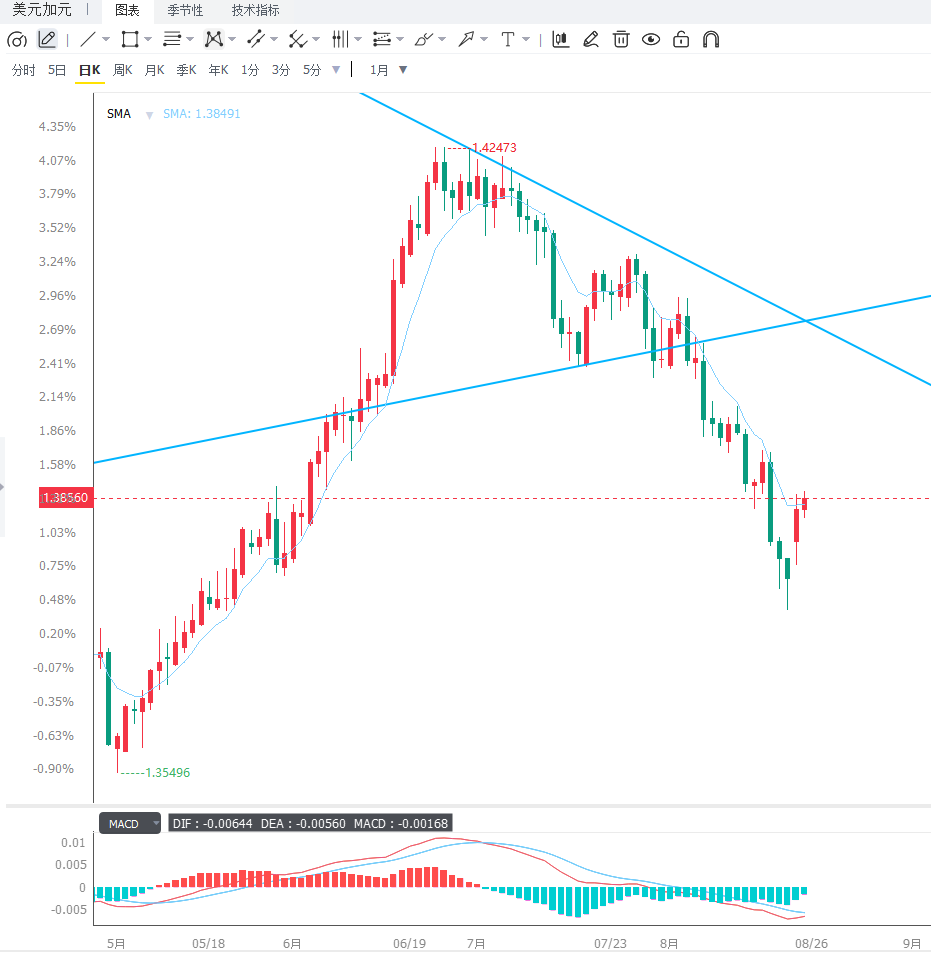 The USD/CAD pair is currently in a phase influenced by a combination of factors, including safe-haven demand for the US dollar, US inflation expectations, oil prices, and concerns over US-Canada trade. For the US dollar, geopolitical risks and energy inflation provide support; for the Canadian dollar, rising oil prices offer natural support, but US-Canada trade concerns weaken its fundamentals. In the short term, 1.3885 is a key level to determine whether USD/CAD can strengthen further, while 1.3852 is a crucial support level to maintain the rebound structure. If PCE is higher than expected and Warsh Research releases hawkish signals, the exchange rate may break through 1.3928 and approach 1.3988; if US inflation cools, the US dollar weakens, and oil prices remain strong, USD/CAD may fall back below 1.3850 and test 1.3800 or even 1.3731. Overall, while the current exchange rate has the potential for further rebound, a clear trend breakout has not yet formed. The key to future market movements lies in whether US interest rate expectations or oil price movements will dominate, and whether US-Canada trade concerns will worsen further.
The US dollar has recently received some support, primarily due to changes in the global risk environment. Following the US expansion of secondary sanctions on Iran's economic network, the market has refocused on the potential impact of energy supply and geopolitical risks on global inflation. US Treasury Secretary Bessant stated that the US will further restrict Iranian economic activity and warned that entities doing business with Iran may face US sanctions. This renewed energy supply risk has provided some safe-haven support for the dollar, while also increasing market attention to future inflationary pressures. Rising oil prices form another important path influencing USD/CAD. The Canadian economy and the Canadian dollar are highly sensitive to the energy market; higher oil prices typically improve Canada's terms of trade and enhance the attractiveness of Canadian dollar assets. Therefore, if oil prices continue to be strong, even with safe-haven demand supporting the dollar, the upside potential for USD/CAD may be limited. Currently, the risk premium in the oil market remains high. Supply risks related to Iran, regional transportation security, and the effectiveness of sanctions enforcement could all affect future oil supply availability. If energy prices rise further, global inflation expectations may resurface, increasing market discussions about future tightening of Federal Reserve policy. Therefore, oil prices have a dual impact on USD/CAD: they can support the US dollar through inflation expectations, or they can directly strengthen the Canadian dollar. In contrast, the Canadian dollar has recently faced more pronounced domestic and international policy pressures. Negotiations between the US and Canada have progressed slower than market expectations, and after the US further increased tariffs on some Canadian goods, Canada indicated it would take corresponding countermeasures. Rising trade concerns could weaken business investment and consumer confidence, increasing uncertainty for the Canadian economy. Market strategists point out that the unexpected breakdown in US-Canada negotiations has altered the previously positive market sentiment for the Canadian dollar. The Canadian government has stated it will take reciprocal measures and is preparing to introduce further domestic support policies. If trade concerns continue to escalate, the market may lower its expectations for Canadian economic growth, thereby weakening the Canadian dollar's performance. However, the US dollar also faces its own constraints. Uncertainty exists regarding US fiscal pressure, long-term Treasury yields, and the future policy path of the Federal Reserve. While rising energy prices may increase inflation expectations, the relatively mild US inflation data in July prevented the market from forming a unified expectation of immediate policy tightening by the Federal Reserve. Therefore, the US dollar is currently more likely undergoing a phase of correction at a low level than entering a clear long-term upward cycle. This week's US PCE data will be a significant catalyst for USD/CAD. If core PCE exceeds market expectations, investors may re-price up their expectations for continued high or even further tightening of US interest rates, potentially providing new support for the US dollar and causing USD/CAD to continue testing key resistance levels. Conversely, if inflation data shows a significant cooling, US yields and the US dollar may come under pressure, while stronger oil prices could further strengthen the Canadian dollar, causing USD/CAD to readjust downwards. Furthermore, Federal Reserve Chairman Kevin Warsh's speech at the Jackson Hole symposium is also worth watching. The market will focus on his assessment of inflation, economic growth, and interest rate policy. If the policy signal is hawkish, the US dollar may strengthen further; if more attention is paid to economic growth risks, the sustainability of the short-term dollar rebound may be reduced. From a daily technical perspective, although USD/CAD has recently rebounded from a three-month low, it is still being suppressed by the 200-day exponential moving average, and the overall trend has not yet fully turned bullish. The 200-day EMA around 1.3885 is currently the most important first resistance level. A decisive break above this level would target the 38.2% Fibonacci retracement level around 1.3928, with further upside potential at the 50% retracement level around 1.3988. On the downside, the 23.6% Fibonacci retracement level around 1.3852 is the most immediate short-term support. If the price holds this level, the market may continue its rebound; however, a break below 1.3852 would significantly weaken short-term bullish momentum, with the psychological level of 1.3800 and the structural support around 1.3731 becoming key support levels. Only a retest of 1.3928 and a further break above 1.3988 would strengthen the medium-term rebound structure of USD/CAD. Looking at the 4-hour chart, USD/CAD is currently consolidating at higher levels after the rebound, with the price hovering around 1.3850, but upward momentum is weak. If the pair can break through 1.3885 and hold above it in the short term, it could open up space for a move towards 1.3928. However, if it fails to break through 1.3885 multiple times and falls below 1.3850, the pair may return to the 1.3800 area to find support. If the MACD momentum expands upwards again, it will be favorable for the continuation of the bullish trend. However, if a divergence in momentum occurs at a high level, it is necessary to be wary of the USD/CAD pair giving back its recent gains. The USD/CAD pair is currently in a phase influenced by a combination of factors, including safe-haven demand for the US dollar, US inflation expectations, oil prices, and concerns over US-Canada trade. For the US dollar, geopolitical risks and energy inflation provide support; for the Canadian dollar, rising oil prices offer natural support, but US-Canada trade concerns weaken its fundamentals. In the short term, 1.3885 is a key level to determine whether USD/CAD can strengthen further, while 1.3852 is a crucial support level to maintain the rebound structure. If PCE is higher than expected and Warsh Research releases hawkish signals, the exchange rate may break through 1.3928 and approach 1.3988; if US inflation cools, the US dollar weakens, and oil prices remain strong, USD/CAD may fall back below 1.3850 and test 1.3800 or even 1.3731. Overall, while the current exchange rate has the potential for further rebound, a clear trend breakout has not yet formed. The key to future market movements lies in whether US interest rate expectations or oil price movements will dominate, and whether US-Canada trade concerns will worsen further.
- Risk Warning and Disclaimer
- The market involves risk, and trading may not be suitable for all investors. This article is for reference only and does not constitute personal investment advice, nor does it take into account certain users’ specific investment objectives, financial situation, or other needs. Any investment decisions made based on this information are at your own risk.