What shifts are occurring in U.S. policy tools, from trade to finance?
2026-08-25 21:53:01
On Tuesday, August 25th, market focus once again centered on the spread of policy risks. The US is imposing further economic pressure on Iran, while trade tensions between the US and Canada are escalating rapidly. These two policy threads have reinforced market concerns about changes in the global trade environment, corporate costs, and inflation paths. The US Treasury Department stated it would expand secondary sanctions targeting Iranian economic activities, but emphasized avoiding measures that could cause severe turmoil in the global financial system. Meanwhile, the breakdown of US-Canada trade negotiations has led to further tariff measures, increasing uncertainty in bilateral trade relations. The core change in the current market environment is not a single event, but rather that policy tools are increasingly becoming important variables influencing global capital flows. From financial sanctions to trade tariffs, policy transmission is spreading from individual economies to global supply chains, energy markets, and business expectations. Investors are focusing on the strength, duration, and potential spillover effects of policy implementation, rather than simply interpreting short-term market fluctuations. 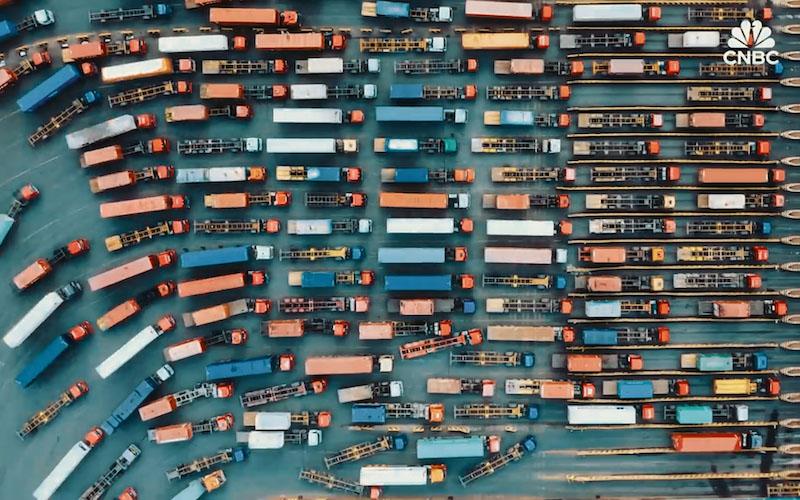
Economic strategies have shifted from unilateral pressure to competition for influence within the financial system.
The latest US economic measures against Iran are not limited to directly restricting Iran's own economic activities, but rather attempt to expand their impact through secondary sanctions. Secondary sanctions refer to restrictive measures against third-party institutions that have business dealings with the target country. Their core logic is to leverage the connectivity of the financial system to increase the cost for other economic entities to participate in related transactions. The US Treasury Department has stated that it will focus on digital assets, technology, gold, aviation, and shipping, and warned that entities that help circumvent restrictions may be excluded from the US financial system. From a market perspective, the impact of such policies is complex. On the one hand, financial sanctions can increase compliance costs for related transactions and change corporate risk assessment systems; on the other hand, if the scope of sanctions is too broad, it may also increase friction costs in the global trade system. Global financial markets have experienced the impact of similar policy tools multiple times over the years. Market participants typically focus on three aspects: First, whether the scope of sanctions expands. If the measures only target specific entities, the market impact may be relatively limited; if more trading partners are involved, it may change corporate supply chain layouts. Second, the enforcement力度 of financial institutions. The international banking system is highly sensitive to compliance risks, and related policies may affect the efficiency of fund settlement. Third, the duration of the policy. There is a difference between short-term statements and long-term implementation; the market is more focused on subsequent specific actions.Trade relations are under pressure, and tariff policies are impacting business cost expectations.
Besides financial sanctions, the trade dispute between the United States and Canada has become another significant variable. Recently, trade negotiations between the two countries failed to reach an agreement, leading the US to implement new tariffs on Canadian goods, to which Canada responded with countermeasures. The impact of trade policy changes on the market is not only reflected in the tariff figures themselves, but more importantly in their impact on business expectations. For the manufacturing sector, tariffs may alter the cost structure of procurement. Industries with long cross-border supply chains need to reassess their raw material sources, production layouts, and inventory strategies. For the consumer sector, changes in import costs may gradually be transmitted to the end market through corporate pricing mechanisms. For the macroeconomy, trade frictions may increase the difficulty of price stability. When the economy is in a period of adjustment, new cost pressures may affect corporate investment plans and may also change market perceptions of the future policy environment. It is worth noting that the economic ties between the US and Canada are relatively close; therefore, the impact of trade frictions not only involves bilateral trade but may also affect the stability of the North American supply chain. From a market perspective, the uncertainty of trade policy is often more concerning than the level of tariffs alone. Businesses can adapt to stable rules, but a frequently changing policy environment increases the difficulty of business decision-making.- Risk Warning and Disclaimer
- The market involves risk, and trading may not be suitable for all investors. This article is for reference only and does not constitute personal investment advice, nor does it take into account certain users’ specific investment objectives, financial situation, or other needs. Any investment decisions made based on this information are at your own risk.