Bond vigilantes triumph: US fiscal intervention fails to reverse market trends
2026-08-26 01:33:00
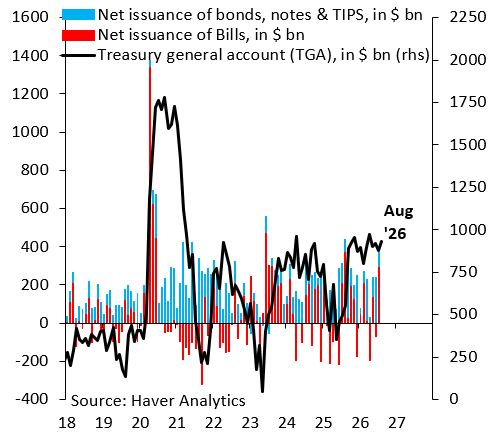
Recent headlines have focused on various measures the U.S. Treasury Department may take to curb rising long-term yields. CNBC reporter Steve Lisman published a report yesterday stating that funds in the Treasury's General Account (TGA) may be used for bond repurchase operations. This represents a shift from the signals released in the Treasury's official press release last week: the market had generally expected that funds for long-term bond repurchases would be raised through the issuance of short-term debt. Using the TGA account is entirely different; it's equivalent to directly buying bonds and injecting a corresponding amount of liquidity into the economy. Furthermore, Fox News' Charles Gasparino tweeted that the Treasury intends to act as a vigilante in the bond market against those attempting to push up 10-year Treasury yields.  Faced with a deluge of news reports, I've broken down the core information into several parts for easier understanding. Currently, these reports essentially constitute verbal intervention. The Ministry of Finance did not issue any official debt management announcement yesterday; the related news at this stage is merely verbal pressure aimed at deterring the market and preventing long-term yields from continuing to rise. Last weekend, I wrote two articles discussing the various tactics highly indebted countries might employ after exhausting their fiscal space, including intimidating the market and accusing it of irrationality. In my view, such approaches almost always backfire, exposing their own vulnerabilities. Once the government begins to draw red lines for the market, the market will almost certainly test them. This almost certainly guarantees that long-term yields will rise again. These actions are like Don Quixote swinging his sword at windmills—futile. As shown by the black line in the chart, the current TGA account size is close to $1 trillion. If the government finances in advance, like in the early stages of the COVID-19 pandemic, issuing bonds heavily before actual spending, the TGA account balance will increase; subsequently, the government can consume this cash, including using it to repurchase existing bonds. Logically, it makes sense, but it misses the core issue: the TGA (Treasury General Agreement on Payments) fund size is finite, and its effect is ultimately limited. A continuously expanding deficit means a constantly rising scale of bond issuance. Using the TGA essentially means using existing funds to combat a continuously widening funding gap, a method that has never been effective; the pressure on funding flows will eventually prevail. The bond market's warning has not been deterred. The following chart shows the US yield curve: the black line represents the central point of the Fed's 25 basis point target range for policy rates; the blue line is the market-priced year-end policy rate; the orange line is the 10-year Treasury yield, and the red line is the 30-year Treasury yield. Since the repurchase policy was officially announced last Wednesday, the 10-year yield has only fallen by 1 basis point, and the 30-year yield has fallen by 6 basis points, with negligible effect on suppressing long-term yields.
  The "currency devaluation trade" is gaining momentum. The more highly indebted countries stray down the wrong path of yield capping—the direction the US is currently heading—the more the market will seek safe-haven assets that avoid debt monetization. The Japanese interest rate crisis teaches us that artificially setting yield caps is detrimental to the local currency and can trigger a vicious cycle from which it's difficult to escape. Since the repurchase policy was announced last week, the dollar has weakened, and gold has risen by more than 7%. The market has fully grasped this policy game and is flocking to "currency devaluation trades."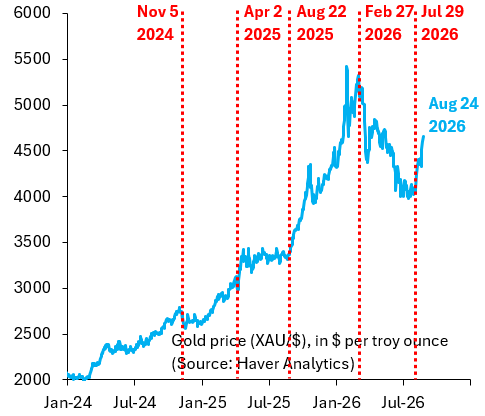
Faced with a deluge of news reports, I've broken down the core information into several parts for easier understanding. Currently, these reports essentially constitute verbal intervention. The Ministry of Finance did not issue any official debt management announcement yesterday; the related news at this stage is merely verbal pressure aimed at deterring the market and preventing long-term yields from continuing to rise. Last weekend, I wrote two articles discussing the various tactics highly indebted countries might employ after exhausting their fiscal space, including intimidating the market and accusing it of irrationality. In my view, such approaches almost always backfire, exposing their own vulnerabilities. Once the government begins to draw red lines for the market, the market will almost certainly test them. This almost certainly guarantees that long-term yields will rise again. These actions are like Don Quixote swinging his sword at windmills—futile. As shown by the black line in the chart, the current TGA account size is close to $1 trillion. If the government finances in advance, like in the early stages of the COVID-19 pandemic, issuing bonds heavily before actual spending, the TGA account balance will increase; subsequently, the government can consume this cash, including using it to repurchase existing bonds. Logically, it makes sense, but it misses the core issue: the TGA (Treasury General Agreement on Payments) fund size is finite, and its effect is ultimately limited. A continuously expanding deficit means a constantly rising scale of bond issuance. Using the TGA essentially means using existing funds to combat a continuously widening funding gap, a method that has never been effective; the pressure on funding flows will eventually prevail. The bond market's warning has not been deterred. The following chart shows the US yield curve: the black line represents the central point of the Fed's 25 basis point target range for policy rates; the blue line is the market-priced year-end policy rate; the orange line is the 10-year Treasury yield, and the red line is the 30-year Treasury yield. Since the repurchase policy was officially announced last Wednesday, the 10-year yield has only fallen by 1 basis point, and the 30-year yield has fallen by 6 basis points, with negligible effect on suppressing long-term yields. The "currency devaluation trade" is gaining momentum. The more highly indebted countries stray down the wrong path of yield capping—the direction the US is currently heading—the more the market will seek safe-haven assets that avoid debt monetization. The Japanese interest rate crisis teaches us that artificially setting yield caps is detrimental to the local currency and can trigger a vicious cycle from which it's difficult to escape. Since the repurchase policy was announced last week, the dollar has weakened, and gold has risen by more than 7%. The market has fully grasped this policy game and is flocking to "currency devaluation trades."
- Risk Warning and Disclaimer
- The market involves risk, and trading may not be suitable for all investors. This article is for reference only and does not constitute personal investment advice, nor does it take into account certain users’ specific investment objectives, financial situation, or other needs. Any investment decisions made based on this information are at your own risk.