With US Treasury bonds surpassing $40 trillion, Federal Reserve officials warn of a "liquidation moment." Will the market stop buying US Treasury bonds?
2026-08-26 08:37:03
Richmond Federal Reserve President Barkin warned that continued growth in U.S. Treasury bonds will eventually lead to a "liquidation moment," although the exact timing is difficult to predict. Barkin stated that as long as investors continue to buy U.S. Treasuries, the government can continue to borrow, but "at some point, people will stop buying your debt—that's the risk." His remarks come at a sensitive time for the bond market—long-term yields rose to their highest level in nearly two decades this month, forcing the Treasury to launch emergency repurchase operations. Barkin also reiterated that evidence of cooling inflation supports keeping interest rates unchanged, but acknowledged that a rate hike might be necessary if price pressures become deeply entrenched. Barkin's comments, coming on the eve of Fed Chairman Warsh's Jackson Hole keynote speech on Thursday, keep fiscal sustainability and the interest rate outlook in focus this week. 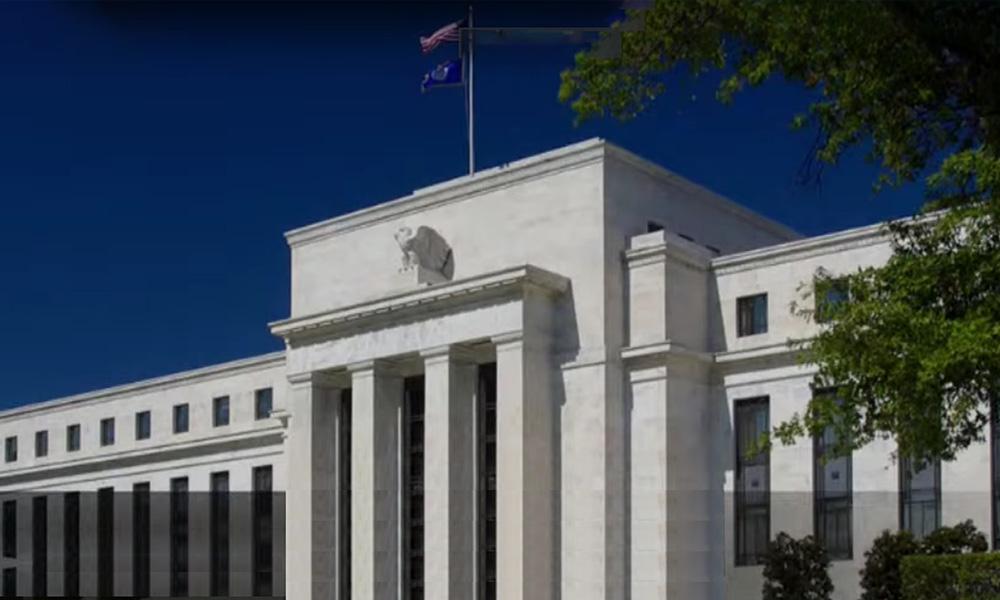
Debt "Liquidation Moment": Barkin Warns Investors May Stop Buying US Treasuries
Richmond Federal Reserve President Barkin recently issued what is arguably the most direct and pointed warning about fiscal sustainability from a Fed official in recent years. He explicitly stated that the continued expansion of the US national debt will eventually lead to a "liquidation moment." When asked about the milestone of public debt surpassing $40 trillion, Barkin frankly admitted: as long as investors are still willing to buy, the government can continue to borrow money; but "at some point, people will stop buying your debt—that's the risk." This statement directly addresses the deep-seated hidden danger of a sudden drying up of market demand for US Treasuries, rather than simply discussing the debt figure itself. This statement comes at a highly sensitive time for the bond market. This month, long-term Treasury yields have risen to their highest level in nearly two decades, significantly increasing long-term borrowing costs. Faced with market pressure from rapidly rising yields, the US Treasury had to launch emergency repurchase operations to intervene, attempting to alleviate liquidity tensions and stabilize market sentiment. Analysts are further concerned that the high deficit and rising borrowing costs are creating a self-reinforcing vicious cycle—the larger the debt, the higher the interest payments; the higher the interest payments, the higher the deficit, which may ultimately erode investor confidence. Barkin's warning was therefore interpreted by the market as an official confirmation of this potential feedback loop. While he did not provide a specific timeline, he emphasized the non-linear nature of the risk: once investor confidence shifts, a sell-off could rapidly amplify, leading to a sharp rise in financing costs and a drastic narrowing of fiscal space. Given the current global investor focus on the trajectory of US fiscal policy, Barkin's remarks undoubtedly added new uncertainty to the US Treasury market and forced the market to re-examine the long-term interest rate path and the allocation logic of dollar assets.Policy Outlook: Maintaining interest rates unchanged will remain the benchmark, but the option of raising rates is retained.
While discussing debt risks, Barkin also gave a clear statement on the near-term monetary policy outlook. He reiterated that, based on evidence of a continued decline in inflation, the current assessment supporting maintaining the current interest rate remains the baseline scenario. In other words, as long as price pressures continue to ease as expected, the most likely path for the Fed is to remain on hold, giving policy sufficient time to observe the lagged effects. However, Barkin also reserved important policy flexibility. He explicitly acknowledged that if price pressures show signs of becoming deeply entrenched rather than continuing to ease, Fed officials may need to reconsider raising interest rates. This statement keeps the door open for rate hikes, even though its core assessment remains "maintaining the status quo." The market interprets this as Barkin not completely ruling out the possibility of policy tightening, but rather leaving the final decision to subsequent data, especially the actual performance of inflation stickiness and the resilience of the labor market. Barkin's remarks come as the market is highly focused on the Fed Chairman's first keynote speech at the Jackson Hole Economic Symposium on Thursday. This speech is widely regarded as the most important official signal window before the September policy meeting, and may provide key guidance on the interest rate path. Barkin's juxtaposition of fiscal sustainability and monetary policy discussions effectively adds a new dimension to the current policy debate—focusing not only on the short-term trade-off between inflation and growth, but also on the potential constraints that long-term debt accumulation poses on policy space and market confidence. This forces the market to incorporate fiscal risk into its pricing framework while awaiting the Jackson Hole speech.Barkin warns that US debt exceeding $40 trillion will usher in a "liquidation moment," maintaining the benchmark interest rate but keeping the door open for rate hikes.
Barkin pointed out that the continued expansion of the US national debt will eventually lead to a "liquidation moment," although the exact timing is difficult to predict. When asked about the milestone of US public debt exceeding $40 trillion, Barkin stated that as long as investors continue to buy US Treasury bonds, the federal government can continue to borrow funds; however, "at some point, people will stop buying your debt—that's the risk." According to the latest data from the US Treasury Department, the total US national debt will first surpass the $40 trillion mark around August 18, 2026, reaching approximately $40.03 trillion to $40.04 trillion as of late August. In terms of debt holding structure, the public holds approximately 80.6%, reaching approximately $32.27 trillion, while the government holds approximately $7.76 trillion. The net increase in debt over the past 12 months is approximately $2.8 trillion, a significant increase. Interest payments have exceeded $1.17 trillion so far this fiscal year, becoming a major source of fiscal pressure. Barkin's remarks come at a highly sensitive time in the bond market. This month, long-term Treasury yields rose to their highest levels in nearly two decades, with the 30-year Treasury yield briefly touching around 5.27%, a level rarely seen since before the global financial crisis. The 10-year Treasury yield fluctuated between 4.64% and 4.74%. The rapid rise in yields directly increased government financing costs and triggered market concerns about a mutually reinforcing cycle between deficits and interest payments. In response to this pressure, the U.S. Treasury announced it would at least double the size of its long-term nominal Treasury liquidity support repurchase operations, raising the maximum single operation from $2 billion to at least $4 billion. These expanded operations are scheduled to begin on September 9th and continue until the end of the quarter. This move is seen as an emergency intervention to alleviate long-term liquidity tensions and stabilize market sentiment. Analysts point out that high deficits and rising borrowing costs are creating a potential feedback loop: the larger the debt, the higher the interest payments; higher interest payments further push up the deficit, potentially eroding investor confidence in U.S. Treasuries. Barkin did not provide a specific timetable, but emphasized the non-linear nature of the risks—once investor confidence shifts, a sell-off could rapidly amplify, leading to a sharp rise in financing costs and a drastic narrowing of fiscal space. Against the backdrop of global investors closely watching the trajectory of US fiscal policy, this warning adds new uncertainty to the US Treasury market. Regarding monetary policy, Barkin also provided a clear stance. He reiterated that, based on evidence of a continued decline in inflation, the current assessment supporting maintaining the current interest rate remains the baseline scenario. As long as price pressures continue to ease as expected, the most likely path for the Fed is to remain on hold, allowing sufficient time to observe the lagged effects. However, he also reserved policy flexibility, explicitly acknowledging that if price pressures show signs of becoming deeply entrenched rather than continuing to ease, officials may need to reconsider raising interest rates. This statement keeps the option of raising rates open, even though the core assessment remains maintaining the status quo. Barkin's remarks come as the market is highly focused on Federal Reserve Chairman Kevin Warsh's first keynote speech at the Jackson Hole Economic Symposium on August 28. This speech is widely regarded as the most important official signal window before the September policy meeting, potentially providing key guidance on the path of interest rates. Barkin juxtaposes the discussion of fiscal sustainability with monetary policy, adding a new dimension to the current policy debate—markets must not only focus on the short-term trade-off between inflation and growth, but also face the potential constraints of long-term debt accumulation on policy space and market confidence.Editor's Summary
The US public debt surpassing $40 trillion and long-term yields rising to near two-decade highs form the core backdrop for current bond market and policy discussions. Richmond Fed President Barkin's warning of a "liquidity moment" has brought fiscal sustainability risks to the forefront, while the Treasury's expanded long-term repurchase operations indicate that the government has begun to address liquidity pressures. On the monetary policy front, maintaining the current interest rate remains the benchmark, but the option of raising rates has been explicitly left open, showing that policy decisions remain highly dependent on subsequent data. The market is awaiting further guidance from the Jackson Hole speech; the interplay of fiscal risks and the interest rate outlook will continue to influence US Treasury pricing and the logic of dollar asset allocation.Frequently Asked Questions
Q: What exactly does Barkin mean by "liquidation moment"? Does it mean the US is about to default on its debt? A: Barkin's "liquidation moment" does not refer to an inevitable technical default by the US government in the short term. Rather, it emphasizes the non-linear risk that a substantial shift in investor demand for US Treasury bonds could trigger a sharp rise in financing costs and amplified market sell-offs. US Treasury bonds remain the world's most fundamental safe-haven asset, and the government can continue to finance them through taxation, money printing, and market issuance. The real risk lies in the loss of confidence, which could force long-term interest rates to rise sharply, squeezing fiscal space and transmitting to the real economy. Barkin emphasizes that the timing is difficult to predict; the core issue is that continued debt growth will eventually test market resilience, rather than immediately triggering a default. This statement is more of a warning about long-term sustainability, reminding policymakers to pay attention to the self-reinforcing cycle of deficits and interest payments. Q: US national debt has exceeded $40 trillion. Where does this level stand in international comparisons? What impact will this have on the economy? A: After the total US national debt exceeded $40 trillion, the debt-to-GDP ratio rose to approximately 126%, and publicly held debt is close to 100% of GDP. This level is relatively high among developed economies, but still lower than in some countries like Japan. The direct impact is a significant increase in interest payments, which have exceeded $1.17 trillion so far this fiscal year, becoming a rigid expenditure in the budget. Long-term impacts include: a higher debt burden may push up the neutral interest rate, limiting monetary policy space; if the market loses patience with the fiscal trajectory, it may trigger an increase in risk premiums, thereby affecting housing and corporate financing costs. Current data indicates that debt growth is still outpacing economic growth, and if the path is not adjusted, the proportion of interest payments will continue to expand in the future. Q: What is the purpose of the Ministry of Finance's expansion of long-term treasury bond repurchase operations? Can it fundamentally solve the problem of rising yields? A: The Ministry of Finance will at least double the scale of long-term nominal treasury bond liquidity support repurchases to over $4 billion per transaction. The main purpose is to alleviate liquidity tensions in the long-term market, stabilize investor sentiment, and support the smooth issuance of new bonds. Repurchases focus on "non-issued" old bonds, which helps release balance sheet space for dealers and promotes normal market operation. This move is a liquidity management tool, not large-scale quantitative easing or a permanent change in the debt structure. It can alleviate selling pressure in the short term, but it cannot fundamentally change the size of the deficit and the path of debt growth. If fundamental concerns persist, yields may rise again. The market sees it as a "stopgap" measure rather than a long-term solution. Q: Why did Barkin retain the option of raising rates while supporting maintaining interest rates? What does this imply for the September meeting? A: Barkin's statement reflects the principle of data dependence. He acknowledged that there is evidence of declining inflation, so maintaining interest rates is the baseline scenario, giving sufficient time for the policy lag effect. However, if price pressures show signs of sticking or becoming deeply entrenched, raising rates may still be put back on the agenda. This keeps the policy path flexible in both directions, preventing the market from locking in a single direction too early. For the September meeting, it suggests that the decision will be highly dependent on the upcoming inflation, employment, and growth data, as well as the signals released by the Jackson Hole speech. The market needs to pay attention to the impact of fiscal risks on long-term interest rates, rather than just focusing on short-term policy rates. Q: Why is the Jackson Hole speech the focus this week? What message might Warsh convey? A: The Jackson Hole symposium is an important platform for communication among central bank officials worldwide, and the Fed Chair's keynote speech has always attracted high market attention. Warsh's first formal keynote speech as the new chairman is seen as the most important policy signal window before the September meeting. The market anticipates his remarks on the inflation path, policy stance, and the relationship between fiscal risks and monetary policy. His speech may emphasize data dependence, policy patience, or a focus on long-term interest rates, thereby influencing the pricing of the dollar, US Treasuries, and risk assets. Given that debt and yields have become sensitive issues, any statements regarding fiscal sustainability or the policy framework are likely to be interpreted with great intensity.- Risk Warning and Disclaimer
- The market involves risk, and trading may not be suitable for all investors. This article is for reference only and does not constitute personal investment advice, nor does it take into account certain users’ specific investment objectives, financial situation, or other needs. Any investment decisions made based on this information are at your own risk.