Can gold really be "immune" to a strong dollar? Societe Generale: $4,600 is just the beginning; this "anchor" has undergone a qualitative change!
2026-08-26 11:29:00
Renewed investor interest is providing new support for gold above $4,600 per ounce. Société Générale notes that precious metals will continue to play an important role in diversified portfolios.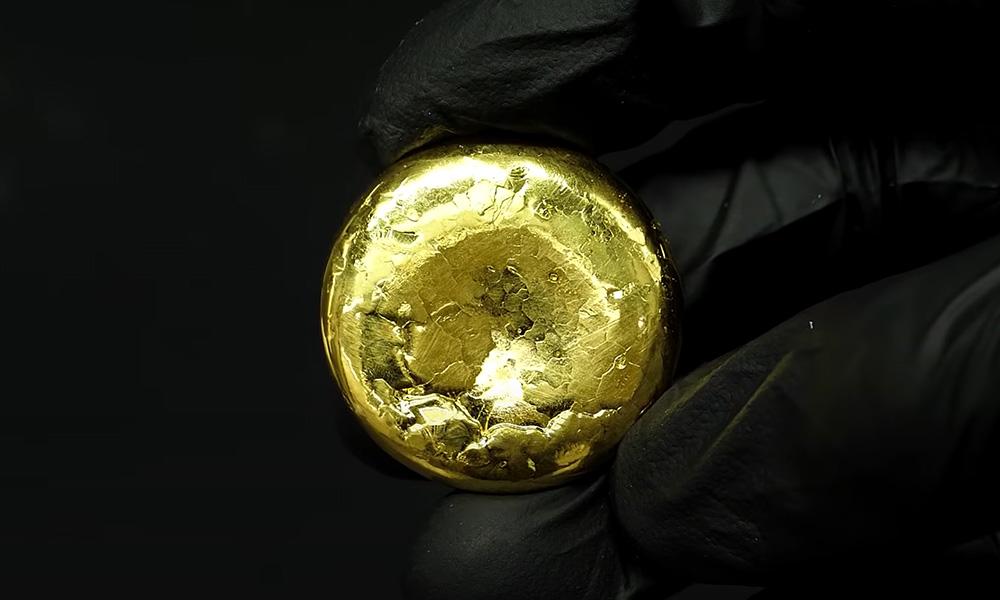
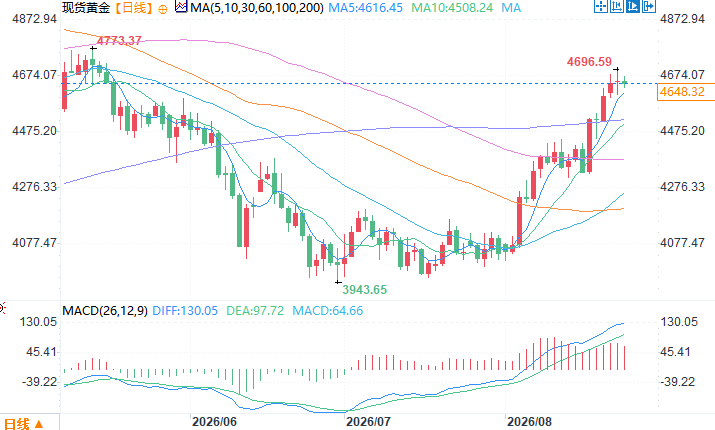 Spot gold daily chart source: FX678. At 11:25 AM Beijing time on August 26, spot gold was trading at $4649.75 per ounce.
Gold has established its strategic asset status by withstanding a strong dollar and high interest rates.
In their latest cross-asset strategy report, Societe Generale analysts stated that gold's ability to hedge against a strong dollar and higher interest rates is strengthening its position as a strategic portfolio asset in the face of persistent inflation, geopolitical instability, and rising policy uncertainty. The analysts indicated they remain strategically bullish on gold, listing it as one of seven assets investors can use to hedge against inflation risk. Societe Generale's overall strategy also includes inflation-linked bonds, copper, select equities, and private credit, with gold specifically positioned as a tool to hedge against policy uncertainty. This latest statement is consistent with previous portfolio allocations. In June, Societe Generale stated that its gold allocation would reach 10% in the third quarter, up from 7% in the second quarter; during the same period, Societe Generale also increased its broader commodity exposure from 8% to 10%.Inflation risks are being underestimated, and the disconnect between markets and the economy is widening.
Societe Generale stated that market-driven inflation expectations are relatively moderate, while the economic environment may keep price pressures high for longer than currently anticipated, widening the gap between the two. The bank points to a new round of US tariffs, accelerated investment in artificial intelligence and infrastructure, volatile oil prices, and persistently large fiscal deficits in developed economies, all pointing to a more inflationary medium-term environment. Meanwhile, Societe Generale believes that current Federal Reserve expectations may not fully reflect these risks. At the time of the report's release, the market was pricing in a tightening of approximately 35 basis points by the end of 2026, but Societe Generale notes that even this would not be sufficient to align monetary policy with the Atlanta Fed's Taylor rule calculations. Analysts say this disconnect reinforces the view that "inflation risks remain underestimated, warranting dedicated portfolio protection."Gold is not the only hedge, but plays a different role.
Analysts also emphasize that gold should not be viewed as the sole inflation hedge in a portfolio. Instead, Societe Generale believes gold should play a differentiating role in a broader strategy designed to protect against multiple potential sources of instability. Societe Generale points out that since mid-2025, market expectations have shifted from further easing to a debate about whether policymakers will raise rates one or two more times. This shift has pushed the two-year US Treasury yield back above 4%, strengthening the dollar, while gold remains well above its mid-2025 levels. Societe Generale states that most of the hawkish adjustments in monetary policy have already been priced into the financial markets. Analysts say that only a significantly larger inflationary shock, accompanied by a more aggressive response from the Federal Reserve, would trigger another major repricing of interest rates. With most of the hawkish adjustments already reflected in the financial markets, the downside risks for gold appear increasingly limited.The central bank has become a key anchor, and the demand structure is evolving in a positive direction.
Analysts also stated that the structure of gold demand is evolving in a favorable direction. Inflows into gold ETFs have slowed significantly this year, diminishing the role of tactical and momentum-driven investors; simultaneously, declining gold volatility has created more attractive entry points for reserve managers. Societe Generale further noted that central bank demand is becoming an increasingly important source of support for the market: major Asian powers continue to increase their gold reserves, while broader reserve diversification remains a structural priority for many emerging market central banks. Analysts stated, "With speculative demand waning and official sector purchases remaining strong, central banks are increasingly becoming a key anchor in the gold market."With geopolitical risks at play, energy prices may struggle to return to pre-conflict levels.
Societe Generale also links gold's composite role to broader geopolitical risks that could keep commodity prices and supply chain costs high. The bank notes that renewed hostilities between the US and Iran, and tensions in the Strait of Hormuz, have increased the geopolitical risk premium embedded in oil prices. Analysts say that even without major supply disruptions, changes in shipping routes, inventory rebuilding, and supply chain diversification efforts could structurally increase costs. Societe Generale warns that energy prices may stabilize, but may not return to pre-conflict levels, leading to more persistent inflation.Conclusion: A "combination punch" to address different sources of inflation
Societe Generale's broader portfolio strategy aims to address diverse inflation risks with different assets, rather than relying on a single hedging tool. The bank describes US Treasury Inflation-Protected Securities (TIPS) as the preferred direct inflation hedge, while copper is used to hedge against inflation stemming from infrastructure, electrification, AI investments, and limited commodity supply. In contrast, gold is positioned as a hedge against currency, geopolitical, and policy uncertainties. In the current climate of increasingly diversified inflation sources and high policy uncertainty, this divide-and-conquer approach may be key for investors building defensive portfolios. Spot gold daily chart source: FX678. At 11:25 AM Beijing time on August 26, spot gold was trading at $4649.75 per ounce.
- Risk Warning and Disclaimer
- The market involves risk, and trading may not be suitable for all investors. This article is for reference only and does not constitute personal investment advice, nor does it take into account certain users’ specific investment objectives, financial situation, or other needs. Any investment decisions made based on this information are at your own risk.