Eurozone economic resilience coupled with energy inflation risks prompts ECB's Schnabel to signal further interest rate hikes.
2026-08-26 14:43:01
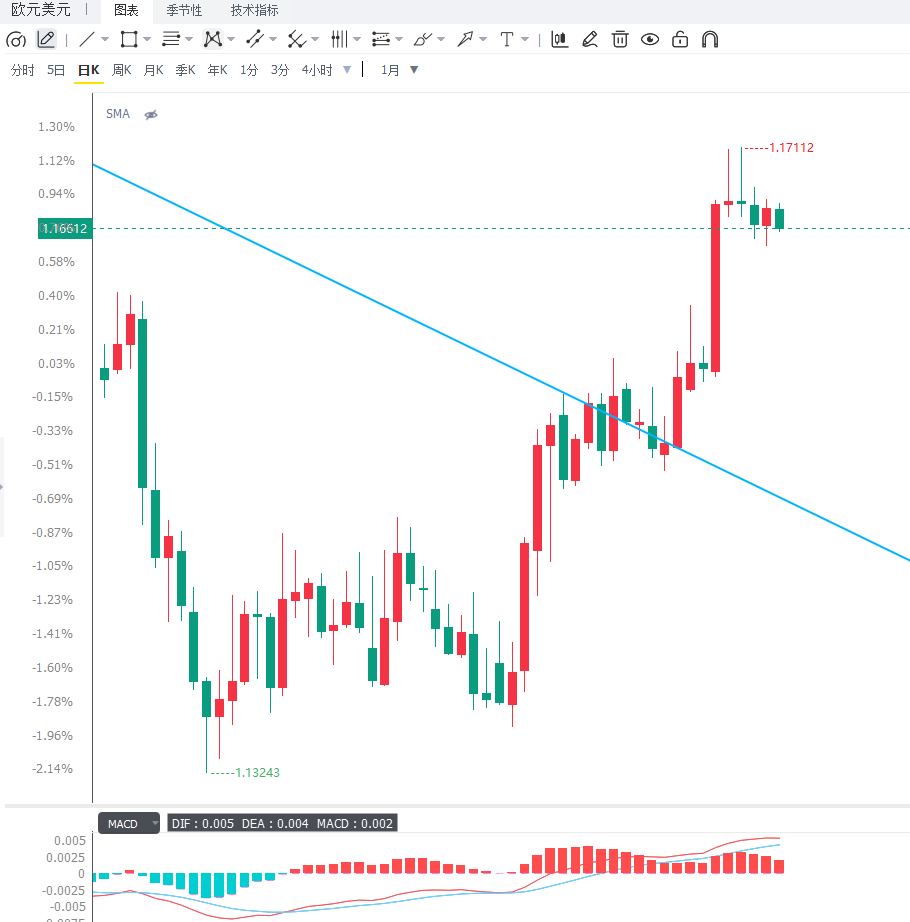
European Central Bank Executive Board member Isabel Schnabel signaled a clearly hawkish policy stance on Wednesday. She stated that with the Middle East conflict dragging on and the Eurozone economy performing stronger than expected, inflation faces further upside risks. At current policy interest rate levels, inflation is unlikely to stabilize back to the ECB's 2% target in the medium term, therefore further tightening of monetary policy remains necessary.  Schnabel's remarks signify that the European Central Bank's assessment of current inflation risks is shifting from solely focusing on energy price shocks to being more vigilant about the spread of energy costs to wages, service prices, and inflation expectations. She particularly emphasized that if policymakers wait until energy price increases have fully translated into wage increases before taking action, they may already be lagging behind inflation changes, necessitating more aggressive tightening policies. This assessment is significant for the ECB's future policy path. Previously, the market had begun betting on a further rate hike at the ECB's September meeting, with current market expectations suggesting a possible increase in the policy rate from 2.25% to 2.50%. However, policymakers had previously remained cautious about further tightening after September, preferring to wait for new inflation data and economic forecasts. Schnabel's speech has clearly increased market attention to further rate hikes. The energy market is one of the biggest variables in the current European inflation outlook. The longer the Middle East situation persists, the longer oil, natural gas, and electricity prices may be constrained by supply. The natural gas market, in particular, is particularly vulnerable, as relatively low European natural gas inventory levels and the uncertainty surrounding winter energy supply could further amplify price volatility. If natural gas prices remain high, their impact could spread from energy bills to transportation, industrial production, and household consumption, ultimately creating more persistent inflationary pressures. Previous research by the European Central Bank also showed that after the outbreak of the Middle East conflict, Eurozone companies' expectations for future input costs, sales prices, and short-term inflation rose significantly, indicating that energy shocks are entering the real economy through corporate pricing behavior. This is also an important background for Schnabel's emphasis on preventing a "second-round effect." Unlike traditional energy shocks, this round of inflationary risks is also supported by the resilience of Eurozone demand. Schnabel pointed out that fiscal policy, increased defense spending, and the global investment boom in artificial intelligence are becoming important forces driving economic activity. These factors mean that even with rising energy costs, Eurozone aggregate demand may remain relatively resilient, thus reducing the inhibitory effect of a rapid economic slowdown on inflation. Fiscal policy and defense spending are particularly noteworthy. Many European countries are increasing investment in defense and infrastructure, which can directly increase aggregate demand and may create additional price pressures given constraints on labor and production capacity. If energy costs rise simultaneously, the combined effect of fiscal expansion and supply shocks could cause inflation to decline significantly slower than previously expected. Investment in artificial intelligence is also becoming a new growth driver. Continued increases in data centers, semiconductors, energy infrastructure, and related capital expenditures are helping to support business investment and economic activity. While AI investment itself has the potential to improve productivity and reduce long-term costs, it may also increase demand for capital goods, energy, and labor in the short term, thus supporting aggregate demand. Therefore, the European Central Bank (ECB) currently faces a more complex policy environment than simply rising energy prices. If an energy shock coexists with strong demand, the central bank faces not a simple choice between "inflation or growth," but rather how to control excessive cooling of economic activity while avoiding a second round of inflation. From the euro's perspective, Schnabel's hawkish remarks have significantly increased interest rate support for the euro. If the market further increases its expectations for subsequent ECB rate hikes, the interest rate differential between the Eurozone and other major economies may shift in favor of the euro, thus supporting the euro/dollar exchange rate. Recently, the market itself has begun to prepare for a more hawkish policy stance from the ECB, with expectations for a September rate hike clearly rising. However, there are also limitations to the euro's rise. While continued increases in energy prices increase the probability of an ECB rate hike, they also compress real purchasing power for residents and increase production costs for businesses. If the energy shock persists for too long and the Eurozone economy eventually slows significantly, the central bank's room for continued interest rate hikes will be limited. Therefore, rising energy prices are not simply a boon for the euro, but rather have an offsetting effect through two paths: "rising inflation → central bank tightening" and "damaged economic growth → limited policy space." For the bond market, Schnabel's remarks may increase upward pressure on European government bond yields. If the market believes the ECB needs to maintain a tight policy after the September rate hike, short-term yields may rise first, while long-term bonds will further factor in the term premium from inflation risks and increased fiscal spending. The market therefore needs to closely monitor Eurozone inflation data, natural gas prices, business surveys, and wage growth in the coming weeks. If energy prices continue to rise while core inflation and wage growth do not show significant signs of cooling, the case for the ECB to continue tightening will be further strengthened; conversely, if energy price risks decrease and demand slows significantly, Schnabel's hawkish view may not translate into a complete rate hike cycle. It is worth noting that Schnabel's statement does not mean the ECB has decided to raise interest rates continuously. Her core argument emphasizes the need for proactive policy measures to address inflation risks, rather than waiting for the energy shock to fully transmit to wages and service prices before taking action. Therefore, the market will need to validate this policy judgment through actual economic data. Overall, the ECB is entering a more complex policy phase. Economic resilience, fiscal expansion, AI investment, and energy supply risks have collectively increased inflation uncertainty, forcing the ECB to re-embark on a policy balance where "interest rates need to be higher, but the economy may also face greater pressure." Looking at the daily chart for EUR/USD, the euro remains in a relatively strong position. Recent changes in the EUR/USD interest rate differential and hawkish expectations from the ECB are providing support for the exchange rate. If the market continues to price in further ECB rate hikes, EUR/USD is expected to retest the resistance around 1.17, with further attention focused on the 1.1725 and 1.1800 areas. On the downside, the first support level to watch is the 1.1600-1.1620 area. If the exchange rate can hold above this area, the medium-term bullish structure remains largely intact; a break below this level could lead to a pullback to around 1.1550. From a 4-hour chart perspective, EUR/USD remains in a high-level consolidation phase in the short term. Schnabel's hawkish comments are beneficial for maintaining the bulls' initiative, but the market has already priced in some of the ECB's rate hike expectations, so further gains will require confirmation from new data. If the price breaks through 1.1700 and holds above it, the bulls may further test the 1.1725-1.1750 area; if the rally fails and falls below 1.1600, profit-taking pressure at higher levels may increase. The current short-term trading focus remains on the breakout direction between the 1.1600 support and 1.1700 resistance levels.
  Editor's Summary: Schnabel's speech further reinforced market focus on the ECB's hawkish policy path. She believes that current interest rates are insufficient to ensure inflation returns to the 2% target in the medium term, and that the Middle East conflict, low natural gas inventories, and continued pressure on energy prices could prolong inflation risks. Meanwhile, fiscal spending, defense investment, and AI capital expenditures are supporting demand in the Eurozone, preventing the economy from cooling rapidly due to energy shocks. If energy inflation and demand resilience continue simultaneously, the probability of the ECB further tightening policy after its September rate hike will increase. However, investors also need to be wary of the risk of excessive tightening. Rising energy prices could ultimately weaken household consumption and corporate profits, limiting the central bank's room for further rate hikes through slower economic growth. Therefore, the market should not only look at central bank officials' speeches but also consider natural gas prices, core inflation, wage growth, and economic activity data to determine whether the ECB has truly entered a longer tightening cycle. In the short term, Schnabel's hawkish stance is positive for the euro and European bond yields, but if energy prices continue to rise, the risks to Eurozone economic growth will also increase. The core trading logic for euro assets in the future will revolve around "the persistence of energy inflation and the magnitude of interest rate hikes by the European Central Bank".
Schnabel's remarks signify that the European Central Bank's assessment of current inflation risks is shifting from solely focusing on energy price shocks to being more vigilant about the spread of energy costs to wages, service prices, and inflation expectations. She particularly emphasized that if policymakers wait until energy price increases have fully translated into wage increases before taking action, they may already be lagging behind inflation changes, necessitating more aggressive tightening policies. This assessment is significant for the ECB's future policy path. Previously, the market had begun betting on a further rate hike at the ECB's September meeting, with current market expectations suggesting a possible increase in the policy rate from 2.25% to 2.50%. However, policymakers had previously remained cautious about further tightening after September, preferring to wait for new inflation data and economic forecasts. Schnabel's speech has clearly increased market attention to further rate hikes. The energy market is one of the biggest variables in the current European inflation outlook. The longer the Middle East situation persists, the longer oil, natural gas, and electricity prices may be constrained by supply. The natural gas market, in particular, is particularly vulnerable, as relatively low European natural gas inventory levels and the uncertainty surrounding winter energy supply could further amplify price volatility. If natural gas prices remain high, their impact could spread from energy bills to transportation, industrial production, and household consumption, ultimately creating more persistent inflationary pressures. Previous research by the European Central Bank also showed that after the outbreak of the Middle East conflict, Eurozone companies' expectations for future input costs, sales prices, and short-term inflation rose significantly, indicating that energy shocks are entering the real economy through corporate pricing behavior. This is also an important background for Schnabel's emphasis on preventing a "second-round effect." Unlike traditional energy shocks, this round of inflationary risks is also supported by the resilience of Eurozone demand. Schnabel pointed out that fiscal policy, increased defense spending, and the global investment boom in artificial intelligence are becoming important forces driving economic activity. These factors mean that even with rising energy costs, Eurozone aggregate demand may remain relatively resilient, thus reducing the inhibitory effect of a rapid economic slowdown on inflation. Fiscal policy and defense spending are particularly noteworthy. Many European countries are increasing investment in defense and infrastructure, which can directly increase aggregate demand and may create additional price pressures given constraints on labor and production capacity. If energy costs rise simultaneously, the combined effect of fiscal expansion and supply shocks could cause inflation to decline significantly slower than previously expected. Investment in artificial intelligence is also becoming a new growth driver. Continued increases in data centers, semiconductors, energy infrastructure, and related capital expenditures are helping to support business investment and economic activity. While AI investment itself has the potential to improve productivity and reduce long-term costs, it may also increase demand for capital goods, energy, and labor in the short term, thus supporting aggregate demand. Therefore, the European Central Bank (ECB) currently faces a more complex policy environment than simply rising energy prices. If an energy shock coexists with strong demand, the central bank faces not a simple choice between "inflation or growth," but rather how to control excessive cooling of economic activity while avoiding a second round of inflation. From the euro's perspective, Schnabel's hawkish remarks have significantly increased interest rate support for the euro. If the market further increases its expectations for subsequent ECB rate hikes, the interest rate differential between the Eurozone and other major economies may shift in favor of the euro, thus supporting the euro/dollar exchange rate. Recently, the market itself has begun to prepare for a more hawkish policy stance from the ECB, with expectations for a September rate hike clearly rising. However, there are also limitations to the euro's rise. While continued increases in energy prices increase the probability of an ECB rate hike, they also compress real purchasing power for residents and increase production costs for businesses. If the energy shock persists for too long and the Eurozone economy eventually slows significantly, the central bank's room for continued interest rate hikes will be limited. Therefore, rising energy prices are not simply a boon for the euro, but rather have an offsetting effect through two paths: "rising inflation → central bank tightening" and "damaged economic growth → limited policy space." For the bond market, Schnabel's remarks may increase upward pressure on European government bond yields. If the market believes the ECB needs to maintain a tight policy after the September rate hike, short-term yields may rise first, while long-term bonds will further factor in the term premium from inflation risks and increased fiscal spending. The market therefore needs to closely monitor Eurozone inflation data, natural gas prices, business surveys, and wage growth in the coming weeks. If energy prices continue to rise while core inflation and wage growth do not show significant signs of cooling, the case for the ECB to continue tightening will be further strengthened; conversely, if energy price risks decrease and demand slows significantly, Schnabel's hawkish view may not translate into a complete rate hike cycle. It is worth noting that Schnabel's statement does not mean the ECB has decided to raise interest rates continuously. Her core argument emphasizes the need for proactive policy measures to address inflation risks, rather than waiting for the energy shock to fully transmit to wages and service prices before taking action. Therefore, the market will need to validate this policy judgment through actual economic data. Overall, the ECB is entering a more complex policy phase. Economic resilience, fiscal expansion, AI investment, and energy supply risks have collectively increased inflation uncertainty, forcing the ECB to re-embark on a policy balance where "interest rates need to be higher, but the economy may also face greater pressure." Looking at the daily chart for EUR/USD, the euro remains in a relatively strong position. Recent changes in the EUR/USD interest rate differential and hawkish expectations from the ECB are providing support for the exchange rate. If the market continues to price in further ECB rate hikes, EUR/USD is expected to retest the resistance around 1.17, with further attention focused on the 1.1725 and 1.1800 areas. On the downside, the first support level to watch is the 1.1600-1.1620 area. If the exchange rate can hold above this area, the medium-term bullish structure remains largely intact; a break below this level could lead to a pullback to around 1.1550. From a 4-hour chart perspective, EUR/USD remains in a high-level consolidation phase in the short term. Schnabel's hawkish comments are beneficial for maintaining the bulls' initiative, but the market has already priced in some of the ECB's rate hike expectations, so further gains will require confirmation from new data. If the price breaks through 1.1700 and holds above it, the bulls may further test the 1.1725-1.1750 area; if the rally fails and falls below 1.1600, profit-taking pressure at higher levels may increase. The current short-term trading focus remains on the breakout direction between the 1.1600 support and 1.1700 resistance levels. Editor's Summary: Schnabel's speech further reinforced market focus on the ECB's hawkish policy path. She believes that current interest rates are insufficient to ensure inflation returns to the 2% target in the medium term, and that the Middle East conflict, low natural gas inventories, and continued pressure on energy prices could prolong inflation risks. Meanwhile, fiscal spending, defense investment, and AI capital expenditures are supporting demand in the Eurozone, preventing the economy from cooling rapidly due to energy shocks. If energy inflation and demand resilience continue simultaneously, the probability of the ECB further tightening policy after its September rate hike will increase. However, investors also need to be wary of the risk of excessive tightening. Rising energy prices could ultimately weaken household consumption and corporate profits, limiting the central bank's room for further rate hikes through slower economic growth. Therefore, the market should not only look at central bank officials' speeches but also consider natural gas prices, core inflation, wage growth, and economic activity data to determine whether the ECB has truly entered a longer tightening cycle. In the short term, Schnabel's hawkish stance is positive for the euro and European bond yields, but if energy prices continue to rise, the risks to Eurozone economic growth will also increase. The core trading logic for euro assets in the future will revolve around "the persistence of energy inflation and the magnitude of interest rate hikes by the European Central Bank".- Risk Warning and Disclaimer
- The market involves risk, and trading may not be suitable for all investors. This article is for reference only and does not constitute personal investment advice, nor does it take into account certain users’ specific investment objectives, financial situation, or other needs. Any investment decisions made based on this information are at your own risk.