German consumer confidence rebounded slightly, with improved economic and income expectations supporting the euro's recovery.
2026-08-27 14:36:03
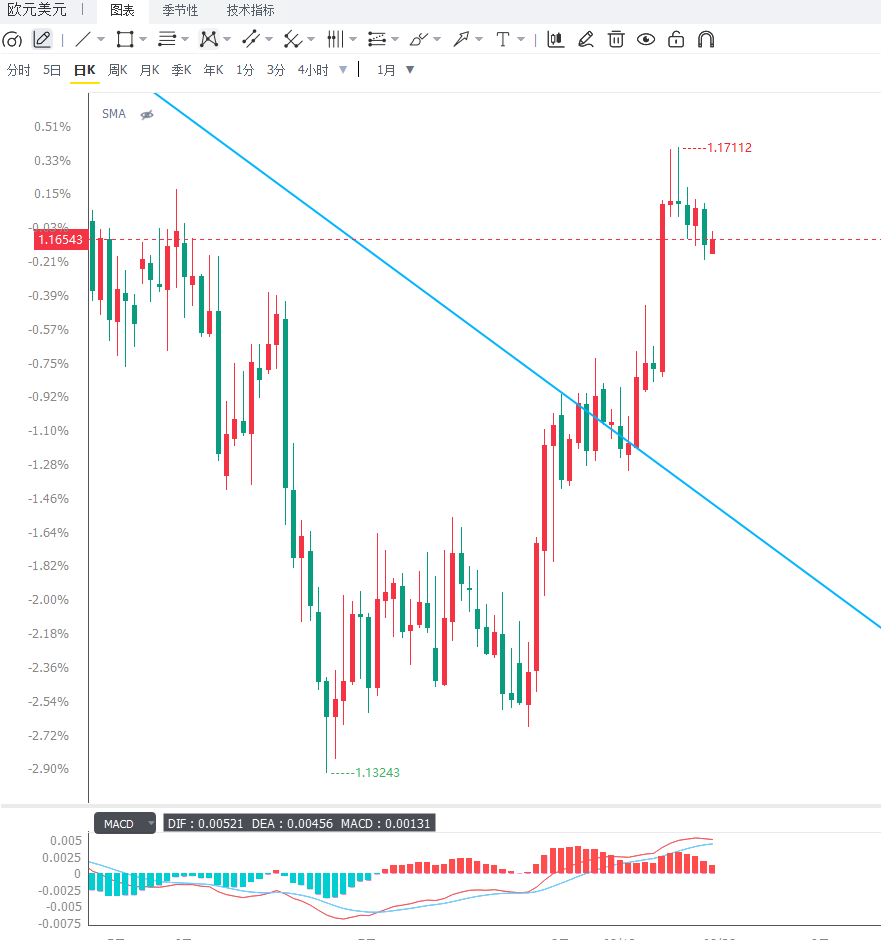
German consumer confidence unexpectedly improved at the end of summer, sending a positive signal to Europe's largest economy, which is struggling. A NIM and GfK survey released on Thursday showed that the German consumer confidence index rose to **-26.6 points** at the start of September, significantly higher than the revised -29.4 points a month earlier, and also exceeding the market's previous expectation of -29.6 points.  This marks the fourth consecutive month of increase for this indicator. While current confidence levels are still significantly below truly optimistic territory, the continuous improvement suggests that German households' pessimism about the future economic environment is gradually easing. Consumer sentiment is typically a key leading indicator of household consumption and domestic demand, therefore this data improvement is significant for the German economy. This rebound in confidence is primarily driven by improvements in economic and income expectations. Rolf Burkel, head of consumer confidence research at NIM, stated that although the economic outlook indicator at the end of summer is still more than 6 points lower than the same period last year, the fourth consecutive increase shows a slight improvement trend. This implies a marginal shift in consumers' assessment of future economic conditions. The positive turn in income expectations is particularly noteworthy. If household confidence in future income continues to recover, it will theoretically help reduce precautionary saving and gradually release pent-up consumer demand. For the German economy, whether private consumption can improve is one of the key variables in whether future economic growth can escape its slump. However, the rebound in consumer confidence cannot yet be directly equated with a strong recovery in consumption. The survey also shows that households remain cautious in their actual spending. Given the continued uncertainty surrounding the economic and employment outlook, consumers may be more inclined to increase savings rather than rapidly expand discretionary spending. Therefore, a time lag may still exist between improved confidence indicators and actual retail consumption growth. The German economy has been consistently affected in recent years by factors such as weak manufacturing, changing external demand, and insufficient business investment. While consumer confidence has improved, if industrial production and business activity do not recover in tandem, relying solely on household consumption will hardly drive sustained strong economic growth. Therefore, the market still needs to observe whether consumer confidence can continue to rise in the coming months and ultimately translate into retail sales and service consumption. From a European macroeconomic policy perspective, improved German consumer confidence will also influence market judgments on the European Central Bank's policy path. If domestic demand gradually recovers while wage and service price pressures remain resilient, the ECB may need to more cautiously assess the necessity for further easing. Conversely, if the recovery in consumer confidence fails to translate into actual consumption growth and economic growth remains weak, monetary policy may still need to remain relatively loose to support economic activity. The euro market may also be marginally affected by this data. Germany is the largest economy in the eurozone, and changes in its household consumption and economic expectations often influence market judgments on the overall growth prospects of the eurozone. If German consumer confidence continues to improve, it could boost expectations of a soft landing for the Eurozone economy, thus supporting the euro. However, the current German consumer confidence index remains in a significantly negative range of -26.6 points, indicating that overall household sentiment remains cautious. The economic outlook indicator is still more than 6 points lower than the same period last year, suggesting that this improvement is more of a low-level recovery than a full-scale shift to optimism. Whether the German economy can truly improve in the future requires further verification from data on employment, real wages, retail sales, and business investment. From a market perspective, this data is more accurately interpreted as a marginal stabilization of the German economy, rather than a complete reversal of the economic cycle. If subsequent income expectations continue to improve, and consumer willingness gradually strengthens, the German economy may form a positive cycle of "improved confidence – recovery in consumption – economic growth." If households continue to choose saving rather than consumption, the positive impact of improved consumer confidence on the real economy will be relatively limited. From a technical perspective, the improvement in German consumer confidence theoretically provides some fundamental support for the euro, but the exchange rate will still be affected by expectations of Federal Reserve policy and the dollar's performance in the short term. On the daily chart, if EUR/USD can maintain its position above 1.1580, the overall rebound structure remains intact, with key resistance levels to watch at 1.1650 and 1.1715. A break above 1.1715 could open up further upside potential. On the downside, watch the 1.1580-1.1575 support zone, formed by both short-term and medium-term moving averages. If the pair finds support in this area, improved German consumer confidence could be a contributing factor to a further euro rebound; a break below this zone could lead to a return to support around 1.1460. On the 4-hour chart, EUR/USD remains in a slightly bullish consolidation phase, but a rapid pullback due to changes in expectations regarding US dollar policy is possible. If the price breaks above 1.1650 and holds above it, the bulls could push towards the 1.1700-1.1715 zone; conversely, a break below 1.1580 would significantly increase short-term downward pressure. Overall, the improvement in German consumer confidence is a mild positive for the euro, but not enough to change the medium-term trend of the exchange rate on its own.
  Editor's Summary: German consumer confidence rose to -26.6 points, improving for the fourth consecutive month. The rebound in economic and income expectations is a positive signal, indicating that German households' pessimism about the future economic situation is easing marginally. However, actual consumption remains cautious, and whether the improved confidence can translate into real consumption growth remains to be seen. In the medium term, if income expectations continue to improve and drive a recovery in household consumption, the German economy may gradually emerge from its slump, and the Eurozone's growth expectations will also improve; however, if uncertainty continues to suppress household spending, this round of confidence rebound may only be a low-level correction. For the market, the focus should be on German retail sales, employment, and real income data, as well as the European Central Bank's latest assessment of the economic growth outlook.
This marks the fourth consecutive month of increase for this indicator. While current confidence levels are still significantly below truly optimistic territory, the continuous improvement suggests that German households' pessimism about the future economic environment is gradually easing. Consumer sentiment is typically a key leading indicator of household consumption and domestic demand, therefore this data improvement is significant for the German economy. This rebound in confidence is primarily driven by improvements in economic and income expectations. Rolf Burkel, head of consumer confidence research at NIM, stated that although the economic outlook indicator at the end of summer is still more than 6 points lower than the same period last year, the fourth consecutive increase shows a slight improvement trend. This implies a marginal shift in consumers' assessment of future economic conditions. The positive turn in income expectations is particularly noteworthy. If household confidence in future income continues to recover, it will theoretically help reduce precautionary saving and gradually release pent-up consumer demand. For the German economy, whether private consumption can improve is one of the key variables in whether future economic growth can escape its slump. However, the rebound in consumer confidence cannot yet be directly equated with a strong recovery in consumption. The survey also shows that households remain cautious in their actual spending. Given the continued uncertainty surrounding the economic and employment outlook, consumers may be more inclined to increase savings rather than rapidly expand discretionary spending. Therefore, a time lag may still exist between improved confidence indicators and actual retail consumption growth. The German economy has been consistently affected in recent years by factors such as weak manufacturing, changing external demand, and insufficient business investment. While consumer confidence has improved, if industrial production and business activity do not recover in tandem, relying solely on household consumption will hardly drive sustained strong economic growth. Therefore, the market still needs to observe whether consumer confidence can continue to rise in the coming months and ultimately translate into retail sales and service consumption. From a European macroeconomic policy perspective, improved German consumer confidence will also influence market judgments on the European Central Bank's policy path. If domestic demand gradually recovers while wage and service price pressures remain resilient, the ECB may need to more cautiously assess the necessity for further easing. Conversely, if the recovery in consumer confidence fails to translate into actual consumption growth and economic growth remains weak, monetary policy may still need to remain relatively loose to support economic activity. The euro market may also be marginally affected by this data. Germany is the largest economy in the eurozone, and changes in its household consumption and economic expectations often influence market judgments on the overall growth prospects of the eurozone. If German consumer confidence continues to improve, it could boost expectations of a soft landing for the Eurozone economy, thus supporting the euro. However, the current German consumer confidence index remains in a significantly negative range of -26.6 points, indicating that overall household sentiment remains cautious. The economic outlook indicator is still more than 6 points lower than the same period last year, suggesting that this improvement is more of a low-level recovery than a full-scale shift to optimism. Whether the German economy can truly improve in the future requires further verification from data on employment, real wages, retail sales, and business investment. From a market perspective, this data is more accurately interpreted as a marginal stabilization of the German economy, rather than a complete reversal of the economic cycle. If subsequent income expectations continue to improve, and consumer willingness gradually strengthens, the German economy may form a positive cycle of "improved confidence – recovery in consumption – economic growth." If households continue to choose saving rather than consumption, the positive impact of improved consumer confidence on the real economy will be relatively limited. From a technical perspective, the improvement in German consumer confidence theoretically provides some fundamental support for the euro, but the exchange rate will still be affected by expectations of Federal Reserve policy and the dollar's performance in the short term. On the daily chart, if EUR/USD can maintain its position above 1.1580, the overall rebound structure remains intact, with key resistance levels to watch at 1.1650 and 1.1715. A break above 1.1715 could open up further upside potential. On the downside, watch the 1.1580-1.1575 support zone, formed by both short-term and medium-term moving averages. If the pair finds support in this area, improved German consumer confidence could be a contributing factor to a further euro rebound; a break below this zone could lead to a return to support around 1.1460. On the 4-hour chart, EUR/USD remains in a slightly bullish consolidation phase, but a rapid pullback due to changes in expectations regarding US dollar policy is possible. If the price breaks above 1.1650 and holds above it, the bulls could push towards the 1.1700-1.1715 zone; conversely, a break below 1.1580 would significantly increase short-term downward pressure. Overall, the improvement in German consumer confidence is a mild positive for the euro, but not enough to change the medium-term trend of the exchange rate on its own. Editor's Summary: German consumer confidence rose to -26.6 points, improving for the fourth consecutive month. The rebound in economic and income expectations is a positive signal, indicating that German households' pessimism about the future economic situation is easing marginally. However, actual consumption remains cautious, and whether the improved confidence can translate into real consumption growth remains to be seen. In the medium term, if income expectations continue to improve and drive a recovery in household consumption, the German economy may gradually emerge from its slump, and the Eurozone's growth expectations will also improve; however, if uncertainty continues to suppress household spending, this round of confidence rebound may only be a low-level correction. For the market, the focus should be on German retail sales, employment, and real income data, as well as the European Central Bank's latest assessment of the economic growth outlook.
- Risk Warning and Disclaimer
- The market involves risk, and trading may not be suitable for all investors. This article is for reference only and does not constitute personal investment advice, nor does it take into account certain users’ specific investment objectives, financial situation, or other needs. Any investment decisions made based on this information are at your own risk.