Iran sets conditions, the US refuses to engage in dialogue: when will the Hormuz stalemate end?
2026-08-28 12:13:04
The Qatari Prime Minister visited Tehran on Thursday (August 28) in an attempt to restart stalled US-Iran diplomatic negotiations and seek the reopening of the Strait of Hormuz. However, US President Trump made it clear that Washington is not currently engaged in dialogue with Iran, and the White House stated that economic pressure will continue until Iran decides to engage in substantive negotiations. The conflict has lasted six months, with large-scale military operations suspended, but little progress has been made on a peace agreement and the opening of the sea routes. Despite facing economic siege, the Iranian government has not shown any inclination to rush into negotiations. 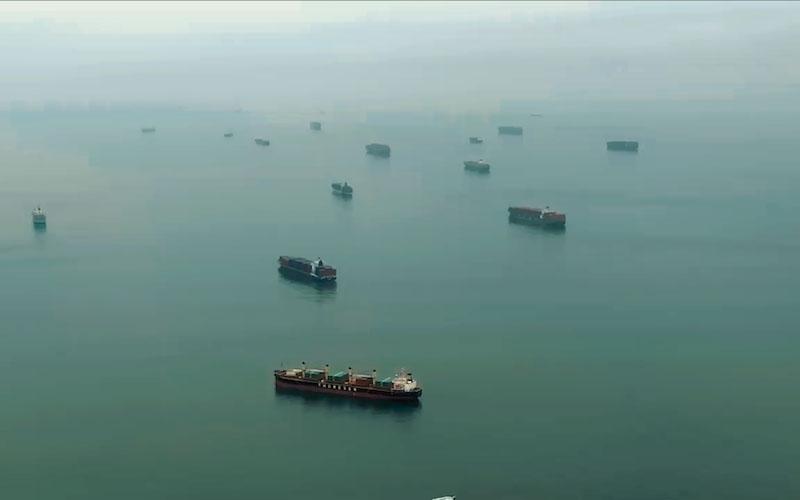
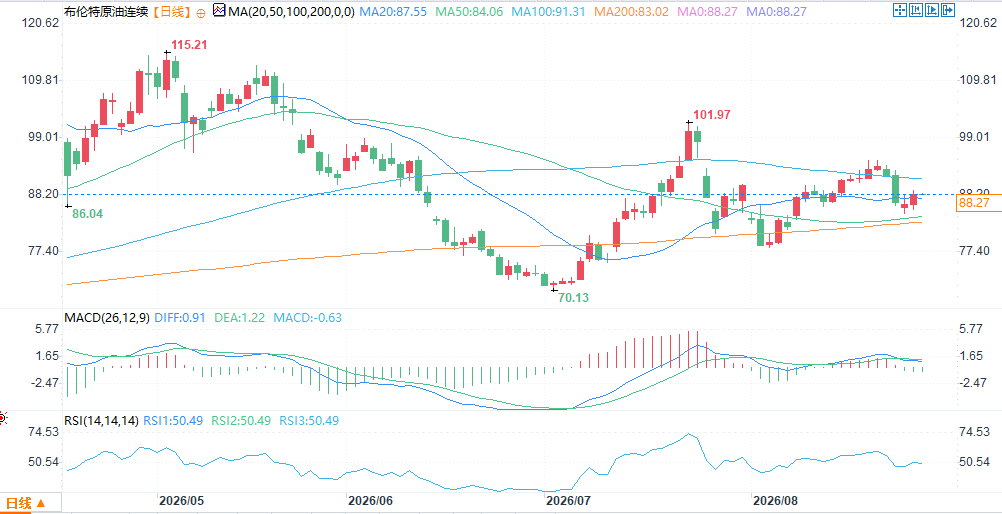 (Brent crude oil futures daily chart, source: EasyTrade) At 12:10 Beijing time, Brent crude oil October futures were trading at $88.20 per barrel.
Qatar's mediation and the US-Iran standoff
Qatar's prime minister visited Tehran on Thursday in an attempt to restart stalled US-Iran diplomatic negotiations and seek a breakthrough in easing regional tensions. However, US President Trump, speaking in the Oval Office, bluntly stated, "We don't want to talk to them. We don't plan to meet, and we don't plan to." A White House spokesperson subsequently emphasized that economic pressure would continue until Iran decided to engage in substantive negotiations. The conflict has lasted six months; while large-scale military operations have been suspended, there has been little substantial progress on a peace agreement and the opening of the Strait of Hormuz. The Iranian government, under economic pressure, has not shown any inclination to return to the negotiating table. Meanwhile, facing political pressure from rising domestic energy prices and the midterm elections, Trump has shifted his focus to economic sanctions, but this requires further coordination with Iran's major trading partners, such as India, making practical implementation difficult. Qatar's mediation efforts highlight the regional countries' desire for de-escalation, but the gap between the US and Iran's positions remains significant, limiting the prospects for a short-term breakthrough.Iran's conditions and position
During a meeting with the Qatari Prime Minister, the Secretary of Iran's Supreme National Security Council explicitly warned that Tehran would retaliate against US military and economic interests if Washington took "sabotage actions" against Iran, demonstrating a tough stance. Iran insists that the US must first meet its preconditions, including ending the blockade, providing compensation, and lifting relevant sanctions, before it will take any action to reopen the Strait of Hormuz. The Iranian Foreign Minister also called on neighboring countries to prevent the US from using its territory to launch attacks against Iran, attempting to garner regional support. Looking back at the reasons for the breakdown of the June memorandum of understanding, the two sides have fundamental differences regarding the future arrangements for the strait—Iran seeks control of the waterway and to collect passage fees, while Washington insists that the Strait of Hormuz must be an open international waterway. This core contradiction remains unresolved, creating structural obstacles to any effort to restart negotiations. Iran's insistence on its preconditions under economic pressure reflects its bottom-line thinking on strategic issues.The White House stated that no negotiations are underway.
A White House spokesperson explicitly stated that the US, which launched Operation Epic Fury to destroy Iran's military capabilities, is currently pursuing "economic isolation" to cripple its economic foundation. "There are currently no negotiations underway, and this will continue until the President deems them likely to come to the negotiating table in a meaningful way." This statement further confirms Washington's current hardline stance. Although Qatar and Iran have discussed a proposal to establish a temporary Iran-Oman joint shipping corridor and a joint demining project, attempting to create technical conditions for passage through the Strait of Hormuz, the US's insistence on a policy of non-dialogue makes a diplomatic breakthrough seem unlikely. The White House views economic pressure as its primary tool to force Iran to change its position and is unlikely to adjust this strategy in the short term. While Qatar's mediation has provided a channel for de-escalation in the region, substantial progress is unlikely given the US's explicit refusal to negotiate, and the US-Iran stalemate is expected to continue for some time.Latest developments in Qatar's mediation: Discussions on temporary shipping lanes and mine clearance.
Qatari Prime Minister and Foreign Minister Sheikh Mohammed bin Rashid Al Nahyan met separately in Tehran on Thursday with Iranian Foreign Minister Araqchi, President Pezeshkian, and chief negotiator Ghalibaf, focusing on easing regional tensions, creating conditions for dialogue, and arrangements related to the Strait of Hormuz. The two sides exchanged views on establishing a temporary Iran-Oman joint shipping corridor and a joint demining project. The Qatari Foreign Ministry emphasized the necessity of resuming the diplomatic process and freedom of navigation. Iran reiterated its stance against pressure and demanded that the United States return to the June memorandum of understanding. Despite Qatar's active mediation, White House Press Secretary Levitt simultaneously confirmed that no negotiations are currently taking place between the US and Iran, and economic pressure will continue until Iran returns to the negotiating table in a meaningful manner. This visit provided a new channel for de-escalation in the region, but the hardline stance of the United States still hinders a substantial breakthrough, and the overall diplomatic outlook remains cautious.Crude oil prices: Geopolitical stalemate continues, supply premium remains high.
The Qatari Prime Minister's trip to Tehran to mediate with Trump, and his statement that "no negotiations are underway," together outline the core narrative of the current oil market: persistent geopolitical stalemate and high supply premiums. While large-scale US-Iran military operations have been suspended for several weeks, diplomatic negotiations have made no progress, and traffic in the Strait of Hormuz remains far below pre-war levels. Trump's shift to economic sanctions suggests a reduced risk of military escalation in the short term, but the continued enforcement of the blockade and Iran's refusal to compromise make the threat of supply disruptions difficult to dissipate. Brent crude is currently trading around $88 per barrel, and WTI crude around $83 per barrel, with geopolitical risk premiums still accounting for a significant proportion of prices. The Secretary of Iran's Supreme National Security Council has clearly stated that Iran will only take action to reopen the Strait if the US first meets conditions such as ending the blockade, providing compensation, and lifting sanctions—while the Trump administration has explicitly ruled out dialogue, leaving no solution to the stalemate on both the supply and demand sides in the short term. Qatar's proposed temporary Iran-Oman joint shipping corridor could put downward pressure on oil prices if a breakthrough is achieved, but its feasibility is questionable given the US's insistence on a no-dialogue stance. With neither the US nor Iran willing to compromise, the geopolitical risk premium in the oil market is unlikely to subside in the short term, and any new information regarding the Hormuz could trigger sharp fluctuations in oil prices.Summarize
The Qatari Prime Minister visited Tehran in an attempt to restart diplomatic negotiations, but Trump made it clear that the US would not engage in dialogue with Iran, and the White House stated that economic pressure would continue. Six months into the conflict, with no progress in peace talks, Iran demanded that the US meet certain conditions before discussing the opening of the Strait of Hormuz. The US maintains its firm stance of economic isolation and no dialogue. Qatar proposed a temporary shipping corridor, but the prospects for a diplomatic breakthrough remain bleak. The deadlock in the Strait of Hormuz is unlikely to be broken in the short term. (Brent crude oil futures daily chart, source: EasyTrade) At 12:10 Beijing time, Brent crude oil October futures were trading at $88.20 per barrel.
- Risk Warning and Disclaimer
- The market involves risk, and trading may not be suitable for all investors. This article is for reference only and does not constitute personal investment advice, nor does it take into account certain users’ specific investment objectives, financial situation, or other needs. Any investment decisions made based on this information are at your own risk.