G20 Summit Becomes Key Window for Yen Policy: Ueda Attends, Bessant Speaks Out, 160 Level May Trigger Intervention
2026-08-28 14:30:03
Japanese Finance Minister Etsuko Kada confirmed on Friday (August 28) that she will attend next week's G20 finance ministers' meeting in Asheville, North Carolina. Markets are closely watching whether she will hold a bilateral meeting with US Treasury Secretary Bessenter. The yen has since retreated from its post-intervention high of 155.20 to around 159.50, approaching the 160 level, casting doubt on the effectiveness of last year's intervention. Kada stated that the joint statement with Bessenter "remains effective," describing it as "very powerful" and "still alive," intending to maintain the credibility of the intervention threat. 
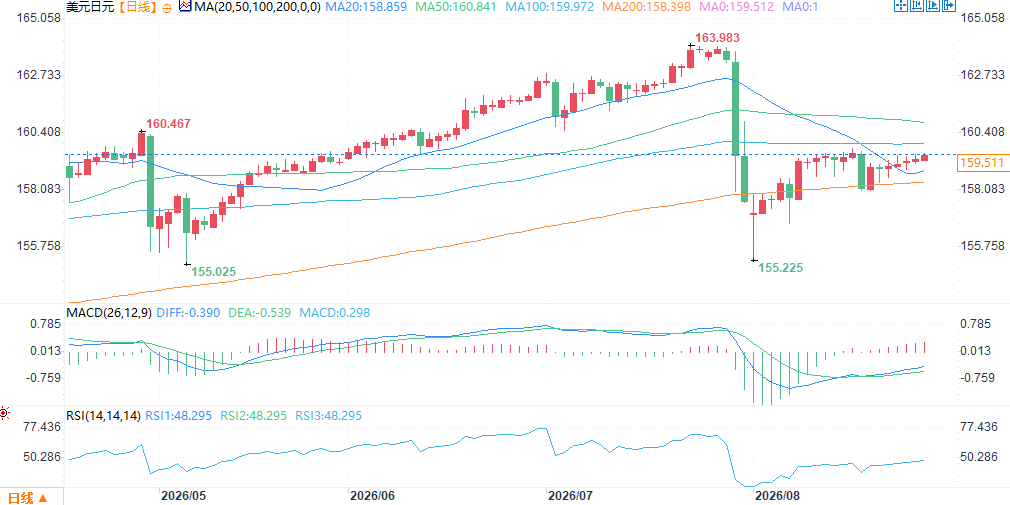 (USD/JPY daily chart, source: FX678) At 14:29 Beijing time, USD/JPY was trading at 159.47/48.
Etsuko Kada has confirmed her attendance at the G20 summit, and the market is paying close attention to the bilateral meeting between the US and Japan.
Japanese Finance Minister Etsuko Kada confirmed on Friday that she will attend next week's G20 finance ministers and central bank governors meeting in Asheville, North Carolina, and expressed her hope to make a positive contribution to discussions on global economic and international financial issues. Bank of Japan Governor Kazuo Ueda is also expected to attend the meeting, but the central bank has not yet officially disclosed his schedule. US Treasury Secretary Bessenter has publicly stated his anticipation of meeting with Ueda in Asheville, further reinforcing market expectations that monetary policy will play a significant role in bilateral sidelines discussions. The market is particularly focused on whether Kada will hold a direct meeting with Bessenter, as the two coordinated closely last month to push for joint intervention to support the then-weak yen. This G20 meeting provides a platform for public and private communication between the US and Japan, and any statements regarding exchange rate coordination or policy stances could influence short-term market sentiment.The yen retreated to around 159.50, raising doubts about the effectiveness of the joint intervention.
The joint US-Japan intervention has only had a partial and waning effect. The yen touched a 40-year low near 164 last month, then jumped to around 155.20 after the joint action was announced, but has since retreated to its current level of 159.50, approaching the 160 mark, leading to widespread market skepticism about the intervention's sustainability. Etsuko Kada publicly defended the continued relevance of the joint statement with Bessant, emphasizing that it was "very powerful" and "still effective," aiming to maintain the credibility of the intervention threat while avoiding an inevitable premonition of new direct action. She also pointed out that the Japanese government is committed to promoting investment and enhancing economic growth potential, efforts that will help improve the yen's global competitiveness. The current reality of the yen giving back most of its post-intervention gains shows that a single coordinated action cannot fundamentally reverse the fundamental-driven depreciation pressure, and the market remains cautiously watching the effectiveness of subsequent policy tools.The G20 meeting serves as a key window for yen policy.
The upcoming G20 meeting comes at a delicate moment for Japan's monetary policy. Officials need to strike a balance between reassuring signals that "coordinated action remains available" and the reality that the yen has given back most of its post-intervention gains. Any bilateral contact between Etsuko Kada and Bessant, or comments made by Kazuo Ueda on the sidelines, will be carefully analyzed by the market for clues about whether further joint action might be considered if the yen continues to weaken. Discussions during the meeting on exchange rate stability, monetary policy coordination, and global financial risks may provide a new window of opportunity for yen policy. If both sides reaffirm their cooperative stance or signal a willingness to coordinate further, it could provide short-term support for the yen; conversely, cautious statements or a lack of new commitments could exacerbate market concerns about the fading effects of intervention. Overall, the G20 will be a crucial juncture for observing the direction of US-Japan exchange rate cooperation.Summarize
Japanese Finance Minister Etsuko Kada has confirmed her attendance at next week's G20 meeting, with markets focused on her bilateral meeting with Bessenter. The yen has retreated to around 159.50, approaching the 160 level, casting doubt on the effectiveness of the joint intervention. Kada stated that the joint statement "remains valid," intending to maintain the credibility of the intervention. Kazuo Ueda is expected to attend, and Bessenter looks forward to the meeting. The G20 meeting is a crucial window for yen policy; any bilateral contact or policy signals will influence market expectations. (USD/JPY daily chart, source: FX678) At 14:29 Beijing time, USD/JPY was trading at 159.47/48.
- Risk Warning and Disclaimer
- The market involves risk, and trading may not be suitable for all investors. This article is for reference only and does not constitute personal investment advice, nor does it take into account certain users’ specific investment objectives, financial situation, or other needs. Any investment decisions made based on this information are at your own risk.