Walsh's debut performance stunned the market: the dollar jumped nearly 40 points, and gold instantly evaporated $80.
2026-08-28 22:19:03
On Friday (August 28), at 22:00 Beijing time, Federal Reserve Chairman Warsh delivered his first keynote speech since taking office at the Jackson Hole Economic Symposium. Prior to the speech, market opinions on the policy path remained divided, with the US dollar index rebounding from around 99.06, while spot gold maintained its high-level fluctuations. On the same day, the preliminary reading of the US 2026 non-farm payrolls baseline change was released: -79,000, lower than the expected 183,000. After the speech began, the market quickly shifted to pricing in Warsh 's hawkish stance.  During the speech, the US dollar index jumped nearly 40 points in the short term, reaching a high of 99.4559; spot gold fell by about $40, hitting a low of $4550.01 per ounce, briefly breaking below the $4550 mark and hitting a new low since August 21. The yield on the two-year US Treasury note rose to 4.286%, the highest since July 31; the 10-year yield remained roughly unchanged at 4.676%. US stock indices fell in the short term, with the Nasdaq down about 0.15%. Domestically, Shanghai silver futures (2610 contract) quickly fell back, with gains narrowing to 0.10%, last quoted at 16847 yuan/kg; Shanghai gold futures (2610 contract) reversed course and fell, closing at 989.8 yuan/gram, with both trading volume and open interest increasing.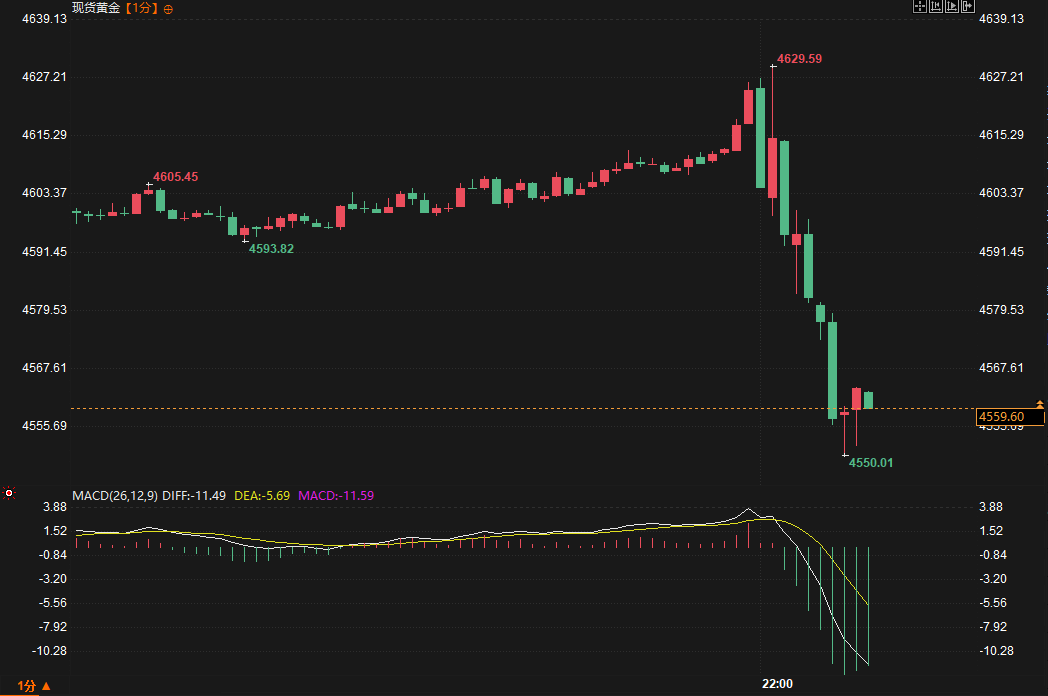
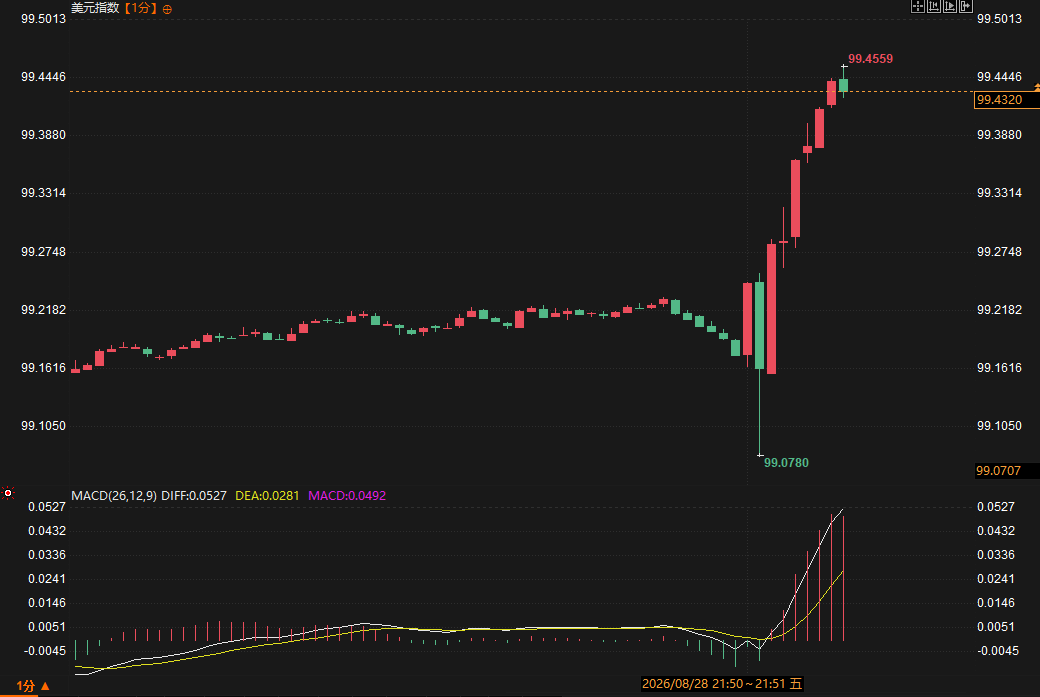
During the speech, the US dollar index jumped nearly 40 points in the short term, reaching a high of 99.4559; spot gold fell by about $40, hitting a low of $4550.01 per ounce, briefly breaking below the $4550 mark and hitting a new low since August 21. The yield on the two-year US Treasury note rose to 4.286%, the highest since July 31; the 10-year yield remained roughly unchanged at 4.676%. US stock indices fell in the short term, with the Nasdaq down about 0.15%. Domestically, Shanghai silver futures (2610 contract) quickly fell back, with gains narrowing to 0.10%, last quoted at 16847 yuan/kg; Shanghai gold futures (2610 contract) reversed course and fell, closing at 989.8 yuan/gram, with both trading volume and open interest increasing. Deep interconnect analysis
Warsh explicitly placed inflation at the heart of policy. He pointed out that while summer inflation data showed improvement, the underlying trend had not significantly improved, and it was crucial to be certain that underlying inflation was moving toward the target; otherwise, "there is still work to be done." The 2% PCE inflation target was reiterated as "firm and fixed." Simultaneously, he emphasized that the labor market was quite stable, the likelihood of higher economic growth was increasing, financial conditions were difficult to describe as restrictive, and there were almost no signs of policy tightening in the credit market. The role of forward guidance should remain limited, policy should not be based on outdated or inaccurate data, and the market should focus on real economic information. Artificial intelligence was seen as a new variable that would influence the economy and policy implementation. These statements deviated significantly from the previously anticipated dovish bias in some markets. Before the speech, institutions focused on the potential dovish signal from a downward revision of the employment benchmark; after the speech, pricing quickly shifted. The market indicated that the probability of a Fed rate hike in September had risen to approximately 50%. Institutional accounts quickly extracted keywords such as "inflation first" and "unrestrictive financial conditions," emphasizing policy patience and data reliance; retail discussions focused more on the immediate pullback in gold and silver, with sentiment shifting from wait-and-see to attention on short-term pressure on precious metals. Historically, similar hawkish stances have often been accompanied by a short-term strengthening of the US dollar and pressure on precious metals. This pricing aligns with this pattern, with both short- and long-term logic pointing to a recalibration of the policy path. For related commodities, the US dollar has received short-term support, while gold and silver face direct bearish pressure, and the short end of the Treasury yield curve has risen more significantly.Trend Outlook
From a technical perspective, the US dollar index quickly recovered its losses and refreshed its intraday high after the speech, indicating an immediate reassessment of the policy statement by the market. Gold retreated from its highs and broke through recent support, with short-term momentum shifting towards consolidation. The rise in short-term yields and increased bets on interest rate hikes reinforced each other, and future price movements will depend more on whether subsequent data can validate Warsh's assessment of underlying inflation and growth resilience. Overall volatility significantly amplified after the speech, as the market re-digests the changes in policy priorities.Frequently Asked Questions
Q: What was the core message of Warsh's speech? He prioritized price stability, emphasizing that the underlying inflation trend has not improved significantly and that there must be confidence that it is moving towards the 2% target; otherwise, policymakers still have work to do. He also pointed out that financial conditions are not restrictive and that the economy and labor market remain resilient. Q: How did market pricing for a September rate hike change before and after the speech? Following the speech, US short-term interest rate futures fell, with market pricing indicating a rise in the probability of a September rate hike to approximately 50%, a significant increase from previous levels.- Risk Warning and Disclaimer
- The market involves risk, and trading may not be suitable for all investors. This article is for reference only and does not constitute personal investment advice, nor does it take into account certain users’ specific investment objectives, financial situation, or other needs. Any investment decisions made based on this information are at your own risk.