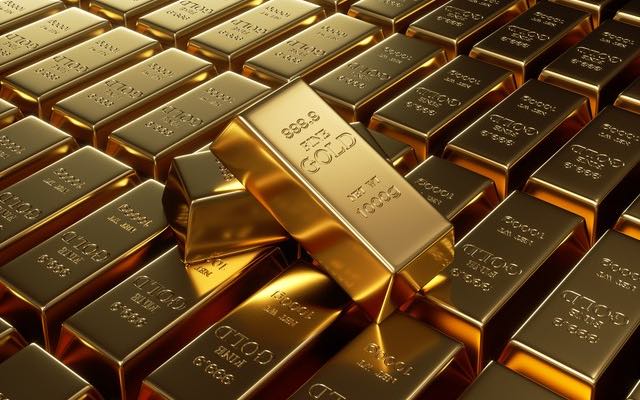
Sticky inflation + the 40 trillion yuan national debt dilemma: Warsh's verbal interest rate hikes are hard to deliver, and smart money is quietly snapping up gold?
2026-09-01 09:35:03
Federal Reserve Chairman Kevin Warsh delivered his first keynote address as chairman at the Jackson Hole Economic Policy Symposium on August 28, 2026. He emphasized that inflation remains the primary concern, reiterated the firm 2% personal consumption expenditures price index target, and hinted that the central bank still has work to do if underlying inflation fails to clearly and quickly return to the target. While this statement did not directly promise an interest rate hike, it quickly pushed up market pricing in a near-term rate increase, causing a significant pullback in gold and silver prices that day, and putting pressure on the stock market. Since Warsh took over as chairman in May 2026, the target range for the federal funds rate has remained at 3.50%-3.75%, consistent with levels since December 2025. With the debt exceeding $40 trillion and annual interest payments surpassing $1 trillion, the market is widely focused on whether his hawkish rhetoric will translate into concrete policy action. 
Warsh's key points from his speech: Prioritizing inflation and reiterating policy tools.
In his speech, Warsh pointed out that although some summer inflation data were better than expected, it "did not tell me that the underlying trend has shown meaningful improvement." He emphasized, "We must be convinced that underlying inflation is moving clearly toward our target and at a sufficiently fast pace. Otherwise, we still have work to do. This is our work, our mission, and our responsibility." He explicitly anchored the Fed's 2% price stability target to the personal consumption expenditures price index, calling it a "firm, fixed target." Latest data shows that as of July 2026, overall PCE is expected to rise 3.7% year-on-year, and core PCE is expected to rise 3.3% year-on-year, both significantly higher than the 2% target. Warsh also stated that short-term interest rates are the main tool for achieving the dual mandate and believes that the current credit and loan markets do not show obvious signs of policy constraints. Many analysts interpreted this statement as leaving room for future rate hikes. Johns Hopkins University economist and former Fed advisor Jon Foster believes that Warsh found a way to convey support for rate hikes when necessary, responding to previous market concerns. After the speech, the market's probability of a September rate hike rose sharply from about 40% to over 50%, and even exceeded 60% at times.Market reaction immediately: Precious metals under pressure, risk assets experience increased volatility.
Following Warsh's speech, the market quickly priced in a higher interest rate environment. Gold prices fell by more than 3% in a short period, while silver prices dropped by more than 4%. As non-interest-bearing assets, precious metals are particularly sensitive to expectations of rising interest rates. The stock market also saw a correction, with the Nasdaq index falling nearly 139 points that day, indicating a cooling of overall risk appetite. Behind this reaction lies the market's long-term reliance on loose monetary policy. In his speech, Warsh emphasized that a system where market participants primarily rely on the Federal Reserve to decide the next move should not be tolerated, but his verbal statements themselves triggered significant price volatility, demonstrating the enormous influence of policy communication on asset prices.Real obstacles to fulfilling commitments: $40 trillion in debt and economic vulnerability
The US national debt officially surpassed the $40 trillion mark in mid-August 2026, with approximately $32.3 trillion held by the public. Annual federal government interest payments have risen to approximately $1.25 trillion, a multi-decade high as a percentage of fiscal revenue. Against this backdrop, any interest rate hike will directly increase debt financing costs and could impact highly leveraged household and corporate balance sheets. Since Warsh took office, the Federal Reserve has held numerous policy meetings, maintaining interest rates unchanged. While inflation has fallen from its peak, it remains sticky. On the one hand, curbing inflation requires tighter monetary policy; on the other hand, maintaining economic activity and debt sustainability requires a more accommodative environment. This dilemma may create a gap between verbal hawkish stances and actual actions. Analysts believe that if the Fed does raise interest rates, it could accelerate the exposure of debt pressures and even trigger broader financial and economic adjustments; if it continues to hold steady, the credibility of its inflation target will be tested. Regardless of the path taken, the long-term demand for safe-haven and value-preserving assets such as gold and silver is likely to be strengthened.Editor's Summary
Federal Reserve Chairman Warsh's speech in Jackson Hole, with its clear inflation-first stance and market-communication style, successfully boosted expectations of interest rate hikes and triggered volatility in precious metals and the stock market. However, the US national debt exceeding $40 trillion, high interest payments, and the economy's dependence on low interest rates constitute a real constraint on policy space. The statement regarding short-term interest rates as the primary tool, coupled with the structural contradiction of the debt black hole, means that whether verbal hawkishness can translate into sustained action still depends on subsequent data and the evolution of economic resilience. Market pricing has changed, but the true policy path remains to be seen.Frequently Asked Questions
Q: What was the core message of Warsh's Jackson Hole speech? A: Warsh's core message was that inflation remains the Fed's primary concern, and the 2% PCE target remains unchanged. He acknowledged some improvement in data but believed the underlying trend had not yet shown a meaningful change. He stated that the central bank still needs to act unless it is certain that inflation is clearly and quickly declining. Short-term interest rates were explicitly identified as the primary policy tool. While this statement did not directly provide a timetable for rate hikes, it significantly increased market expectations for policy tightening. Q: Why did the market react so strongly to the speech? A: The market has long relied on loose monetary policy, and Warsh's hawkish rhetoric directly challenged this expectation. Gold and silver, as non-interest-bearing assets, are sensitive to rising interest rates, falling by more than 3% and 4% respectively that day. The stock market also saw a correction. Simultaneously, the probability of a rate hike rose from about 40% to 50%-60%, indicating that investors quickly adjusted their pricing of the policy path. The intensity of the reaction reflects the market's high sensitivity to the Fed's "consistency between words and actions." Q: How far is the current US inflation level from the Fed's target? A: As of July 2026, the overall PCE rose 3.7% year-on-year, and the core PCE rose 3.3%, both significantly higher than the 2% target. Although some summer readings were better than expected, Warsh clearly stated that these figures were insufficient to prove that the underlying trend had substantially improved. The persistent stickiness of inflation is the direct basis for his emphasis that "there is still work to be done." Q: Why is the size of the US national debt a major obstacle for Warsh to fulfill his promises? A: The US national debt has exceeded $40 trillion, with annual interest payments of approximately $1.25 trillion, a record high as a percentage of fiscal revenue. Interest rate hikes will directly increase government financing costs and may impact highly leveraged household and corporate debt. The Fed faces a dilemma between curbing inflation and maintaining debt sustainability, which significantly limits the scope for simply raising interest rates. Q: What will happen to gold and silver if the Fed ultimately does not raise interest rates? A: If the expectation of a rate hike fails to materialize, maintaining low interest rates will reduce the opportunity cost of holding non-interest-bearing assets, which is beneficial to gold and silver. At the same time, high debt and potential inflation stickiness may strengthen demand for safe-haven assets and preservation of value. Conversely, if interest rates do rise, precious metals may face short-term pressure, but if the economy experiences a deep adjustment as a result, their long-term safe-haven appeal may still emerge. Regardless of the path taken, the structural contradiction between debt and inflation is likely to support the allocation value of precious metals. As of 09:31 Beijing time, spot gold is trading at $4439.37 per ounce.- Risk Warning and Disclaimer
- The market involves risk, and trading may not be suitable for all investors. This article is for reference only and does not constitute personal investment advice, nor does it take into account certain users’ specific investment objectives, financial situation, or other needs. Any investment decisions made based on this information are at your own risk.