The USD/JPY pair surged to 160.38 before falling back to 159.60. Has Tokyo made its move?
2026-09-02 15:34:03
On Wednesday (September 2), during the European session, the USD/JPY pair surged to 160.38, its highest level since the joint intervention on July 31, before quickly retreating to 159.60. Japan's intervention since April has lacked flexibility in its execution—the core of the intervention lies in signal transmission rather than the scale of funds, requiring sufficient market liquidity to amplify the signal and create deterrence. However, the timing of the intervention was poor, with fundamentals across the board unfavorable to the yen—surges in global bond yields and a high USD/JPY interest rate differential made any intervention's effects unsustainable. 
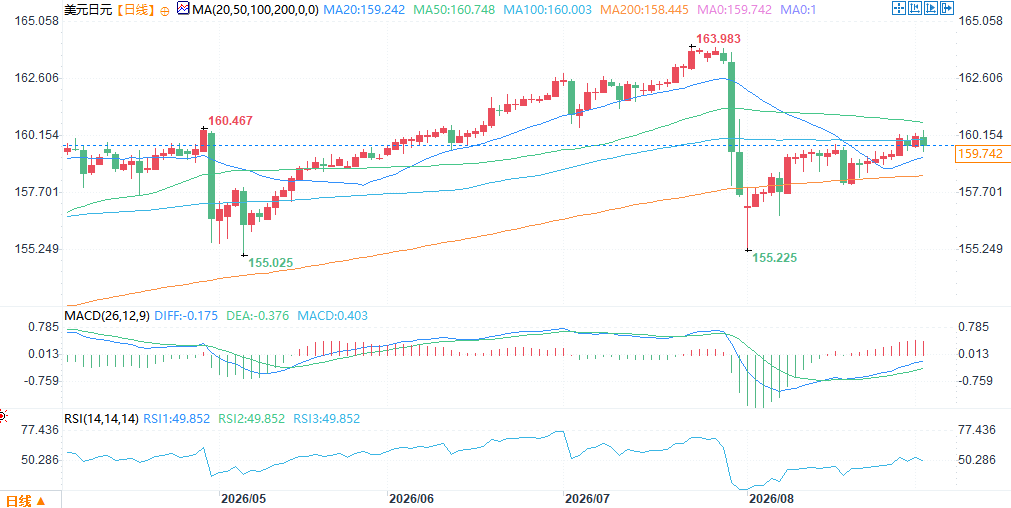 (USD/JPY daily chart, source: FX678) At 15:31 Beijing time, USD/JPY was trading at 159.58/59.
The dollar rose against the yen before retreating, and concerns about intervention resurfaced.
On Wednesday, the USD/JPY pair surged to 160.38, its highest level since the joint US-Japan intervention on July 31, before quickly retreating to around 159.60. The sharp drop may have stemmed from Tokyo's "interest rate checks" (i.e., exploratory operations before verbal or actual intervention) or heightened market concerns about a potential new round of joint intervention. Analysts believe the core of intervention lies in signal transmission rather than simply the scale of funds. Successful intervention requires sufficient market liquidity to amplify the signal's effect, thus creating an effective deterrent against confrontation with the Ministry of Finance/Bank of Japan. However, Japan's numerous interventions since April have lacked flexibility in execution, often with poor timing, causing signals to be diluted by the market into noise rather than clear leading indicators. In the short term, repeated tests of the 160 level will continue to test the authorities' resolve, significantly increasing market sensitivity to intervention and potentially leading to further volatility.Fundamentals exerted downward pressure on the yen across the board, and intervention had a short-lived effect.
With global bond yields soaring and the USD/JPY interest rate differential remaining high, the fundamentals are generally unfavorable for the yen. Against this macroeconomic backdrop, any form of intervention is unlikely to be sustainable, offering only temporary suppression rather than a trend reversal. The USD/JPY pair may return above 160 within weeks, becoming a focal point of market discussion. While hawkish comments from Bank of Japan policy board member Hajime Takada provided some marginal support for the yen, they were far from reversing the overall trend dominated by interest rate differentials. The market generally views intervention as noise rather than a clear directional signal, and the USD/JPY interest rate differential remains the core force determining the medium- to long-term direction of the exchange rate. If US Treasury yields continue to rise or expectations of a Fed rate hike strengthen further, the yen will continue to be under pressure; only when the interest rate differential narrows significantly or the Bank of Japan's policy becomes more aggressive can the effect of intervention be strengthened and transformed into trend support.Summarize
The USD/JPY pair rose to 160.38 before falling back to 159.60, with renewed concerns about intervention. The signals of Japanese intervention had limited effect, with fundamentals exerting downward pressure on the yen across the board. The USD/JPY pair is likely to fluctuate between 158 and 161 in the short term, with intervention risks and interest rate differentials creating a tug-of-war. The market will focus on further actions by Japanese authorities near the 160 level, as well as the impact of US data on the USD/JPY interest rate differential. (USD/JPY daily chart, source: FX678) At 15:31 Beijing time, USD/JPY was trading at 159.58/59.
- Risk Warning and Disclaimer
- The market involves risk, and trading may not be suitable for all investors. This article is for reference only and does not constitute personal investment advice, nor does it take into account certain users’ specific investment objectives, financial situation, or other needs. Any investment decisions made based on this information are at your own risk.