The old era of global currency has ended: high real interest rates are not a temporary phenomenon, and the market needs to repric.
2026-09-03 00:58:03
The era of abundance is over—neither policy nor markets have kept pace with the change. Last week, as Federal Reserve Chairman, Kevin Warsh spoke at the Jackson Hole conference, suggesting that U.S. interest rates were more likely to rise than fall next. He wasn't alone in this view: the European Central Bank raised rates in June and may raise them further; several other central banks have also adopted a more hawkish stance. This is indeed perplexing—economic growth is slowing, unemployment is rising, and core inflation in developed economies is only slightly above target. Why is the global monetary trend shifting towards tightening?  The official explanation is that they did this to prevent changes in people's expectations. Supply-side driven inflation is not necessarily sustainable; it only persists when businesses and households anticipate it and adjust wages and prices accordingly. Having misjudged the 2021 economic shock as temporary, central bankers are unwilling to take the same risk again. Therefore, their tightening policies are not aimed at eliminating that economic shock—because no interest rate tool can do that—but at stabilizing people's expectations. However, that's only a small part of the problem. Central banks around the world view what is essentially institutional change as cyclical fluctuations. In the era of the previous generation, developed economies had ample supply and abundant capital: globalization kept commodity prices low, and a global savings glut lowered the cost of money, so monetary policy only needed to regulate demand. Now, both of these conditions are reversing—supply has become scarce and costs have risen, as has capital, and these two are linked. The consequences are severe. This type of inflation cannot be suppressed by interest rates; it can only be addressed at the cost of economic recession. The real cost of capital is rising continuously, not cyclically. Investors accustomed to the old economic environment—those who expect central banks to adopt loose monetary policy during economic downturns, rely on government bonds to hedge against stock market risk, and anticipate real interest rates falling to previously low levels—are actually living in a world where the past is unlikely to return. Supply conditions across all sectors are becoming strained. Last month alone, the U.S. imposed a 50% tariff on Canadian goods; the U.S. military also attacked Iranian launchers in the Strait of Hormuz, causing Brent crude prices to rise above $90 again. All of these factors drive up costs, and interest rate policy cannot solve these problems. Furthermore, a shrinking labor supply exacerbates the situation. Recent government tightens immigration controls and has even decided to cancel work permits for over one million people. This move reduces the available labor force in construction, agriculture, and services, thereby driving up wage costs in these sectors. This is not merely a temporary anomaly, but rather a manifestation of long-term trends. In fact, energy costs have been rising steadily for the past 25 years, reaching historic highs; and the "return to home" strategy means rebuilding supply chains at even higher costs. Even before the relevant measures were strictly implemented, demographic changes had already made the labor market increasingly tight. The cheap and unrestricted labor supply of the era of globalization no longer exists. Data confirms this. If we break down the US core inflation rate into demand-driven and supply-driven components, the demand-driven component has fallen to about 1 percentage point, while supply factors have caused almost all inflation above the target level (see Figure 1). Among the G10 countries, core inflation rates are close to the target level, with no country exceeding 2.5% (see Figure 2). Inflationary demand influenced by monetary policy has been controlled. Wage growth is slowing, while market-based inflation expectations indicators remain near the target level. The factor causing inflation above the target level is a supply-side issue.
 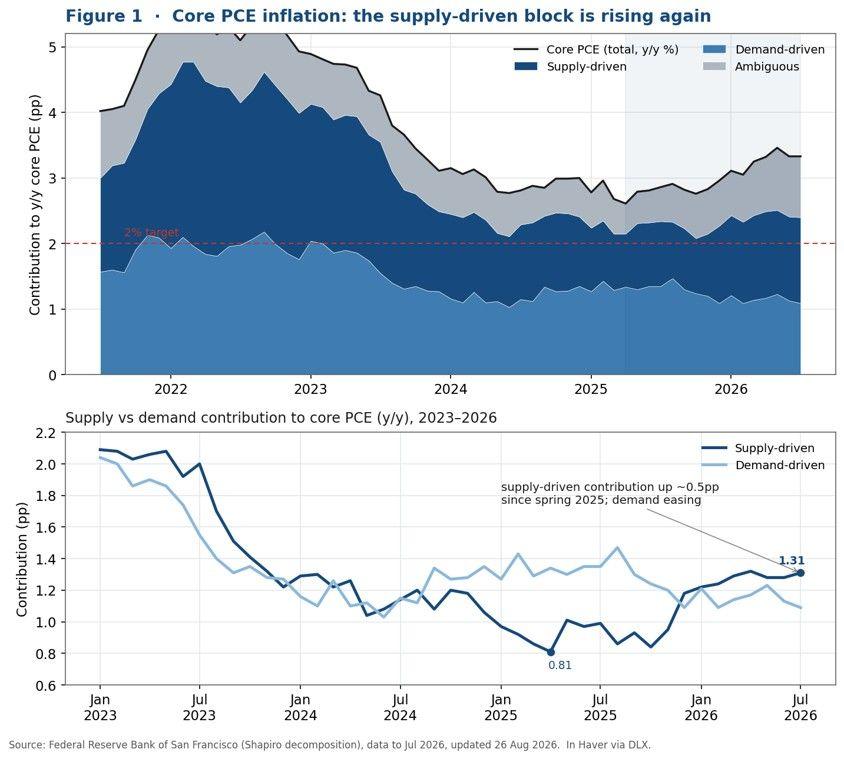 Figure 1. Changes in US core PCE inflation driven by supply and demand factors. Data source: Federal Reserve Bank of San Francisco (Shapiro decomposition method).
 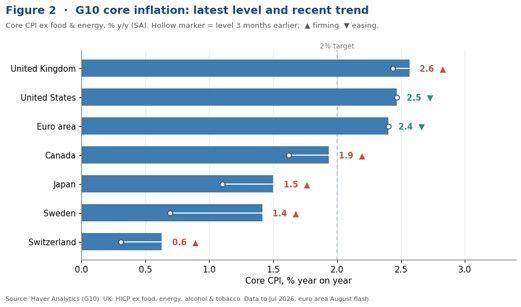 Figure 2: Core Inflation Rates in G10 Countries – Current Levels and Trends Over the Next Three Months. Capital is also flowing in the same direction, so the investment boom is not as offsetting as it seems. Developed economies are being required to invest massively in areas such as artificial intelligence, energy transition, and defense, on a scale not seen in decades; meanwhile, savings resources to support these investments are dwindling as the corporate sector has shifted from net borrowers to net borrowers, and China is investing less of its surplus funds in Western assets. Artificial intelligence will not alleviate the pressure; rather, it will exacerbate it: data centers are major electricity consumers, the energy transition further increases demand for electricity and metals, and even if these resources become available in the future, the required investment will far exceed current levels. The cost of capital has already risen. During the 2022 inflation period, the real yield on government debt in developed economies had been at historic lows for over four decades, but it has now risen to its highest level before the financial crisis (see Figure 3). Near-zero interest rates are an anomaly, not the target level that policy should return to.
 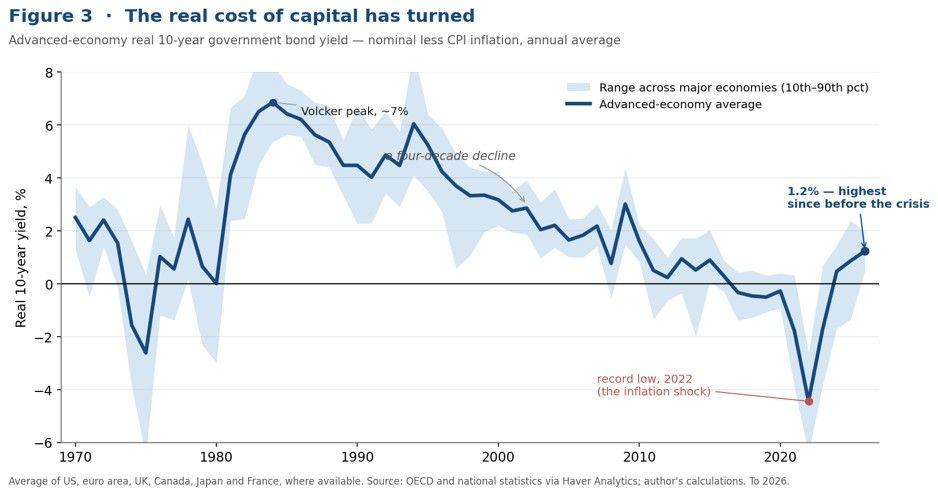 Figure 3. Average annual real 10-year government bond yields (nominal interest rate minus CPI inflation) in advanced economies. In short, central banks are using the wrong tools. The instruments they employ can only address supply-side inflation and structurally rising capital costs; these measures can at best lead to recessions, not solve the fundamental problems. Higher policy rates cannot lower oil prices, replace laid-off workers, or increase the supply of savings. Their entrenched expectations show little sign of wavering, and the potential recession to maintain those expectations is a greater danger. Investors are making the opposite mistake, still believing they live in an ended world. When economic growth diverges from inflation, central bank safeguards fail; under supply shocks, bonds and stocks fall simultaneously, as happened in 2022; and high real interest rates are due to genuine capital scarcity, not temporary policy constraints. The assets that will benefit are those related to physical resources—such as energy and its related raw materials. The hardest hit are longer-term bonds and stocks that have been overvalued due to low-cost capital. The September decision itself is less important than the policy environment that led to it. The era of abundance is over, but neither policy nor the market has yet adapted to the change.
The official explanation is that they did this to prevent changes in people's expectations. Supply-side driven inflation is not necessarily sustainable; it only persists when businesses and households anticipate it and adjust wages and prices accordingly. Having misjudged the 2021 economic shock as temporary, central bankers are unwilling to take the same risk again. Therefore, their tightening policies are not aimed at eliminating that economic shock—because no interest rate tool can do that—but at stabilizing people's expectations. However, that's only a small part of the problem. Central banks around the world view what is essentially institutional change as cyclical fluctuations. In the era of the previous generation, developed economies had ample supply and abundant capital: globalization kept commodity prices low, and a global savings glut lowered the cost of money, so monetary policy only needed to regulate demand. Now, both of these conditions are reversing—supply has become scarce and costs have risen, as has capital, and these two are linked. The consequences are severe. This type of inflation cannot be suppressed by interest rates; it can only be addressed at the cost of economic recession. The real cost of capital is rising continuously, not cyclically. Investors accustomed to the old economic environment—those who expect central banks to adopt loose monetary policy during economic downturns, rely on government bonds to hedge against stock market risk, and anticipate real interest rates falling to previously low levels—are actually living in a world where the past is unlikely to return. Supply conditions across all sectors are becoming strained. Last month alone, the U.S. imposed a 50% tariff on Canadian goods; the U.S. military also attacked Iranian launchers in the Strait of Hormuz, causing Brent crude prices to rise above $90 again. All of these factors drive up costs, and interest rate policy cannot solve these problems. Furthermore, a shrinking labor supply exacerbates the situation. Recent government tightens immigration controls and has even decided to cancel work permits for over one million people. This move reduces the available labor force in construction, agriculture, and services, thereby driving up wage costs in these sectors. This is not merely a temporary anomaly, but rather a manifestation of long-term trends. In fact, energy costs have been rising steadily for the past 25 years, reaching historic highs; and the "return to home" strategy means rebuilding supply chains at even higher costs. Even before the relevant measures were strictly implemented, demographic changes had already made the labor market increasingly tight. The cheap and unrestricted labor supply of the era of globalization no longer exists. Data confirms this. If we break down the US core inflation rate into demand-driven and supply-driven components, the demand-driven component has fallen to about 1 percentage point, while supply factors have caused almost all inflation above the target level (see Figure 1). Among the G10 countries, core inflation rates are close to the target level, with no country exceeding 2.5% (see Figure 2). Inflationary demand influenced by monetary policy has been controlled. Wage growth is slowing, while market-based inflation expectations indicators remain near the target level. The factor causing inflation above the target level is a supply-side issue. Figure 1. Changes in US core PCE inflation driven by supply and demand factors. Data source: Federal Reserve Bank of San Francisco (Shapiro decomposition method). Figure 2: Core Inflation Rates in G10 Countries – Current Levels and Trends Over the Next Three Months. Capital is also flowing in the same direction, so the investment boom is not as offsetting as it seems. Developed economies are being required to invest massively in areas such as artificial intelligence, energy transition, and defense, on a scale not seen in decades; meanwhile, savings resources to support these investments are dwindling as the corporate sector has shifted from net borrowers to net borrowers, and China is investing less of its surplus funds in Western assets. Artificial intelligence will not alleviate the pressure; rather, it will exacerbate it: data centers are major electricity consumers, the energy transition further increases demand for electricity and metals, and even if these resources become available in the future, the required investment will far exceed current levels. The cost of capital has already risen. During the 2022 inflation period, the real yield on government debt in developed economies had been at historic lows for over four decades, but it has now risen to its highest level before the financial crisis (see Figure 3). Near-zero interest rates are an anomaly, not the target level that policy should return to. Figure 3. Average annual real 10-year government bond yields (nominal interest rate minus CPI inflation) in advanced economies. In short, central banks are using the wrong tools. The instruments they employ can only address supply-side inflation and structurally rising capital costs; these measures can at best lead to recessions, not solve the fundamental problems. Higher policy rates cannot lower oil prices, replace laid-off workers, or increase the supply of savings. Their entrenched expectations show little sign of wavering, and the potential recession to maintain those expectations is a greater danger. Investors are making the opposite mistake, still believing they live in an ended world. When economic growth diverges from inflation, central bank safeguards fail; under supply shocks, bonds and stocks fall simultaneously, as happened in 2022; and high real interest rates are due to genuine capital scarcity, not temporary policy constraints. The assets that will benefit are those related to physical resources—such as energy and its related raw materials. The hardest hit are longer-term bonds and stocks that have been overvalued due to low-cost capital. The September decision itself is less important than the policy environment that led to it. The era of abundance is over, but neither policy nor the market has yet adapted to the change.
- Risk Warning and Disclaimer
- The market involves risk, and trading may not be suitable for all investors. This article is for reference only and does not constitute personal investment advice, nor does it take into account certain users’ specific investment objectives, financial situation, or other needs. Any investment decisions made based on this information are at your own risk.