Trade concerns and rising supply risks have prompted ANZ Bank to predict copper prices will reach new highs early next year.
2026-09-03 16:20:04
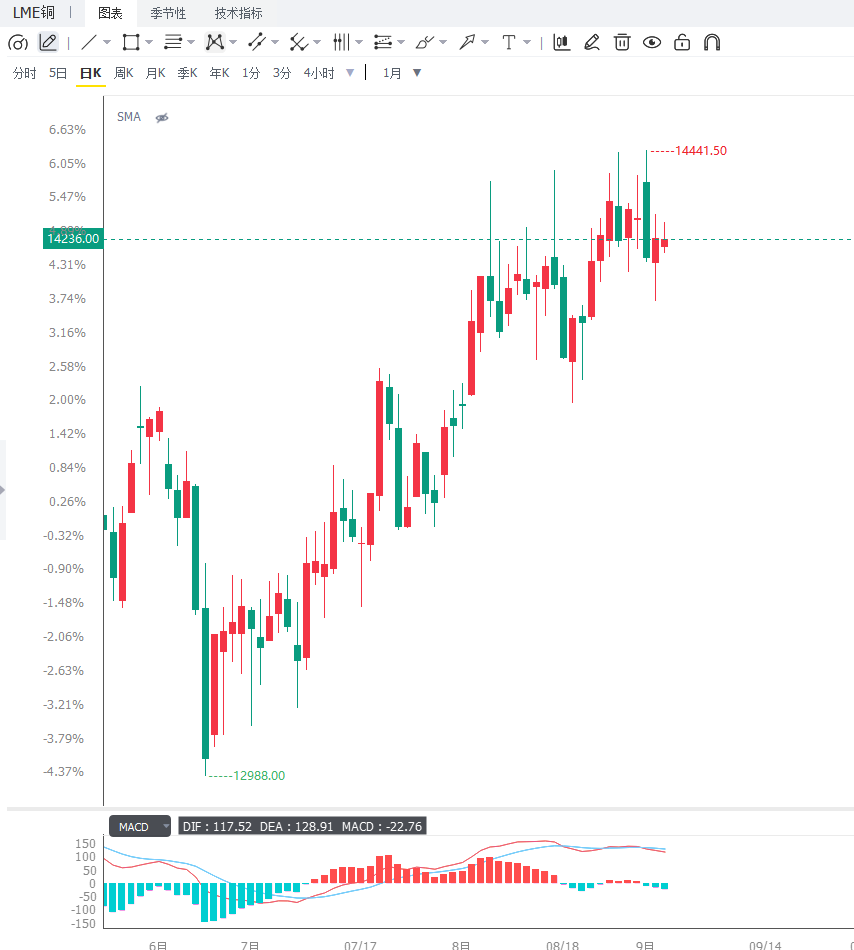
The copper market has recently regained focus in the commodities sector. ANZ analysts believe that with the continued impact of potential US copper tariffs on global trade flows, increasing challenges to mine supply, and resilient demand from the new energy and electrification sectors, the likelihood of copper prices reaching new historical highs early next year is rising.  The core logic behind this assessment is that potential US tariffs are altering the geographical distribution of global copper inventories. Market concerns about further increases in copper import costs by the US government are prompting traders and downstream companies to ship copper resources to the US in advance to mitigate potential tariff risks. As a result, while US domestic inventories are replenished, the availability of tradable copper resources outside the US is decreasing , putting greater pressure on the actual usable inventory in the global market. This phenomenon is not a short-term coincidence. The International Energy Agency previously pointed out that the copper market this year has been driven by multiple factors, including mine supply disruptions, US tariff uncertainty, and increased demand for electrification and artificial intelligence infrastructure, with copper prices once exceeding $14,500 per ton . Meanwhile, copper mine development cycles are long, with new mines typically taking several years from exploration to production, making it difficult to quickly fill supply gaps through new capacity in the short term. Supply-side pressures also warrant attention. ANZ Bank believes that El Niño may adversely affect copper production in Chile, while rising risks to hydropower supply in Brazil could further increase uncertainty in mining production. For the copper mining and smelting industry, which is highly dependent on energy and water resources, extreme weather and changes in energy supply can further amplify supply pressure in the spot market by affecting mining, beneficiation, and smelting processes. Copper supply risks are gradually shifting from individual mine accidents to broader structural problems. Recently, the Chilean copper industry has also faced security risks in transportation, with some copper shipments being stolen, further increasing supply chain uncertainty. On the demand side, however, the market exhibits characteristics different from traditional economic cycles. Electric vehicles, power transmission networks, new energy facilities, and data center construction all require significant amounts of copper. In particular, the rapid expansion of artificial intelligence infrastructure is driving continued growth in demand for copper from power supply, transformers, transmission lines, and data center internal power distribution systems. The International Energy Agency predicts that as the global energy system becomes further electrified, power grids, electric vehicles, buildings, industry, and data centers will all become important sources of future copper consumption growth. Meanwhile, the US manufacturing sector continues to experience tight supplies of copper and related electrical components. The latest manufacturing survey shows that copper products, electrical components, and some metal materials remain in a state of supply shortage, while raw material price indices remain high, indicating that price pressure in the copper market is not entirely due to financial speculation, but is related to the actual supply chain environment. From an inventory perspective, the US's early absorption of copper resources may lead to significant regional differentiation. If US import demand continues to increase, it will further compress the spot resources available to European and other Asian markets. As US inventories continue to accumulate and inventories in other regions decline, the global copper market may see more pronounced regional price differences, increasing spot premiums and volatility in forward contracts. In fact, copper prices have already seen a significant breakthrough this year. Data shows that LME copper prices previously rose to a record high of $14,334 per ton , a price increase closely related to a weakening dollar, concerns about mine supply, and early stockpiling driven by potential US tariffs. However, high copper prices themselves will also constrain demand. As copper prices continue to reach new highs, some traditional manufacturing companies may reduce purchases, postpone inventory replenishment, or even seek alternative materials such as aluminum. Therefore, for copper prices to reach new historical highs early next year, in addition to continued tight supply, continued incremental demand from structural sectors such as new energy, power grids, and artificial intelligence infrastructure is needed. Furthermore, it is necessary to be wary of price fluctuations caused by changes in US tariff policies. If tariffs are ultimately lower than market expectations, or if the policy is further delayed, copper inventories that flowed into the US in advance may return to the global market. This would alleviate supply pressure outside the US to some extent, potentially leading to a significant short-term adjustment in copper prices. Previously, some institutions had warned that after tariff uncertainty subsided, the market might refocus on global supply and demand fundamentals, putting pressure on copper prices. Therefore, the current copper market is forming a rather unique pattern: on the one hand, tariff expectations are driving inventories to concentrate in the US in advance; on the other hand, difficulties in mine supply growth and structural demand from new energy, artificial intelligence, and power grid investments continue to reinforce expectations of tight global supply and demand. The combination of these two forces gives copper prices the foundation to continue challenging historical highs, but it also means that prices are highly sensitive to policy changes and inventory reallocation. From a medium-term technical perspective, copper prices still maintain a strong upward trend. The fact that LME copper prices have been moving towards historical highs after breaking through $14,000/ton indicates that the bullish trend remains dominant. If the price can effectively hold above $14,000 and break through the previous historical high near $14,500 , it is expected to open up new price potential. After reaching a new high, the market needs to closely observe changes in trading volume and open interest to determine the sustainability of the upward trend. In the short term, copper prices are in a high-level consolidation zone after a rapid rise, and the risk of chasing the price higher has increased significantly. If the pullback can hold the $13,500-$13,800 range, the overall upward structure is likely to remain intact; if it breaks below this area, it may further seek support near $13,000. On the upside, the key level to watch is the historical high of $14,500. If it breaks through effectively, the market may re-enter a trend-up phase; if it fails to break through multiple times, a technical correction due to increased profit-taking at higher levels should be anticipated.
  Editor's Summary: ANZ Bank is bullish on copper prices hitting new highs early next year. Their core reasoning is not simply driven by speculative funds, but rather by the combined effects of US tariffs leading to inventory reallocation, limited mine supply growth, and increased demand for new energy and artificial intelligence infrastructure . In the short term, tariff policy remains the biggest variable for prices; in the medium to long term, the contradiction between the global electrification trend and the long development cycle of copper mines may continue to support copper price valuations. If inventories outside the US continue to decline, while mine supply is disrupted by weather and operational factors, the probability of copper prices challenging historical highs will further increase.
The core logic behind this assessment is that potential US tariffs are altering the geographical distribution of global copper inventories. Market concerns about further increases in copper import costs by the US government are prompting traders and downstream companies to ship copper resources to the US in advance to mitigate potential tariff risks. As a result, while US domestic inventories are replenished, the availability of tradable copper resources outside the US is decreasing , putting greater pressure on the actual usable inventory in the global market. This phenomenon is not a short-term coincidence. The International Energy Agency previously pointed out that the copper market this year has been driven by multiple factors, including mine supply disruptions, US tariff uncertainty, and increased demand for electrification and artificial intelligence infrastructure, with copper prices once exceeding $14,500 per ton . Meanwhile, copper mine development cycles are long, with new mines typically taking several years from exploration to production, making it difficult to quickly fill supply gaps through new capacity in the short term. Supply-side pressures also warrant attention. ANZ Bank believes that El Niño may adversely affect copper production in Chile, while rising risks to hydropower supply in Brazil could further increase uncertainty in mining production. For the copper mining and smelting industry, which is highly dependent on energy and water resources, extreme weather and changes in energy supply can further amplify supply pressure in the spot market by affecting mining, beneficiation, and smelting processes. Copper supply risks are gradually shifting from individual mine accidents to broader structural problems. Recently, the Chilean copper industry has also faced security risks in transportation, with some copper shipments being stolen, further increasing supply chain uncertainty. On the demand side, however, the market exhibits characteristics different from traditional economic cycles. Electric vehicles, power transmission networks, new energy facilities, and data center construction all require significant amounts of copper. In particular, the rapid expansion of artificial intelligence infrastructure is driving continued growth in demand for copper from power supply, transformers, transmission lines, and data center internal power distribution systems. The International Energy Agency predicts that as the global energy system becomes further electrified, power grids, electric vehicles, buildings, industry, and data centers will all become important sources of future copper consumption growth. Meanwhile, the US manufacturing sector continues to experience tight supplies of copper and related electrical components. The latest manufacturing survey shows that copper products, electrical components, and some metal materials remain in a state of supply shortage, while raw material price indices remain high, indicating that price pressure in the copper market is not entirely due to financial speculation, but is related to the actual supply chain environment. From an inventory perspective, the US's early absorption of copper resources may lead to significant regional differentiation. If US import demand continues to increase, it will further compress the spot resources available to European and other Asian markets. As US inventories continue to accumulate and inventories in other regions decline, the global copper market may see more pronounced regional price differences, increasing spot premiums and volatility in forward contracts. In fact, copper prices have already seen a significant breakthrough this year. Data shows that LME copper prices previously rose to a record high of $14,334 per ton , a price increase closely related to a weakening dollar, concerns about mine supply, and early stockpiling driven by potential US tariffs. However, high copper prices themselves will also constrain demand. As copper prices continue to reach new highs, some traditional manufacturing companies may reduce purchases, postpone inventory replenishment, or even seek alternative materials such as aluminum. Therefore, for copper prices to reach new historical highs early next year, in addition to continued tight supply, continued incremental demand from structural sectors such as new energy, power grids, and artificial intelligence infrastructure is needed. Furthermore, it is necessary to be wary of price fluctuations caused by changes in US tariff policies. If tariffs are ultimately lower than market expectations, or if the policy is further delayed, copper inventories that flowed into the US in advance may return to the global market. This would alleviate supply pressure outside the US to some extent, potentially leading to a significant short-term adjustment in copper prices. Previously, some institutions had warned that after tariff uncertainty subsided, the market might refocus on global supply and demand fundamentals, putting pressure on copper prices. Therefore, the current copper market is forming a rather unique pattern: on the one hand, tariff expectations are driving inventories to concentrate in the US in advance; on the other hand, difficulties in mine supply growth and structural demand from new energy, artificial intelligence, and power grid investments continue to reinforce expectations of tight global supply and demand. The combination of these two forces gives copper prices the foundation to continue challenging historical highs, but it also means that prices are highly sensitive to policy changes and inventory reallocation. From a medium-term technical perspective, copper prices still maintain a strong upward trend. The fact that LME copper prices have been moving towards historical highs after breaking through $14,000/ton indicates that the bullish trend remains dominant. If the price can effectively hold above $14,000 and break through the previous historical high near $14,500 , it is expected to open up new price potential. After reaching a new high, the market needs to closely observe changes in trading volume and open interest to determine the sustainability of the upward trend. In the short term, copper prices are in a high-level consolidation zone after a rapid rise, and the risk of chasing the price higher has increased significantly. If the pullback can hold the $13,500-$13,800 range, the overall upward structure is likely to remain intact; if it breaks below this area, it may further seek support near $13,000. On the upside, the key level to watch is the historical high of $14,500. If it breaks through effectively, the market may re-enter a trend-up phase; if it fails to break through multiple times, a technical correction due to increased profit-taking at higher levels should be anticipated. Editor's Summary: ANZ Bank is bullish on copper prices hitting new highs early next year. Their core reasoning is not simply driven by speculative funds, but rather by the combined effects of US tariffs leading to inventory reallocation, limited mine supply growth, and increased demand for new energy and artificial intelligence infrastructure . In the short term, tariff policy remains the biggest variable for prices; in the medium to long term, the contradiction between the global electrification trend and the long development cycle of copper mines may continue to support copper price valuations. If inventories outside the US continue to decline, while mine supply is disrupted by weather and operational factors, the probability of copper prices challenging historical highs will further increase.
- Risk Warning and Disclaimer
- The market involves risk, and trading may not be suitable for all investors. This article is for reference only and does not constitute personal investment advice, nor does it take into account certain users’ specific investment objectives, financial situation, or other needs. Any investment decisions made based on this information are at your own risk.