German industrial output unexpectedly fell 1.1% in July, putting downward pressure on the euro, which fluctuated around 1.1600.
2026-09-07 14:26:06
The euro/dollar pair weakened slightly in Asian trading on Monday, hovering around 1.1610. Latest German industrial data significantly missed market expectations, putting short-term pressure on the euro. However, the dollar itself also lacked sustained upward momentum. Therefore, the EUR/USD pair is currently exhibiting more of a technical pullback after high-level consolidation than a clear downward trend.  Data released by the Federal Statistical Office of Germany showed that German industrial output fell 1.1% month-on-month in July, significantly lower than the market expectation of a 0.3% increase . The previous figure was revised down from a 0.2% increase to essentially flat. Adjusted for seasonality and calendar changes, German industrial output fell 1.6% year-on-year in July, a further widening of the decline from 0.5% in June. This unexpected weakening of industrial production directly reflects the continued pressure on German manufacturing under the influence of factors such as energy costs, external demand, and industrial restructuring. Of particular note is the fact that German manufacturing had previously shown some signs of stabilization. New orders in German manufacturing rose 2.5% month-on-month in July, continuing to improve and indicating that the order side was not entirely weak. However, the increase in orders has not yet fully translated into actual production growth; the significant decline in industrial output in July suggests a time lag between business production activity and new orders. The weak performance of the industrial sector may limit market optimism regarding Eurozone economic growth. If German industrial activity remains sluggish, the growth momentum of Europe's largest economy may be further weakened, putting fundamental pressure on the euro. Especially against the backdrop of rapidly rising energy prices, manufacturing companies face higher production costs, and future output and profit margins remain uncertain. However, the euro is not only affected by economic growth. Recent energy price increases have significantly altered the European Central Bank's policy environment. Escalating tensions in the Middle East have pushed oil prices to high levels, reigniting the risk of energy inflation. The market currently widely expects the ECB to raise interest rates by another 25 basis points to 2.50% at its September meeting, with some institutions even predicting further rate hikes before the end of the year. This means that while weak German industrial data is unfavorable for the euro, it may also reinforce discussions about the stagflation risk of "weakening economic growth and persistently high inflation." If the ECB needs to continue addressing energy-driven inflation under economic pressure, interest rate support for the euro may still exist. Regarding the US dollar, the increase of 162,000 non-farm payrolls in August, significantly higher than the market expectation of 56,000, has led to renewed bets on a Fed rate hike in September. However, the dollar has not yet shown sustained strength as a result. Latest market data shows that the US dollar index fell to around 99.09 on Monday, indicating that the interest rate support from strong employment data was still offset by other factors. Another important variable in the market is the US inflation data to be released this week. If the US CPI is higher than expected, expectations of a Fed rate hike may further intensify, the dollar will regain its advantage, and EUR/USD may face greater pressure; if the inflation data is moderate, the market may reduce its bets on rate hikes again, limiting the dollar's rebound potential, and the euro may have a chance to strengthen again. Therefore, weak German industrial output has a short-term negative impact on the euro, but the potential for further tightening by the ECB and the lack of sustained upward momentum in the dollar itself keep EUR/USD in a tug-of-war between bulls and bears for the time being. From a daily chart perspective, EUR/USD has currently fallen back to around 1.1610, and is still in a consolidation phase after the previous rise. Recent technical movements show that EUR/USD has held key support areas for two consecutive weeks, and the market is awaiting further decisions from ECB policy and US inflation data to determine the direction of the breakout. First, pay attention to the 1.1600 level, which is both a significant psychological support level near the current price and a point where the balance of power between bulls and bears has been rebalanced. If the exchange rate can hold 1.1600 and rise back above 1.1650, the short-term downward pressure may ease, and further resistance levels to watch are 1.1680 and 1.1710. Conversely, if 1.1600 is effectively broken, EUR/USD may further test the support around 1.1560. If the US dollar strengthens due to US CPI, and EUR/USD breaks below this area, the exchange rate may continue to fall towards the 1.1500 level. From a momentum perspective, the euro's recent upward momentum has clearly slowed, and German industrial data has further increased short-term downward pressure. However, as long as the exchange rate can remain above key medium-term support, it cannot be simply concluded that the euro has entered a new downtrend. Currently, it is more important to pay attention to whether the 1.1600 level can provide effective defense and whether 1.1650 can turn into short-term support again.
 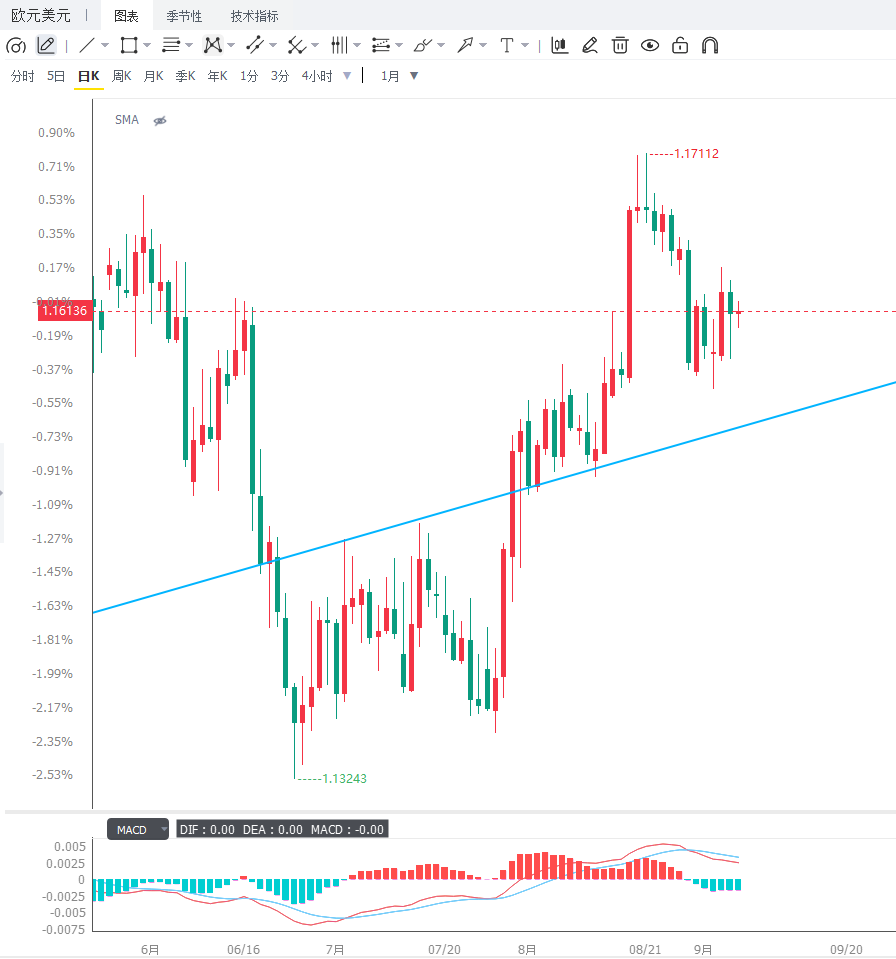 Editor's Summary: German industrial output unexpectedly fell 1.1% in July, far below market expectations, indicating that the recovery of German manufacturing remains fragile, putting significant downward pressure on the euro in the short term. However, rising energy prices in Europe are pushing up inflation risks again, and expectations of a September rate hike by the European Central Bank remain strong, providing some interest rate support for the euro. In the short term, the core contradiction for EUR/USD has shifted from simply European economic data to the interplay between expectations of an ECB rate hike and expectations of Federal Reserve policy. If US CPI is overheated, a stronger dollar could push EUR/USD below 1.1600 and test 1.1560; if US inflation is moderate and the ECB continues to send hawkish signals, the euro could retest 1.1650 and 1.1710. Currently, 1.1600 is a key short-term support level, and the direction of the subsequent breakout will determine the next trend.
Data released by the Federal Statistical Office of Germany showed that German industrial output fell 1.1% month-on-month in July, significantly lower than the market expectation of a 0.3% increase . The previous figure was revised down from a 0.2% increase to essentially flat. Adjusted for seasonality and calendar changes, German industrial output fell 1.6% year-on-year in July, a further widening of the decline from 0.5% in June. This unexpected weakening of industrial production directly reflects the continued pressure on German manufacturing under the influence of factors such as energy costs, external demand, and industrial restructuring. Of particular note is the fact that German manufacturing had previously shown some signs of stabilization. New orders in German manufacturing rose 2.5% month-on-month in July, continuing to improve and indicating that the order side was not entirely weak. However, the increase in orders has not yet fully translated into actual production growth; the significant decline in industrial output in July suggests a time lag between business production activity and new orders. The weak performance of the industrial sector may limit market optimism regarding Eurozone economic growth. If German industrial activity remains sluggish, the growth momentum of Europe's largest economy may be further weakened, putting fundamental pressure on the euro. Especially against the backdrop of rapidly rising energy prices, manufacturing companies face higher production costs, and future output and profit margins remain uncertain. However, the euro is not only affected by economic growth. Recent energy price increases have significantly altered the European Central Bank's policy environment. Escalating tensions in the Middle East have pushed oil prices to high levels, reigniting the risk of energy inflation. The market currently widely expects the ECB to raise interest rates by another 25 basis points to 2.50% at its September meeting, with some institutions even predicting further rate hikes before the end of the year. This means that while weak German industrial data is unfavorable for the euro, it may also reinforce discussions about the stagflation risk of "weakening economic growth and persistently high inflation." If the ECB needs to continue addressing energy-driven inflation under economic pressure, interest rate support for the euro may still exist. Regarding the US dollar, the increase of 162,000 non-farm payrolls in August, significantly higher than the market expectation of 56,000, has led to renewed bets on a Fed rate hike in September. However, the dollar has not yet shown sustained strength as a result. Latest market data shows that the US dollar index fell to around 99.09 on Monday, indicating that the interest rate support from strong employment data was still offset by other factors. Another important variable in the market is the US inflation data to be released this week. If the US CPI is higher than expected, expectations of a Fed rate hike may further intensify, the dollar will regain its advantage, and EUR/USD may face greater pressure; if the inflation data is moderate, the market may reduce its bets on rate hikes again, limiting the dollar's rebound potential, and the euro may have a chance to strengthen again. Therefore, weak German industrial output has a short-term negative impact on the euro, but the potential for further tightening by the ECB and the lack of sustained upward momentum in the dollar itself keep EUR/USD in a tug-of-war between bulls and bears for the time being. From a daily chart perspective, EUR/USD has currently fallen back to around 1.1610, and is still in a consolidation phase after the previous rise. Recent technical movements show that EUR/USD has held key support areas for two consecutive weeks, and the market is awaiting further decisions from ECB policy and US inflation data to determine the direction of the breakout. First, pay attention to the 1.1600 level, which is both a significant psychological support level near the current price and a point where the balance of power between bulls and bears has been rebalanced. If the exchange rate can hold 1.1600 and rise back above 1.1650, the short-term downward pressure may ease, and further resistance levels to watch are 1.1680 and 1.1710. Conversely, if 1.1600 is effectively broken, EUR/USD may further test the support around 1.1560. If the US dollar strengthens due to US CPI, and EUR/USD breaks below this area, the exchange rate may continue to fall towards the 1.1500 level. From a momentum perspective, the euro's recent upward momentum has clearly slowed, and German industrial data has further increased short-term downward pressure. However, as long as the exchange rate can remain above key medium-term support, it cannot be simply concluded that the euro has entered a new downtrend. Currently, it is more important to pay attention to whether the 1.1600 level can provide effective defense and whether 1.1650 can turn into short-term support again. Editor's Summary: German industrial output unexpectedly fell 1.1% in July, far below market expectations, indicating that the recovery of German manufacturing remains fragile, putting significant downward pressure on the euro in the short term. However, rising energy prices in Europe are pushing up inflation risks again, and expectations of a September rate hike by the European Central Bank remain strong, providing some interest rate support for the euro. In the short term, the core contradiction for EUR/USD has shifted from simply European economic data to the interplay between expectations of an ECB rate hike and expectations of Federal Reserve policy. If US CPI is overheated, a stronger dollar could push EUR/USD below 1.1600 and test 1.1560; if US inflation is moderate and the ECB continues to send hawkish signals, the euro could retest 1.1650 and 1.1710. Currently, 1.1600 is a key short-term support level, and the direction of the subsequent breakout will determine the next trend.
- Risk Warning and Disclaimer
- The market involves risk, and trading may not be suitable for all investors. This article is for reference only and does not constitute personal investment advice, nor does it take into account certain users’ specific investment objectives, financial situation, or other needs. Any investment decisions made based on this information are at your own risk.