Oil prices fluctuated at high levels, supporting the Canadian dollar; USD/CAD continued to trade at low levels.
2026-09-07 14:32:05
The USD/CAD pair remained around 1.3830 during Monday's Asian session, lacking a clear direction after a slight rise in the previous trading day. The market is currently driven by strong US jobs data, but also influenced by continued rises in oil prices and a generally weak US dollar, pushing the pair into a key trading range.  International oil prices have become a significant variable influencing the Canadian dollar. With the escalation of the military conflict between the US and Iran, shipping risks in the Strait of Hormuz have increased again. WTI crude oil prices rose to around $92 on Monday, while Brent crude approached $97. Last week, WTI crude rose nearly 10%, marking one of the strongest weekly performances in weeks. Recent news indicates that tanker traffic in the Strait of Hormuz has fallen to its lowest level since May, and market concerns about further disruptions to Middle Eastern oil supplies have intensified significantly. For Canada, rising oil prices typically improve energy export revenues and support the Canadian dollar through terms of trade and capital flows. Therefore, with oil prices remaining high, the USD/CAD pair theoretically faces some downward pressure. However, this round of oil price increases has also boosted global inflation expectations, potentially leading major central banks to maintain higher interest rates for a longer period, thus its actual impact on the exchange rate is not one-way. US employment data provides significant upward support for the USD/CAD pair. US non-farm payrolls increased by 162,000 in August, significantly higher than the market expectation of 56,000, while the unemployment rate remained at 4.1%. Strong employment data has reignited market expectations for a September rate hike by the Federal Reserve, with current market pricing indicating a roughly 57% probability, at times approaching 60%. Meanwhile, the Canadian job market has been relatively weak. Latest data shows that Canada lost approximately 41,700 jobs in August, while the unemployment rate remained unchanged. This significant divergence in employment data between the US and Canada has strengthened support for the US dollar from interest rate expectations, limiting the Canadian dollar's appreciation potential driven by rising oil prices. Therefore, the USD/CAD pair has not yet fully followed the decline in oil prices. The market is reassessing the policy differences between the Federal Reserve and the Bank of Canada. If US inflation data continues to be strong, further fueling expectations of a Fed rate hike, the US dollar may regain momentum; conversely, if CPI falls short of expectations, the market will again bet on the Fed maintaining interest rates, potentially weakening the dollar's support quickly, at which point the boost from rising oil prices to the Canadian dollar will be more pronounced. This week's US inflation data will be the core variable determining the short-term direction of the USD/CAD pair. The market is particularly focused on whether the CPI will rebound due to rising energy prices. If core inflation remains moderate, the Federal Reserve's policy expectations may shift back to caution, putting greater downward pressure on USD/CAD. Conversely, if inflation picks up again, the US dollar is expected to gain an interest rate advantage, pushing USD/CAD to test key resistance levels. From a daily chart perspective, USD/CAD is currently in a relatively weak technical structure, trading around 1.3830, and is facing short-term resistance from the 9-day and 50-day exponential moving averages. The latest technical indicators show the RSI around 43, still below the neutral level of 50, indicating that bullish momentum has not yet formed a significant breakthrough. The first resistance level to watch is the 9-day EMA around 1.3845. If USD/CAD can effectively hold above this level, the short-term upside potential may open up further, followed by the 50-day EMA in the 1.3930-1.3940 area and previous key resistance. A break above 1.3930 could see the market further test the 1.4000 psychological level. Technical market data suggests that 1.3930 is currently a crucial directional confirmation level. On the downside, watch for short-term support around 1.3800, followed by the lower Bollinger Band around 1.3760. If oil prices continue to strengthen and the US dollar index remains weak, and USD/CAD breaks below 1.3760, it could open up further downside potential. Conversely, if the price rebounds above 1.3930, the short-term bearish structure will weaken significantly. Overall, USD/CAD is currently caught in a tug-of-war between fundamentals and technicals: strong US employment data supports the dollar, while high oil prices and the commodity attributes of the Canadian dollar limit further gains. The key short-term direction remains the breakout from the 1.3760-1.3940 range.
 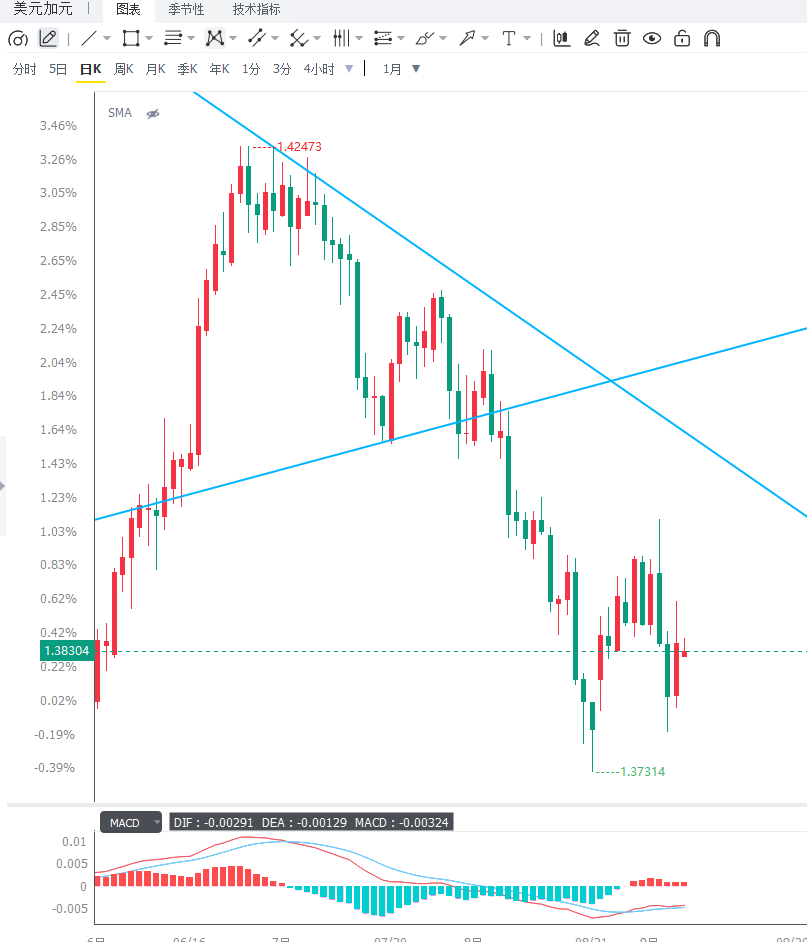 Editor's Summary: The core contradiction in the USD/CAD pair lies in the conflicting effects of strong US employment data and high oil prices on the exchange rate. The significantly stronger-than-expected US August non-farm payrolls data increased the probability of a Fed rate hike in September, providing support for the US dollar. Meanwhile, WTI crude oil prices rising to around $92 and escalating supply risks in the Strait of Hormuz continue to improve the fundamentals of the Canadian dollar. In the short term, as long as oil prices remain high and US CPI does not significantly exceed expectations, USD/CAD may still fall back to the 1.3760 area. If US inflation rebounds and further increases expectations of rate hikes, a break above 1.3930 and a rebound towards the 1.4000 level should be anticipated. Currently, 1.3930 is a key upward trend level, while 1.3760 is a crucial support level.
International oil prices have become a significant variable influencing the Canadian dollar. With the escalation of the military conflict between the US and Iran, shipping risks in the Strait of Hormuz have increased again. WTI crude oil prices rose to around $92 on Monday, while Brent crude approached $97. Last week, WTI crude rose nearly 10%, marking one of the strongest weekly performances in weeks. Recent news indicates that tanker traffic in the Strait of Hormuz has fallen to its lowest level since May, and market concerns about further disruptions to Middle Eastern oil supplies have intensified significantly. For Canada, rising oil prices typically improve energy export revenues and support the Canadian dollar through terms of trade and capital flows. Therefore, with oil prices remaining high, the USD/CAD pair theoretically faces some downward pressure. However, this round of oil price increases has also boosted global inflation expectations, potentially leading major central banks to maintain higher interest rates for a longer period, thus its actual impact on the exchange rate is not one-way. US employment data provides significant upward support for the USD/CAD pair. US non-farm payrolls increased by 162,000 in August, significantly higher than the market expectation of 56,000, while the unemployment rate remained at 4.1%. Strong employment data has reignited market expectations for a September rate hike by the Federal Reserve, with current market pricing indicating a roughly 57% probability, at times approaching 60%. Meanwhile, the Canadian job market has been relatively weak. Latest data shows that Canada lost approximately 41,700 jobs in August, while the unemployment rate remained unchanged. This significant divergence in employment data between the US and Canada has strengthened support for the US dollar from interest rate expectations, limiting the Canadian dollar's appreciation potential driven by rising oil prices. Therefore, the USD/CAD pair has not yet fully followed the decline in oil prices. The market is reassessing the policy differences between the Federal Reserve and the Bank of Canada. If US inflation data continues to be strong, further fueling expectations of a Fed rate hike, the US dollar may regain momentum; conversely, if CPI falls short of expectations, the market will again bet on the Fed maintaining interest rates, potentially weakening the dollar's support quickly, at which point the boost from rising oil prices to the Canadian dollar will be more pronounced. This week's US inflation data will be the core variable determining the short-term direction of the USD/CAD pair. The market is particularly focused on whether the CPI will rebound due to rising energy prices. If core inflation remains moderate, the Federal Reserve's policy expectations may shift back to caution, putting greater downward pressure on USD/CAD. Conversely, if inflation picks up again, the US dollar is expected to gain an interest rate advantage, pushing USD/CAD to test key resistance levels. From a daily chart perspective, USD/CAD is currently in a relatively weak technical structure, trading around 1.3830, and is facing short-term resistance from the 9-day and 50-day exponential moving averages. The latest technical indicators show the RSI around 43, still below the neutral level of 50, indicating that bullish momentum has not yet formed a significant breakthrough. The first resistance level to watch is the 9-day EMA around 1.3845. If USD/CAD can effectively hold above this level, the short-term upside potential may open up further, followed by the 50-day EMA in the 1.3930-1.3940 area and previous key resistance. A break above 1.3930 could see the market further test the 1.4000 psychological level. Technical market data suggests that 1.3930 is currently a crucial directional confirmation level. On the downside, watch for short-term support around 1.3800, followed by the lower Bollinger Band around 1.3760. If oil prices continue to strengthen and the US dollar index remains weak, and USD/CAD breaks below 1.3760, it could open up further downside potential. Conversely, if the price rebounds above 1.3930, the short-term bearish structure will weaken significantly. Overall, USD/CAD is currently caught in a tug-of-war between fundamentals and technicals: strong US employment data supports the dollar, while high oil prices and the commodity attributes of the Canadian dollar limit further gains. The key short-term direction remains the breakout from the 1.3760-1.3940 range. Editor's Summary: The core contradiction in the USD/CAD pair lies in the conflicting effects of strong US employment data and high oil prices on the exchange rate. The significantly stronger-than-expected US August non-farm payrolls data increased the probability of a Fed rate hike in September, providing support for the US dollar. Meanwhile, WTI crude oil prices rising to around $92 and escalating supply risks in the Strait of Hormuz continue to improve the fundamentals of the Canadian dollar. In the short term, as long as oil prices remain high and US CPI does not significantly exceed expectations, USD/CAD may still fall back to the 1.3760 area. If US inflation rebounds and further increases expectations of rate hikes, a break above 1.3930 and a rebound towards the 1.4000 level should be anticipated. Currently, 1.3930 is a key upward trend level, while 1.3760 is a crucial support level.
- Risk Warning and Disclaimer
- The market involves risk, and trading may not be suitable for all investors. This article is for reference only and does not constitute personal investment advice, nor does it take into account certain users’ specific investment objectives, financial situation, or other needs. Any investment decisions made based on this information are at your own risk.