Japan's wage growth hits fastest pace since 1997! A September rate hike is virtually certain, providing strong support for the yen.
2026-09-08 08:34:05
Data released on Tuesday (September 8) showed that real wages in Japan rose 2.4% year-on-year in July, marking the largest increase since May 2021 and the seventh consecutive month of positive growth. In terms of nominal wages, total cash income surged 4.7% year-on-year to 436,401 yen per month, the fastest growth since January 1997, far exceeding market expectations of 3.8%. 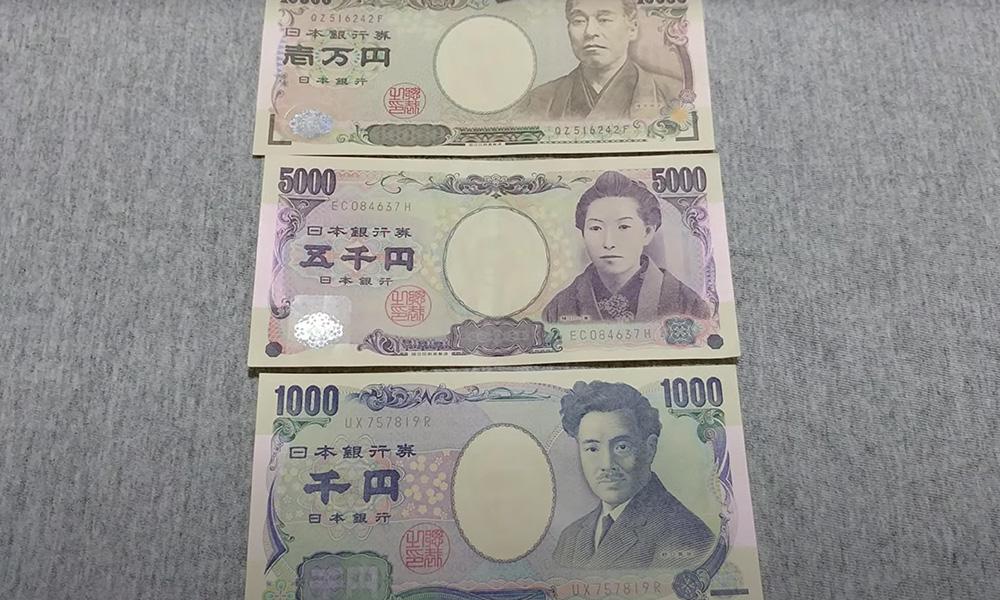
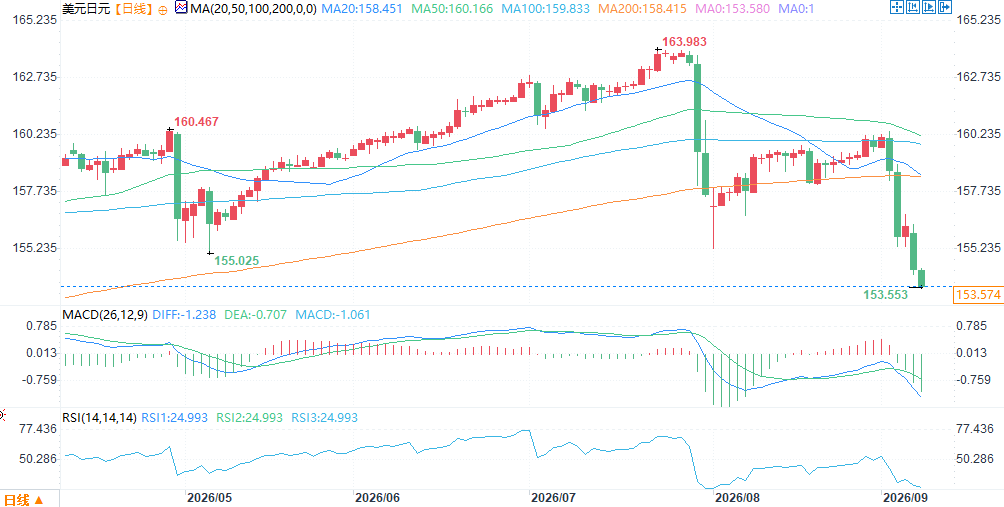 (USD/JPY daily chart, source: FX678) At 8:29 Beijing time, USD/JPY was trading at 153.55/56.
Real wages saw their biggest increase since 2021, while nominal wages grew at their fastest pace since 1997.
Japan's real wages rose 2.4% year-on-year in July (the largest increase since May 2021), marking the seventh consecutive month of growth. Nominal wages (total cash income) rose 4.7% year-on-year to 436,401 yen per month, the fastest pace since January 1997, far exceeding the expected 3.8%. Basic wages rose 4.1% (the fastest pace since April 1992), exceeding 3% for six consecutive months (the longest consecutive record in 34 years). Overtime pay growth slowed to 3.1%, while special payments (one-time bonuses) jumped 6.3%. The inflation rate used to calculate real wages rose to 2.2% (the first time it has reached 2% this year), but remains well below 3.6% in the same period last year. The data provides the "clearest evidence yet" for the Bank of Japan to raise interest rates next week, addressing the central bank's main concern that a rate hike could stifle wage recovery.The market is focused on the post-interest rate hike path, with Japanese bond yields and the yen attracting attention.
The market has largely priced in a rate hike by the Bank of Japan next week, and the focus has quickly shifted to the central bank's statements and guidance regarding the future path of rate increases. If a continued gradual tightening stance is confirmed, it will further push up Japanese government bond yields, which are already at near 30-year highs, and provide support for the yen. The impact on the Nikkei index is two-sided: strong wage growth and a positive outlook for consumption will benefit export companies' profits, but continued yield increases may suppress valuations in interest rate-sensitive sectors such as banking and real estate. Investors will closely watch the actual decision, policy statement, and details of the governor's press conference at next week's Bank of Japan meeting. These signals will directly determine the next direction of Japanese government bond yields and the yen, and will have a ripple effect on global carry trades and risk asset sentiment.Institutional Views
Bank of America recently significantly raised its outlook for the Japanese yen, predicting that the USD/JPY exchange rate will fall back to 149 by the end of the year. The bank believes that the joint US-Japan foreign exchange intervention has significantly enhanced its effectiveness and credibility, effectively removing the previous limitation imposed by Japan's foreign exchange reserves on the scale of intervention, and providing policy space for the Bank of Japan to accelerate interest rate hikes. Analysts point out that the long-term goal of the intervention is to restore the stability of the yen; if the Bank of Japan raises interest rates in September and releases hawkish signals, it will further strengthen the yen's support. The bank emphasizes that the joint action reflects the US and Japan's commitment to the long-term stability of the yen, rather than simply short-term defense; therefore, the yen's appreciation momentum is expected to continue, with an appreciation potential of approximately 6% by the end of the year.Summarize
Japan's real wages in July saw their largest increase since 2021, and nominal wage growth was the fastest since 1997, providing strong evidence for a Bank of Japan rate hike next week. The market is focused on the post-rate hike path, with Japanese government bond yields and the yen under scrutiny. Investors need to pay attention to the Bank of Japan's meeting results and subsequent policy signals. If continued tightening is confirmed, the yen may strengthen further; if it is dovish, the exchange rate may rebound. The Nikkei index faces both influences. The Bank of Japan's meeting next week will be a key catalyst for the yen's short-term direction. (USD/JPY daily chart, source: FX678) At 8:29 Beijing time, USD/JPY was trading at 153.55/56.
- Risk Warning and Disclaimer
- The market involves risk, and trading may not be suitable for all investors. This article is for reference only and does not constitute personal investment advice, nor does it take into account certain users’ specific investment objectives, financial situation, or other needs. Any investment decisions made based on this information are at your own risk.