Oil prices have been fluctuating at high levels, supporting the Canadian dollar. The USD/CAD pair has returned to lower levels; a break below these levels should be anticipated.
2026-09-08 14:04:09
The USD/CAD pair continued its decline in Asian trading on Tuesday, falling below the 1.3800 level. The Canadian dollar has recently shown significant improvement, driven by both a weakening US dollar and a surge in international oil prices. Latest market data shows that WTI crude oil has risen above $92 and Brent crude is near $97, remaining at multi-month highs, with rising energy prices strengthening the relative support for the Canadian dollar.  The strength in the crude oil market is closely related to supply risks in the Middle East. The ongoing situation around the Strait of Hormuz continues to disrupt global energy transportation, and concerns about supply disruptions are driving a renewed widening of the crude oil risk premium. Since energy exports are a crucial external support for the Canadian economy and the Canadian dollar, stronger oil prices typically benefit the Canadian dollar, thus putting downward pressure on USD/CAD. The Bank of Canada has also pointed out that oil prices have a significant impact on Canada's inflation outlook, and energy price changes remain a key variable in the current economic outlook. Regarding the US dollar, the US added 162,000 non-farm payroll jobs in August, and the unemployment rate remained at 4.1%. Strong employment data has boosted market expectations for further tightening by the Federal Reserve, with the probability now rising to approximately 60%. However, the US dollar index has remained weak recently, falling to around 98.8 on September 8th, indicating that strong employment data is not enough to completely reverse the dollar's medium-term weakness. The market's focus will quickly shift to US inflation data. US PPI and CPI will be released this week. If inflation rebounds significantly, especially if rising energy prices further transmit to overall prices, it could strengthen market expectations for Fed tightening and provide upward momentum for the dollar. Conversely, if inflation remains moderate, the dollar's weakness may persist, and USD/CAD will face further downward pressure. Canada's own policy environment is also worth noting. The Bank of Canada previously maintained its policy rate at 2.25%, while noting that inflation had risen to approximately 3%, and cost pressures from high oil prices have become a key factor for policymakers. Canada's annualized economic growth reached 3.3% in the second quarter, indicating continued economic resilience, but the job market has recently shown signs of cooling, with 41,700 fewer jobs in August and the unemployment rate remaining at 6.4%. Therefore, USD/CAD currently faces dual pressure from a weakening dollar and rising oil prices, but US inflation data could still be a significant catalyst for changing the short-term direction. If the US CPI is lower than expected, and WTI continues to stabilize above $90, USD/CAD may further test the 1.3750 or even 1.3700 area; if inflation unexpectedly rises and drives a dollar rebound, the 1.3900 area may once again become a target for a rebound. From a daily chart perspective, USD/CAD has been declining continuously from above 1.3900 recently, and a short-term downward structure is gradually forming. The current exchange rate has broken below the 1.3800 level, and may accelerate its downward movement in the short term, with the next targets at 1.3750 and the 1.3700 area. If oil prices continue to be strong, buying of the Canadian dollar may increase further, potentially expanding the downside potential for USD/CAD. Conversely, if the exchange rate rebounds above 1.3900, it would indicate some relief in short-term bearish pressure, and a retest of the resistance around 1.4000 is possible. On the 4-hour chart, the exchange rate maintains a downward trend, with lower highs on rallies. The first resistance level is around 1.3850, while 1.3900 presents a more significant resistance level. On the downside, key levels to watch are 1.3750 and 1.3700. If US inflation data is lower than expected and the US dollar index continues to weaken, the exchange rate may accelerate its downward test of support. If PPI or CPI is significantly higher than expected, a rapid rebound in the US dollar could lead to USD/CAD regaining 1.3850.
 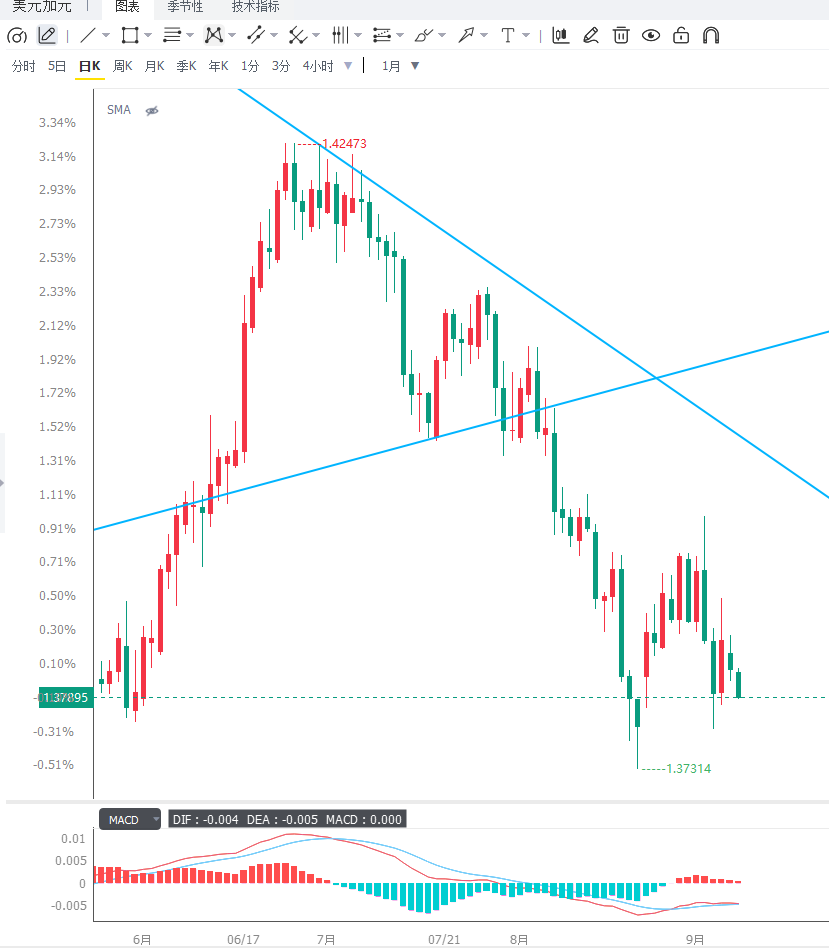 The core contradiction in the USD/CAD pair currently lies between "expectations of US dollar policy" and "the correlation between oil prices and the Canadian dollar." While US employment data has reinforced expectations of a tightening Federal Reserve policy, the US dollar index remains weak, while the continued rise in oil prices further strengthens support for the Canadian dollar. In the short term, if US inflation does not significantly exceed expectations, USD/CAD is likely to remain range-bound with a slight downward bias; if inflation rebounds and drives the US dollar stronger, there is room for a technical rebound in the exchange rate. Investors should pay close attention to whether US PPI, CPI, and international oil prices can maintain their high levels this week.
The strength in the crude oil market is closely related to supply risks in the Middle East. The ongoing situation around the Strait of Hormuz continues to disrupt global energy transportation, and concerns about supply disruptions are driving a renewed widening of the crude oil risk premium. Since energy exports are a crucial external support for the Canadian economy and the Canadian dollar, stronger oil prices typically benefit the Canadian dollar, thus putting downward pressure on USD/CAD. The Bank of Canada has also pointed out that oil prices have a significant impact on Canada's inflation outlook, and energy price changes remain a key variable in the current economic outlook. Regarding the US dollar, the US added 162,000 non-farm payroll jobs in August, and the unemployment rate remained at 4.1%. Strong employment data has boosted market expectations for further tightening by the Federal Reserve, with the probability now rising to approximately 60%. However, the US dollar index has remained weak recently, falling to around 98.8 on September 8th, indicating that strong employment data is not enough to completely reverse the dollar's medium-term weakness. The market's focus will quickly shift to US inflation data. US PPI and CPI will be released this week. If inflation rebounds significantly, especially if rising energy prices further transmit to overall prices, it could strengthen market expectations for Fed tightening and provide upward momentum for the dollar. Conversely, if inflation remains moderate, the dollar's weakness may persist, and USD/CAD will face further downward pressure. Canada's own policy environment is also worth noting. The Bank of Canada previously maintained its policy rate at 2.25%, while noting that inflation had risen to approximately 3%, and cost pressures from high oil prices have become a key factor for policymakers. Canada's annualized economic growth reached 3.3% in the second quarter, indicating continued economic resilience, but the job market has recently shown signs of cooling, with 41,700 fewer jobs in August and the unemployment rate remaining at 6.4%. Therefore, USD/CAD currently faces dual pressure from a weakening dollar and rising oil prices, but US inflation data could still be a significant catalyst for changing the short-term direction. If the US CPI is lower than expected, and WTI continues to stabilize above $90, USD/CAD may further test the 1.3750 or even 1.3700 area; if inflation unexpectedly rises and drives a dollar rebound, the 1.3900 area may once again become a target for a rebound. From a daily chart perspective, USD/CAD has been declining continuously from above 1.3900 recently, and a short-term downward structure is gradually forming. The current exchange rate has broken below the 1.3800 level, and may accelerate its downward movement in the short term, with the next targets at 1.3750 and the 1.3700 area. If oil prices continue to be strong, buying of the Canadian dollar may increase further, potentially expanding the downside potential for USD/CAD. Conversely, if the exchange rate rebounds above 1.3900, it would indicate some relief in short-term bearish pressure, and a retest of the resistance around 1.4000 is possible. On the 4-hour chart, the exchange rate maintains a downward trend, with lower highs on rallies. The first resistance level is around 1.3850, while 1.3900 presents a more significant resistance level. On the downside, key levels to watch are 1.3750 and 1.3700. If US inflation data is lower than expected and the US dollar index continues to weaken, the exchange rate may accelerate its downward test of support. If PPI or CPI is significantly higher than expected, a rapid rebound in the US dollar could lead to USD/CAD regaining 1.3850. The core contradiction in the USD/CAD pair currently lies between "expectations of US dollar policy" and "the correlation between oil prices and the Canadian dollar." While US employment data has reinforced expectations of a tightening Federal Reserve policy, the US dollar index remains weak, while the continued rise in oil prices further strengthens support for the Canadian dollar. In the short term, if US inflation does not significantly exceed expectations, USD/CAD is likely to remain range-bound with a slight downward bias; if inflation rebounds and drives the US dollar stronger, there is room for a technical rebound in the exchange rate. Investors should pay close attention to whether US PPI, CPI, and international oil prices can maintain their high levels this week.
- Risk Warning and Disclaimer
- The market involves risk, and trading may not be suitable for all investors. This article is for reference only and does not constitute personal investment advice, nor does it take into account certain users’ specific investment objectives, financial situation, or other needs. Any investment decisions made based on this information are at your own risk.