Euro bulls are pinning their hopes on a tightening cycle from the European Central Bank.
2026-09-09 17:42:08
Market optimism regarding the European Central Bank's monetary tightening is driving a rebound in the euro against the dollar, with continued inflows of bullish funds further amplifying the euro's upward momentum. The dollar's weakness is primarily driven by market concerns about a significant drop in US Treasury yields. Even with recent increases in oil prices, a slight rise in US Treasury yields, and downward pressure on stock indices—multiple macroeconomic conditions that should have been favorable for the dollar—the dollar index has failed to gain a significant boost and has not staged the expected strong rebound.  Investors generally anticipate that the US Treasury will expand and deepen its long-term Treasury repurchase operations; meanwhile, the market is also digesting the European Central Bank's (ECB) hawkish policy comments. The market expects the ECB to raise its deposit rate from 2.25% to 2.5%. The current debate is no longer about "whether to raise rates," but rather when this tightening cycle will end and at what level interest rates will ultimately settle, which will directly determine the euro's subsequent upside potential. The ECB is the most hawkish central bank among the G7. Impacted by the geopolitical conflicts in the Middle East pushing up energy prices, it was also the first G7 central bank to initiate monetary tightening policies. The ongoing Middle East situation continues to disrupt the international oil and gas supply chain, and energy-imported inflation continues to threaten price stability in the Eurozone, forcing the central bank to tighten monetary policy ahead of schedule to prevent further inflation from spreading to consumer goods and services. In September, the ECB Governing Council planned its second rate hike. Following this, economists surveyed by Bloomberg predicted a prolonged period of interest rate pause; however, financial markets have already priced in a further increase in the deposit rate to 3% by mid-2027. Which prediction will come true? The significant divergence between these two expectations will cause continued volatility in the EUR/USD exchange rate, and the answer to this question will be the most crucial clue in predicting the future trend of the EUR/USD. The European Central Bank (ECB) has ample reason to raise deposit rates in September. The Eurozone's consumer price index climbed to 3.3% in August, a three-year high; simultaneously, the Eurozone's GDP growth rate accelerated to 0.6% in the second quarter of 2026, with upward revisions to economic data demonstrating that the Eurozone economy has the foundation to withstand interest rate hikes, providing realistic support for the central bank to tighten monetary policy. Furthermore, the ECB does not want to repeat the mistakes of 2022—when its policy response was too slow, directly causing inflation to surge above 10%. The longer the Middle East conflict continues, the higher the risk of a second round of inflation transmission from rising energy prices, and the greater the hidden danger of a wage-price spiral, forcing the central bank not to easily abandon the option of raising interest rates. However, on the other hand, it is difficult to find sufficient realistic justification for raising deposit rates all the way to 3%. The continued rise in international crude oil and natural gas prices, with their lagged effects, will gradually erode the disposable income of Eurozone residents, suppress household consumption, and increase business operating costs, thereby inhibiting investment activity and ultimately dragging down aggregate demand and GDP growth. Aggressive monetary tightening at this time would only further exacerbate the Eurozone's economic predicament. Furthermore, the European Central Bank must remain cautious; a significant interest rate hike would push up sovereign bond yields in Eurozone countries, increase debt repayment pressure on some highly indebted member states, and even trigger renewed signs of Eurozone debt crisis—a situation policymakers must strive to avoid.
 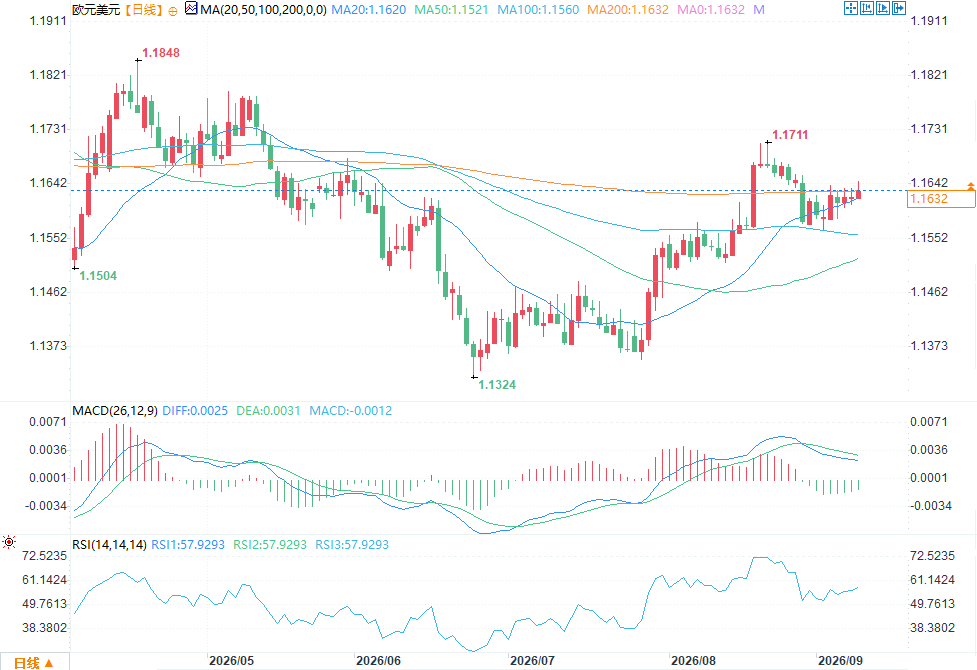 (EUR/USD Daily Chart Source: EasyForex) Considering the above factors, the European Central Bank (ECB) needs to adopt a cautious and balanced policy stance. Baseline Scenario: Christine Lagarde will likely deliver a cautious statement after the policy meeting. The market's previous large long positions in EUR/USD were largely a pre-emptive bet against a hawkish signal from the ECB; if this expectation fails to materialize, the already large long positions in EUR/USD could easily trigger profit-taking, putting significant downward pressure on the exchange rate. In addition, the market also needs to pay attention to the scale of the US Treasury bond repurchase program announced by the Treasury Department, as the entire debt market will react accordingly. Morgan Stanley predicts that the repurchase program may reach $10 billion. Theoretically, large-scale repurchases of long-term Treasury bonds will change the supply and demand pattern in the bond market, putting downward pressure on yields of bonds with broader maturities; it is precisely because of this pre-emptive concern that the US dollar has been unable to strengthen, and even favorable external conditions have failed to attract a sustained inflow of funds back to dollar assets.
Investors generally anticipate that the US Treasury will expand and deepen its long-term Treasury repurchase operations; meanwhile, the market is also digesting the European Central Bank's (ECB) hawkish policy comments. The market expects the ECB to raise its deposit rate from 2.25% to 2.5%. The current debate is no longer about "whether to raise rates," but rather when this tightening cycle will end and at what level interest rates will ultimately settle, which will directly determine the euro's subsequent upside potential. The ECB is the most hawkish central bank among the G7. Impacted by the geopolitical conflicts in the Middle East pushing up energy prices, it was also the first G7 central bank to initiate monetary tightening policies. The ongoing Middle East situation continues to disrupt the international oil and gas supply chain, and energy-imported inflation continues to threaten price stability in the Eurozone, forcing the central bank to tighten monetary policy ahead of schedule to prevent further inflation from spreading to consumer goods and services. In September, the ECB Governing Council planned its second rate hike. Following this, economists surveyed by Bloomberg predicted a prolonged period of interest rate pause; however, financial markets have already priced in a further increase in the deposit rate to 3% by mid-2027. Which prediction will come true? The significant divergence between these two expectations will cause continued volatility in the EUR/USD exchange rate, and the answer to this question will be the most crucial clue in predicting the future trend of the EUR/USD. The European Central Bank (ECB) has ample reason to raise deposit rates in September. The Eurozone's consumer price index climbed to 3.3% in August, a three-year high; simultaneously, the Eurozone's GDP growth rate accelerated to 0.6% in the second quarter of 2026, with upward revisions to economic data demonstrating that the Eurozone economy has the foundation to withstand interest rate hikes, providing realistic support for the central bank to tighten monetary policy. Furthermore, the ECB does not want to repeat the mistakes of 2022—when its policy response was too slow, directly causing inflation to surge above 10%. The longer the Middle East conflict continues, the higher the risk of a second round of inflation transmission from rising energy prices, and the greater the hidden danger of a wage-price spiral, forcing the central bank not to easily abandon the option of raising interest rates. However, on the other hand, it is difficult to find sufficient realistic justification for raising deposit rates all the way to 3%. The continued rise in international crude oil and natural gas prices, with their lagged effects, will gradually erode the disposable income of Eurozone residents, suppress household consumption, and increase business operating costs, thereby inhibiting investment activity and ultimately dragging down aggregate demand and GDP growth. Aggressive monetary tightening at this time would only further exacerbate the Eurozone's economic predicament. Furthermore, the European Central Bank must remain cautious; a significant interest rate hike would push up sovereign bond yields in Eurozone countries, increase debt repayment pressure on some highly indebted member states, and even trigger renewed signs of Eurozone debt crisis—a situation policymakers must strive to avoid. (EUR/USD Daily Chart Source: EasyForex) Considering the above factors, the European Central Bank (ECB) needs to adopt a cautious and balanced policy stance. Baseline Scenario: Christine Lagarde will likely deliver a cautious statement after the policy meeting. The market's previous large long positions in EUR/USD were largely a pre-emptive bet against a hawkish signal from the ECB; if this expectation fails to materialize, the already large long positions in EUR/USD could easily trigger profit-taking, putting significant downward pressure on the exchange rate. In addition, the market also needs to pay attention to the scale of the US Treasury bond repurchase program announced by the Treasury Department, as the entire debt market will react accordingly. Morgan Stanley predicts that the repurchase program may reach $10 billion. Theoretically, large-scale repurchases of long-term Treasury bonds will change the supply and demand pattern in the bond market, putting downward pressure on yields of bonds with broader maturities; it is precisely because of this pre-emptive concern that the US dollar has been unable to strengthen, and even favorable external conditions have failed to attract a sustained inflow of funds back to dollar assets.
- Risk Warning and Disclaimer
- The market involves risk, and trading may not be suitable for all investors. This article is for reference only and does not constitute personal investment advice, nor does it take into account certain users’ specific investment objectives, financial situation, or other needs. Any investment decisions made based on this information are at your own risk.