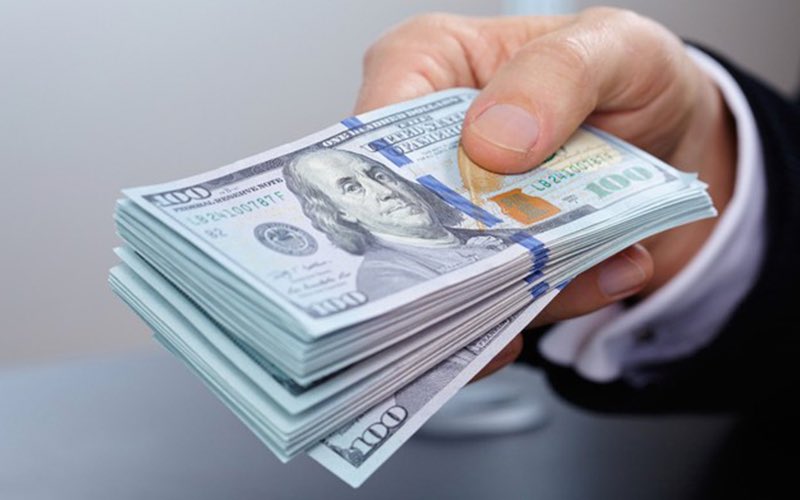
A former US lawmaker said he should hold his own gold, as the world's largest asset bubble is nearing its end.
2026-09-10 10:34:06
On Wednesday morning (September 9th) local time, U.S. Treasury Secretary Scott Bessent announced that the cap on the repurchase of long-term government bonds would be tripled, reaching a maximum of $6 billion. Bond repurchases involve the government buying back outstanding Treasury bonds to improve liquidity and lower government financing costs. However, the market did not calm down after this policy was implemented; the 10-year Treasury yield rose by about 0.06 percentage points to 4.85%, and spot gold prices climbed above $4,400. Former Congressman Ron Paul, a long-time researcher of monetary systems, issued a strong warning about the current monetary and fiscal system, drawing on decades of observation and personal experience. 
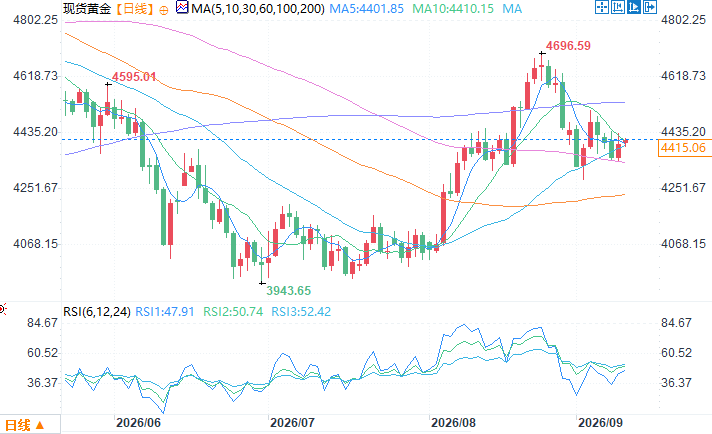 Spot gold daily chart source: FX678. At 10:31 AM Beijing time on September 10th, spot gold was trading at $4414.06 per ounce.
The Fort Knox gold ledger has sparked controversy, with some advocating for the public to hold physical gold at their discretion.
Ron Paul has focused on currency and gold for decades, and his core viewpoint has remained unchanged. He believes that people should own their gold, not entrust it to the government, so that everyone can truly understand their assets. In August of this year, his son, Senator Rand Paul, spent about two hours in the Fort Knox U.S. Gold Reserve Vault, confirming that physical gold was indeed stored there. Data from the U.S. Mint shows that the total gold reserves are approximately 147 million ounces. Officials say that members of Congress conducted an audit of the vault in 1974 and that audits are performed regularly. Critics argue that this is not an independent, bar-by-bar public inventory. Ron Paul's main concern is not the existence of the physical gold, but rather the official accounting methods. He says it's difficult for outsiders to know the true situation inside the vault; the official accounting methods sometimes use $42 per ounce and sometimes refer to a gold price of $4,000 before publishing the total gold reserves, making this accounting system unreliable. The U.S. Treasury still values the national gold reserves at the 1973 statutory price of $42.22 per ounce, a figure that remains unchanged, while the spot price of gold has increased more than a hundredfold. Ron Paul didn't predict gold price levels; his core logic was simple: holding physical gold is far more reliable than relying on others' accounting records. When asked under what circumstances he would sell his gold holdings, he quoted a friend in the numismatic industry, saying that true gold believers don't sell their gold, and he himself wouldn't. He also believes that simply raising the statutory gold price cannot solve the deep-seated problems of the system; Britain tried a similar approach in the 1920s, which ultimately failed.US Treasury repurchase agreements harbor hidden risks; be wary of them evolving into a second round of quantitative easing.
Regarding the Treasury's recent intervention in the bond market, Ron Paul suspects that this repurchase program will ultimately evolve into a second round of quantitative easing. He said he is curious where the government will raise this huge amount of funds. The Federal Reserve launched quantitative easing after 2008, with the central bank printing money to buy bonds; this policy officially ended many years ago. What worries him even more is that the Federal Reserve no longer focuses on M1 and M2 money supply indicators. He said many people are concerned about the growth rate of M1 and M2 and changes in the money supply, but now officials say these indicators are outdated analytical frameworks, while some, including himself, still believe that the total money supply is an important reference. He predicts that such bond-buying interventions will escalate, this system will eventually fail, and the authorities will have to increase intervention efforts; it will be difficult to conceal the various operations that maintain this monetary system indefinitely. Treasury Secretary Scott Bessent previously stated in Texas, when discussing foreign exchange market intervention, that he is now in charge of policy. Ron Paul interpreted these remarks as a propaganda tactic, essentially sending a signal to the market that everything is under control and that he has the power to make decisions, expressing strong skepticism about the current monetary policy formulation.Government-business entanglements increase risks, and the massive debt bubble will eventually be liquidated.
Ron Paul points out a worrying new development: since 2025, the US government has acquired stakes in over 30 private companies, a model he calls corporatism. While these companies are nominally private, their actual operations are guided by the government. He says government agencies and administrative departments directly buy shares in these companies, becoming one of their owners. He cites the example of early railroad companies, noting that those receiving government funding and regulation mostly went bankrupt, while those refusing government funding survived. He argues that the current frequent discussions about "affordability" in the US are misplaced; the public laments the unaffordability of commodities like oil, but rarely realizes that the root cause is not purchasing power, but the devaluation of the currency itself. Brent crude oil broke $100 a barrel for the first time since July, rising about 65% this year, diesel prices hit a new high, and 30-year mortgage rates rose to 6.85%, the highest level in over a year. Geopolitical conflicts in the Gulf region will be transmitted through energy prices to residential mortgages, pushing up overall societal costs. Ron Paul assesses the current system as likely the biggest asset bubble in human history, stating that market liquidation is inevitable once debt and improper investments accumulate to a certain extent.Conclusion
Ron Paul's views are rooted in his family's memories and his experience of the collapse of the Bretton Woods system; he insists on the ideals of sound money and freedom. The limited effectiveness of the US Treasury's bond market bailout indirectly confirms the fragility of the current debt system. While central banks around the world continue to increase their gold reserves, Ron Paul reminds investors that paper reserves do not equate to physical control, and warns of the risks of monetary expansion resulting from continued government intervention in the market. Huge debt, distorted investments, and geopolitical disturbances mean that the risk of asset bubble liquidation deserves the continued attention of all market participants. Spot gold daily chart source: FX678. At 10:31 AM Beijing time on September 10th, spot gold was trading at $4414.06 per ounce.
- Risk Warning and Disclaimer
- The market involves risk, and trading may not be suitable for all investors. This article is for reference only and does not constitute personal investment advice, nor does it take into account certain users’ specific investment objectives, financial situation, or other needs. Any investment decisions made based on this information are at your own risk.