Expectations of a UK interest rate hike are rising, and the pound has risen for five consecutive days against the dollar, potentially accelerating its upward momentum in the short term.
2026-09-10 13:16:07
The British pound extended its recent gains against the US dollar in Asian trading on Thursday, trading around 1.3540, marking its fifth consecutive day of increases. Latest market data showed that GBP/USD briefly rose above 1.3550, reaching a near two-week high, indicating that the pound continues to maintain a relatively strong performance. A weaker dollar and market expectations of a gradual tightening of monetary policy by the Bank of England are key factors supporting the pound.  The core focus of the foreign exchange market remains on US inflation data. The US PPI will be released on Thursday, and the CPI on Friday; these two figures will directly influence market expectations for the Federal Reserve's policy meeting next week. Recent strong US employment data has prompted traders to increase their expectations for interest rate hikes, with the market currently pricing in a roughly 60% probability of a rate hike at the next Fed meeting. If PPI and CPI continue to exceed expectations, the dollar may regain support from yield and interest rate expectations, limiting the pound's upside potential; if inflation data falls short of expectations, the dollar's weakness may continue, further improving the upside environment for GBP/USD. In the UK, economic data signals are relatively complex. The UK housing market has recently shown initial signs of stabilization. The Royal Institution of Chartered Surveyors' August housing market survey showed that the house price differential improved from a revised -29 in July to -28, the highest level in five months. However, the housing market recovery remains fragile, and house price expectations for the next three months remain weak, with the market anticipating gradual stabilization only afterward. UK inflationary pressures continue to be a significant variable for the pound market. Previously, UK consumer inflation rose to 2.9% in July, with a sharp increase in energy costs further increasing pressure on the Bank of England to maintain its tight monetary policy. Meanwhile, Bank of England Chief Economist Peale stated that raising interest rates earlier could help reduce the risk of needing more aggressive measures to control inflation in the future. The interest rate market is not currently betting on an immediate policy adjustment by the Bank of England at its next meeting, but investors are gradually pricing in the possibility of further tightening before the end of the year. Market strategists point out that the UK short-term interest rate market remains cautious about the next meeting, but has already reflected expectations of gradual rate hikes in November and December. This means that the market is currently trading not on an immediate sharp shift by the Bank of England, but rather on the possibility that inflation and energy price pressures may drive a gradual tightening of policy before the end of the year. This provides some support for the pound, but also means that further gains in the pound require more fundamental confirmation. If UK inflation continues to exceed the target while energy prices remain high, the Bank of England's policy space may be reassessed, and the pound's interest rate advantage could widen. Conversely, if UK economic activity slows significantly, and the housing and labor markets face further pressure, the Bank of England may become more cautious, and the pound's upward momentum will be weakened. Regarding the US dollar, the recent continuous weakening of the index has provided direct support for GBP/USD. The market is currently awaiting a repricing of US PPI and CPI data to reflect expectations for Federal Reserve policy. Especially against the backdrop of rising energy prices pushing up global inflation risks, marginal changes in US inflation data could amplify interest rate market volatility and further impact carry trades between the US dollar and the British pound. Furthermore, the continued rise in international energy prices increases the complexity of policy decisions by the Bank of England and the Federal Reserve. Rising energy prices could either push up inflation or suppress real consumption and economic growth; therefore, the market needs to determine whether the inflationary shock will be transmitted to central bank policy more quickly or ultimately translate into economic growth pressure. For GBP/USD, this means that short-term movements will remain highly dependent on the relative changes between expectations of US dollar interest rates and expectations of UK interest rate hikes. From a daily chart perspective, GBP/USD currently maintains a slightly bullish structure, with the exchange rate trading above a dense area of moving averages. Latest technical data shows that the 5-day, 10-day, 20-day, and 50-day moving averages are all below the current price, with short- and medium-term moving averages showing a bullish alignment. The 14-day RSI is approximately 53, in a neutral-to-strong zone, indicating that the bulls still hold a certain advantage but have not yet entered a clearly overbought state. The first resistance level to watch is around 1.3565, followed by the psychological level of 1.3600. If the price breaks through 1.3600 and holds above that level, it may test the trendline resistance around 1.3670. The 1.3670 area is also a key breakout zone in the current daily chart; a successful breakout could open up further upside potential for the pound in the medium term. On the downside, the first support level to watch is the 1.3520-1.3515 area, a crucial defensive zone for the short-term bullish structure. A break below this area could lead to a pullback to around 1.3490; a further breach would require monitoring the moving average support around 1.3470-1.3465. In the daily chart, the 1.3470 level is also close to a dense area of moving averages, so holding this level will determine whether the short-term bullish structure continues. Looking at the 4-hour chart, GBP/USD has recently formed consecutive higher lows and highs, and the short-term bullish structure remains intact. The 1.3540 level has transformed from a previous pivot area into a crucial short-term support/resistance level. As long as the exchange rate remains above 1.3540, there is still a possibility of further testing of 1.3570 and 1.3600 in the short term. However, if it falls below 1.3540 again, the upward momentum may weaken, increasing the risk of a pullback to 1.3515 or even 1.3490. Overall, the GBP/USD technical outlook is currently bullish, but the exchange rate is approaching the key resistance area of 1.3600. Whether it can continue to rise will depend on changes in US PPI, CPI, and interest rate expectations in the UK and the US. Strong US inflation data could drive a rebound in the US dollar, while moderate US inflation data could create conditions for the pound to break through 1.3600.
 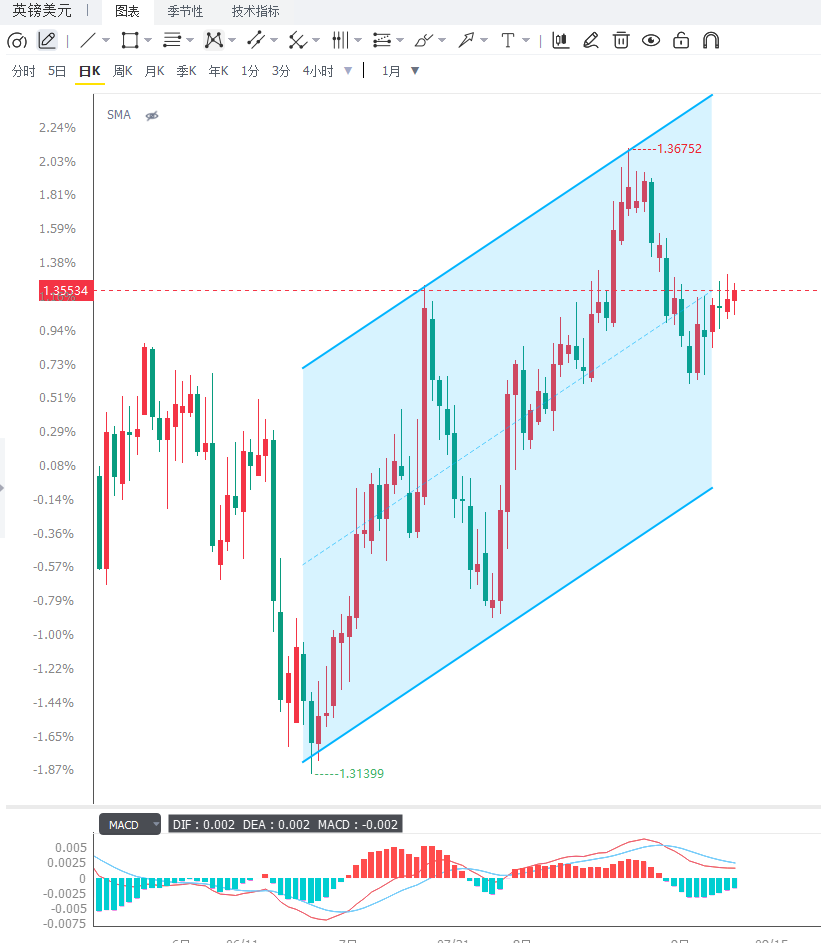 The GBP/USD pair has risen for the fifth consecutive day, currently approaching 1.3550. A weaker dollar and expectations of further tightening of monetary policy in the UK are jointly supporting the pound. However, with the US PPI and CPI data to be released soon, and market expectations for a Fed rate hike rising to approximately 60%, the dollar still faces a short-term risk of rebound. Looking ahead, 1.3600 is a key resistance level for GBP/USD to further expand its upward potential; a break above this level could see it reach 1.3670. On the downside, key support levels to watch are 1.3520, 1.3490, and 1.3465. Short-term market direction will largely depend on the repricing of Fed rate expectations by US inflation data, while also monitoring UK inflation, energy prices, and the possibility of further tightening by the Bank of England before the end of the year.
The core focus of the foreign exchange market remains on US inflation data. The US PPI will be released on Thursday, and the CPI on Friday; these two figures will directly influence market expectations for the Federal Reserve's policy meeting next week. Recent strong US employment data has prompted traders to increase their expectations for interest rate hikes, with the market currently pricing in a roughly 60% probability of a rate hike at the next Fed meeting. If PPI and CPI continue to exceed expectations, the dollar may regain support from yield and interest rate expectations, limiting the pound's upside potential; if inflation data falls short of expectations, the dollar's weakness may continue, further improving the upside environment for GBP/USD. In the UK, economic data signals are relatively complex. The UK housing market has recently shown initial signs of stabilization. The Royal Institution of Chartered Surveyors' August housing market survey showed that the house price differential improved from a revised -29 in July to -28, the highest level in five months. However, the housing market recovery remains fragile, and house price expectations for the next three months remain weak, with the market anticipating gradual stabilization only afterward. UK inflationary pressures continue to be a significant variable for the pound market. Previously, UK consumer inflation rose to 2.9% in July, with a sharp increase in energy costs further increasing pressure on the Bank of England to maintain its tight monetary policy. Meanwhile, Bank of England Chief Economist Peale stated that raising interest rates earlier could help reduce the risk of needing more aggressive measures to control inflation in the future. The interest rate market is not currently betting on an immediate policy adjustment by the Bank of England at its next meeting, but investors are gradually pricing in the possibility of further tightening before the end of the year. Market strategists point out that the UK short-term interest rate market remains cautious about the next meeting, but has already reflected expectations of gradual rate hikes in November and December. This means that the market is currently trading not on an immediate sharp shift by the Bank of England, but rather on the possibility that inflation and energy price pressures may drive a gradual tightening of policy before the end of the year. This provides some support for the pound, but also means that further gains in the pound require more fundamental confirmation. If UK inflation continues to exceed the target while energy prices remain high, the Bank of England's policy space may be reassessed, and the pound's interest rate advantage could widen. Conversely, if UK economic activity slows significantly, and the housing and labor markets face further pressure, the Bank of England may become more cautious, and the pound's upward momentum will be weakened. Regarding the US dollar, the recent continuous weakening of the index has provided direct support for GBP/USD. The market is currently awaiting a repricing of US PPI and CPI data to reflect expectations for Federal Reserve policy. Especially against the backdrop of rising energy prices pushing up global inflation risks, marginal changes in US inflation data could amplify interest rate market volatility and further impact carry trades between the US dollar and the British pound. Furthermore, the continued rise in international energy prices increases the complexity of policy decisions by the Bank of England and the Federal Reserve. Rising energy prices could either push up inflation or suppress real consumption and economic growth; therefore, the market needs to determine whether the inflationary shock will be transmitted to central bank policy more quickly or ultimately translate into economic growth pressure. For GBP/USD, this means that short-term movements will remain highly dependent on the relative changes between expectations of US dollar interest rates and expectations of UK interest rate hikes. From a daily chart perspective, GBP/USD currently maintains a slightly bullish structure, with the exchange rate trading above a dense area of moving averages. Latest technical data shows that the 5-day, 10-day, 20-day, and 50-day moving averages are all below the current price, with short- and medium-term moving averages showing a bullish alignment. The 14-day RSI is approximately 53, in a neutral-to-strong zone, indicating that the bulls still hold a certain advantage but have not yet entered a clearly overbought state. The first resistance level to watch is around 1.3565, followed by the psychological level of 1.3600. If the price breaks through 1.3600 and holds above that level, it may test the trendline resistance around 1.3670. The 1.3670 area is also a key breakout zone in the current daily chart; a successful breakout could open up further upside potential for the pound in the medium term. On the downside, the first support level to watch is the 1.3520-1.3515 area, a crucial defensive zone for the short-term bullish structure. A break below this area could lead to a pullback to around 1.3490; a further breach would require monitoring the moving average support around 1.3470-1.3465. In the daily chart, the 1.3470 level is also close to a dense area of moving averages, so holding this level will determine whether the short-term bullish structure continues. Looking at the 4-hour chart, GBP/USD has recently formed consecutive higher lows and highs, and the short-term bullish structure remains intact. The 1.3540 level has transformed from a previous pivot area into a crucial short-term support/resistance level. As long as the exchange rate remains above 1.3540, there is still a possibility of further testing of 1.3570 and 1.3600 in the short term. However, if it falls below 1.3540 again, the upward momentum may weaken, increasing the risk of a pullback to 1.3515 or even 1.3490. Overall, the GBP/USD technical outlook is currently bullish, but the exchange rate is approaching the key resistance area of 1.3600. Whether it can continue to rise will depend on changes in US PPI, CPI, and interest rate expectations in the UK and the US. Strong US inflation data could drive a rebound in the US dollar, while moderate US inflation data could create conditions for the pound to break through 1.3600. The GBP/USD pair has risen for the fifth consecutive day, currently approaching 1.3550. A weaker dollar and expectations of further tightening of monetary policy in the UK are jointly supporting the pound. However, with the US PPI and CPI data to be released soon, and market expectations for a Fed rate hike rising to approximately 60%, the dollar still faces a short-term risk of rebound. Looking ahead, 1.3600 is a key resistance level for GBP/USD to further expand its upward potential; a break above this level could see it reach 1.3670. On the downside, key support levels to watch are 1.3520, 1.3490, and 1.3465. Short-term market direction will largely depend on the repricing of Fed rate expectations by US inflation data, while also monitoring UK inflation, energy prices, and the possibility of further tightening by the Bank of England before the end of the year.
- Risk Warning and Disclaimer
- The market involves risk, and trading may not be suitable for all investors. This article is for reference only and does not constitute personal investment advice, nor does it take into account certain users’ specific investment objectives, financial situation, or other needs. Any investment decisions made based on this information are at your own risk.