Expectations of a Bank of Japan rate hike have strengthened, and the USD/JPY exchange rate is hovering around 153.50.
2026-09-10 14:40:07
The USD/JPY pair rebounded slightly in Asian trading on Thursday, fluctuating around 153.50, temporarily moving away from the seven-month low reached earlier this week. With US inflation data due soon, some short positions began to take profits, leading to a technical correction in the dollar. However, from an overall structural perspective, USD/JPY remains in a clearly weak zone, and the recent strength of the yen continues to limit the upside potential for USD/JPY.  The market's repricing of the Bank of Japan's (BOJ) policy path is one of the core factors driving the yen's strength. The market has largely priced in the expectation of a 25 basis point rate hike at the BOJ's September 17-18 meeting and is now focusing on the possibility of further rate hikes by the end of the year. Recent hawkish signals from BOJ officials, along with improved expectations for wage and economic growth, have strengthened market expectations of a faster normalization of Japan's monetary policy. The latest policy signals further reinforce this logic. BOJ Governor Kazuyuki Masuda stated that if inflation continues to accelerate, the BOJ may need to raise interest rates more quickly to avoid real interest rates remaining too low for an extended period. The market is now even beginning to anticipate that the BOJ may raise the policy rate to 1.25% in September and continue normalizing it in the future. This has provided significant support for the yen, resulting in a substantial recent appreciation against the US dollar. Meanwhile, the domestic interest rate environment in Japan is also changing. With rising Japanese government bond yields, the long-standing environment of low-interest financing and carry trades is shifting. If the BOJ continues to raise the policy rate, the Japan-US interest rate differential may narrow further, and some short yen positions may continue to be closed, further driving the yen's appreciation. This is one of the key reasons why USD/JPY remains under pressure even with US Treasury yields remaining high. Regarding the US dollar, the index has rebounded somewhat after a period of weakness recently, with the market reducing some short dollar positions ahead of the US PPI release. The US PPI will be released on Thursday, and the CPI on Friday; these two data points will directly influence investors' judgments on the Fed's future policy path. Recent US employment data has been strong, increasing market expectations for a further rate hike by the Fed in September. At the same time, the rapid rise in oil prices has again increased the risk of US inflation. Currently, international oil prices have broken through the $100 per barrel mark, and rising energy prices may transmit to overall inflation through multiple channels such as transportation, production, and consumption. If both PPI and CPI are higher than expected, the market may further increase its pricing in the Fed maintaining high interest rates or even raising rates, which could support the dollar and US Treasury yields, and USD/JPY may see a significant rebound. However, the dollar's rebound is also constrained by geopolitical tensions. Recent tensions in the Middle East have increased shipping risks near the Strait of Hormuz, and oil prices breaking through $100 have further increased global inflationary pressures. While safe-haven demand typically supports the US dollar, the energy shock also increases US inflationary pressures and could reinforce market concerns about a global economic slowdown. Therefore, the flow of safe-haven funds between the US dollar and the Japanese yen is not entirely unidirectional. Current market performance suggests that policy drivers for the yen remain more prominent. The yen appreciated significantly in September, and the market is increasingly focused on whether the Bank of Japan (BOJ) will accelerate policy normalization ahead of schedule. If the BOJ continues to send hawkish signals, and US inflation data does not significantly exceed expectations, USD/JPY may continue to face downward pressure. Therefore, the US PPI and CPI data for the next two trading days will be important catalysts for the foreign exchange market. Strong inflation could temporarily reverse the dollar's weakness, pushing USD/JPY towards 154.00 or even 155.00; if inflation data is moderate, market expectations for further tightening by the Federal Reserve decline, and the BOJ continues to signal interest rate hikes, then USD/JPY may retest 153.00 or even lower. From a daily chart perspective, USD/JPY is currently in a clear downtrend, with the exchange rate continuing to trade below the key level of 155.20 to 155.30. This area, previously a key horizontal support and pivot point, has now become a significant resistance level. As long as the exchange rate fails to recover to around 155.30, the recent downtrend remains intact. In the short term, 153.00 is the most important psychological support level. If the exchange rate breaks below 153.00 and continues to trade below that level, it will be considered a signal of a new round of declines, potentially leading to further support around 152.50 or even 152.00. Recent market data shows some buying interest around 153.00, while 152.00 is also a noteworthy psychological level. The first resistance level to watch is around 154.00. If USD/JPY can regain 154.00, the short-term rebound could extend further to around 154.50; the more significant resistance lies in the 155.20 to 155.30 area. Only a decisive break and hold above this area can weaken the current medium-term bearish structure. On the 4-hour chart, USD/JPY is still in a technical rebound phase within a downtrend. The current price is fluctuating between 153.40 and 153.60, with short-term bullish and bearish forces temporarily balanced, but the overall moving average alignment remains bearish. The latest chart shows that 153.45 is a key short-term level, while the 153.58-153.70 area constitutes resistance for further rebounds. If the price breaks below 153.30 again, it may retest the support levels around 153.00 and 152.90. In summary, while USD/JPY has a short-term technical rebound potential, the overall downtrend remains unchanged. 153.00 is a key level that the bears need to break through in the next phase, 154.00 and 154.50 are resistance levels to watch during any rebound, and the 155.20-155.30 area is crucial in determining whether the medium-term trend can be reversed. If US PPI and CPI are significantly higher than expected, it could drive a short-term rebound in the exchange rate; conversely, if the data are lower than expected, coupled with the continued rise in expectations of a Bank of Japan interest rate hike, USD/JPY may seek support below 153.00 again.
 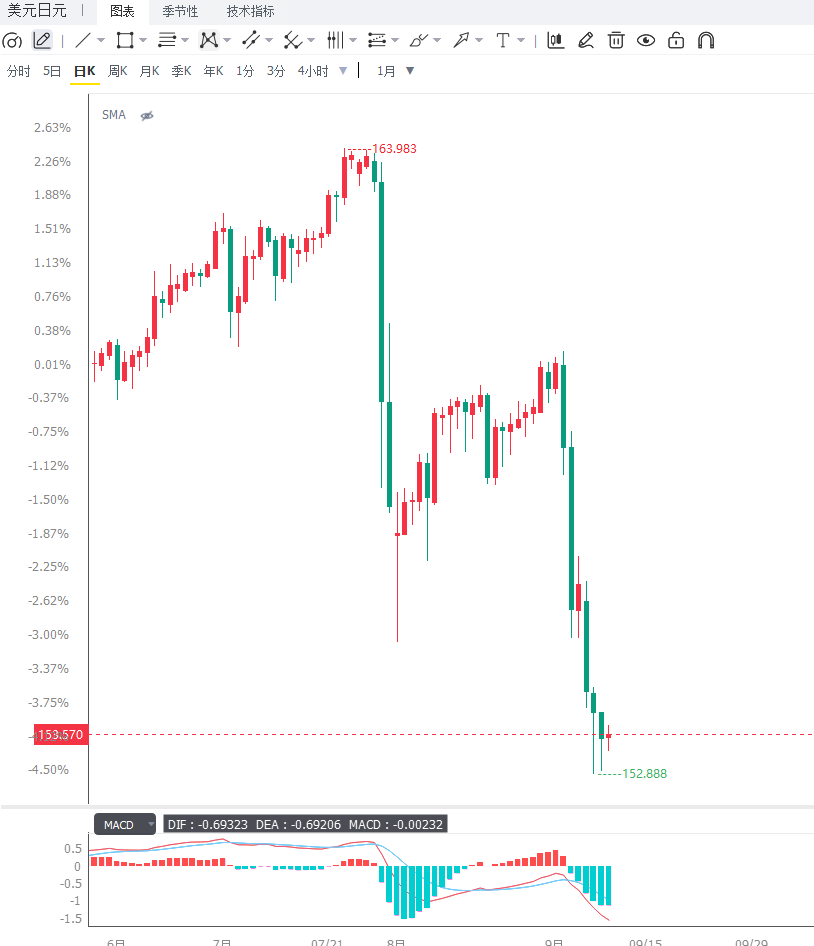 The USD/JPY pair is currently hovering around 153.50. Although the US dollar rebounded somewhat before the release of US inflation data, the yen remains strong due to rising expectations of a Bank of Japan (BOJ) rate hike. The accelerated normalization of BOJ policy and the narrowing interest rate differential between Japan and the US are the main downward pressures currently facing the USD/JPY pair. In the short term, US PPI and CPI will determine whether the dollar can gain new interest rate support. If inflation data is stronger than expected, USD/JPY may rebound towards the 154.00 and 155.20-155.30 areas; if the data is weaker, and the BOJ continues to release hawkish signals, then once 153.00 is breached, the exchange rate may further seek support in the 152.50 and 152.00 areas. Overall, until 155.30 is effectively recovered, USD/JPY is still viewed with a bearish bias.
The market's repricing of the Bank of Japan's (BOJ) policy path is one of the core factors driving the yen's strength. The market has largely priced in the expectation of a 25 basis point rate hike at the BOJ's September 17-18 meeting and is now focusing on the possibility of further rate hikes by the end of the year. Recent hawkish signals from BOJ officials, along with improved expectations for wage and economic growth, have strengthened market expectations of a faster normalization of Japan's monetary policy. The latest policy signals further reinforce this logic. BOJ Governor Kazuyuki Masuda stated that if inflation continues to accelerate, the BOJ may need to raise interest rates more quickly to avoid real interest rates remaining too low for an extended period. The market is now even beginning to anticipate that the BOJ may raise the policy rate to 1.25% in September and continue normalizing it in the future. This has provided significant support for the yen, resulting in a substantial recent appreciation against the US dollar. Meanwhile, the domestic interest rate environment in Japan is also changing. With rising Japanese government bond yields, the long-standing environment of low-interest financing and carry trades is shifting. If the BOJ continues to raise the policy rate, the Japan-US interest rate differential may narrow further, and some short yen positions may continue to be closed, further driving the yen's appreciation. This is one of the key reasons why USD/JPY remains under pressure even with US Treasury yields remaining high. Regarding the US dollar, the index has rebounded somewhat after a period of weakness recently, with the market reducing some short dollar positions ahead of the US PPI release. The US PPI will be released on Thursday, and the CPI on Friday; these two data points will directly influence investors' judgments on the Fed's future policy path. Recent US employment data has been strong, increasing market expectations for a further rate hike by the Fed in September. At the same time, the rapid rise in oil prices has again increased the risk of US inflation. Currently, international oil prices have broken through the $100 per barrel mark, and rising energy prices may transmit to overall inflation through multiple channels such as transportation, production, and consumption. If both PPI and CPI are higher than expected, the market may further increase its pricing in the Fed maintaining high interest rates or even raising rates, which could support the dollar and US Treasury yields, and USD/JPY may see a significant rebound. However, the dollar's rebound is also constrained by geopolitical tensions. Recent tensions in the Middle East have increased shipping risks near the Strait of Hormuz, and oil prices breaking through $100 have further increased global inflationary pressures. While safe-haven demand typically supports the US dollar, the energy shock also increases US inflationary pressures and could reinforce market concerns about a global economic slowdown. Therefore, the flow of safe-haven funds between the US dollar and the Japanese yen is not entirely unidirectional. Current market performance suggests that policy drivers for the yen remain more prominent. The yen appreciated significantly in September, and the market is increasingly focused on whether the Bank of Japan (BOJ) will accelerate policy normalization ahead of schedule. If the BOJ continues to send hawkish signals, and US inflation data does not significantly exceed expectations, USD/JPY may continue to face downward pressure. Therefore, the US PPI and CPI data for the next two trading days will be important catalysts for the foreign exchange market. Strong inflation could temporarily reverse the dollar's weakness, pushing USD/JPY towards 154.00 or even 155.00; if inflation data is moderate, market expectations for further tightening by the Federal Reserve decline, and the BOJ continues to signal interest rate hikes, then USD/JPY may retest 153.00 or even lower. From a daily chart perspective, USD/JPY is currently in a clear downtrend, with the exchange rate continuing to trade below the key level of 155.20 to 155.30. This area, previously a key horizontal support and pivot point, has now become a significant resistance level. As long as the exchange rate fails to recover to around 155.30, the recent downtrend remains intact. In the short term, 153.00 is the most important psychological support level. If the exchange rate breaks below 153.00 and continues to trade below that level, it will be considered a signal of a new round of declines, potentially leading to further support around 152.50 or even 152.00. Recent market data shows some buying interest around 153.00, while 152.00 is also a noteworthy psychological level. The first resistance level to watch is around 154.00. If USD/JPY can regain 154.00, the short-term rebound could extend further to around 154.50; the more significant resistance lies in the 155.20 to 155.30 area. Only a decisive break and hold above this area can weaken the current medium-term bearish structure. On the 4-hour chart, USD/JPY is still in a technical rebound phase within a downtrend. The current price is fluctuating between 153.40 and 153.60, with short-term bullish and bearish forces temporarily balanced, but the overall moving average alignment remains bearish. The latest chart shows that 153.45 is a key short-term level, while the 153.58-153.70 area constitutes resistance for further rebounds. If the price breaks below 153.30 again, it may retest the support levels around 153.00 and 152.90. In summary, while USD/JPY has a short-term technical rebound potential, the overall downtrend remains unchanged. 153.00 is a key level that the bears need to break through in the next phase, 154.00 and 154.50 are resistance levels to watch during any rebound, and the 155.20-155.30 area is crucial in determining whether the medium-term trend can be reversed. If US PPI and CPI are significantly higher than expected, it could drive a short-term rebound in the exchange rate; conversely, if the data are lower than expected, coupled with the continued rise in expectations of a Bank of Japan interest rate hike, USD/JPY may seek support below 153.00 again. The USD/JPY pair is currently hovering around 153.50. Although the US dollar rebounded somewhat before the release of US inflation data, the yen remains strong due to rising expectations of a Bank of Japan (BOJ) rate hike. The accelerated normalization of BOJ policy and the narrowing interest rate differential between Japan and the US are the main downward pressures currently facing the USD/JPY pair. In the short term, US PPI and CPI will determine whether the dollar can gain new interest rate support. If inflation data is stronger than expected, USD/JPY may rebound towards the 154.00 and 155.20-155.30 areas; if the data is weaker, and the BOJ continues to release hawkish signals, then once 153.00 is breached, the exchange rate may further seek support in the 152.50 and 152.00 areas. Overall, until 155.30 is effectively recovered, USD/JPY is still viewed with a bearish bias.
- Risk Warning and Disclaimer
- The market involves risk, and trading may not be suitable for all investors. This article is for reference only and does not constitute personal investment advice, nor does it take into account certain users’ specific investment objectives, financial situation, or other needs. Any investment decisions made based on this information are at your own risk.