Expectations of a European Central Bank rate hike are supporting the euro, and the euro/dollar exchange rate may test previous highs.
2026-09-10 14:36:06
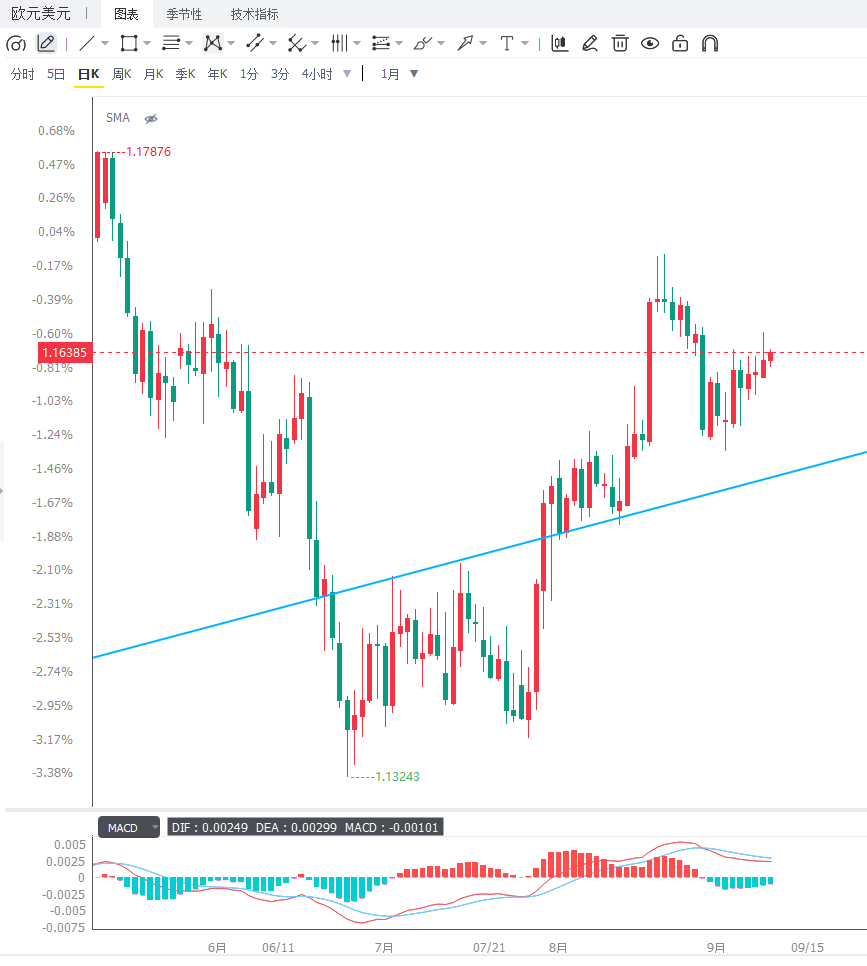
A rate hike by the European Central Bank this month is widely expected by the market. The market currently anticipates that the ECB will raise the deposit facility rate from 2.25% to 2.50%, which would be the second rate hike since 2026. More than the rate hike itself, investors are now focused on whether the ECB will signal further tightening of monetary policy, and whether the 2.50% rate represents a temporary end or a midpoint in a continuous rate hike cycle.  Aberdeen economist Felix Feather stated that this rate hike is "almost a done deal," but what truly matters is how the European Central Bank (ECB) describes its subsequent policy path. If the ECB's rhetoric is clearly hawkish, the market may further increase expectations for continued rate hikes by the end of the year, thereby pushing up the euro and European government bond yields. Feather believes that the resilience shown by the Eurozone economy has exceeded previous expectations, while high energy prices, stronger forward-looking wage indicators, and slightly rising market inflation expectations will all force policymakers to continue to focus on upside inflation risks. The policy environment facing the ECB has changed significantly compared to before. International energy prices continue to rise, with Brent crude oil breaking through $100 per barrel again, making energy shocks a significant source of inflation in Europe once more. Since the Eurozone is highly dependent on energy imports, rising oil and gas prices not only directly push up energy costs but may also gradually transmit to the broader price system through channels such as transportation, manufacturing, and services. The Eurozone inflation rate rose to 3.3% in August, significantly higher than the ECB's 2% target. At the same time, core inflation continues to decline, with the latest data showing core inflation at approximately 2.4%, and wage growth has also slowed to some extent. This means that current inflationary pressures are significantly different from those during the previous energy crisis: energy prices are the main driver, but a clear wage-price spiral has not yet formed. This also explains why the European Central Bank (ECB), while more cautious on interest rate hikes, may still maintain a hawkish tone. If energy prices remain high, inflation could remain sticky in the coming months, and policymakers will need to prevent the market from developing persistent inflation expectations. The ECB has previously emphasized that its policy decisions will depend on the inflation outlook, changes in underlying inflation, and the transmission of monetary policy, and will not pre-commit to a fixed interest rate path. Regarding economic growth, the Eurozone has shown more resilience than the market had previously feared. Economic activity has not slowed significantly due to rising energy prices, and bank lending activity has improved, providing some room for the ECB to maintain a relatively tight policy. Market surveys indicate that the ECB may simultaneously raise its economic growth forecasts, further reinforcing market confidence that the Eurozone economy can withstand higher interest rates. However, significant disagreements remain within the ECB and in the market regarding the future path of interest rate hikes. Some economists believe that the September rate hike may be nearing the end of the current tightening cycle, as the labor market remains relatively weak, wage pressures have not shown signs of spiraling out of control, and core inflation is declining. A previous survey of economists showed that most respondents expected the European Central Bank (ECB) to maintain the 2.50% interest rate for an extended period after the September hike. However, other market institutions have begun to raise their expectations for further rate hikes. Deutsche Bank recently predicted that the ECB may raise rates by another 25 basis points in December, considering 2.75% as the most likely final interest rate level. The institution also pointed out that if the situation in the Middle East eases rapidly, energy prices fall, and economic growth slows significantly, interest rates may remain at 2.50%; in the absence of broader inflationary pressures, there is insufficient basis for rates to rise above 3%. Therefore, the impact of this ECB meeting on financial markets may come more from "changes in wording" than from the rate hike itself. If the ECB emphasizes the potential continuation of the energy shock and hints at further rate hikes if necessary, short-term yields in the Eurozone may continue to rise, providing support for carry trades for the euro. Conversely, if the ECB emphasizes that core inflation is declining and wage pressures are manageable, and suggests that 2.50% is sufficient to limit demand, the market may lower its expectations for further rate hikes, limiting the euro's upside potential. The dollar's performance is also crucial for the euro. Currently, the dollar index is in a recent weak zone, and with the upcoming release of US PPI and CPI data, the market is reassessing the Fed's policy path. If US inflation data is lower than expected, the dollar may continue to be under pressure, while the ECB's hawkish signals will further amplify the euro's relative advantage; if US inflation is significantly higher than expected, the dollar may rebound, offsetting some of the positive impact of the ECB's hawkish rhetoric. Energy prices are one of the biggest external variables affecting the euro's future performance. If tensions in the Middle East persist and oil and gas prices remain high, the ECB may need to find a balance between "controlling inflation" and "avoiding excessive economic tightening." Feather believes that core inflation and wage pressures are currently manageable, but the stability of the energy market will be a key factor in determining whether the ECB will continue to tighten policy. Looking at the daily chart of the euro/dollar exchange rate, the current exchange rate remains in a relatively strong zone. The euro rebounded gradually after finding support around 1.1500 and is currently moving back above 1.1600. The next key target for the market is around 1.1700. As long as the exchange rate can hold above 1.1550, the overall rebound structure remains intact. The first resistance level to watch is around 1.1650, followed by the psychological level of 1.1700. If the ECB releases a clearly hawkish signal, and the US dollar weakens due to US inflation data, a decisive break above 1.1700 for EUR/USD could lead to a further test of the previous key resistance around 1.1770. A decisive break above 1.1770 could open up further upside potential for the euro in the medium term. On the downside, the first support level to watch is around 1.1600, followed by 1.1550. If the exchange rate falls below 1.1550, the short-term bullish structure will weaken significantly, and a retest of the 1.1500 level may follow. If 1.1500 is also breached, the market should be wary of the risk of a deeper pullback. From a 4-hour chart perspective, EUR/USD remains in a slightly bullish consolidation phase in the short term, but the 1.1650-1.1700 area has become a significant resistance zone for further upward movement. If the exchange rate can effectively break through 1.1700 after the ECB meeting, the short-term trend may be further strengthened; if it encounters resistance and falls below 1.1600, it may form a high-level consolidation or even a technical pullback. Overall, the core trading logic for the euro has shifted from "whether the ECB will raise interest rates" to "whether the ECB will continue to tighten after raising interest rates." The 2.50% target has already been fully priced into by the market, so what truly drives a euro breakout would require hawkish guidance exceeding market expectations. Meanwhile, US PPI and CPI may also amplify EUR/USD volatility through the dollar channel.
  Editor's Summary: The market has largely priced in the European Central Bank's (ECB) September rate hike. The real determinant of the euro's future direction will be the central bank's statements regarding its future policy path. High energy prices, the resilience of the Eurozone economy, and inflation remaining above target provide justification for the ECB to maintain a hawkish stance; however, declining core inflation, manageable wage pressures, and economic growth risks limit the scope for further rapid rate hikes. If the ECB hints at a possible rate hike in December, coupled with weak US inflation data, EUR/USD could break through 1.1700 and move towards 1.1770. Conversely, if the ECB signals caution, coupled with higher-than-expected US inflation, the euro may fall back to around 1.1550 or even 1.1500. In the short term, 1.1700 is a key level for a bullish breakout, while 1.1550 is a crucial support level for maintaining the current rebound structure.
Aberdeen economist Felix Feather stated that this rate hike is "almost a done deal," but what truly matters is how the European Central Bank (ECB) describes its subsequent policy path. If the ECB's rhetoric is clearly hawkish, the market may further increase expectations for continued rate hikes by the end of the year, thereby pushing up the euro and European government bond yields. Feather believes that the resilience shown by the Eurozone economy has exceeded previous expectations, while high energy prices, stronger forward-looking wage indicators, and slightly rising market inflation expectations will all force policymakers to continue to focus on upside inflation risks. The policy environment facing the ECB has changed significantly compared to before. International energy prices continue to rise, with Brent crude oil breaking through $100 per barrel again, making energy shocks a significant source of inflation in Europe once more. Since the Eurozone is highly dependent on energy imports, rising oil and gas prices not only directly push up energy costs but may also gradually transmit to the broader price system through channels such as transportation, manufacturing, and services. The Eurozone inflation rate rose to 3.3% in August, significantly higher than the ECB's 2% target. At the same time, core inflation continues to decline, with the latest data showing core inflation at approximately 2.4%, and wage growth has also slowed to some extent. This means that current inflationary pressures are significantly different from those during the previous energy crisis: energy prices are the main driver, but a clear wage-price spiral has not yet formed. This also explains why the European Central Bank (ECB), while more cautious on interest rate hikes, may still maintain a hawkish tone. If energy prices remain high, inflation could remain sticky in the coming months, and policymakers will need to prevent the market from developing persistent inflation expectations. The ECB has previously emphasized that its policy decisions will depend on the inflation outlook, changes in underlying inflation, and the transmission of monetary policy, and will not pre-commit to a fixed interest rate path. Regarding economic growth, the Eurozone has shown more resilience than the market had previously feared. Economic activity has not slowed significantly due to rising energy prices, and bank lending activity has improved, providing some room for the ECB to maintain a relatively tight policy. Market surveys indicate that the ECB may simultaneously raise its economic growth forecasts, further reinforcing market confidence that the Eurozone economy can withstand higher interest rates. However, significant disagreements remain within the ECB and in the market regarding the future path of interest rate hikes. Some economists believe that the September rate hike may be nearing the end of the current tightening cycle, as the labor market remains relatively weak, wage pressures have not shown signs of spiraling out of control, and core inflation is declining. A previous survey of economists showed that most respondents expected the European Central Bank (ECB) to maintain the 2.50% interest rate for an extended period after the September hike. However, other market institutions have begun to raise their expectations for further rate hikes. Deutsche Bank recently predicted that the ECB may raise rates by another 25 basis points in December, considering 2.75% as the most likely final interest rate level. The institution also pointed out that if the situation in the Middle East eases rapidly, energy prices fall, and economic growth slows significantly, interest rates may remain at 2.50%; in the absence of broader inflationary pressures, there is insufficient basis for rates to rise above 3%. Therefore, the impact of this ECB meeting on financial markets may come more from "changes in wording" than from the rate hike itself. If the ECB emphasizes the potential continuation of the energy shock and hints at further rate hikes if necessary, short-term yields in the Eurozone may continue to rise, providing support for carry trades for the euro. Conversely, if the ECB emphasizes that core inflation is declining and wage pressures are manageable, and suggests that 2.50% is sufficient to limit demand, the market may lower its expectations for further rate hikes, limiting the euro's upside potential. The dollar's performance is also crucial for the euro. Currently, the dollar index is in a recent weak zone, and with the upcoming release of US PPI and CPI data, the market is reassessing the Fed's policy path. If US inflation data is lower than expected, the dollar may continue to be under pressure, while the ECB's hawkish signals will further amplify the euro's relative advantage; if US inflation is significantly higher than expected, the dollar may rebound, offsetting some of the positive impact of the ECB's hawkish rhetoric. Energy prices are one of the biggest external variables affecting the euro's future performance. If tensions in the Middle East persist and oil and gas prices remain high, the ECB may need to find a balance between "controlling inflation" and "avoiding excessive economic tightening." Feather believes that core inflation and wage pressures are currently manageable, but the stability of the energy market will be a key factor in determining whether the ECB will continue to tighten policy. Looking at the daily chart of the euro/dollar exchange rate, the current exchange rate remains in a relatively strong zone. The euro rebounded gradually after finding support around 1.1500 and is currently moving back above 1.1600. The next key target for the market is around 1.1700. As long as the exchange rate can hold above 1.1550, the overall rebound structure remains intact. The first resistance level to watch is around 1.1650, followed by the psychological level of 1.1700. If the ECB releases a clearly hawkish signal, and the US dollar weakens due to US inflation data, a decisive break above 1.1700 for EUR/USD could lead to a further test of the previous key resistance around 1.1770. A decisive break above 1.1770 could open up further upside potential for the euro in the medium term. On the downside, the first support level to watch is around 1.1600, followed by 1.1550. If the exchange rate falls below 1.1550, the short-term bullish structure will weaken significantly, and a retest of the 1.1500 level may follow. If 1.1500 is also breached, the market should be wary of the risk of a deeper pullback. From a 4-hour chart perspective, EUR/USD remains in a slightly bullish consolidation phase in the short term, but the 1.1650-1.1700 area has become a significant resistance zone for further upward movement. If the exchange rate can effectively break through 1.1700 after the ECB meeting, the short-term trend may be further strengthened; if it encounters resistance and falls below 1.1600, it may form a high-level consolidation or even a technical pullback. Overall, the core trading logic for the euro has shifted from "whether the ECB will raise interest rates" to "whether the ECB will continue to tighten after raising interest rates." The 2.50% target has already been fully priced into by the market, so what truly drives a euro breakout would require hawkish guidance exceeding market expectations. Meanwhile, US PPI and CPI may also amplify EUR/USD volatility through the dollar channel. Editor's Summary: The market has largely priced in the European Central Bank's (ECB) September rate hike. The real determinant of the euro's future direction will be the central bank's statements regarding its future policy path. High energy prices, the resilience of the Eurozone economy, and inflation remaining above target provide justification for the ECB to maintain a hawkish stance; however, declining core inflation, manageable wage pressures, and economic growth risks limit the scope for further rapid rate hikes. If the ECB hints at a possible rate hike in December, coupled with weak US inflation data, EUR/USD could break through 1.1700 and move towards 1.1770. Conversely, if the ECB signals caution, coupled with higher-than-expected US inflation, the euro may fall back to around 1.1550 or even 1.1500. In the short term, 1.1700 is a key level for a bullish breakout, while 1.1550 is a crucial support level for maintaining the current rebound structure.- Risk Warning and Disclaimer
- The market involves risk, and trading may not be suitable for all investors. This article is for reference only and does not constitute personal investment advice, nor does it take into account certain users’ specific investment objectives, financial situation, or other needs. Any investment decisions made based on this information are at your own risk.