September 14th Financial Breakfast: Strengthened US inflation fuels interest rate hike expectations; gold faces resistance around 4340; Saudi oil pipeline attack disrupts operations; risks in the Bab el-Mandeb Strait push up oil prices.
2026-09-14 07:14:07
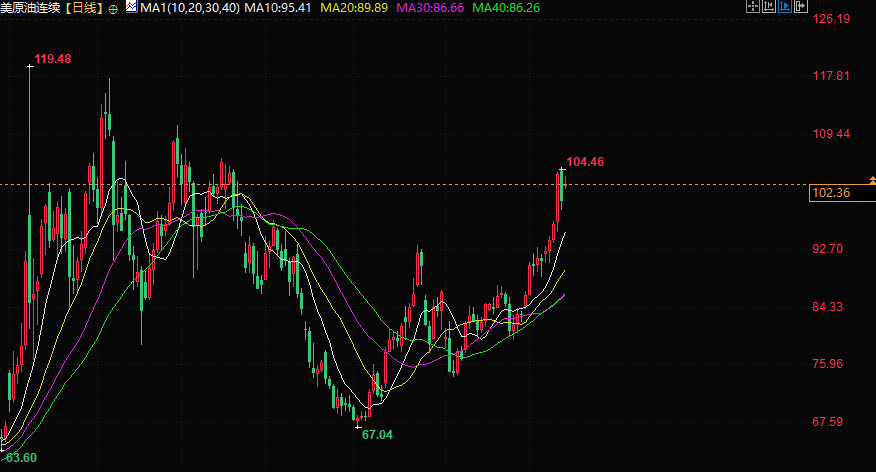
On Monday (September 14, Beijing time) in early Asian trading, spot gold was trading around $4,340 per ounce. Escalating tensions in the Middle East and rising US inflation, which strengthened expectations of a Fed rate hike this week, dragged down gold prices. US crude oil opened more than 2% higher on Monday. Houthi rebels carried out targeted operations near the Bab el-Mandeb Strait, and a key Saudi oil pipeline was attacked and shut down. A meeting scheduled for September 14 between Iran and several Gulf states to discuss the establishment of a temporary shipping lane in the Strait of Hormuz has reportedly been postponed. 
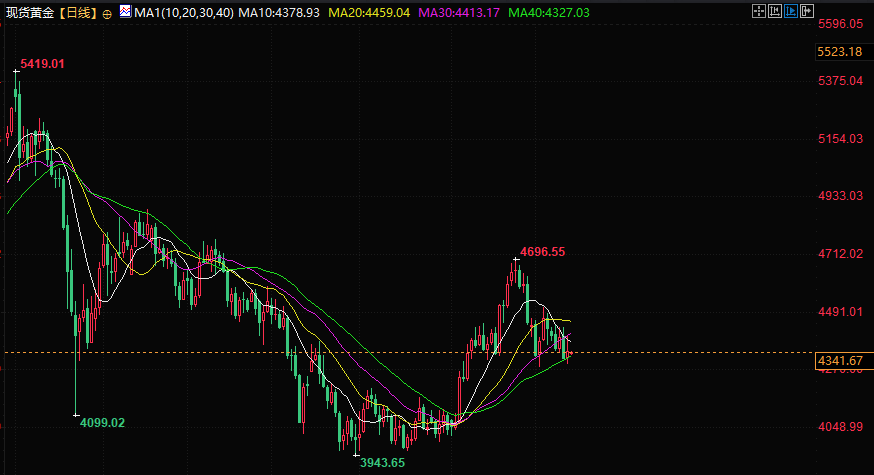 Independent precious metals trader Tai Wong said gold is rebounding rapidly after a brief pullback, as CPI data likely further solidified market expectations of a Fed rate hike this week. With the market already pricing in a 70% probability of a rate hike, volatility has lessened, and current price action suggests gold is forming a short-term bottom after its recent correction. The U.S. Bureau of Labor Statistics reported on Friday that the Consumer Price Index (CPI) rose 0.4% month-over-month in August, compared to a slight increase of 0.1% in July. Rising oil prices have exacerbated inflation concerns, reinforcing market bets on rate hikes; although gold is generally seen as a hedge against inflation, rising interest rates will diminish the appeal of non-interest-bearing gold. The CME FedWatch tool shows traders currently expect an 87% probability of a Fed rate hike at this week's policy meeting, up from 67% before the inflation data release. Last week, Indian gold demand was weak due to price volatility deterring buyers, while investment demand remained strong in China, the largest gold consumer. Spot silver rose 1.41% on Friday to $64.45 an ounce, but fell 2.6% for the week; platinum rose 1% to $1,792.11 an ounce; and palladium rose 2.1% to $1,308.63 an ounce, though both fell for the week.
 The Financial Times reported that foreign ministers from various Middle Eastern countries are attempting to reach a temporary agreement with Iran to manage shipping through the Strait of Hormuz. This news caused both indicators to briefly erase earlier gains. Traders reassessed the risks on Friday as attacks on shipping in the region escalated. The International Energy Agency (IEA) cited attacks on Saudi energy facilities on Friday, stating that Saudi crude oil supplies in August fell by 2.3 million barrels per day to 6 million barrels per day, the lowest level in over 30 years. According to four Yemeni government sources, the Houthi rebels reached Perim Island, a strategic location in the Bab el-Mandeb Strait, on Friday, further strengthening their control over this vital global shipping route. As the conflict in the Middle East expands, the Houthi advance could threaten another major energy transport route. Preliminary ship tracking data released on Friday showed that the number of ships passing through the Strait of Hormuz on Thursday fell to seven from 11 the previous day. According to GasBuddy, an oil price tracking agency, the average price of diesel across the United States broke the $6 mark for the first time last Thursday, affected by oil supply disruptions caused by the war with Iran and attacks on Russian refineries by Ukraine.
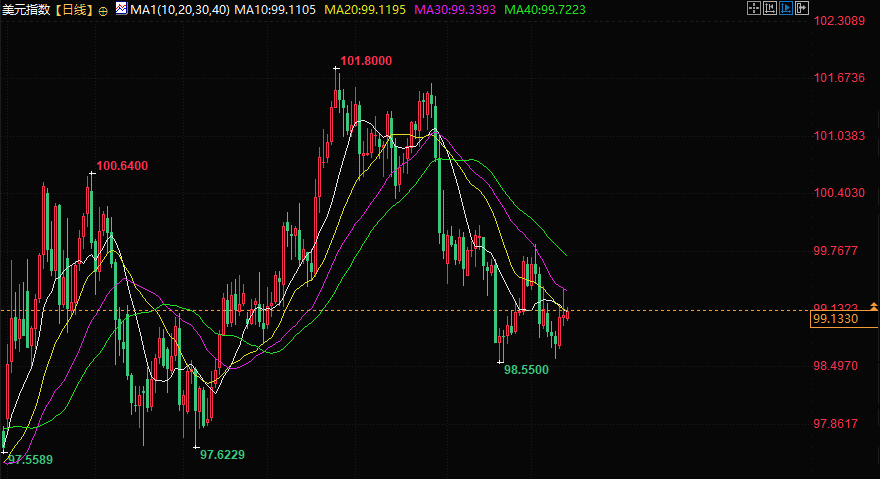 The CME Group's FedWatch tool showed that the market expects an 86% probability of a 25 basis point rate hike by the Federal Reserve, up from about 72% a day earlier. The two-year Treasury yield rose 7.75 basis points to 4.63%. The euro fell 0.12% against the dollar to $1.1597; the dollar rose 0.46% against the Swiss franc to 0.8163 francs, marking its third consecutive weekly gain. The dollar fell 0.6% against the yen on Friday, closing at 153.48, marking its second consecutive weekly decline; four sources familiar with the Bank of Japan's thinking said they expect the Bank of Japan to raise interest rates this week, with Japan's August wholesale inflation remaining high further strengthening the case for a rate hike this month.
Key Focus Today
stock market
U.S. stocks rose across the board on Friday, with a drop in oil prices outweighing concerns about interest rate hikes. The S&P 500 rose 0.86% to close at 7656.98, the Nasdaq rose 0.96% to close at 26333.04, and the Dow Jones Industrial Average rose 0.98% to close at 52573.29. Nine of the eleven sectors rose, with communication services and consumer discretionary sectors leading the gains. U.S. consumer prices accelerated, gasoline prices rebounded, and the CME Group FedWatch tool showed a near 90% probability of a Fed rate hike on Wednesday. Dell shares surged 12% to a record high, while better-than-expected Oracle earnings boosted Hewlett Packard Enterprise by 12%, HP rose 8.4%, and Oracle itself fell 1.8%. Trading was relatively quiet, with the VIX falling 2 points to 15.88. The S&P 500 is down about 2% from its record closing high on August 13, but is still up 12% year-to-date. Last week, the S&P 500 fell 0.8% and the Nasdaq fell 0.7%. The forward P/E ratio of 19 is the lowest since April 2025.Gold Market
Gold prices rose more than 1% on Friday, rebounding from recent losses, with spot gold closing at $4,348.35 per ounce, despite strong U.S. inflation data reinforcing market expectations of a Federal Reserve rate hike this week; however, spot gold fell 1.86% for the week. Independent precious metals trader Tai Wong said gold is rebounding rapidly after a brief pullback, as CPI data likely further solidified market expectations of a Fed rate hike this week. With the market already pricing in a 70% probability of a rate hike, volatility has lessened, and current price action suggests gold is forming a short-term bottom after its recent correction. The U.S. Bureau of Labor Statistics reported on Friday that the Consumer Price Index (CPI) rose 0.4% month-over-month in August, compared to a slight increase of 0.1% in July. Rising oil prices have exacerbated inflation concerns, reinforcing market bets on rate hikes; although gold is generally seen as a hedge against inflation, rising interest rates will diminish the appeal of non-interest-bearing gold. The CME FedWatch tool shows traders currently expect an 87% probability of a Fed rate hike at this week's policy meeting, up from 67% before the inflation data release. Last week, Indian gold demand was weak due to price volatility deterring buyers, while investment demand remained strong in China, the largest gold consumer. Spot silver rose 1.41% on Friday to $64.45 an ounce, but fell 2.6% for the week; platinum rose 1% to $1,792.11 an ounce; and palladium rose 2.1% to $1,308.63 an ounce, though both fell for the week.oil market
Oil prices fell on Friday, with Brent crude down 4.19% to settle at $104.37 a barrel and WTI crude down 2.43% to settle at $99.99 a barrel. However, oil prices rose more than 9% for the week. Meanwhile, U.S. diesel prices rose to a record high, and attacks on Middle Eastern shipping routes raised concerns about long-term supply disruptions. The Financial Times reported that foreign ministers from various Middle Eastern countries are attempting to reach a temporary agreement with Iran to manage shipping through the Strait of Hormuz. This news caused both indicators to briefly erase earlier gains. Traders reassessed the risks on Friday as attacks on shipping in the region escalated. The International Energy Agency (IEA) cited attacks on Saudi energy facilities on Friday, stating that Saudi crude oil supplies in August fell by 2.3 million barrels per day to 6 million barrels per day, the lowest level in over 30 years. According to four Yemeni government sources, the Houthi rebels reached Perim Island, a strategic location in the Bab el-Mandeb Strait, on Friday, further strengthening their control over this vital global shipping route. As the conflict in the Middle East expands, the Houthi advance could threaten another major energy transport route. Preliminary ship tracking data released on Friday showed that the number of ships passing through the Strait of Hormuz on Thursday fell to seven from 11 the previous day. According to GasBuddy, an oil price tracking agency, the average price of diesel across the United States broke the $6 mark for the first time last Thursday, affected by oil supply disruptions caused by the war with Iran and attacks on Russian refineries by Ukraine.Foreign exchange market
The US dollar index remained flat at 99.108 on Friday, posting a slight weekly decline, but marking its second consecutive week of losses. This followed US inflation data showing rising consumer prices, reinforcing expectations that the Federal Reserve would raise interest rates this week. The US August CPI rose 0.4% month-on-month, compared to a slight increase of 0.1% in July, while the core CPI rose 2.4% year-on-year in August, compared to 2.5% in July. The dollar initially rose after the data release, but escalating tensions with Iran pushing up oil prices and fragile investor sentiment limited its gains. The CME Group's FedWatch tool showed that the market expects an 86% probability of a 25 basis point rate hike by the Federal Reserve, up from about 72% a day earlier. The two-year Treasury yield rose 7.75 basis points to 4.63%. The euro fell 0.12% against the dollar to $1.1597; the dollar rose 0.46% against the Swiss franc to 0.8163 francs, marking its third consecutive weekly gain. The dollar fell 0.6% against the yen on Friday, closing at 153.48, marking its second consecutive weekly decline; four sources familiar with the Bank of Japan's thinking said they expect the Bank of Japan to raise interest rates this week, with Japan's August wholesale inflation remaining high further strengthening the case for a rate hike this month.International News
Houthi rebels claim to have killed four Saudi-backed commanders in a targeted operation near the Bab el-Mandeb Strait. The Houthi rebels in Yemen said on Sunday that they launched a targeted operation in the Qahb region near the Bab el-Mandeb Strait. According to the group, the operation killed four commanders of Saudi-backed forces and wounded five others. A major Saudi oil pipeline was forced to shut down after the attack. This pipeline, originally intended to bypass the Strait of Hormuz and serve as an alternative transport route, caused international oil prices to rise due to the disruption. Oman's Foreign Minister stated that a meeting between Iran and several Gulf states to discuss establishing a temporary shipping lane in the Strait of Hormuz has been postponed. Iranian Foreign Minister: US compliance is a prerequisite for reopening the Strait; Oman meeting focuses on new shipping routes. Iranian Foreign Minister Araghchi stated that Iran's condition for reopening the Strait of Hormuz is the United States' fulfillment of its obligations under the Islamabad Memorandum. Araghchi also revealed that the meeting to be held in Oman on the 14th will focus on new maritime shipping route arrangements in the Strait of Hormuz. Kushner Says Putin Has Clearly Defined the "Target Line," Agreement Can Be Formed if Ukraine Accepts the Framework US President's Special Envoy and Trump's Son-in-Law Jared Kushner stated regarding the prospects of the Russia-Ukraine peace talks that Russian President Vladimir Putin has clearly stated his demanded "target line," namely the territorial border. Kushner stated that if Ukraine is willing to withdraw to this line, the US is ready for the rest of the agreement and has completed the overall framework. Iranian President: Not at War with Saudi Arabia, Calls for Regional Peace Building On September 12, Iranian President Pezechzian stated in an interview in India that Iran and Saudi Arabia are not at war. He reiterated that Iran has repeatedly called on all countries in the region to sit down and work together to build regional peace and security, emphasizing that there is no reason for conflict or war among regional countries. He also pointed out that Iran's target is the US military bases located in regional countries. He stated that as long as the US stops its blockade and "cowardly behavior," and in accordance with established international principles, the waterway will be reopened. Iranian President: No State of War with Saudi Arabia, Calls for Regional Peace Building On September 12, Iranian President Pezechzian stated in an interview in India that Iran and Saudi Arabia are not at war. He reiterated that Iran has repeatedly called on all countries in the region to sit down and work together to build regional peace and security, emphasizing that there is no reason for conflict or war among regional countries. He also pointed out that Iran's actions are aimed at US military bases in regional countries. Korean Exchange Introduces Evening Trading Session to Test Global Investor Participation South Korea's major stock exchanges will add an evening trading session, breaking with Asian market conventions. Starting Monday, almost all domestic stocks on the Korean Stock Exchange will continue trading until 8 pm after the regular closing time of 3:30 pm. This is the first time a major Asian exchange has introduced such an arrangement, aiming for 24-hour trading. This move follows the global trend of 24-hour markets led by Nasdaq and the NYSE, aiming to attract more international investors, especially covering European trading hours. Driven by the artificial intelligence boom, the South Korean stock market has outperformed globally this year, but market enthusiasm has recently cooled. Whether the extended trading session can maintain sufficient liquidity and whether investors truly need a longer window will be tested after the new session begins on Monday. The White House is reportedly considering using the Defense Production Act to expand refining capacity, driven by record-high diesel prices. On September 12th, reports indicated the White House was considering using the Defense Production Act to expand U.S. refining capacity. Discussions stemmed from a recent meeting between Trump and executives from nearly 12 refining companies, but no final decision has been made. Refining companies believe federal funds are better suited for improving the efficiency of existing refineries or expanding existing facilities, rather than building new refineries. The report states that U.S. refinery capacity utilization is currently at 98%, and the average diesel price has exceeded $6 per gallon for the first time. In April, the U.S. government authorized the use of the Defense Production Act to support the expansion of domestic oil production, refining, and logistics capacity. Against the backdrop of tight refined oil supplies and record-high diesel prices, the use of emergency legal tools to expand capacity reflects escalating policy concerns about fuel inflation. However, the long construction cycle of new refineries and limited willingness from companies to participate suggest that the final decision and the rapid implementation of efficiency improvement and expansion plans will be crucial.Domestic News
China to assume BRICS presidency in 2027 On the afternoon of September 12 local time, at the first session of the 18th BRICS Summit, President Xi Jinping announced that China will assume the BRICS presidency in 2027 and host the 19th BRICS Summit. (CCTV News) National new energy storage capacity to reach 300 million kilowatts by 2030 Since the beginning of this year, China's new energy storage construction has maintained a rapid development trend. As of the end of June, the installed capacity of new energy storage in operation nationwide reached 153 million kilowatts/396 million kilowatt-hours, a year-on-year increase of 61%. The utilization of new energy storage nationwide has been improving year by year. In 2023, 2024, and 2025, the equivalent utilization hours of new energy storage nationwide will reach 611 hours, 911 hours, and 1195 hours respectively, effectively playing a role in system regulation. Liu Yongdong, Deputy Secretary-General of the China Electricity Council, stated that during the 14th Five-Year Plan period, China's new energy storage capacity increased more than 40 times, achieving a historic leap from the early stages of commercialization to large-scale development. During the 15th Five-Year Plan period, new energy storage will continue to grow at a high level, with an estimated new installed capacity of approximately 160 million kilowatts. According to the plan, by 2030, the national new energy storage capacity will reach 300 million kilowatts, with 140 million kilowatts of grid-side independent new energy storage capable of handling peak power supply. (CCTV News) China's demand for tokens is experiencing explosive growth, with consumption expected to reach 100 trillion by 2026. The "Research Report on the Development of AI Infrastructure in the Era of Intelligent Agents (2026)" released by the China Telecom Research Institute shows that as the focus of the artificial intelligence industry shifts from large-scale models and computing power competition to the large-scale implementation and monetization of intelligent agents, China's demand for tokens is experiencing explosive growth. Rao Shaoyang, Director of the Industry and Enterprise Strategy Research Institute of China Telecom Research Institute: It is estimated that China's annual token consumption will reach 10 trillion by 2026 and exceed 350 trillion by 2030, with a compound annual growth rate of nearly 12 times. (CCTV) The "Computing Power Token Loan" is accelerating its nationwide rollout . This year's China International Fair for Trade in Services (CIFTIS) launched a joint exhibition model of "finance + science and technology innovation" for the first time, allowing financial institutions to exhibit together with the science and technology innovation enterprises they empower. In addition to financial products, the exhibition also featured hard technologies such as intelligent robotic arms, carrier rocket models, and humanoid robots, supported by new financial tools such as computing power loans, computing power guarantees, and investment-loan linkage. The "Computing Power Token Loan" for AI enterprises, launched in August, is accelerating its nationwide rollout. At CIFTIS, several banks released related products. Hu Xianwen, Deputy General Manager of the Corporate Banking Department of the Industrial and Commercial Bank of China, introduced that the "Computing Power Infrastructure Loan" supports the construction of new computing power infrastructure such as computing power data centers and the procurement of GPU server clusters, while the "Computing Power R&D Loan" addresses the pain points of enterprises' large R&D investment and long conversion cycles. (CCTV Finance) World's Largest Salt Cavern Compressed Air Energy Storage Project Launched Today (December 12th), the two units of the world's largest salt cavern compressed air energy storage project were successfully launched in Jintan, Jiangsu Province. This marks a significant breakthrough in China's key core technologies and system integration capabilities in the field of large-capacity salt cavern compressed air energy storage. The two units, each with a capacity of 350 megawatts, constitute the world's largest salt cavern compressed air energy storage project in terms of total installed capacity. (CCTV News)- Risk Warning and Disclaimer
- The market involves risk, and trading may not be suitable for all investors. This article is for reference only and does not constitute personal investment advice, nor does it take into account certain users’ specific investment objectives, financial situation, or other needs. Any investment decisions made based on this information are at your own risk.