The pound was under pressure ahead of the Bank of England and Bank of America decisions, with GBP/USD hovering around the 1.3500 level awaiting policy guidance.
2026-09-14 14:54:09
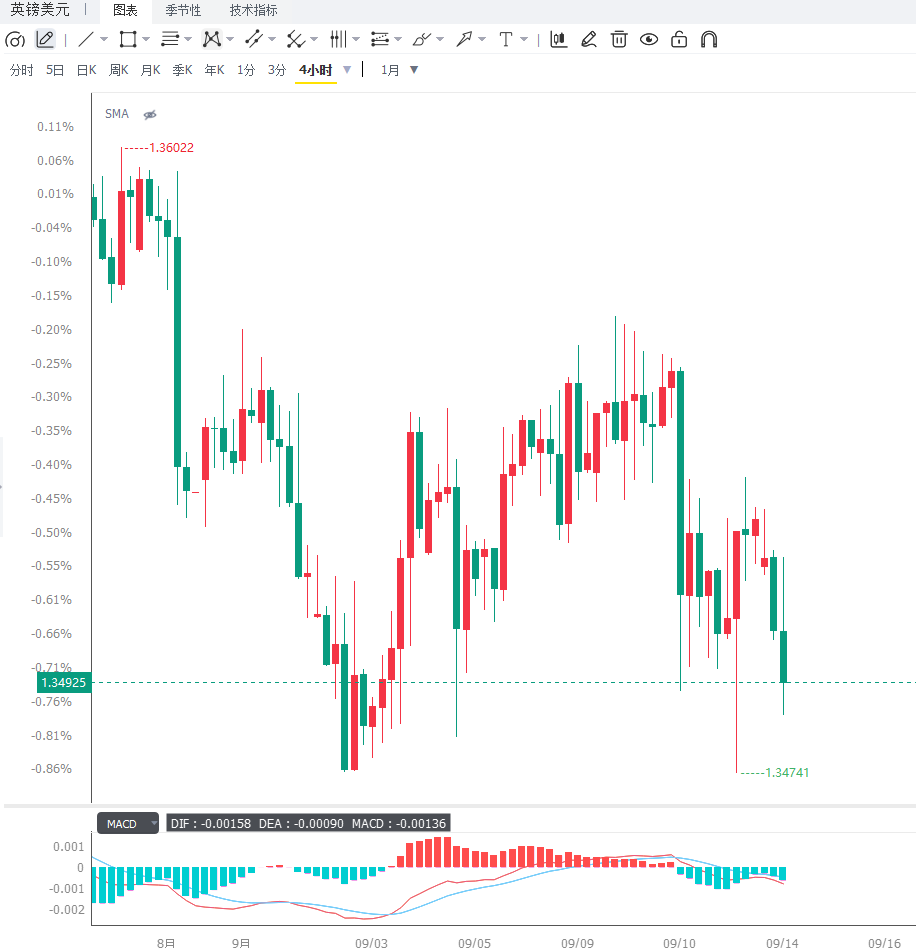
GBP/USD remained weak and volatile during Asian trading hours on Monday, failing to continue the rebound that began last Friday from near the month's lows, and is currently hovering around the psychological level of 1.3500. With two major policy events this week—the Federal Reserve and the Bank of England—market participants are temporarily reducing their directional bets, and the exchange rate lacks clear momentum for a breakout in the short term.  This week, the core variables in the European and American currency markets focus on the policy paths of two central banks. The Federal Reserve will announce its interest rate decision on Wednesday, while the Bank of England will release its policy statement on Thursday. Recent US inflation data has strengthened market expectations for a 25 basis point rate hike by the Fed, giving the dollar a certain interest rate advantage. If the Fed ultimately raises rates and releases a hawkish signal, US Treasury yields and the dollar may receive further support, while GBP/USD will face new downward pressure. US inflationary pressures remain an important support for the dollar in the near term. The core CPI rose 0.3% month-on-month in August, higher than the previous 0.2%, causing the market to refocus on the persistence of US price pressures. With the policy meeting approaching, investors are not only focused on whether there will be a rate hike, but also on the Fed's assessment of the future interest rate path. If the policy statement emphasizes that inflation risks remain high, the dollar may continue to attract capital inflows. At the same time, the situation in the Middle East continues to provide safe-haven support for the dollar. Recent geopolitical conflicts and shipping risks have escalated, with shipping security issues in the Strait of Hormuz and delays in regional diplomatic arrangements suppressing market risk appetite. Driven by safe-haven flows, the dollar remains relatively strong, limiting the upside potential of the pound against the dollar. However, the pound itself also receives some fundamental support. The UK's GDP grew by 0.4% month-on-month in July, significantly better than the market's previous expectation of zero growth, indicating that the UK economy still has a certain degree of resilience during the summer. Improved economic activity has reduced market concerns about a rapid deterioration in the UK economy and provided some buffer for the pound. Going forward, UK economic data will be a crucial catalyst for the pound's short-term movement. UK employment data will be released on Tuesday, followed by the Consumer Price Index on Wednesday. Whether the job market continues to cool and whether inflation remains resilient will directly affect market judgments on the Bank of England's future policy. If inflation becomes more sticky again, the Bank of England may extend the period of maintaining a restrictive interest rate, thus providing support for the pound. However, the market currently widely expects the Bank of England to keep interest rates around 3.75%, thus lacking a clear reason for pound bulls to further increase their positions. Compared to the US market, expectations for further tightening of UK monetary policy have not yet been clearly priced in, meaning that better UK economic data can only alleviate downward pressure on the pound, rather than independently driving a sustained upward trend for GBP/USD. From a market sentiment perspective, 1.3500 is currently a significant psychological watershed. The fact that the exchange rate has been able to hold this level indicates that there is still some bargain hunting in the market; however, if US interest rate expectations continue to rise, while UK inflation and employment data fall short of expectations, the pound may face renewed selling pressure. Conversely, if UK data is strong and the Federal Reserve releases relatively cautious policy signals, GBP/USD may have a chance to recover. Therefore, this week's trading logic will clearly revolve around "Fed rate hike expectations and UK economic data." Investors need to pay special attention to Tuesday's UK employment data, Wednesday's UK CPI, and the Fed's policy decision, followed by the Bank of England's policy statement on Thursday. These events could change the current interest rate expectation gap between the pound and the dollar and push GBP/USD out of its recent trading range. From the 4-hour chart, GBP/USD is currently still in a weak, range-bound state, trading below the 200-period simple moving average at 1.3522 and the 38.2% Fibonacci retracement level at 1.3516, indicating that selling pressure remains. If the bulls cannot effectively recover the 1.3516-1.3522 area, the short-term rebound may continue to be limited. Further resistance is seen at the 23.6% Fibonacci retracement level around 1.3575. A break above this level could lead to a test of the cycle high around 1.3671. On the downside, the first support level is the 50% Fibonacci retracement level around 1.3468. A decisive break below this area could see the bears test the 61.8% retracement level around 1.3420, followed by the 78.6% retracement level around 1.3352. If the market exhibits a clear trend after the central bank meeting, the area around 1.3265 will become a more significant medium-term support level. Overall, only a re-establishment of 1.3522 and a break above 1.3575 will significantly alleviate short-term bearish pressure for GBP/USD; a break below 1.3468 would further increase the risk of a correction.
  In summary, GBP/USD is currently in a crucial policy window. The US dollar is supported by expectations of a Fed rate hike and safe-haven demand, while the British pound benefits from improved UK economic data. However, expectations of a pause in rate hikes by the Bank of England are limiting upside potential. In the short term, the 1.3500 level and the 1.3468 support level will determine whether the exchange rate can maintain its current consolidation pattern. On the upside, key levels to watch are 1.3522 and 1.3575. In the coming days, UK employment and CPI data, as well as policy guidance from the US and UK central banks, will be the core factors determining the direction of any breakout.
This week, the core variables in the European and American currency markets focus on the policy paths of two central banks. The Federal Reserve will announce its interest rate decision on Wednesday, while the Bank of England will release its policy statement on Thursday. Recent US inflation data has strengthened market expectations for a 25 basis point rate hike by the Fed, giving the dollar a certain interest rate advantage. If the Fed ultimately raises rates and releases a hawkish signal, US Treasury yields and the dollar may receive further support, while GBP/USD will face new downward pressure. US inflationary pressures remain an important support for the dollar in the near term. The core CPI rose 0.3% month-on-month in August, higher than the previous 0.2%, causing the market to refocus on the persistence of US price pressures. With the policy meeting approaching, investors are not only focused on whether there will be a rate hike, but also on the Fed's assessment of the future interest rate path. If the policy statement emphasizes that inflation risks remain high, the dollar may continue to attract capital inflows. At the same time, the situation in the Middle East continues to provide safe-haven support for the dollar. Recent geopolitical conflicts and shipping risks have escalated, with shipping security issues in the Strait of Hormuz and delays in regional diplomatic arrangements suppressing market risk appetite. Driven by safe-haven flows, the dollar remains relatively strong, limiting the upside potential of the pound against the dollar. However, the pound itself also receives some fundamental support. The UK's GDP grew by 0.4% month-on-month in July, significantly better than the market's previous expectation of zero growth, indicating that the UK economy still has a certain degree of resilience during the summer. Improved economic activity has reduced market concerns about a rapid deterioration in the UK economy and provided some buffer for the pound. Going forward, UK economic data will be a crucial catalyst for the pound's short-term movement. UK employment data will be released on Tuesday, followed by the Consumer Price Index on Wednesday. Whether the job market continues to cool and whether inflation remains resilient will directly affect market judgments on the Bank of England's future policy. If inflation becomes more sticky again, the Bank of England may extend the period of maintaining a restrictive interest rate, thus providing support for the pound. However, the market currently widely expects the Bank of England to keep interest rates around 3.75%, thus lacking a clear reason for pound bulls to further increase their positions. Compared to the US market, expectations for further tightening of UK monetary policy have not yet been clearly priced in, meaning that better UK economic data can only alleviate downward pressure on the pound, rather than independently driving a sustained upward trend for GBP/USD. From a market sentiment perspective, 1.3500 is currently a significant psychological watershed. The fact that the exchange rate has been able to hold this level indicates that there is still some bargain hunting in the market; however, if US interest rate expectations continue to rise, while UK inflation and employment data fall short of expectations, the pound may face renewed selling pressure. Conversely, if UK data is strong and the Federal Reserve releases relatively cautious policy signals, GBP/USD may have a chance to recover. Therefore, this week's trading logic will clearly revolve around "Fed rate hike expectations and UK economic data." Investors need to pay special attention to Tuesday's UK employment data, Wednesday's UK CPI, and the Fed's policy decision, followed by the Bank of England's policy statement on Thursday. These events could change the current interest rate expectation gap between the pound and the dollar and push GBP/USD out of its recent trading range. From the 4-hour chart, GBP/USD is currently still in a weak, range-bound state, trading below the 200-period simple moving average at 1.3522 and the 38.2% Fibonacci retracement level at 1.3516, indicating that selling pressure remains. If the bulls cannot effectively recover the 1.3516-1.3522 area, the short-term rebound may continue to be limited. Further resistance is seen at the 23.6% Fibonacci retracement level around 1.3575. A break above this level could lead to a test of the cycle high around 1.3671. On the downside, the first support level is the 50% Fibonacci retracement level around 1.3468. A decisive break below this area could see the bears test the 61.8% retracement level around 1.3420, followed by the 78.6% retracement level around 1.3352. If the market exhibits a clear trend after the central bank meeting, the area around 1.3265 will become a more significant medium-term support level. Overall, only a re-establishment of 1.3522 and a break above 1.3575 will significantly alleviate short-term bearish pressure for GBP/USD; a break below 1.3468 would further increase the risk of a correction. In summary, GBP/USD is currently in a crucial policy window. The US dollar is supported by expectations of a Fed rate hike and safe-haven demand, while the British pound benefits from improved UK economic data. However, expectations of a pause in rate hikes by the Bank of England are limiting upside potential. In the short term, the 1.3500 level and the 1.3468 support level will determine whether the exchange rate can maintain its current consolidation pattern. On the upside, key levels to watch are 1.3522 and 1.3575. In the coming days, UK employment and CPI data, as well as policy guidance from the US and UK central banks, will be the core factors determining the direction of any breakout.
- Risk Warning and Disclaimer
- The market involves risk, and trading may not be suitable for all investors. This article is for reference only and does not constitute personal investment advice, nor does it take into account certain users’ specific investment objectives, financial situation, or other needs. Any investment decisions made based on this information are at your own risk.