September 15th Financial Breakfast: Interest rate hike expectations weighed on gold, with prices falling to their lowest level in over a month; oil prices hit a four-month high, while Trump's comments eased gains.
2026-09-15 07:34:08
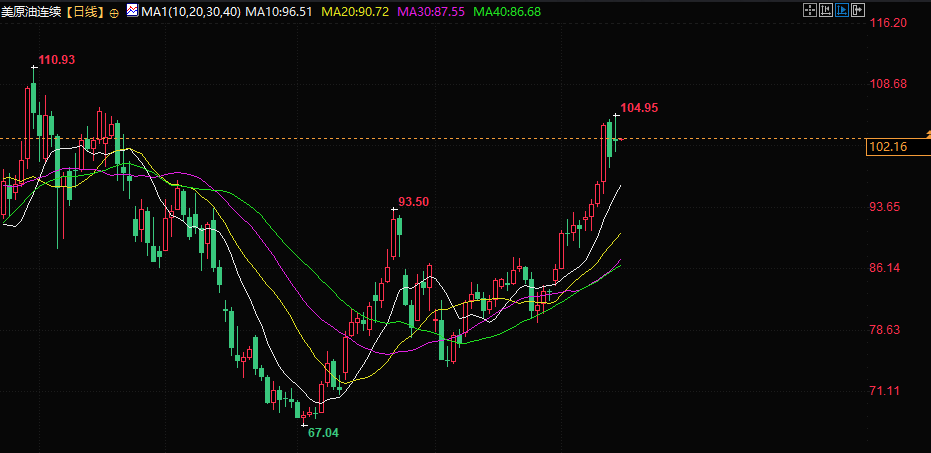
On Tuesday (September 15, Beijing time) in early Asian trading, spot gold was trading around $4,290 per ounce. Gold prices fell to their lowest level in more than a month on Monday as rising oil prices and stronger-than-expected inflation data on Friday boosted market bets on a rate hike at the Federal Reserve's policy meeting this week. US crude oil was trading at $102.13 per barrel. Oil prices touched a four-month high on Monday, as concerns about energy supply intensified due to renewed attacks on Saudi Arabian energy infrastructure and attacks on ships in the Middle East. However, oil prices retreated from their intraday highs after US President Trump said Iran wanted to reach an agreement with Washington. 
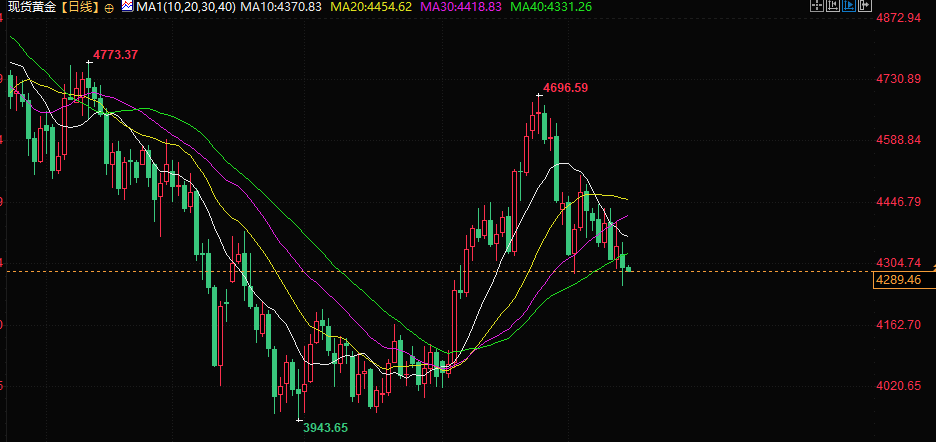 Jim Wyckoff, a market analyst at the U.S. Gold Exchange, said that the sharp rise in oil prices has pushed up inflation expectations, meaning that major central banks around the world will have to tighten monetary policy to control inflation, which is bearish for metal prices. A majority of economists surveyed expect the Federal Reserve to raise interest rates on Wednesday and at least once more before the end of March next year. The CME Group's FedWatch tool shows that traders believe there is about a 93% probability of a rate hike this week, and the market also expects the Bank of Japan to raise rates on Friday. Oil prices rose early Monday due to a new round of attacks on Saudi energy and civilian infrastructure, Iranian attacks on ships in the Gulf region, the closure of a key Saudi oil pipeline, and the postponement of a meeting between Iran and other Gulf states, which hampered Middle East diplomatic efforts. The dollar rose to a two-week high, making dollar-denominated gold more expensive for holders of other currencies. Spot silver fell 1.92% to $63.21 per ounce, platinum fell 1.6% to $1768.17, and palladium fell 0.7% to $1290.41.
 The Houthi rebels in Yemen, backed by Iran, claimed to have launched dozens of missiles and drones at a military airbase in Khamis Mushait, southern Saudi Arabia. Gulf Arab states postponed scheduled talks with Iran, exacerbating concerns that the Middle East conflict could spread and threaten global oil supplies. Preliminary ship tracking data showed that the average daily number of commodity ships passing through the Strait of Hormuz fell to single digits over the weekend, far below the 14 ships per day average of the previous 10 days. Before the US and Israel attacks on Iran in late February, about one-fifth of the world's oil supply was transported through the strait. Meanwhile, according to three industry sources, with the shutdown of Saudi Arabia's east-west oil pipeline, the port of Yanbu on the Red Sea coast has had to draw on its reserves, which are estimated to last only 5 to 7 days of exports. Trump also stated that Ukraine and Russia have agreed not to attack each other's energy targets, and any agreement aimed at ending the Russia-Ukraine war could allow Russia to increase its energy exports. As an OPEC+ member, Russia is projected to be the world's third-largest crude oil producer by 2025, after the United States and Saudi Arabia. In addition, investors bet that the Federal Reserve would raise its benchmark interest rate by 25 basis points to a range of 3.75% to 4.00% on Wednesday and hint at further tightening of monetary policy, which also put pressure on oil prices.
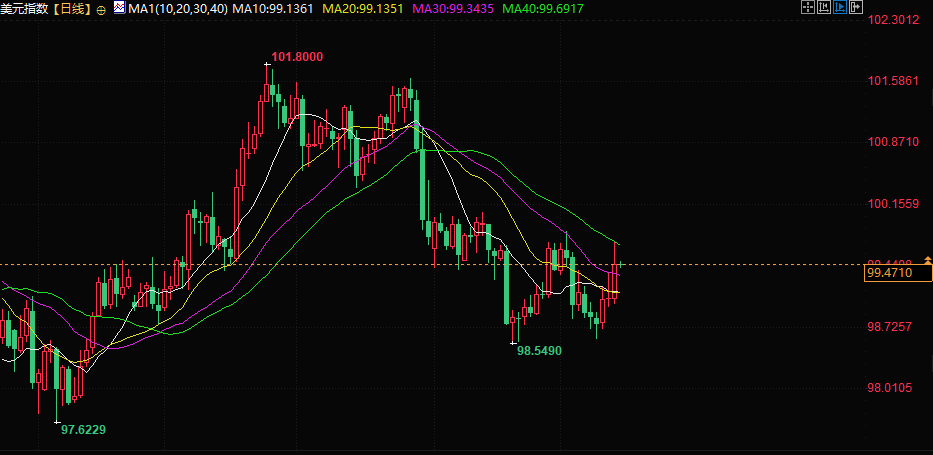 The euro fell 0.12% against the dollar, hitting a one-month low of $1.152, while the pound fell 0.21% to $1.3498. The dollar rose 0.55% against the yen to 154.337, recovering from a near seven-month low of below 153 last week. Houthi attacks on Saudi Arabia, Saudi Arabia's closure of a major oil pipeline bypassing the Strait of Hormuz, threats to the Red Sea, the postponement of a meeting between Tehran and other Gulf states, and attacks on regional ships all exacerbated supply concerns, leading to higher oil prices. ING strategist Francesco Pesole stated that the Gulf situation and AI news weighed on the stock market, and the dollar should continue to receive support. Markets are increasingly convinced that the Federal Reserve will raise interest rates on Wednesday to address rising energy prices. The CME FedWatch tool shows that the money market expects a rate hike with a probability of around 90%, up from about 60% a week ago. Lee Hardman, an analyst at Mitsubishi UFJ, said the dollar strengthened slightly due to increased expectations of Fed tightening. However, Scotiabank warned that if the Fed keeps rates unchanged or adopts a "dovish" rate hike without a clear commitment to further increases, it could put pressure on the dollar. Rising global bets on rate hikes have pushed yields on US, European, and Japanese government bonds to multi-year and even multi-decade highs, but the impact on the foreign exchange market has been relatively limited. Markets are almost certain that the Bank of Japan will raise rates on Friday, and speculators have turned net long on the yen for the first time since February. The Bank of England is expected to keep borrowing costs unchanged on Thursday, but traders expect a rate hike later this year and further hikes in 2027.
Key Focus Today
stock market
U.S. stocks closed lower on Monday, with the S&P 500 down 0.48% to 7619.94, the Nasdaq down 0.56% to 26186.41, and the Dow Jones down 0.29% to 52421.17. Eight of the eleven sectors declined, with information technology and industrials leading the losses. Global AI-related stocks plunged after leaders from Anthropic, OpenAI, and xAI warned of the risks of rapid AI development and called for a slowdown. Nvidia fell 3.4%, Micron fell over 5%, and Broadcom and AMD both fell over 4%. The Philadelphia Semiconductor Index plummeted 5.9%. Meanwhile, the 10-year U.S. Treasury yield briefly rose above 5% for the first time since 2023, making investors nervous ahead of the Federal Reserve meeting. Traders expect a 90% probability of a 25 basis point rate hike by the Fed on Wednesday. ServiceNow, Adobe, and Workday rose 4% to 7.4%, while Bank of America plunged 5.1% due to expectations of declining investment banking fee income. Rising oil prices, high inflation, massive borrowing, and fiscal concerns pushed up U.S. Treasury yields, and the S&P 500's forward price-to-earnings ratio fell to 19, the lowest since April 2025.Gold Market
Gold prices fell to their lowest level in more than a month on Monday, with spot gold down 1.14% to settle at $4,298.63 an ounce, as rising oil prices and stronger-than-expected inflation data on Friday boosted market bets on a rate hike at the Federal Reserve's policy meeting this week. Jim Wyckoff, a market analyst at the U.S. Gold Exchange, said that the sharp rise in oil prices has pushed up inflation expectations, meaning that major central banks around the world will have to tighten monetary policy to control inflation, which is bearish for metal prices. A majority of economists surveyed expect the Federal Reserve to raise interest rates on Wednesday and at least once more before the end of March next year. The CME Group's FedWatch tool shows that traders believe there is about a 93% probability of a rate hike this week, and the market also expects the Bank of Japan to raise rates on Friday. Oil prices rose early Monday due to a new round of attacks on Saudi energy and civilian infrastructure, Iranian attacks on ships in the Gulf region, the closure of a key Saudi oil pipeline, and the postponement of a meeting between Iran and other Gulf states, which hampered Middle East diplomatic efforts. The dollar rose to a two-week high, making dollar-denominated gold more expensive for holders of other currencies. Spot silver fell 1.92% to $63.21 per ounce, platinum fell 1.6% to $1768.17, and palladium fell 0.7% to $1290.41.oil market
Oil prices rose on Monday, with WTI crude up 1.9% to settle at $101.89 a barrel, after hitting a four-month high of $104.95 during the session; Brent crude rose 1.71% to settle at $106.15 a barrel, after hitting a four-month high of $109.72 during the session. Concerns about energy supply intensified following further attacks on Saudi Arabian energy infrastructure and attacks on ships in the Middle East, but prices retreated from their intraday highs after US President Trump stated that Iran wanted to reach an agreement with Washington. The Houthi rebels in Yemen, backed by Iran, claimed to have launched dozens of missiles and drones at a military airbase in Khamis Mushait, southern Saudi Arabia. Gulf Arab states postponed scheduled talks with Iran, exacerbating concerns that the Middle East conflict could spread and threaten global oil supplies. Preliminary ship tracking data showed that the average daily number of commodity ships passing through the Strait of Hormuz fell to single digits over the weekend, far below the 14 ships per day average of the previous 10 days. Before the US and Israel attacks on Iran in late February, about one-fifth of the world's oil supply was transported through the strait. Meanwhile, according to three industry sources, with the shutdown of Saudi Arabia's east-west oil pipeline, the port of Yanbu on the Red Sea coast has had to draw on its reserves, which are estimated to last only 5 to 7 days of exports. Trump also stated that Ukraine and Russia have agreed not to attack each other's energy targets, and any agreement aimed at ending the Russia-Ukraine war could allow Russia to increase its energy exports. As an OPEC+ member, Russia is projected to be the world's third-largest crude oil producer by 2025, after the United States and Saudi Arabia. In addition, investors bet that the Federal Reserve would raise its benchmark interest rate by 25 basis points to a range of 3.75% to 4.00% on Wednesday and hint at further tightening of monetary policy, which also put pressure on oil prices.Foreign exchange market
The dollar rose across the board on Monday, with the dollar index gaining 0.4% to close at 99.47. It touched a high of 99.73 during the session, its highest level since September 2nd. Continued Middle East conflict pushed up oil prices, prompting investors to buy the dollar as a safe haven. Meanwhile, the market prepared for a possible first interest rate hike by the Federal Reserve in over two years. Warnings from executives of major AI companies about potential risks to AI dampened overall risk sentiment and also supported the dollar. The euro fell 0.12% against the dollar, hitting a one-month low of $1.152, while the pound fell 0.21% to $1.3498. The dollar rose 0.55% against the yen to 154.337, recovering from a near seven-month low of below 153 last week. Houthi attacks on Saudi Arabia, Saudi Arabia's closure of a major oil pipeline bypassing the Strait of Hormuz, threats to the Red Sea, the postponement of a meeting between Tehran and other Gulf states, and attacks on regional ships all exacerbated supply concerns, leading to higher oil prices. ING strategist Francesco Pesole stated that the Gulf situation and AI news weighed on the stock market, and the dollar should continue to receive support. Markets are increasingly convinced that the Federal Reserve will raise interest rates on Wednesday to address rising energy prices. The CME FedWatch tool shows that the money market expects a rate hike with a probability of around 90%, up from about 60% a week ago. Lee Hardman, an analyst at Mitsubishi UFJ, said the dollar strengthened slightly due to increased expectations of Fed tightening. However, Scotiabank warned that if the Fed keeps rates unchanged or adopts a "dovish" rate hike without a clear commitment to further increases, it could put pressure on the dollar. Rising global bets on rate hikes have pushed yields on US, European, and Japanese government bonds to multi-year and even multi-decade highs, but the impact on the foreign exchange market has been relatively limited. Markets are almost certain that the Bank of Japan will raise rates on Friday, and speculators have turned net long on the yen for the first time since February. The Bank of England is expected to keep borrowing costs unchanged on Thursday, but traders expect a rate hike later this year and further hikes in 2027.International News
Senior Iranian Official: No Negotiations Unless Conditions Met Early on the morning of the 15th local time, Rezaei, Secretary of Iran's Supreme National Security Council, stated that one should not be misled by contradictory signals from the United States, which included both "Iran will not negotiate" and "Iran is ready to negotiate." Rezaei stated that the landscape regarding oil and the Strait of Hormuz has changed. He emphasized that Iran will not negotiate until its conditions are met, without a doubt. (CCTV) Trump Says He's Willing to Negotiate with Iran, Demands "Compensation for Escorts" US President Trump posted several messages on social media on the 14th defending his Iran policy. Trump stated he was "open" to negotiations with Iran and claimed that the US facilitates oil transport in the Strait of Hormuz, demanding "compensation" from other countries for escorting the US. Trump stated that Iran "eagerly" wants an agreement, and "we are open to that idea." Previously, Trump stated that the US-Iran war would "end immediately" after the US midterm elections in November, and that resuming negotiations with Iran "is not something we are currently considering." (Xinhua) US Treasury Announces Sanctions Against VTB Bank On September 14, local time, the US Treasury Department announced that it was targeting VTB Bank, citing the bank's alleged involvement in circumventing sanctions against Iran. (CCTV News) Iran Claims Strait of Hormuz Blocked and Under "Smart Control" On September 14, local time, the Iranian Islamic Revolutionary Guard Corps Navy issued a statement saying that the supertanker "Al-Gaya" struck a mine while attempting to cross the no-navigation zone south of the Strait of Hormuz, subsequently exploding. Firefighting efforts were unsuccessful, and the ship caught fire. The statement emphasized that warnings had been issued previously regarding the dangers of this illegal route. The Guard Corps Navy explicitly announced that the Strait of Hormuz has been blocked and remains under Iranian smart control. (CCTV News) Vance Says US in Direct Talks with Houthis, Simultaneously Contacting Saudi Arabia and Other Conflict-Affected Countries US Vice President Vance stated on Monday that Washington has been holding direct talks with the Houthi rebels in Yemen as the Iranian-backed Houthi group continues its attacks on Saudi Arabia and expands its control over the area near the Bab el-Mandeb Strait. Vance told reporters, "We have also been in direct communication with the Houthis themselves." He added that the US government is also in contact with Saudi Arabia and other countries affected by the conflict. He stated, "We actually believe the situation is under our control. The situation is constantly changing, but we will continue to monitor it to ensure that core US interests are protected." Zelenskyy says reciprocal cessation of attacks on Russian energy facilities Regarding US President Trump's statement that Russia and Ukraine have agreed to stop attacking each other's energy targets, Ukrainian President Zelenskyy posted on social media on the evening of September 14th local time, stating that Ukraine is prepared to stop its attacks on Russia if its partners can ensure that Russia will no longer attack Ukraine's energy facilities, infrastructure, and food supply routes. Zelenskyy posted, "This war must end. And taking de-escalation measures on critical infrastructure issues may be the first step towards peace. We look forward to concrete solutions from our partners." (CCTV International News) Lagarde warns of massive European capital flow to US AI, calls for building domestic computing power to protect technological sovereignty European Central Bank President Christine Lagarde delivered a speech in Vienna on September 14th, titled "The New Era of Capital: Growth, Sovereignty, and Artificial Intelligence." She pointed out that Eurozone households hold approximately €440 billion in US technology assets, with significant European capital flowing into US AI. While Europe's AI penetration rate exceeds 50%, its digital investment lags behind the US. AI adoption is expected to boost productivity by up to 4% within a decade, alleviating fiscal pressures from an aging population. Lagarde warned that simply importing AI carries risks of data disruptions, supply shortages, and losing technological dominance. Europe needs to build its own computing power, requiring up to €600 billion to fill the gap and develop its own AI models. She stated that European science and technology innovation financing relies excessively on banks; while there is no shortage of domestic savings, there is a lack of channels for capital inflow, and she warned of a bubble risk in US AI development. Data shows that daily traffic in the Strait of Hormuz has dropped to single digits . Ship tracking information shows that daily ship traffic in the Strait of Hormuz was only in the single digits over the past two days, lower than the average of 14 ships per day over the past 10 days. According to ship tracking information on the 14th, four ships left the Strait of Hormuz over the past two days, including energy-carrying vessels; ten cargo ships entered the Strait of Hormuz. However, the above figures do not include ships that disable their Automatic Identification System (AIS) while transiting the Strait of Hormuz. According to the UK's Office for Maritime Trade Operations, a ship was struck by an unidentified flying object while transiting the Strait of Hormuz on the 13th; the extent of damage to the crew and the vessel is unclear. The Strait of Hormuz is a vital global shipping route, carrying approximately one-quarter of the world's seaborne oil trade, as well as significant quantities of liquefied natural gas and fertilizer. Before the US-Israel military strikes against Iran on February 28, approximately 125 large merchant ships, including oil tankers, LNG carriers, bulk carriers, and container ships, passed through the Strait of Hormuz daily. (CCTV News)Domestic News
State-owned Assets Supervision and Administration Commission of the State Council (SASAC): Central Enterprises to Take the Lead in Timely Payment Pei Renquan, head of the Financial Management and Operation Bureau of SASAC, said at a State Council policy briefing held by the State Council Information Office on September 14 that the "Notice on Strengthening the Governance of Difficulties in Receiving Payments from Small and Medium-sized Enterprises" specifically requires central enterprises to play an exemplary role. Going forward, central enterprises will actively raise funds to ensure timely payments; they will adhere to cash payments to small and medium-sized enterprises as a "hard rule," while maintaining a reasonable cash payment ratio for large enterprises based on their own circumstances, promoting the transmission along the business chain, and strictly controlling the use of "invoices," prohibiting the issuance of new "invoices" for periods longer than six months; they will also urge central enterprises to take the lead in complying with regulations in their respective industry sectors, be the first to clarify the four key elements in contracts, and be the first to respond to and implement the industry's timely payment initiative. (Xinhua News Agency) Ministry of Industry and Information Technology: Second Phase of National Small and Medium-sized Enterprise Development Fund to be Established On September 14, the State Council Information Office held a policy briefing to introduce the relevant work on strengthening the governance of difficulties in receiving payments from small and medium-sized enterprises. Ke Jixin, Vice Minister of Industry and Information Technology, stated that if large enterprises are found to deliberately extend payment terms while refusing to utilize financing support policies, relevant departments will intervene promptly, urging rectification through joint interviews and other means. For those enterprises refusing to rectify, stricter anti-unfair competition enforcement will be implemented, employing measures such as credit sanctions and public exposure to create a deterrent effect. For small and medium-sized enterprises (SMEs), financing efficiency will be improved in multiple dimensions. In conjunction with the Ministry of Finance and the People's Bank of China, loan interest subsidies and re-lending policies for technological innovation and technological transformation will be provided to SMEs to effectively reduce their financing costs. Simultaneously, the second phase of the National SME Development Fund will be established to inject long-term and patient capital into the transformation and development of SMEs. (Xinhua News Agency) The People's Bank of China: Preliminary statistics show that the outstanding social financing scale at the end of August 2026 was 464.8 trillion yuan, a year-on-year increase of 7.2% . The People's Bank of China released its August 2026 financial statistics report, showing that the outstanding social financing scale at the end of August 2026 was 464.8 trillion yuan, a year-on-year increase of 7.2%. Among them, outstanding RMB loans to the real economy reached RMB 278.63 trillion, a year-on-year increase of 5%; outstanding foreign currency loans to the real economy (converted to RMB) reached RMB 1.23 trillion, a year-on-year increase of 3.1%; outstanding entrusted loans reached RMB 11.26 trillion, a year-on-year increase of 1%; outstanding trust loans reached RMB 4.58 trillion, a year-on-year increase of 1.9%; outstanding undiscounted bank acceptance bills reached RMB 2.01 trillion, a year-on-year decrease of 5.1%; outstanding corporate bonds reached RMB 36.71 trillion, a year-on-year increase of 9.7%; outstanding government bonds reached RMB 103.69 trillion, a year-on-year increase of 13.5%; and outstanding domestic shares of non-financial enterprises reached RMB 12.67 trillion, a year-on-year increase of 5.7%.- Risk Warning and Disclaimer
- The market involves risk, and trading may not be suitable for all investors. This article is for reference only and does not constitute personal investment advice, nor does it take into account certain users’ specific investment objectives, financial situation, or other needs. Any investment decisions made based on this information are at your own risk.