With multiple shocks to the crude oil supply side, how much room is left for the risk premium in oil prices to rise?
2026-09-15 08:20:13
Brent crude futures opened higher in Asian trading on Tuesday (September 15) and are currently trading around $106.50 per barrel. Another controversial tanker incident in the Strait of Hormuz adds further uncertainty to the supply side. According to Iran's Fars News Agency on the 14th, the Iranian Revolutionary Guard Navy claimed that an oil tanker struck a mine and exploded while attempting to pass through a restricted route south of the Strait of Hormuz; the US Central Command denied this claim, stating that the tanker was hit by an Iranian missile last month and lost power, and was also attacked by an Iranian drone over the weekend, and that it was not struck by a mine. 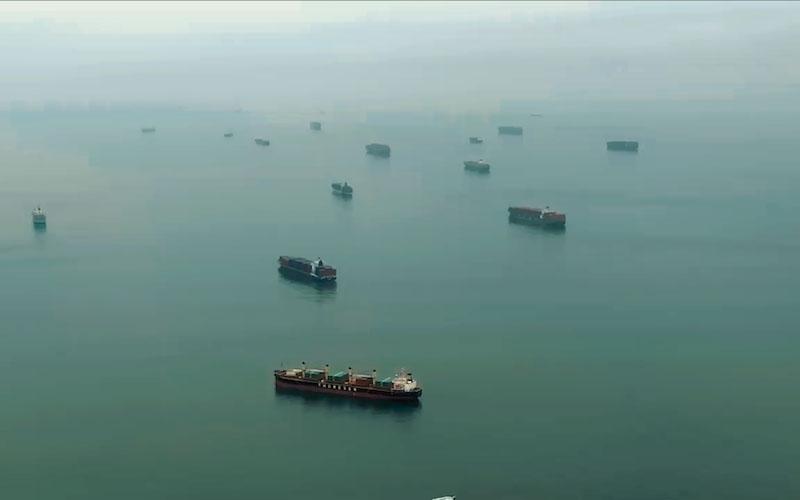
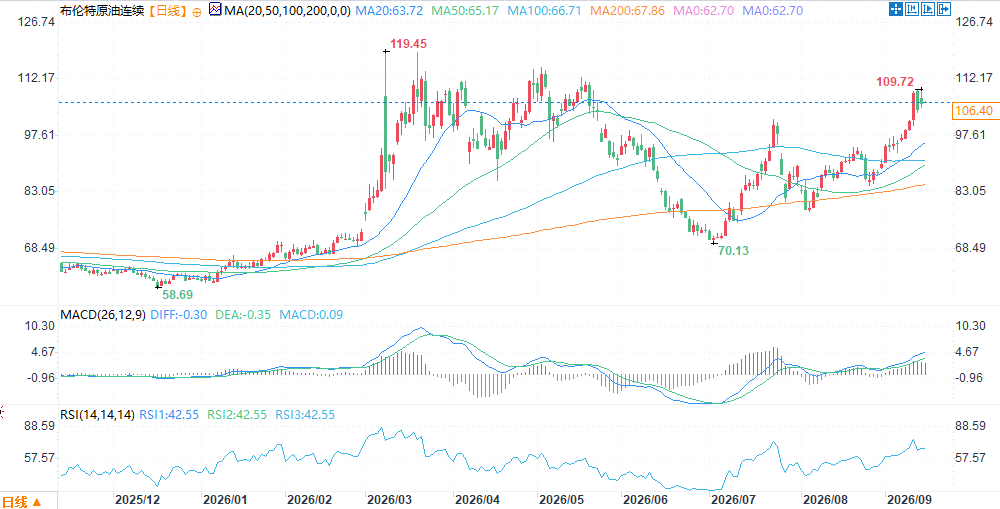 (Brent crude oil futures daily chart, source: EasyTrade) At 8:14 Beijing time, Brent crude oil futures were trading at $106.55 per barrel.
Conflicting statements from Iran and the United States
According to Iran's state news agency, the Iranian Revolutionary Guard Navy claimed that an oil tanker struck a mine and caught fire while attempting to pass through a restricted route south of the Strait of Hormuz. The Revolutionary Guard stated that firefighting efforts had failed, and the ship is now completely engulfed in flames, adding that it had previously warned vessels against using what it called the "illegal passage." The U.S. Central Command denied this claim. In a statement, Central Command confirmed the ship was the Panamanian-flagged oil tanker "El Gaia" and stated that it had not struck a mine. Instead, Central Command claimed the tanker was hit by an Iranian missile last month and lost power, and was then attacked a second time by Iranian drones in waters near the coast of Oman over the weekend. The two accounts are inconsistent, and the actual cause of the tanker's damage remains unresolved. The El Gaia's crew is reportedly Indian and was evacuated in the most recent incident; the latest reports indicate that one crew member is missing.The implications of risk pricing behind the controversy
The core of the controversy lies in whether the ships were disabled by mines or directly struck by missiles and drones, which is crucial for risk pricing. An active minefield implies a broader navigational hazard to all shipping; a targeted strike, on the other hand, indicates sustained and deliberate action by Iran against specific vessels. Regardless of the interpretation, both keep war risk premiums and freight costs high, and the tanker charter market is already under pressure from a broader conflict. From a risk pricing perspective, the market implications of a mine threat and a targeted strike are distinctly different. If an active minefield is confirmed, insurance companies and shipowners will have to classify the Strait of Hormuz and adjacent waters as high-risk areas, leading to a significant increase in war risk premiums, and potentially even some insurance companies refusing to cover certain vessels. All passing ships, regardless of nationality or cargo type, will face additional costs, and shipping companies may be forced to take longer routes or increase escort requirements, thereby driving up global crude oil and refined product transportation costs. Conversely, if the incident is confirmed to be a missile and drone attack targeting a specific vessel, the risk is more specific, and the market may interpret it as a selective action by Iran against a specific target, rather than a complete blockade of shipping lanes. In this scenario, the rise in freight and insurance rates may be relatively concentrated on conflict-related routes or flags, but the impact on the overall shipping network is relatively manageable. However, in reality, both interpretations coexist, leading market participants to adopt the most conservative pricing strategies. Current tanker day rates have risen significantly due to regional tensions, especially for Very Large Crude Carriers (VLCCs) on the Middle East Gulf to Asia route. The sustained war risk premium reflects not only immediate security concerns but also the market's long-term expectation of a potential further escalation of the US-Iran conflict. Negotiations between shipowners, charterers, and insurers are becoming more difficult, with some contracts beginning to include stricter war clauses and the right to bypass certain routes. Regardless of the final truth, this event has reinforced the vulnerability of the Strait of Hormuz as a global energy chokepoint, making the risk premium a structural factor that is difficult to dissipate in the short term.Background: A series of controversial oil tanker incidents
This incident is the latest in a series of controversial tanker incidents in and around the Strait of Hormuz since the escalation of the US-Iran conflict this year. Iran has repeatedly claimed that transit vessels struck mines, while the US military has repeatedly stated that the removal of mines from internationally recognized shipping lanes renders such claims credible and characterizes them as disinformation intended to intimidate commercial shipping. Similar disputes have occurred repeatedly near the Strait of Hormuz since the escalation of US-Iran tensions. Iran habitually attributes ship damage to mine strikes, emphasizing that these vessels deviated from their recognized safe shipping lanes, attempting to use this to prove its jurisdiction over parts of the waters. The US military has repeatedly refuted these claims with public statements and satellite evidence, pointing out that internationally recognized main shipping lanes are relatively safe after mine-clearing operations, and that Iran's "mine strike" claims often lack independent evidence and are more like an information warfare tactic aimed at creating panic, driving up shipping costs, and undermining international confidence in the US's ability to protect maritime passage. In several previous incidents, some damaged vessels were towed to nearby ports, and the delayed release of investigation results further deepened doubts among all parties. The commercial shipping industry is highly vigilant, with many shipowners adjusting their routes, increasing coordination with naval escort fleets, or opting for cautious passage at night or during low-visibility periods. Meanwhile, the International Maritime Organization and other multilateral bodies have called for restraint and permission for independent investigations, but progress has been limited. The cumulative effect of these events is a redefinition of the concept of "normal passage" in the Strait of Hormuz, significantly increasing operating costs and uncertainty for commercial shipping. Regardless of the specific causes of each incident, the ongoing mutual accusations have become part of the regional security environment, continuously pushing up risk premiums in the global energy supply chain and reminding markets that, against a backdrop of heightened geopolitical tensions, even damage to a single oil tanker can quickly evolve into a systemic signal affecting oil prices and shipping markets.Controversy maintains risk premium, providing support for oil price floor.
Whether the tanker was disabled by mines or directly hit by missiles and drones, both interpretations point to the same conclusion: the guarantee of safe passage through the Strait of Hormuz remains unreliable. Mines imply a broad navigational hazard to all shipping, while targeted strikes suggest ongoing Iranian action against specific vessels—both keep war risk premiums and freight costs high. For Brent crude futures, this means the geopolitical premium currently embedded in the price is unlikely to recede quickly. Coupled with previous supply-side shocks such as the closure of Saudi Arabia's East-West pipeline and the Houthi advance into the Bab el-Mandeb Strait, Brent crude futures have found multiple supports above $100. If similar disputes continue to occur, or if the diplomatic process between the US and Iran on the Hormuz issue stalls further, the risk skew for oil prices will continue to rise; conversely, if regional negotiations make substantial progress or there are clear signs of supply recovery, Brent may give back some of the premium. In short, this news does not change the immediate direction of oil prices, but it strengthens the "stickiness" of the current risk premium. (Brent crude oil futures daily chart, source: EasyTrade) At 8:14 Beijing time, Brent crude oil futures were trading at $106.55 per barrel.
- Risk Warning and Disclaimer
- The market involves risk, and trading may not be suitable for all investors. This article is for reference only and does not constitute personal investment advice, nor does it take into account certain users’ specific investment objectives, financial situation, or other needs. Any investment decisions made based on this information are at your own risk.