The Final Stage of Fed Rate Hikes: The Impact of Expectations for a Single Rate Hike on Global Markets
2026-09-17 01:36:09
The core trading theme in the current global financial markets has completely revolved around the game of whether the Federal Reserve will reach the end of its current interest rate hike cycle. A consensus has formed in the market's mainstream optimistic expectation: the Fed may implement its final rate hike, followed by a pause in tightening and the end of this rate hike cycle—a scenario commonly known as a "single rate hike that marks the end of the cycle." This expectation has dominated the overall trend of global equities, interest rates, and commodities, and is the core underlying logic behind recent fluctuations in major asset classes. 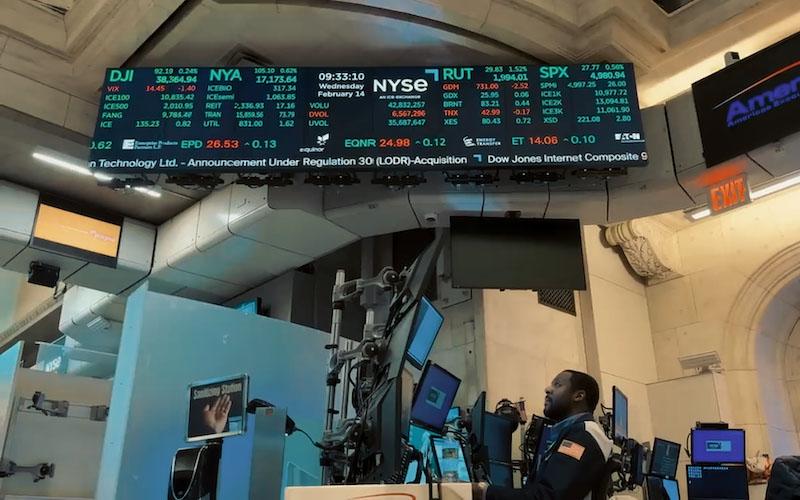 From the perspective of interest rate futures pricing, the market has priced in an extremely high probability of this rate hike, reaching almost complete consensus. However, it is worth noting that the market has not completely ruled out the possibility of further rate hikes, with the two year-end meetings still retaining a certain probability of a rate hike. This pricing structure of "a rate hike this time is certain, but subsequent hikes are uncertain" has created a typical market divide: short-term risk assets are betting on a policy turning point, while medium- and long-term funds are still pricing in inflation stickiness and policy uncertainty, forming a clear divergence between bulls and bears. The core support for this round of market optimism comes from the phased decline in long-term US Treasury yields, which has temporarily eased the core pressure suppressing the valuation of growth assets, thus creating a window of opportunity for risk assets to recover. Funds are generally betting that after this rate hike, the tightening policy will be completely cleared out, and long-term interest rates are expected to remain stable without another systemic rise, opening up space for the valuation recovery of various risk assets. Fundamental contradiction: Strong consumption and high commodity inflation offset expectations of policy easing The biggest macroeconomic contradiction in the current market lies in the serious divergence between "market expectations of easing" and "economic fundamentals resilience." While investors' one-sided speculation on policy has come to an end, the latest economic data continues to demonstrate that inflationary pressures in the US have not completely subsided, and the economy is performing far better than expected. The Federal Reserve does not possess the fundamental conditions to immediately shift to easing. US retail sales data significantly exceeded market expectations, reversing the previous trend of weakening consumption, with core consumer demand showing remarkable resilience. Excluding volatile categories such as durable goods and automobiles, both essential and discretionary consumption remained robust, with online and service consumption continuing to recover. Most importantly, consumption growth has consistently outpaced inflation growth, indicating that US residents have not reduced spending due to rising prices, exhibiting typical characteristics of "anti-inflation consumption." This sustained strong demand directly reinforces the endogenous stickiness of inflation, making it difficult for inflation to quickly fall back to the policy target range. Meanwhile, global energy commodity prices remain high, with crude oil and refined oil prices remaining strong, indicating persistent imported inflationary pressures. As a fundamental cost across the entire industry chain, high energy prices will continue to be transmitted to industrial goods, consumer goods, and services, forming a tiered system of inflationary support. Strong consumer spending coupled with high commodity inflation constitutes a double inflation barrier, severely restricting the Federal Reserve's policy shift space and representing the biggest potential negative factor for the current market optimism. Simply put, the market hopes the Fed will quickly end its tightening cycle, but economic data does not support policy easing. This expectation gap is the biggest source of uncertainty in the current global market. If the Fed adopts a hawkish stance, global risk assets will face valuation revaluation pressure. The underlying logic of market structural differentiation: the pricing divergence between growth and value assets The structural differentiation in the current global equity market is essentially due to the different sensitivities of different sectors to the Fed's policy cycle. Growth assets and value assets have exhibited completely opposite pricing logics, clearly reflecting the market's game-theoretic state regarding the policy turning point. High-valuation growth assets are highly sensitive to interest rate changes, thus becoming the biggest beneficiaries of this round of policy expectation-driven market activity. With long-term interest rates declining and the market betting on the end of interest rate hikes, valuation pressure on growth assets has eased, ushering in a concentrated recovery. The trading logic is very clear: the end of interest rate hikes means the most strained liquidity phase has passed, the subsequent market environment will marginally improve, and the valuation recovery space for high-valuation growth sectors will further open up. In contrast, traditional value stocks and cyclical sectors continued to show weakness and were under pressure, failing to follow the recovery of growth stocks. This divergence clearly indicates that this market recovery is not a full-blown bull market, but merely a structural market driven by policy expectations. The overall market's bullish foundation is not solid, and the overall market has a clear emotional ceiling. The core reason for the continued weakness of value stocks lies in the market's lingering concerns about the economic outlook and high interest rates. Even with the interest rate hikes nearing their end, the lagged effects of the high-interest-rate environment will continue to impact real economy enterprises, suppressing the profit recovery potential of traditional industries. Therefore, value funds remain cautious and unwilling to blindly follow the rebound, ultimately resulting in an extreme structural market characterized by "growth stocks rising alone while value stocks remain stagnant." Historical cycle patterns warn: The post-interest-rate hike rally harbors hidden risks . From the perspective of historical monetary policy cycles, the current market's one-sided optimism contains significant irrational elements, and the short-term market risks after the interest rate hike cycle is implemented are generally underestimated by current funds. A review of multiple Fed rate hike cycles reveals that growth-oriented risk assets generally underperform in the short term following rate hikes, with a high probability of short-term corrections and often delayed medium-term recovery. Historical data repeatedly confirms a pattern: the implementation of rate hikes does not signify a complete elimination of risks. The suppressive effect of a high-interest-rate environment on the market often has a lag, gradually manifesting itself after the policy is implemented. The biggest risk in the current market lies in the fact that all funds assume "this rate hike is an exception," subjectively believing that this tightening cycle has completely ended, thus prematurely pricing in long-term positive expectations. Once the Fed releases a hawkish signal in its policy statement, emphasizing that inflation risks remain and that future policy will retain flexibility, the market's extreme easing expectations will cool rapidly, and the previously over-priced optimism will be quickly corrected, triggering overall volatility in global equity markets. In short, this market rebound is an "expectation-driven advance rally," rather than a fundamentally driven trend rally. Lacking the dual support of performance and economic fundamentals, it is extremely unstable and highly susceptible to policy statements. Overall Asset Class Landscape and Macroeconomic Impact Considering the current macroeconomic fundamentals, policy expectations, and historical cyclical patterns, global asset classes are currently in a highly sensitive and volatile policy window. The Fed's decision will reshape global asset pricing logic in a phase. If the Fed confirms a single rate hike and signals a policy pause, market optimism will be fully realized, long-term interest rates are expected to decline further, growth and risk assets will continue their recovery, and global market risk appetite will continue to rise. In this scenario, the structural bullish trend will continue, market funds will further concentrate on growth stocks, and the valuation recovery will continue. However, if the Fed adopts a hawkish stance, emphasizing inflation stickiness and retaining room for further rate hikes, current market optimism will cool rapidly, global risk assets will experience a phase of correction, and interest rates and exchange rates will fluctuate and adjust accordingly, likely ending the previous structural rebound. Overall, the current macroeconomic environment is a typical "strong data, weak expectations, waiting for policy" pattern. Economic fundamentals do not support easing, but market sentiment is extremely speculative regarding easing. This extreme expectation gap is the core macroeconomic logic of the global financial market at present, and it also determines the overall pattern of increased short-term market volatility and continued structural differentiation. The subsequent trend of all assets will be repriced around the Fed's policy statements.
From the perspective of interest rate futures pricing, the market has priced in an extremely high probability of this rate hike, reaching almost complete consensus. However, it is worth noting that the market has not completely ruled out the possibility of further rate hikes, with the two year-end meetings still retaining a certain probability of a rate hike. This pricing structure of "a rate hike this time is certain, but subsequent hikes are uncertain" has created a typical market divide: short-term risk assets are betting on a policy turning point, while medium- and long-term funds are still pricing in inflation stickiness and policy uncertainty, forming a clear divergence between bulls and bears. The core support for this round of market optimism comes from the phased decline in long-term US Treasury yields, which has temporarily eased the core pressure suppressing the valuation of growth assets, thus creating a window of opportunity for risk assets to recover. Funds are generally betting that after this rate hike, the tightening policy will be completely cleared out, and long-term interest rates are expected to remain stable without another systemic rise, opening up space for the valuation recovery of various risk assets. Fundamental contradiction: Strong consumption and high commodity inflation offset expectations of policy easing The biggest macroeconomic contradiction in the current market lies in the serious divergence between "market expectations of easing" and "economic fundamentals resilience." While investors' one-sided speculation on policy has come to an end, the latest economic data continues to demonstrate that inflationary pressures in the US have not completely subsided, and the economy is performing far better than expected. The Federal Reserve does not possess the fundamental conditions to immediately shift to easing. US retail sales data significantly exceeded market expectations, reversing the previous trend of weakening consumption, with core consumer demand showing remarkable resilience. Excluding volatile categories such as durable goods and automobiles, both essential and discretionary consumption remained robust, with online and service consumption continuing to recover. Most importantly, consumption growth has consistently outpaced inflation growth, indicating that US residents have not reduced spending due to rising prices, exhibiting typical characteristics of "anti-inflation consumption." This sustained strong demand directly reinforces the endogenous stickiness of inflation, making it difficult for inflation to quickly fall back to the policy target range. Meanwhile, global energy commodity prices remain high, with crude oil and refined oil prices remaining strong, indicating persistent imported inflationary pressures. As a fundamental cost across the entire industry chain, high energy prices will continue to be transmitted to industrial goods, consumer goods, and services, forming a tiered system of inflationary support. Strong consumer spending coupled with high commodity inflation constitutes a double inflation barrier, severely restricting the Federal Reserve's policy shift space and representing the biggest potential negative factor for the current market optimism. Simply put, the market hopes the Fed will quickly end its tightening cycle, but economic data does not support policy easing. This expectation gap is the biggest source of uncertainty in the current global market. If the Fed adopts a hawkish stance, global risk assets will face valuation revaluation pressure. The underlying logic of market structural differentiation: the pricing divergence between growth and value assets The structural differentiation in the current global equity market is essentially due to the different sensitivities of different sectors to the Fed's policy cycle. Growth assets and value assets have exhibited completely opposite pricing logics, clearly reflecting the market's game-theoretic state regarding the policy turning point. High-valuation growth assets are highly sensitive to interest rate changes, thus becoming the biggest beneficiaries of this round of policy expectation-driven market activity. With long-term interest rates declining and the market betting on the end of interest rate hikes, valuation pressure on growth assets has eased, ushering in a concentrated recovery. The trading logic is very clear: the end of interest rate hikes means the most strained liquidity phase has passed, the subsequent market environment will marginally improve, and the valuation recovery space for high-valuation growth sectors will further open up. In contrast, traditional value stocks and cyclical sectors continued to show weakness and were under pressure, failing to follow the recovery of growth stocks. This divergence clearly indicates that this market recovery is not a full-blown bull market, but merely a structural market driven by policy expectations. The overall market's bullish foundation is not solid, and the overall market has a clear emotional ceiling. The core reason for the continued weakness of value stocks lies in the market's lingering concerns about the economic outlook and high interest rates. Even with the interest rate hikes nearing their end, the lagged effects of the high-interest-rate environment will continue to impact real economy enterprises, suppressing the profit recovery potential of traditional industries. Therefore, value funds remain cautious and unwilling to blindly follow the rebound, ultimately resulting in an extreme structural market characterized by "growth stocks rising alone while value stocks remain stagnant." Historical cycle patterns warn: The post-interest-rate hike rally harbors hidden risks . From the perspective of historical monetary policy cycles, the current market's one-sided optimism contains significant irrational elements, and the short-term market risks after the interest rate hike cycle is implemented are generally underestimated by current funds. A review of multiple Fed rate hike cycles reveals that growth-oriented risk assets generally underperform in the short term following rate hikes, with a high probability of short-term corrections and often delayed medium-term recovery. Historical data repeatedly confirms a pattern: the implementation of rate hikes does not signify a complete elimination of risks. The suppressive effect of a high-interest-rate environment on the market often has a lag, gradually manifesting itself after the policy is implemented. The biggest risk in the current market lies in the fact that all funds assume "this rate hike is an exception," subjectively believing that this tightening cycle has completely ended, thus prematurely pricing in long-term positive expectations. Once the Fed releases a hawkish signal in its policy statement, emphasizing that inflation risks remain and that future policy will retain flexibility, the market's extreme easing expectations will cool rapidly, and the previously over-priced optimism will be quickly corrected, triggering overall volatility in global equity markets. In short, this market rebound is an "expectation-driven advance rally," rather than a fundamentally driven trend rally. Lacking the dual support of performance and economic fundamentals, it is extremely unstable and highly susceptible to policy statements. Overall Asset Class Landscape and Macroeconomic Impact Considering the current macroeconomic fundamentals, policy expectations, and historical cyclical patterns, global asset classes are currently in a highly sensitive and volatile policy window. The Fed's decision will reshape global asset pricing logic in a phase. If the Fed confirms a single rate hike and signals a policy pause, market optimism will be fully realized, long-term interest rates are expected to decline further, growth and risk assets will continue their recovery, and global market risk appetite will continue to rise. In this scenario, the structural bullish trend will continue, market funds will further concentrate on growth stocks, and the valuation recovery will continue. However, if the Fed adopts a hawkish stance, emphasizing inflation stickiness and retaining room for further rate hikes, current market optimism will cool rapidly, global risk assets will experience a phase of correction, and interest rates and exchange rates will fluctuate and adjust accordingly, likely ending the previous structural rebound. Overall, the current macroeconomic environment is a typical "strong data, weak expectations, waiting for policy" pattern. Economic fundamentals do not support easing, but market sentiment is extremely speculative regarding easing. This extreme expectation gap is the core macroeconomic logic of the global financial market at present, and it also determines the overall pattern of increased short-term market volatility and continued structural differentiation. The subsequent trend of all assets will be repriced around the Fed's policy statements.
- Risk Warning and Disclaimer
- The market involves risk, and trading may not be suitable for all investors. This article is for reference only and does not constitute personal investment advice, nor does it take into account certain users’ specific investment objectives, financial situation, or other needs. Any investment decisions made based on this information are at your own risk.