Japan strengthens fiscal discipline and emphasizes its 2% inflation target, sending the dollar back above 155 against the yen.
2026-09-17 14:38:10
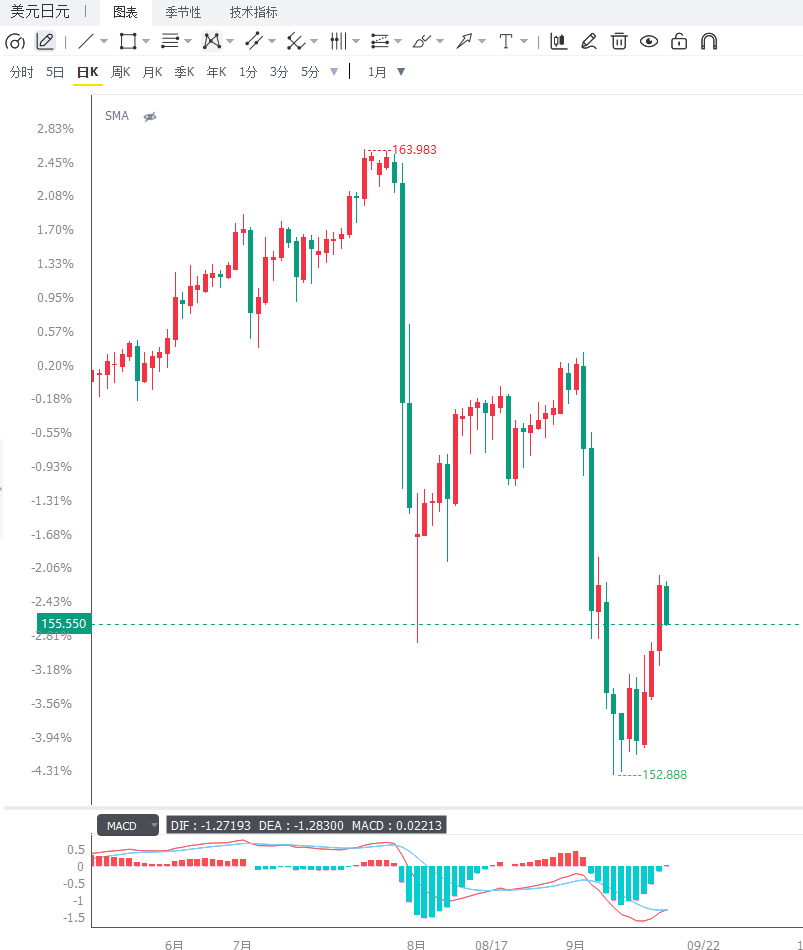
Japanese Finance Minister Satsuki Katayama said on Thursday that the Japanese government will further review budget requests from various departments and keep government debt issuance at a level that can gain market confidence. She also expressed her expectation that the Bank of Japan will adopt appropriate monetary policy to achieve a stable and sustainable 2% inflation target. These statements indicate that the Japanese government is currently focusing on balancing fiscal sustainability, bond market stability, and the normalization of monetary policy.  On the fiscal policy front, the Japanese government is facing significant budgetary needs and debt pressures. Katayama Satsuki previously stated that the government will maintain market confidence by reviewing expenditures and revenues, reducing unnecessary spending, and avoiding excessive bond issuance to alleviate fiscal financing pressures. The yield on Japanese 10-year government bonds recently rose to a 30-year high of approximately 3.0%, and market concerns have clearly increased that increased government spending could further push up debt issuance costs. Meanwhile, the Japanese government's focus on the yen's exchange rate is also intensifying. Katayama stated that Japan had already indicated its willingness to address excessive exchange rate volatility during its previous joint intervention with the US in the foreign exchange market. Japanese government spokesperson Kihara Minoru also stated on Thursday that Japan will continue to maintain close communication with the US Treasury Department and strive to maintain the orderly operation of the exchange rate market. Previously, Japan and the US took joint intervention measures at the end of July to stabilize the yen's exchange rate. The recent movement of the USD/JPY exchange rate has been significantly influenced by changes in expectations regarding the US-Japan interest rate differential. The Federal Reserve raised interest rates by 25 basis points on Wednesday and signaled the possibility of further rate hikes, pushing the dollar index to around 100.30, while the yield on US 2-year Treasury bonds rose to around 4.7153%. A stronger dollar put pressure on the yen, with the USD/JPY pair rising to around 155.50 in Asian trading on Thursday, significantly higher than the low of 152.89 reached in early September. The Bank of Japan (BOJ) is now a key variable in the next phase of the USD/JPY exchange rate movement. The market currently expects the BOJ to raise interest rates to 1.25% at its September meeting, the highest level in 31 years, but the market is more focused on whether Governor Kazuo Ueda will give a clear signal of further rate hikes. If the BOJ emphasizes that inflation is already sustainable and hints that there is still room for further tightening, expectations of a narrowing USD/JPY interest rate differential may strengthen, thus supporting the yen. Conversely, if the policy stance is cautious and the Federal Reserve continues to maintain a hawkish position, the USD/JPY pair may remain high. Fiscal policy will also affect the exchange rate through the Japanese government bond market. If the Japanese government can strictly control budget needs and debt issuance, reducing market concerns about fiscal expansion, it may help stabilize the Japanese government bond market and improve risk pricing for yen assets. However, if fiscal spending continues to expand and government bond yields continue to rise, it is necessary to observe whether this rise in yields is driven by the normalization of monetary policy or by fiscal risk premiums, as the two have different impacts on the yen. Therefore, the USD/JPY pair is currently in a repricing phase between the Fed's hawkish stance and the Bank of Japan's potential interest rate hike. On the one hand, rising US interest rates and a stronger dollar are driving the exchange rate higher; on the other hand, the Japanese government's strengthening of fiscal discipline and emphasis on addressing excessive exchange rate volatility, along with the Bank of Japan's potential interest rate hike, may limit the yen's further weakness. The market will need to focus on the Bank of Japan's policy statement, Kazuo Ueda's speech, Japanese government bond yields, and changes in US interest rates. Looking at the daily chart of USD/JPY, the exchange rate previously rebounded from around 152.89 and has now risen back to the 155.50-156.00 area, shifting the short-term trend from a correction to a rebound. The first resistance level to watch is around 156.00. A successful break above this level could lead to further tests of 156.80 and 157.50. On the downside, watch the psychological level of 155.00, followed by the 153.90-154.00 area. A break below 153.90 would significantly weaken the short-term rebound. Overall, USD/JPY is currently in a high-level rebound phase, but the technical resistance around 156 warrants close monitoring. On the 4-hour chart, USD/JPY has formed a relatively clear rebound structure, with short-term moving averages diverging upwards again, and a stronger dollar providing momentum for the exchange rate. However, the 155.80-156.00 area presents significant resistance from previous trading activity; if the price fails to break through this level, a short-term pullback is still possible. A break and hold above 156.00 could open up further upside potential; a break below 155.00 could lead to a pullback to around 154.00 to find new support.
  Editor's Summary: The Japanese government is currently stabilizing market confidence by rigorously reviewing budget requests, controlling debt issuance, and strengthening fiscal discipline, while continuing to emphasize the importance of the Bank of Japan achieving its 2% inflation target. The USD/JPY exchange rate is influenced by both the Federal Reserve's hawkish stance and the Bank of Japan's potential interest rate hikes. In the short term, US interest rates and the dollar's performance remain key drivers of the exchange rate, while the Bank of Japan's policy path and the Japanese government's attitude towards excessive exchange rate volatility will determine whether the yen can regain sustained support. The 155-156 USD/JPY range has therefore become a crucial price zone for the market to watch in the near term.
On the fiscal policy front, the Japanese government is facing significant budgetary needs and debt pressures. Katayama Satsuki previously stated that the government will maintain market confidence by reviewing expenditures and revenues, reducing unnecessary spending, and avoiding excessive bond issuance to alleviate fiscal financing pressures. The yield on Japanese 10-year government bonds recently rose to a 30-year high of approximately 3.0%, and market concerns have clearly increased that increased government spending could further push up debt issuance costs. Meanwhile, the Japanese government's focus on the yen's exchange rate is also intensifying. Katayama stated that Japan had already indicated its willingness to address excessive exchange rate volatility during its previous joint intervention with the US in the foreign exchange market. Japanese government spokesperson Kihara Minoru also stated on Thursday that Japan will continue to maintain close communication with the US Treasury Department and strive to maintain the orderly operation of the exchange rate market. Previously, Japan and the US took joint intervention measures at the end of July to stabilize the yen's exchange rate. The recent movement of the USD/JPY exchange rate has been significantly influenced by changes in expectations regarding the US-Japan interest rate differential. The Federal Reserve raised interest rates by 25 basis points on Wednesday and signaled the possibility of further rate hikes, pushing the dollar index to around 100.30, while the yield on US 2-year Treasury bonds rose to around 4.7153%. A stronger dollar put pressure on the yen, with the USD/JPY pair rising to around 155.50 in Asian trading on Thursday, significantly higher than the low of 152.89 reached in early September. The Bank of Japan (BOJ) is now a key variable in the next phase of the USD/JPY exchange rate movement. The market currently expects the BOJ to raise interest rates to 1.25% at its September meeting, the highest level in 31 years, but the market is more focused on whether Governor Kazuo Ueda will give a clear signal of further rate hikes. If the BOJ emphasizes that inflation is already sustainable and hints that there is still room for further tightening, expectations of a narrowing USD/JPY interest rate differential may strengthen, thus supporting the yen. Conversely, if the policy stance is cautious and the Federal Reserve continues to maintain a hawkish position, the USD/JPY pair may remain high. Fiscal policy will also affect the exchange rate through the Japanese government bond market. If the Japanese government can strictly control budget needs and debt issuance, reducing market concerns about fiscal expansion, it may help stabilize the Japanese government bond market and improve risk pricing for yen assets. However, if fiscal spending continues to expand and government bond yields continue to rise, it is necessary to observe whether this rise in yields is driven by the normalization of monetary policy or by fiscal risk premiums, as the two have different impacts on the yen. Therefore, the USD/JPY pair is currently in a repricing phase between the Fed's hawkish stance and the Bank of Japan's potential interest rate hike. On the one hand, rising US interest rates and a stronger dollar are driving the exchange rate higher; on the other hand, the Japanese government's strengthening of fiscal discipline and emphasis on addressing excessive exchange rate volatility, along with the Bank of Japan's potential interest rate hike, may limit the yen's further weakness. The market will need to focus on the Bank of Japan's policy statement, Kazuo Ueda's speech, Japanese government bond yields, and changes in US interest rates. Looking at the daily chart of USD/JPY, the exchange rate previously rebounded from around 152.89 and has now risen back to the 155.50-156.00 area, shifting the short-term trend from a correction to a rebound. The first resistance level to watch is around 156.00. A successful break above this level could lead to further tests of 156.80 and 157.50. On the downside, watch the psychological level of 155.00, followed by the 153.90-154.00 area. A break below 153.90 would significantly weaken the short-term rebound. Overall, USD/JPY is currently in a high-level rebound phase, but the technical resistance around 156 warrants close monitoring. On the 4-hour chart, USD/JPY has formed a relatively clear rebound structure, with short-term moving averages diverging upwards again, and a stronger dollar providing momentum for the exchange rate. However, the 155.80-156.00 area presents significant resistance from previous trading activity; if the price fails to break through this level, a short-term pullback is still possible. A break and hold above 156.00 could open up further upside potential; a break below 155.00 could lead to a pullback to around 154.00 to find new support. Editor's Summary: The Japanese government is currently stabilizing market confidence by rigorously reviewing budget requests, controlling debt issuance, and strengthening fiscal discipline, while continuing to emphasize the importance of the Bank of Japan achieving its 2% inflation target. The USD/JPY exchange rate is influenced by both the Federal Reserve's hawkish stance and the Bank of Japan's potential interest rate hikes. In the short term, US interest rates and the dollar's performance remain key drivers of the exchange rate, while the Bank of Japan's policy path and the Japanese government's attitude towards excessive exchange rate volatility will determine whether the yen can regain sustained support. The 155-156 USD/JPY range has therefore become a crucial price zone for the market to watch in the near term.
- Risk Warning and Disclaimer
- The market involves risk, and trading may not be suitable for all investors. This article is for reference only and does not constitute personal investment advice, nor does it take into account certain users’ specific investment objectives, financial situation, or other needs. Any investment decisions made based on this information are at your own risk.