













The widening interest rate differential between the US and Canada, coupled with trade concerns, put pressure on the Canadian dollar, pushing the USD/CAD pair near the 1.4000 level.
2026-09-18 14:38:14
The USD/CAD pair remained range-bound in Asian trading on Friday, trading below the psychological level of 1.4000. Despite recent pressure on the US dollar from falling US Treasury yields, the widening interest rate differential between the Federal Reserve and the Bank of Canada continues to provide fundamental support for the USD/CAD pair. The pair is now poised to record gains for the second consecutive week, extending its upward trend that has lasted for over a week.  The USD/CAD pair rose to around 1.4000 this week, its highest level since August 7. The main reason for the Canadian dollar's pressure lies in the further divergence in monetary policy paths between the US and Canada. The Bank of Canada kept its policy rate unchanged at 2.25% this month, while the Federal Reserve raised its benchmark rate by 25 basis points this week to 3.75%-4.00%, widening the US-Canada policy rate differential to 175 basis points. This widening differential directly reduces the attractiveness of Canadian dollar assets relative to US dollar assets. The market is currently not only assessing the impact of the Fed's rate hike but also repricing future policy paths. Signals from the Fed indicate the possibility of further rate hikes this year, while the Bank of Canada needs to weigh inflation, economic growth, and the external trade environment. Against this backdrop, the short-term interest rate market is significantly more supportive of the US dollar than the Canadian dollar. Scotiabank strategists point out that the return of the US-Canada policy rate differential to 175 basis points and the widening of the front-end yield spread are important reasons for the recent weakness of the Canadian dollar. Their model shows that the equilibrium exchange rate for USD/CAD is approximately 1.3894, implying a certain degree of overvaluation of the US dollar at current spot levels. However, given the lack of significant momentum for a narrowing interest rate differential between the US and Canada in the short term, a sustained rebound in the Canadian dollar is unlikely. Oil prices are typically a key support factor for the Canadian dollar, but this effect has not been fully realized recently. As a major energy exporter, Canada typically benefits from improved terms of trade and increased attractiveness of the Canadian dollar when international crude oil prices rise. However, while oil prices remain high recently, increased market focus on the global energy supply and demand outlook, coupled with trade concerns between the US and Canada, has prevented the Canadian dollar from fully benefiting from rising energy prices. Trade concerns are also a significant factor influencing the Canadian dollar. The US previously imposed a 50% tariff on approximately $20 billion worth of Canadian goods, and Canada subsequently retaliated with tariffs ranging from 15% to 50% on approximately $20 billion worth of US goods. This ongoing trade friction increases uncertainty for the Canadian economy and could put pressure on economic growth through exports, business investment, and consumer confidence. For the Bank of Canada, a deteriorating external trade environment means policymakers need to pay closer attention to economic growth risks. If trade friction further weakens Canadian economic activity, the market may increase expectations for future interest rate cuts or continued low interest rates, further widening the interest rate advantage between the US dollar and the Canadian dollar. However, current Canadian inflation and energy prices remain key variables limiting a rapid shift in policy expectations. On the other hand, the US dollar has not been entirely strong recently. The yield on 10-year US Treasury bonds has retreated from the previous trading day's high, and falling oil prices have eased some inflationary pressures, causing the dollar index to consolidate near the 100 level. Federal Reserve Chairman Warsh emphasized that inflation remains high, which has somewhat eased the previous selling pressure in the bond market, but the decline in yields still limits the dollar's potential for further short-term gains. Therefore, the USD/CAD exchange rate is currently showing a clear divergence in fundamentals. On the one hand, the widening US-Canada interest rate differential, trade concerns, and risks to Canadian economic growth support the USD/CAD exchange rate; on the other hand, falling US yields and high oil prices provide some buffer for the Canadian dollar, while limiting the speed of the USD/CAD's rise. The market will need to focus on US and Canadian economic data in the next phase, as well as further statements from the two central banks regarding their future policy paths. If US inflation and employment data remain resilient, expectations for further Fed rate hikes may continue to rise, and the USD/CAD pair is likely to remain high. Conversely, if US economic data cools while oil prices remain strong, the Canadian dollar may see some recovery. On the daily chart, USD/CAD is currently maintaining an upward trend, having risen for the second consecutive week and gradually approaching the psychological level of 1.4000. The short-term bullish structure was strengthened after the price broke through the 1.3800 and 1.3900 areas. 1.4000 is currently the most important psychological resistance level; if the daily chart effectively breaks through and holds this level, further attention can be paid to 1.4050 and the 1.4100 area. On the downside, the first support level to watch is around 1.3900, which is currently the first support level after the recent rise; further support lies in the 1.3850 and 1.3800 areas. If the price falls below 1.3800, it indicates a significant weakening of the recent upward structure, and a possible return to the previous trading range. From a 4-hour chart perspective, the USD/CAD pair has entered a consolidation phase at higher levels after a rapid rise, with significant resistance appearing multiple times around 1.4000, indicating a slowdown in short-term bullish momentum. A decisive break above 1.4000 on the 4-hour chart could open up further upside potential; conversely, repeated failures to break through and a drop below 1.3900 could lead to a technical pullback, targeting around 1.3850. Overall, the USD/CAD pair remains in a short-term bullish structure, but the 1.4000 level is a crucial watershed for determining the next trend. As long as the price holds above 1.3800, the medium-term upward structure remains intact.
 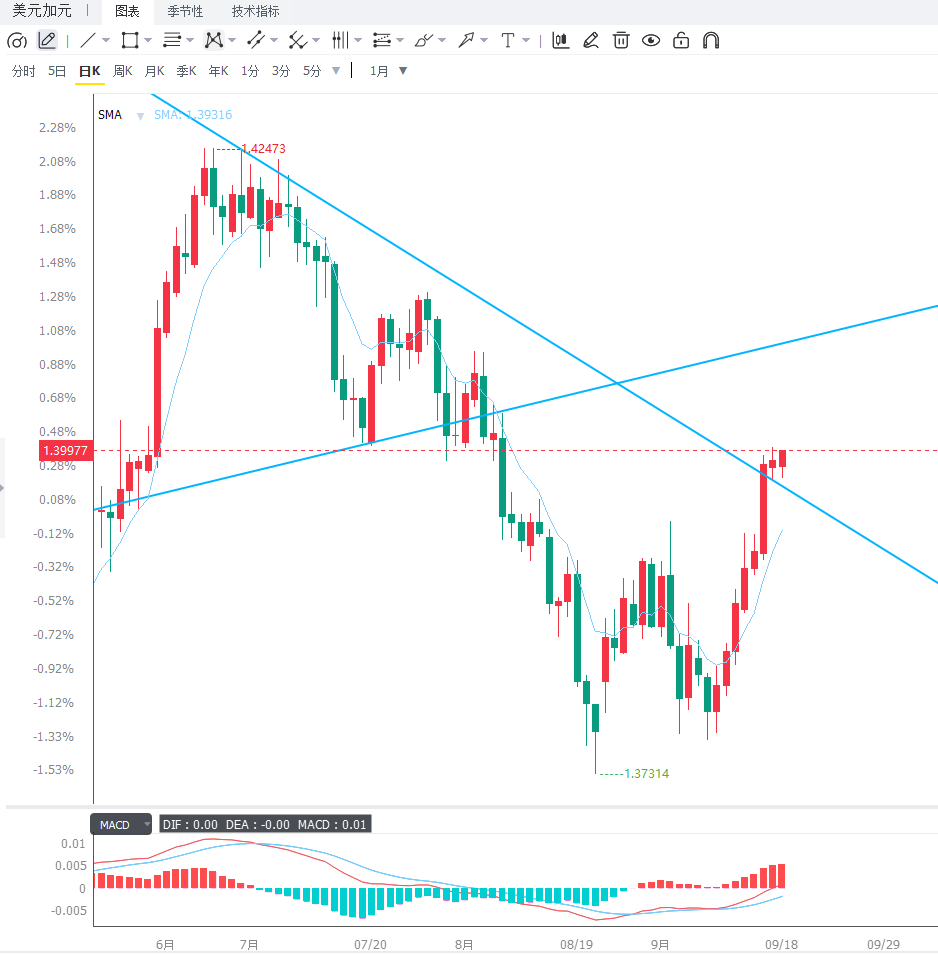 Editor's Summary: The Federal Reserve raised interest rates to 3.75%-4.00%, while the Bank of Canada kept them unchanged at 2.25%, widening the US-Canada policy rate differential to 175 basis points. This is a key fundamental factor contributing to the current strength of the USD/CAD pair. Meanwhile, trade concerns between the US and Canada have added extra pressure to the Canadian dollar, making it difficult for it to fully benefit from high oil prices. However, declining US Treasury yields and cooling oil prices have limited the pace of further dollar appreciation, so the USD/CAD pair may still face strong resistance around 1.4000. In the short term, 1.4000 is a key level for both bulls and bears; whether it can be effectively broken will depend on changes in the US-Canada interest rate differential, expectations for US monetary policy, and the performance of the energy market. If US economic data continues to support further rate hikes, the US-Canada interest rate differential may remain high, and the upward structure of the USD/CAD pair is likely to continue. If US data cools, yields continue to decline, and oil prices remain strong, the Canadian dollar may gradually recover, and the upward pressure on the USD/CAD pair may be alleviated.
The USD/CAD pair rose to around 1.4000 this week, its highest level since August 7. The main reason for the Canadian dollar's pressure lies in the further divergence in monetary policy paths between the US and Canada. The Bank of Canada kept its policy rate unchanged at 2.25% this month, while the Federal Reserve raised its benchmark rate by 25 basis points this week to 3.75%-4.00%, widening the US-Canada policy rate differential to 175 basis points. This widening differential directly reduces the attractiveness of Canadian dollar assets relative to US dollar assets. The market is currently not only assessing the impact of the Fed's rate hike but also repricing future policy paths. Signals from the Fed indicate the possibility of further rate hikes this year, while the Bank of Canada needs to weigh inflation, economic growth, and the external trade environment. Against this backdrop, the short-term interest rate market is significantly more supportive of the US dollar than the Canadian dollar. Scotiabank strategists point out that the return of the US-Canada policy rate differential to 175 basis points and the widening of the front-end yield spread are important reasons for the recent weakness of the Canadian dollar. Their model shows that the equilibrium exchange rate for USD/CAD is approximately 1.3894, implying a certain degree of overvaluation of the US dollar at current spot levels. However, given the lack of significant momentum for a narrowing interest rate differential between the US and Canada in the short term, a sustained rebound in the Canadian dollar is unlikely. Oil prices are typically a key support factor for the Canadian dollar, but this effect has not been fully realized recently. As a major energy exporter, Canada typically benefits from improved terms of trade and increased attractiveness of the Canadian dollar when international crude oil prices rise. However, while oil prices remain high recently, increased market focus on the global energy supply and demand outlook, coupled with trade concerns between the US and Canada, has prevented the Canadian dollar from fully benefiting from rising energy prices. Trade concerns are also a significant factor influencing the Canadian dollar. The US previously imposed a 50% tariff on approximately $20 billion worth of Canadian goods, and Canada subsequently retaliated with tariffs ranging from 15% to 50% on approximately $20 billion worth of US goods. This ongoing trade friction increases uncertainty for the Canadian economy and could put pressure on economic growth through exports, business investment, and consumer confidence. For the Bank of Canada, a deteriorating external trade environment means policymakers need to pay closer attention to economic growth risks. If trade friction further weakens Canadian economic activity, the market may increase expectations for future interest rate cuts or continued low interest rates, further widening the interest rate advantage between the US dollar and the Canadian dollar. However, current Canadian inflation and energy prices remain key variables limiting a rapid shift in policy expectations. On the other hand, the US dollar has not been entirely strong recently. The yield on 10-year US Treasury bonds has retreated from the previous trading day's high, and falling oil prices have eased some inflationary pressures, causing the dollar index to consolidate near the 100 level. Federal Reserve Chairman Warsh emphasized that inflation remains high, which has somewhat eased the previous selling pressure in the bond market, but the decline in yields still limits the dollar's potential for further short-term gains. Therefore, the USD/CAD exchange rate is currently showing a clear divergence in fundamentals. On the one hand, the widening US-Canada interest rate differential, trade concerns, and risks to Canadian economic growth support the USD/CAD exchange rate; on the other hand, falling US yields and high oil prices provide some buffer for the Canadian dollar, while limiting the speed of the USD/CAD's rise. The market will need to focus on US and Canadian economic data in the next phase, as well as further statements from the two central banks regarding their future policy paths. If US inflation and employment data remain resilient, expectations for further Fed rate hikes may continue to rise, and the USD/CAD pair is likely to remain high. Conversely, if US economic data cools while oil prices remain strong, the Canadian dollar may see some recovery. On the daily chart, USD/CAD is currently maintaining an upward trend, having risen for the second consecutive week and gradually approaching the psychological level of 1.4000. The short-term bullish structure was strengthened after the price broke through the 1.3800 and 1.3900 areas. 1.4000 is currently the most important psychological resistance level; if the daily chart effectively breaks through and holds this level, further attention can be paid to 1.4050 and the 1.4100 area. On the downside, the first support level to watch is around 1.3900, which is currently the first support level after the recent rise; further support lies in the 1.3850 and 1.3800 areas. If the price falls below 1.3800, it indicates a significant weakening of the recent upward structure, and a possible return to the previous trading range. From a 4-hour chart perspective, the USD/CAD pair has entered a consolidation phase at higher levels after a rapid rise, with significant resistance appearing multiple times around 1.4000, indicating a slowdown in short-term bullish momentum. A decisive break above 1.4000 on the 4-hour chart could open up further upside potential; conversely, repeated failures to break through and a drop below 1.3900 could lead to a technical pullback, targeting around 1.3850. Overall, the USD/CAD pair remains in a short-term bullish structure, but the 1.4000 level is a crucial watershed for determining the next trend. As long as the price holds above 1.3800, the medium-term upward structure remains intact. Editor's Summary: The Federal Reserve raised interest rates to 3.75%-4.00%, while the Bank of Canada kept them unchanged at 2.25%, widening the US-Canada policy rate differential to 175 basis points. This is a key fundamental factor contributing to the current strength of the USD/CAD pair. Meanwhile, trade concerns between the US and Canada have added extra pressure to the Canadian dollar, making it difficult for it to fully benefit from high oil prices. However, declining US Treasury yields and cooling oil prices have limited the pace of further dollar appreciation, so the USD/CAD pair may still face strong resistance around 1.4000. In the short term, 1.4000 is a key level for both bulls and bears; whether it can be effectively broken will depend on changes in the US-Canada interest rate differential, expectations for US monetary policy, and the performance of the energy market. If US economic data continues to support further rate hikes, the US-Canada interest rate differential may remain high, and the upward structure of the USD/CAD pair is likely to continue. If US data cools, yields continue to decline, and oil prices remain strong, the Canadian dollar may gradually recover, and the upward pressure on the USD/CAD pair may be alleviated.
- Risk Warning and Disclaimer
- The market involves risk, and trading may not be suitable for all investors. This article is for reference only and does not constitute personal investment advice, nor does it take into account certain users’ specific investment objectives, financial situation, or other needs. Any investment decisions made based on this information are at your own risk.

