













The Bank of Japan raised interest rates to a 31-year high, but the yen weakened; the pound sterling rebounded after a sharp drop against the yen.
2026-09-18 14:52:13
The British pound strengthened significantly against the Japanese yen in Asian trading on Friday, briefly breaking through 209.50 to reach a near two-week high. The main driver of this rally was not the Bank of Japan's interest rate hike itself, but rather the market's reassessment of the BOJ's future tightening pace following the rate decision. As widely expected, the BOJ raised its policy rate by 25 basis points to 1.25%, the highest level in 31 years, but the 7-2 vote revealed significant divisions within the policy committee.  In its policy statement, the Bank of Japan (BOJ) stated that it will continue to adjust interest rates based on changes in economic activity, prices, and financial conditions, while assessing the likelihood and associated risks of achieving its economic and inflation outlook. This means the BOJ has not ruled out further rate hikes, but has not provided a specific timetable for the next rate increase. The market has therefore turned its attention to BOJ Governor Kazuo Ueda's post-meeting press conference for further clues about the pace of future rate hikes. Japan's latest inflation data has also become a significant factor influencing the yen's performance. In August, Japan's overall consumer price index rose 1.9% year-on-year, while core inflation unexpectedly fell to 1.7%. Excluding fresh food and energy, the core index remained below the BOJ's 2% target. With the rate hike already implemented, the easing of inflationary pressures has reduced market expectations for a rapid and continuous series of rate hikes by the BOJ, thus the yen has not received support commensurate with the magnitude of the rate increase. Market reactions confirm this. After the BOJ announced its decision, the yen weakened against the dollar, with the dollar/yen pair rising to around 157 at one point, indicating that investors are more focused on the wording in the policy statement regarding the speed and magnitude of future rate hikes, rather than just the 25 basis point increase itself. For GBP/JPY, the weakening yen directly provides upward momentum. Meanwhile, the pound sterling, influenced by the overall consolidation of the dollar at high levels, has not experienced significant dollar appreciation pressure in the short term, thus providing additional support for GBP/JPY. However, the pound itself is also subject to policy constraints. The Bank of England kept interest rates unchanged on Thursday, maintaining a cautious policy stance, meaning that further strengthening of the pound still requires new impetus from UK economic data or monetary policy expectations. Looking at recent price performance, GBP/JPY has been steadily recovering from its low of around 207.00 reached last week. Historical data shows that the exchange rate fell to around 207.26 on September 11th before gradually recovering, reaching a high of around 209.46 on September 16th, indicating that the area around 209.50 has become a crucial battleground for short-term bulls and bears. The core contradiction in the current market lies in the fact that while the Bank of Japan has officially entered a further normalization phase, slowing inflation in Japan and internal disagreements within the policymaking body have made investors cautious about the timing and pace of subsequent interest rate hikes. If Kazuo Ueda emphasizes at the press conference that policy normalization will continue to proceed gradually based on economic and price data, the yen may regain support, and the short-term rise in GBP/JPY may be curbed. Conversely, if the Bank of Japan remains patient regarding the next rate hike, the yen's weakness may continue. Furthermore, the global interest rate environment is also worth noting. The Federal Reserve raised interest rates by 25 basis points this week to 3.75%-4.00%, and major central banks worldwide are still in the policy adjustment phase to address inflationary pressures. For interest rate differential-sensitive cross currencies like GBP/JPY, synchronized changes in interest rate expectations in the UK, Japan, and the US could further impact the exchange rate through global bond yields and risk appetite. Therefore, in the short term, the direct driver of GBP/JPY's rise is primarily the weakening of the yen, rather than a significant improvement in the pound's fundamentals. Whether a valid breakout above 209.50 can be achieved, and whether subsequent policy guidance from the Bank of Japan further strengthens expectations of rate hikes, will determine whether this rebound can continue. From a daily chart perspective, GBP/JPY rebounded from a low near 207.00 and returned above 209.00, indicating a significant improvement in the short-term price structure. The exchange rate reached a high of around 209.52 on September 16th, and then attempted to break above 209.50 again on September 18th, making 209.50 the most immediate resistance level. If the daily chart can effectively hold above this level, further upside targets are around 210.50 and 211.20; however, if it falls back below 209.00 after reaching a high, the strength of the breakout needs further confirmation. On the downside, the first support level to watch is around 208.50, an area where prices have traded multiple times previously and serves as a significant short-term support. A further break below this level would bring the next key support levels around 207.80 and 207.00, with 207.00 also representing a previous low in this pullback. If the exchange rate falls below 207.00 again, the recent rebound structure will weaken significantly. From a 4-hour chart perspective, GBP/JPY maintains a short-term upward trend, with bullish momentum strengthening after breaking through 209.00. However, the 209.50-210.00 area presents resistance from previous highs and psychological levels, and profit-taking after the recent gains warrants caution. If the 4-hour chart holds above 209.50, the short-term trend could extend towards 210.50; conversely, if the rally fails and breaks below 208.50, the exchange rate may retest the 208.00 level for support.
 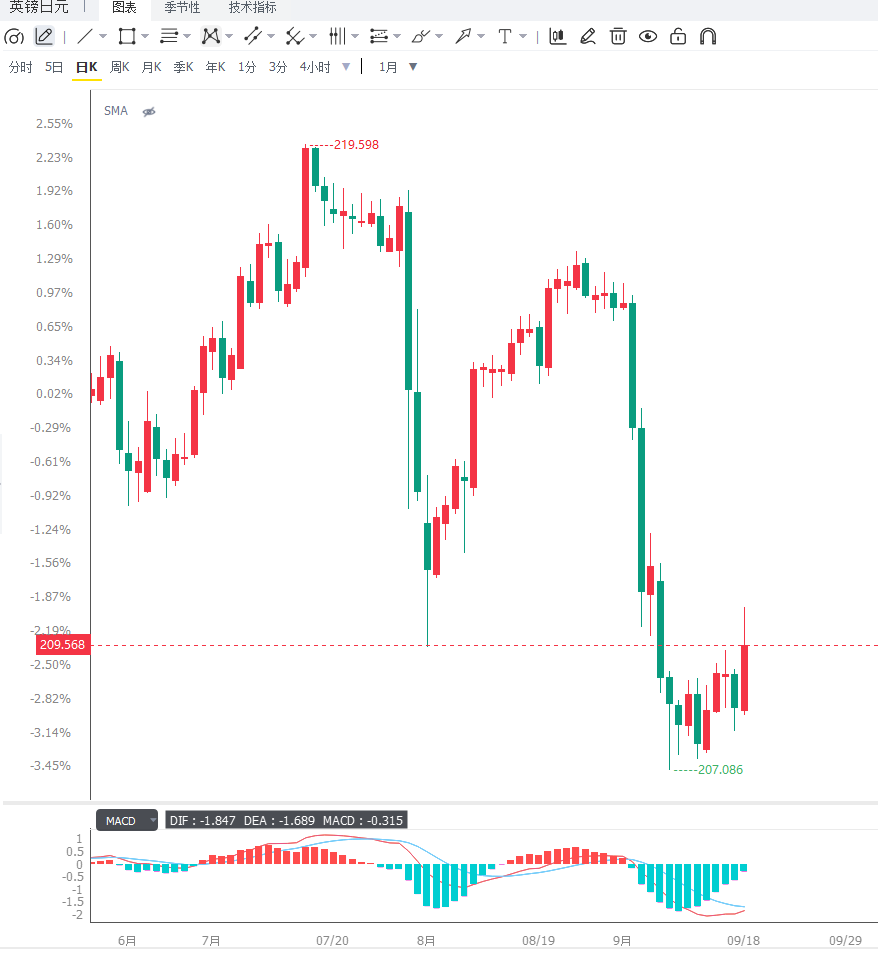 Editor's Summary: The Bank of Japan's (BOJ) increase of the policy rate to 1.25% marks a continued move towards normalization in Japanese monetary policy. However, the 7-2 vote and the cooling of inflation in August dampened market expectations for further rapid rate hikes, causing the yen to weaken after the decision. GBP/JPY, driven by the yen's weakness, rose back above 209.50. The key to future price movements remains the BOJ's policy guidance. If Kazuo Ueda releases clearer signals of further rate hikes, the yen may regain support; if the policy statement emphasizes a gradual approach, GBP/JPY may continue to test 210.50 and higher. Meanwhile, the Bank of England's policy path, global bond yields, and overall risk appetite will also influence short-term volatility in this cross rate.
In its policy statement, the Bank of Japan (BOJ) stated that it will continue to adjust interest rates based on changes in economic activity, prices, and financial conditions, while assessing the likelihood and associated risks of achieving its economic and inflation outlook. This means the BOJ has not ruled out further rate hikes, but has not provided a specific timetable for the next rate increase. The market has therefore turned its attention to BOJ Governor Kazuo Ueda's post-meeting press conference for further clues about the pace of future rate hikes. Japan's latest inflation data has also become a significant factor influencing the yen's performance. In August, Japan's overall consumer price index rose 1.9% year-on-year, while core inflation unexpectedly fell to 1.7%. Excluding fresh food and energy, the core index remained below the BOJ's 2% target. With the rate hike already implemented, the easing of inflationary pressures has reduced market expectations for a rapid and continuous series of rate hikes by the BOJ, thus the yen has not received support commensurate with the magnitude of the rate increase. Market reactions confirm this. After the BOJ announced its decision, the yen weakened against the dollar, with the dollar/yen pair rising to around 157 at one point, indicating that investors are more focused on the wording in the policy statement regarding the speed and magnitude of future rate hikes, rather than just the 25 basis point increase itself. For GBP/JPY, the weakening yen directly provides upward momentum. Meanwhile, the pound sterling, influenced by the overall consolidation of the dollar at high levels, has not experienced significant dollar appreciation pressure in the short term, thus providing additional support for GBP/JPY. However, the pound itself is also subject to policy constraints. The Bank of England kept interest rates unchanged on Thursday, maintaining a cautious policy stance, meaning that further strengthening of the pound still requires new impetus from UK economic data or monetary policy expectations. Looking at recent price performance, GBP/JPY has been steadily recovering from its low of around 207.00 reached last week. Historical data shows that the exchange rate fell to around 207.26 on September 11th before gradually recovering, reaching a high of around 209.46 on September 16th, indicating that the area around 209.50 has become a crucial battleground for short-term bulls and bears. The core contradiction in the current market lies in the fact that while the Bank of Japan has officially entered a further normalization phase, slowing inflation in Japan and internal disagreements within the policymaking body have made investors cautious about the timing and pace of subsequent interest rate hikes. If Kazuo Ueda emphasizes at the press conference that policy normalization will continue to proceed gradually based on economic and price data, the yen may regain support, and the short-term rise in GBP/JPY may be curbed. Conversely, if the Bank of Japan remains patient regarding the next rate hike, the yen's weakness may continue. Furthermore, the global interest rate environment is also worth noting. The Federal Reserve raised interest rates by 25 basis points this week to 3.75%-4.00%, and major central banks worldwide are still in the policy adjustment phase to address inflationary pressures. For interest rate differential-sensitive cross currencies like GBP/JPY, synchronized changes in interest rate expectations in the UK, Japan, and the US could further impact the exchange rate through global bond yields and risk appetite. Therefore, in the short term, the direct driver of GBP/JPY's rise is primarily the weakening of the yen, rather than a significant improvement in the pound's fundamentals. Whether a valid breakout above 209.50 can be achieved, and whether subsequent policy guidance from the Bank of Japan further strengthens expectations of rate hikes, will determine whether this rebound can continue. From a daily chart perspective, GBP/JPY rebounded from a low near 207.00 and returned above 209.00, indicating a significant improvement in the short-term price structure. The exchange rate reached a high of around 209.52 on September 16th, and then attempted to break above 209.50 again on September 18th, making 209.50 the most immediate resistance level. If the daily chart can effectively hold above this level, further upside targets are around 210.50 and 211.20; however, if it falls back below 209.00 after reaching a high, the strength of the breakout needs further confirmation. On the downside, the first support level to watch is around 208.50, an area where prices have traded multiple times previously and serves as a significant short-term support. A further break below this level would bring the next key support levels around 207.80 and 207.00, with 207.00 also representing a previous low in this pullback. If the exchange rate falls below 207.00 again, the recent rebound structure will weaken significantly. From a 4-hour chart perspective, GBP/JPY maintains a short-term upward trend, with bullish momentum strengthening after breaking through 209.00. However, the 209.50-210.00 area presents resistance from previous highs and psychological levels, and profit-taking after the recent gains warrants caution. If the 4-hour chart holds above 209.50, the short-term trend could extend towards 210.50; conversely, if the rally fails and breaks below 208.50, the exchange rate may retest the 208.00 level for support. Editor's Summary: The Bank of Japan's (BOJ) increase of the policy rate to 1.25% marks a continued move towards normalization in Japanese monetary policy. However, the 7-2 vote and the cooling of inflation in August dampened market expectations for further rapid rate hikes, causing the yen to weaken after the decision. GBP/JPY, driven by the yen's weakness, rose back above 209.50. The key to future price movements remains the BOJ's policy guidance. If Kazuo Ueda releases clearer signals of further rate hikes, the yen may regain support; if the policy statement emphasizes a gradual approach, GBP/JPY may continue to test 210.50 and higher. Meanwhile, the Bank of England's policy path, global bond yields, and overall risk appetite will also influence short-term volatility in this cross rate.
- Risk Warning and Disclaimer
- The market involves risk, and trading may not be suitable for all investors. This article is for reference only and does not constitute personal investment advice, nor does it take into account certain users’ specific investment objectives, financial situation, or other needs. Any investment decisions made based on this information are at your own risk.

