The US dollar is facing resistance at a seven-week high! The yen is depreciating sharply, and Japanese authorities have already conducted currency inquiries. Is something big going to happen next week?
2026-09-19 08:08:09
This week, the global foreign exchange and interest rate markets were dominated by a stronger US dollar. The US dollar index rose about 1.2% for the week, approaching a seven-week high. Although the Bank of Japan raised interest rates by 25 basis points to a 31-year high of 1.25%, the yen depreciated instead of appreciating due to the vote not being unanimously approved and the absence of hawkish guidance, marking its biggest weekly drop in months. US Treasury yields rose across the board, with the two-year yield reaching its highest level since 2024. Energy prices came under pressure and fell, while precious metals bucked the trend and strengthened. The resumption of the global interest rate hike cycle became the main theme throughout the week, and the pricing of a rise in the central interest rate is becoming increasingly clear. 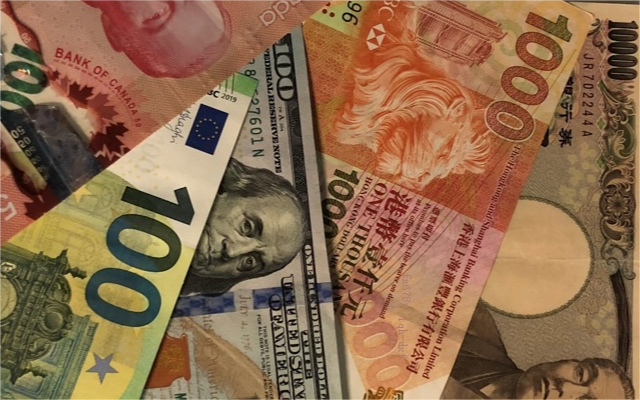
US Dollar Index
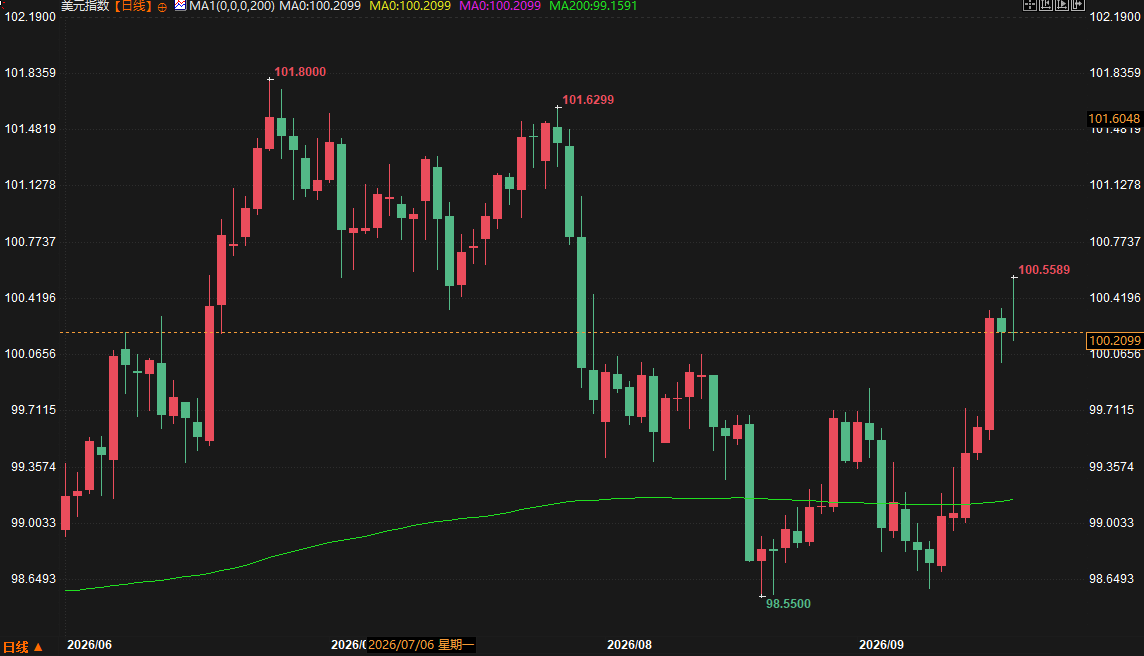
The US dollar index continued its upward trend this week, rising approximately 1.2% and reaching a seven-week high. The daily chart showed consecutive positive closes, indicating a clear short-term strengthening trend. The Federal Reserve's rate hike this week and its hints at further rate increases in the coming months cleared obstacles for the dollar's strength. The CME Group's FedWatch tool shows that traders expect a greater than 55% probability of a rate hike at next month's meeting, a significant increase from 27% a week ago. Major overseas institutions believe that against the backdrop of a renewed global rate hike cycle, the dollar has a basis for further appreciation. However, easing inflation concerns due to falling energy prices may limit the dollar's upside potential to some extent.US Dollar Japanese Yen
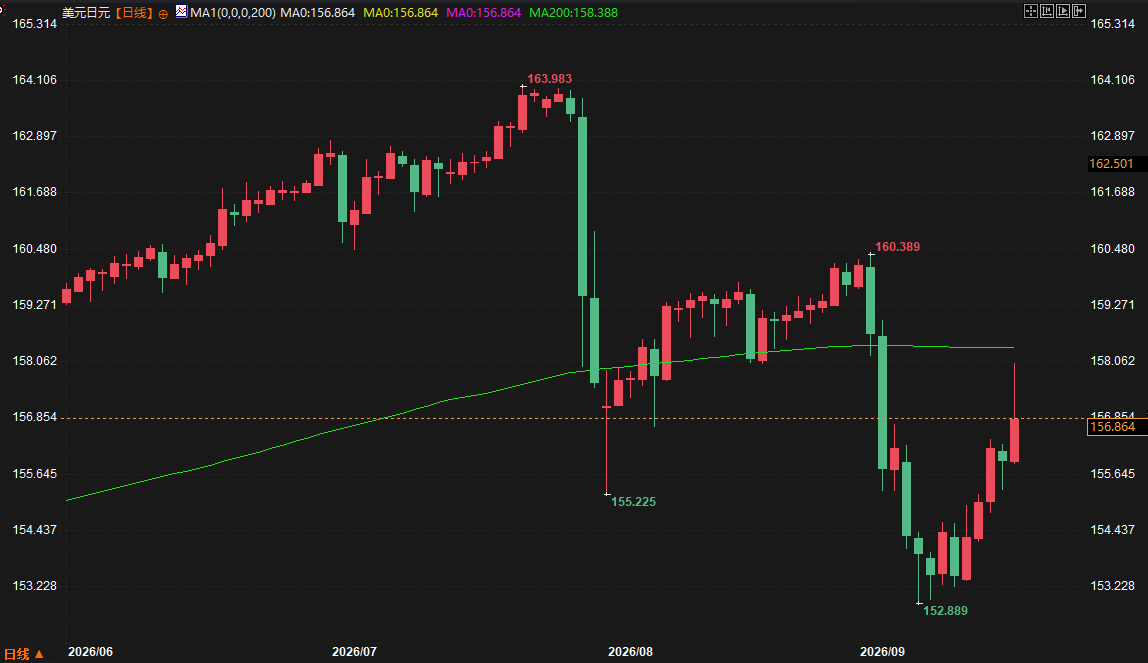
The dollar rebounded sharply against the yen this week, posting its biggest weekly gain since October 2025. On Friday, the Bank of Japan voted 7-2 to raise interest rates by 25 basis points to a 31-year high of 1.25%, but two policymakers voted against the move, leading traders to question the central bank's resolve to raise rates further. The rate hike failed to boost the yen, as the market perceived the central bank as lacking clear hawkish guidance. Nikkei reported that Japanese authorities had already conducted currency inquiries in the foreign exchange market, a move seen as preliminary action before intervention in the currency market; the dollar gave back some of its gains after the news was released. The market remains highly wary of Japanese authorities potentially intervening to support the yen.Eurodollar
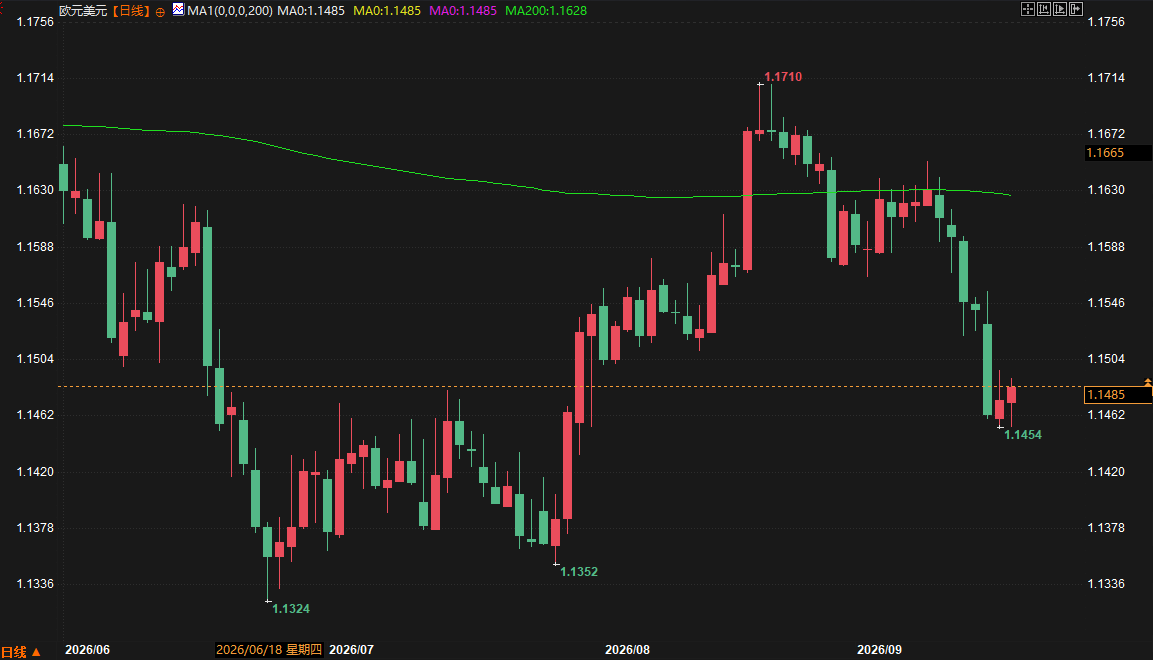
The euro was under pressure against the dollar this week, and is expected to fall by about 1% for the week. The strengthening dollar following the Fed's rate hike has weighed on the euro. Technically, after several days of declines, the euro saw a slight rebound on Friday, but remains in a downward trend overall. The ECB's policy stance contrasts with the Fed's, leaving the euro lacking upward momentum. Major overseas institutions believe that the euro is likely to remain weak during a period of dollar strength. The transmission effect of energy prices on the Eurozone's inflation and growth prospects will be a crucial variable determining the euro's future direction.British pound and US dollar
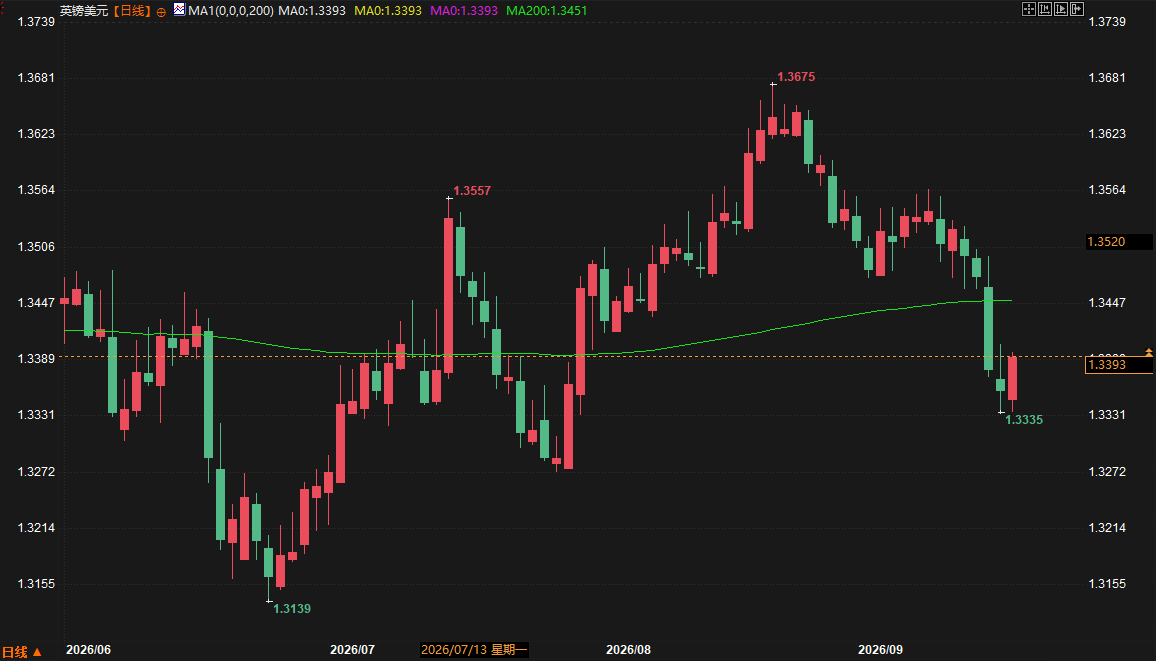
The pound rebounded against the dollar on Friday after better-than-expected UK retail sales data. The Bank of England kept interest rates unchanged on Thursday but also hinted at a possible increase in borrowing costs. Technically, the pound's previous rapid decline has shown signs of bottoming out, with the last trading day closing higher. Overall, the pound is still seeking a balance between a stronger dollar and its own UK data, and its short-term movement is expected to be mainly characterized by consolidation and correction. The market will closely watch subsequent UK inflation and employment data to determine whether the central bank will follow the Federal Reserve in raising interest rates.Australian Dollar US Dollar
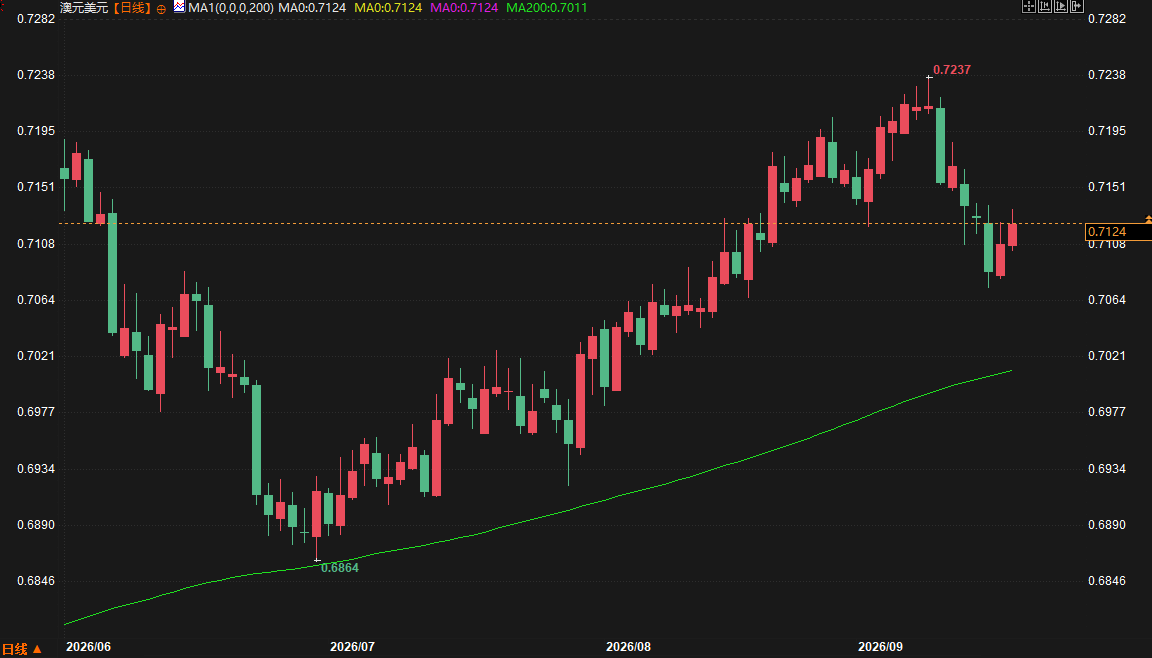
The Australian dollar rebounded slightly against the US dollar this week after an initial surge, exhibiting a generally volatile pattern with a pullback in its upward trend. The Australian dollar closed lower for the week, following the overall weakness of commodity currencies. The decline in iron ore and energy prices weighed on the Australian dollar. Technically, the exchange rate saw a bullish correction after a series of declines, but the upward momentum was limited. Going forward, attention should be paid to the support provided by commodity price trends and changes in external demand expectations for the Australian dollar; it may maintain range-bound trading in the short term.US dollars and Canadian dollars
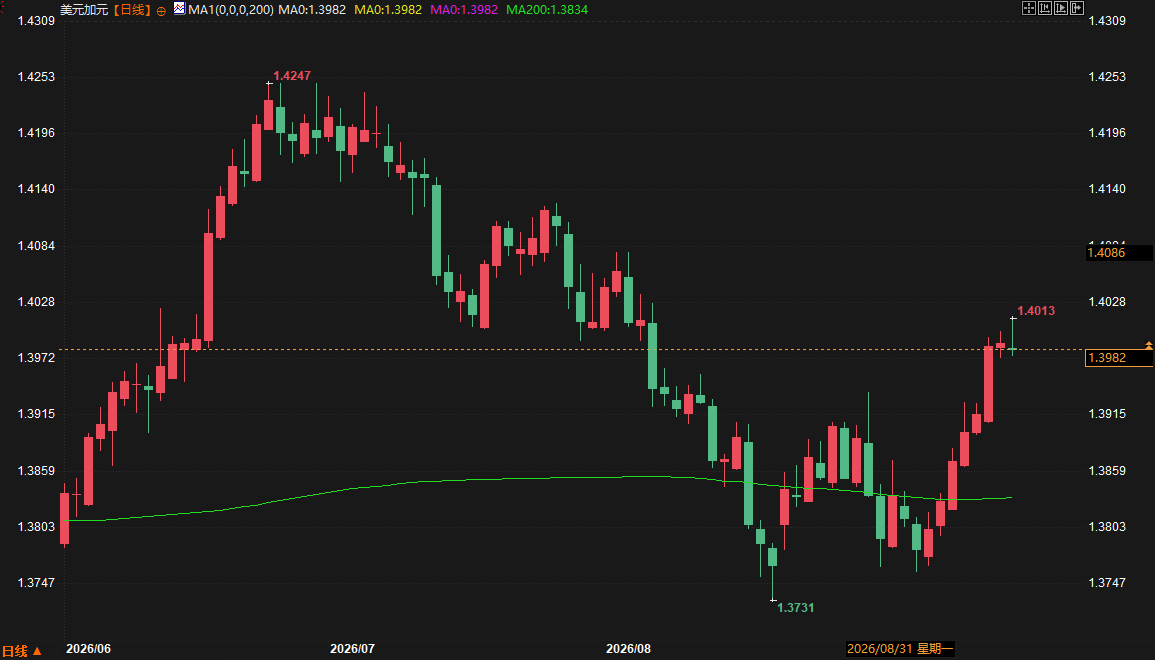
After a week of continuous gains, the USD/CAD pair has experienced a slight consolidation, but the overall trend remains upward. Lower oil prices typically put pressure on the Canadian dollar, providing support for the USD/CAD pair. Technically, the pair formed a small bearish doji after a series of large bullish candles, indicating a slight weakening of short-term upward momentum, which is a normal consolidation within an uptrend. Major overseas institutions believe that against the backdrop of a generally stronger US dollar, the Canadian dollar still faces some downward pressure, and its future direction will be influenced by both oil prices and the interest rate differential between the US and Canada.US Dollar and Swiss Franc
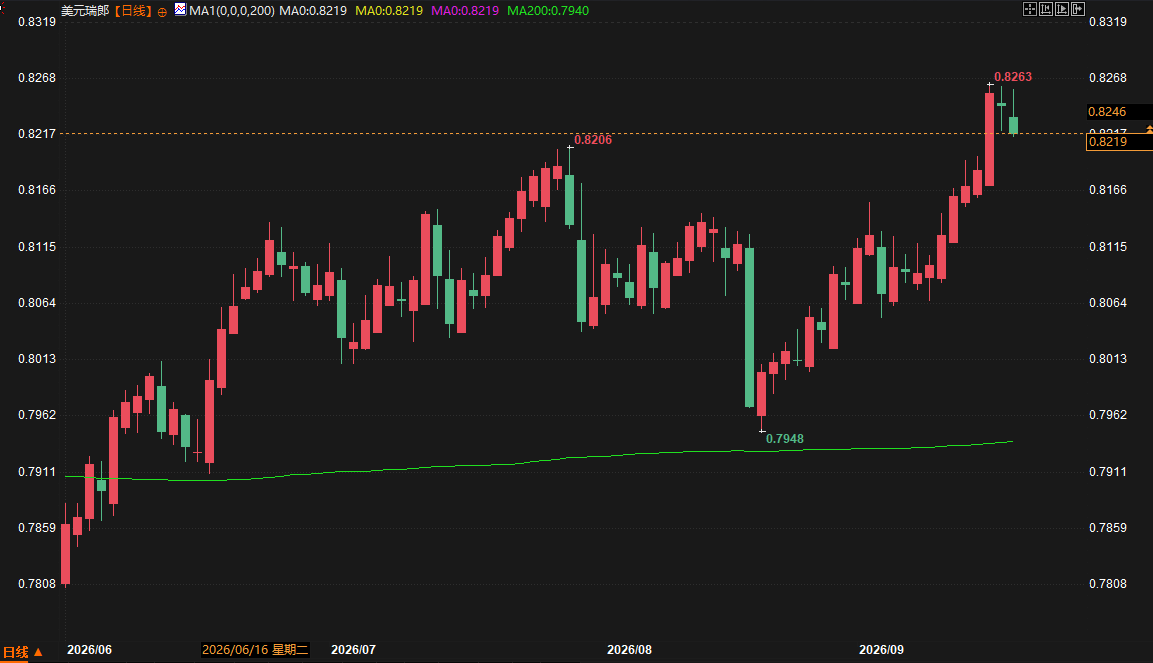
The USD/CHF pair saw a slight pullback recently after a week of continuous gains, but the overall trend remains strong. As a safe-haven currency, the Swiss franc saw relatively limited demand this week, with the strengthening US dollar driving the USD/CHF pair higher. Technically, the pair experienced a medium-sized pullback after consecutive large gains, which is a normal technical consolidation and does not change the overall upward structure. Overall, the USD/CHF pair remains in an upward channel, and short-term fluctuations will depend more on the overall performance of the US dollar and changes in global risk appetite.Energy commodities
The energy sector was under pressure this week, with WTI crude falling about 6.6% and Brent crude about 4%. Both WTI and Brent crude saw consecutive daily declines after initial surges, indicating the short-term downtrend has not yet ended. The decline in oil prices was mainly driven by expectations of easing supply pressures. Market news indicated that authorities had requested restraints on attacks against Saudi oil infrastructure, easing supply concerns. The drop in crude oil prices also alleviated market anxiety about inflation to some extent. Natural gas and gasoline bucked the trend and closed higher, showing significant divergence within the energy sector.precious metals
Spot gold strengthened this week, rising approximately 1.1% for the week, with a daily chart showing a bottoming out and rebound. Spot silver also performed strongly, rising about 1.6% on the day. Safe-haven demand and inflation concerns provided support for precious metals. Although a stronger dollar typically suppresses gold prices, precious metals bucked the trend and rose this week, indicating a weakening of their negative correlation with the dollar. As a safe-haven asset, gold remains favored by investors in an environment of rising global policy uncertainty, and its short-term trend is expected to remain bullish.US Treasury market
US Treasury yields rose across the board this week, with daily increases in the two-year, five-year, and ten-year yields. The two-year yield led the gains, reaching its highest level since July 2024, reflecting rising market expectations for further interest rate hikes. The spread between the two-year and ten-year yields narrowed to 25.5 basis points, the flattest level since June 25. The benchmark ten-year yield was at 5%, having touched 5.041% intraday, a new high since 2007. Major overseas institutions believe that against the backdrop of rising interest rate expectations, there is still room for short-term yields to rise, while long-term yields are constrained by controlled inflation expectations, resulting in a relatively moderate increase. Overall, the main theme of global markets this week was the restart of the interest rate hike cycle. The US dollar remained strong amid hawkish signals from the Federal Reserve and rising global interest rates, while the yen weakened significantly due to the Bank of Japan's weaker-than-expected rate hikes. Non-US currencies such as the euro and pound sterling were under pressure. The across-the-board rise in US Treasury yields reflects the market's pricing in a higher interest rate center. A divergence occurred between falling energy prices and rising precious metals, indicating a coexistence of risk appetite and safe-haven demand in the market. Looking ahead, the policy paths of the Federal Reserve and the Bank of Japan, the trend of energy prices, and the potential risks of foreign exchange intervention will be key variables influencing the market's direction.Q&A module
Why did the Bank of Japan's rate hike fail to boost the yen, instead driving a surge in the USD/JPY exchange rate? Although the Bank of Japan raised interest rates by 25 basis points to a 31-year high, the vote was not unanimous, with two policymakers voting against it and no clear hawkish guidance provided. The market had previously bet on multiple rate hikes, an expectation now being questioned. The smaller-than-expected rate hike actually made the dollar stronger, leading to a surge in the USD/JPY exchange rate and its largest weekly gain in months. Can the dollar's strength continue after the Fed's rate hike? The Fed raised rates this week and hinted at further hikes in the coming months, with traders predicting a greater than 55% probability of a rate hike next month. Major overseas institutions believe that the long-predicted medium- to long-term dollar strength may finally be arriving. However, easing inflation concerns due to falling energy prices and potential foreign exchange intervention could limit further dollar gains. Why did the two-year US Treasury yield rise to its highest level since 2024? The two-year yield typically fluctuates in tandem with expectations of rate hikes. Amid heightened inflation concerns and a rising prospect of a new global interest rate hike cycle, the market is more inclined to price in more rate hike expectations than to rule out the possibility of rate hikes. The short-term yield curve is rising faster than the long-term yield curve, further flattening the yield curve and reflecting the market's concentrated pricing of rising short-term interest rates. What impact will the decline in oil prices have on the market? Oil prices fell significantly this week, mainly driven by expectations of easing supply pressures. Lower oil prices have alleviated market inflation concerns to some extent, impacting both US Treasury yields and the dollar's performance. However, the previous surge in oil prices related to regional tensions remains a source of inflation concerns, and the future direction of energy prices remains uncertain and requires continued monitoring. Is it possible that Japanese authorities will intervene in the foreign exchange market to support the yen? Nikkei reports that Japanese authorities have already conducted exchange rate inquiries in the foreign exchange market, a move seen as a preliminary step before intervention. Previously, the Japanese Finance Minister stated that Japan would not hesitate to conduct coordinated foreign exchange intervention. Traders remain wary of the risks of intervention, but the actual effect and timing of intervention remain highly uncertain, and the market will continue to closely monitor related developments.- Risk Warning and Disclaimer
- The market involves risk, and trading may not be suitable for all investors. This article is for reference only and does not constitute personal investment advice, nor does it take into account certain users’ specific investment objectives, financial situation, or other needs. Any investment decisions made based on this information are at your own risk.