September 21st Financial Breakfast: Lower oil prices ease inflation concerns, gold prices find support and retest the $4400 level; the US says it is prepared to negotiate with Iran.
2026-09-21 07:22:10
On Monday (September 21, Beijing time) in early Asian trading, spot gold was trading around $4,373 per ounce. Gold prices benefited from lower oil prices, which eased market concerns about persistent inflationary pressures. The price may test the $4,400 per ounce level again during the day. US crude oil was trading around $95.87 per barrel. Although Iran's stance remained tough, the market expected the Houthi rebels to reduce their attacks on Saudi oil infrastructure. It is also reported that the US said it was ready to negotiate with Iran. US crude oil may test the $95 per barrel level during the day. 
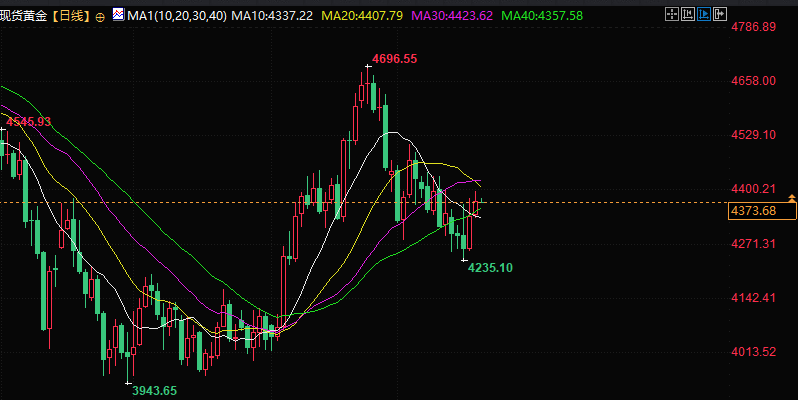 Chris Gaffney, president of global markets at EverBank, said the decline in oil prices eased inflationary pressures, as crude oil has been a major driver of overall inflation. Precious metals investors, who had built large short positions in anticipation of a Federal Reserve rate hike in an attempt to profit from the expected gold sell-off, have quickly unwound these positions. While the drop in oil prices has somewhat alleviated inflation concerns, the risk of supply disruptions in the Middle East remains a major market concern. The dollar rose to a more than seven-week high, making gold more expensive for holders of other currencies. The Federal Reserve raised interest rates by 25 basis points last week and hinted at further rate hikes in the coming months; the CME FedWatch tool shows that traders currently expect a 55% probability of another rate hike at the Fed's next meeting in October. Although gold is traditionally seen as an inflation hedge, rising interest rates make interest-bearing assets more attractive, thus diminishing gold's appeal. Meanwhile, Indian gold demand was weak last week as buyers postponed purchases due to expectations of lower prices; Chinese gold premiums, however, remained stable, supported by strong investment demand. Gaffney stated that gold is currently testing resistance around $4,400 to $4,440 per ounce, and a break above this level could open up further upside potential. Spot silver rose 1.61% to settle at $66.24 per ounce; platinum rose 2.2% to $1,812.50 per ounce; and palladium rose 1.5% to $1,310.20 per ounce, with all three precious metals recording weekly gains.
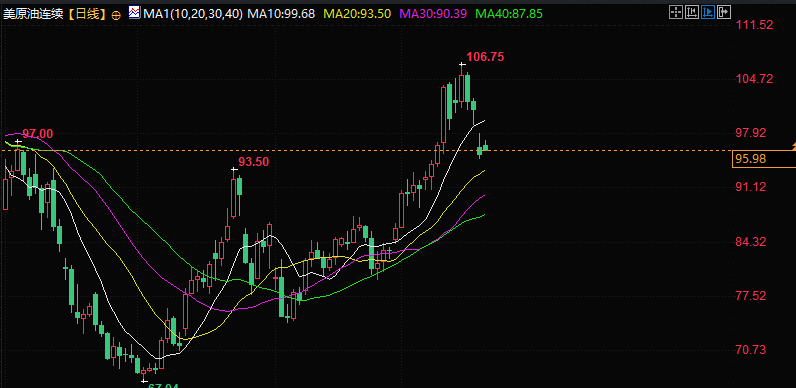 Oil prices have steadily risen in recent weeks as the US and Iran resumed their attacks, and the Houthi rebels, allied with Iran, intensified their military operations. Recent military action, coupled with global refining capacity issues, has pushed up prices for key fuels such as diesel in major markets. Data from the American Automobile Association (AAA) shows that the current retail price of diesel in the US is $6.45 per gallon, a record high, while the average retail price of gasoline is $4.47 per gallon, whereas gasoline prices are typically declining at this time of year. IIR Energy, a refining data provider, said last Friday that it expects US refining capacity to decrease by 371,000 barrels per day this week. Phil Flynn, senior analyst at Price Futures Group, said, "The problem right now isn't supply, it's refining." Analysts say the outlook for the coming months remains uncertain; JPMorgan Chase stated that this is the first time since the US and Israel launched their war against Iran in February that the bank has been unable to determine a clear baseline scenario for the oil market. The Strait of Hormuz remains largely blocked. Preliminary shipping data released last Friday showed that only four commodity carriers passed through the strait on Thursday, down from the 10-day average of about 16. Bloomberg reported last Friday, citing sources familiar with the matter, that Saudi Aramco had notified at least two European refining customers that they would not receive crude oil supplies next month following attacks on key Saudi-to-Red Sea pipelines. Saudi Arabia and Iran-backed Houthi rebels in Yemen launched renewed attacks on each other across the border on Thursday. As the Middle East conflict spreads and poses new threats to supplies, Yemeni civilians are fleeing the fighting by boat into the Red Sea.
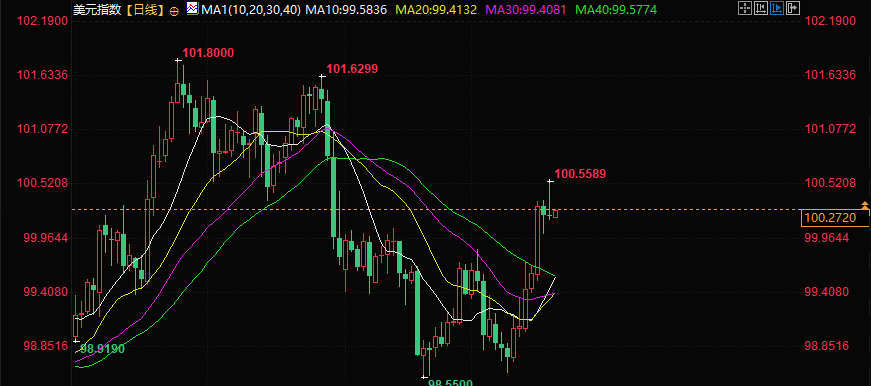 Steven Englander, head of G10 FX research at Standard Chartered Bank, said, "Insufficient rate hikes make it easier for the dollar to rise. The medium- to long-term strength of the dollar that we have been predicting may finally be arriving." The dollar rose 0.58% against the yen on Friday to 156.86 yen, having earlier touched a two-week high of 158.04. It also rose 2.2% for the week, its biggest weekly gain since October 2025. The Bank of Japan raised interest rates by 25 basis points on Friday, to a 31-year high of 1.25%, but failed to boost the yen, despite two policymakers voting against the widely expected rate hike, leading traders to doubt the possibility of further rate increases. Traders felt the central bank had not given clear hawkish guidance. Nikkei reported that Japanese authorities conducted a currency inquiry in the foreign exchange market, a move seen as preliminary action before intervention in the currency market; the dollar gave back some of its gains after the announcement. Ray Attrill, head of foreign exchange strategy at National Australia Bank, said, "It's clear their actions fell far short of market expectations. What's even more surprising is that they didn't even manage to reach a unanimous vote, which really surprised the market." Traders remain wary of the risks of Japanese authorities intervening to support the yen after Finance Minister Satsuki Katayama stated that Japan would not hesitate to take further coordinated foreign exchange intervention. Kevin Ford, a foreign exchange and macro strategist at Convera, said, "The interest rate hike actually led to a depreciation of the currency, which is an outcome policymakers didn't want to see, and it gives the Ministry of Finance even more reason to curb unilateral exchange rate movements." The pound rose 0.26% against the dollar to $1.3393 after better-than-expected UK retail sales data was released on Friday, and the Bank of England kept interest rates unchanged on Thursday but hinted at a possible increase in borrowing costs.
Key Focus Today
stock market
U.S. stocks traded quietly on Friday. The Dow Jones Industrial Average fell 0.18% to close at 51,682.64; the S&P 500 rose 0.17% to close at 7,650.50; and the Nasdaq Composite rose 0.40% to close at 26,522.55. Among the 11 sectors of the S&P 500, the technology sector saw the largest gain, while the utilities sector saw the largest decline. Last week's trading can be roughly divided into two phases: the market first anxiously awaited the Fed's expected rate hike, and then digested the rate hike decision. Rising semiconductor stocks boosted the Nasdaq and S&P 500, but the broader market weakened, dragging down the Dow Jones Industrial Average. On a weekly basis, the S&P 500 edged down, while the Dow recorded its largest weekly percentage drop since March. Chuck Carlson, CEO of Horizon Investment Services, said investors were exhausted by the week's volatility and were therefore cautious; many were assessing not only the short-term impact of the Fed's actions but also their long-term effects and how they would affect stocks and fixed-income investments, and were unwilling to bet on any direction before the weekend, given that external events could lead to sharp market fluctuations on Monday. The CME Group's FedWatch tool shows that financial markets currently estimate a 55.4% probability of another Fed rate hike at its October meeting. Berkshire Hathaway announced that Warren Buffett would step down as chairman and become chairman emeritus, nine months after handing over the CEO position to Greg Abel; the company's stock dipped slightly that day. Xenon Pharmaceuticals' stock plunged 30.7% after reports of side effects from its experimental drug for treating major depressive disorder and bipolar disorder, prompting the company to temporarily halt recruitment for related clinical trials.Gold Market
Gold prices rose to a one-week high on Friday and recorded their first weekly gain in four weeks. Spot gold closed up 0.84% at $4,378.29 per ounce, as lower oil prices eased market concerns about persistent inflationary pressures. Chris Gaffney, president of global markets at EverBank, said the decline in oil prices eased inflationary pressures, as crude oil has been a major driver of overall inflation. Precious metals investors, who had built large short positions in anticipation of a Federal Reserve rate hike in an attempt to profit from the expected gold sell-off, have quickly unwound these positions. While the drop in oil prices has somewhat alleviated inflation concerns, the risk of supply disruptions in the Middle East remains a major market concern. The dollar rose to a more than seven-week high, making gold more expensive for holders of other currencies. The Federal Reserve raised interest rates by 25 basis points last week and hinted at further rate hikes in the coming months; the CME FedWatch tool shows that traders currently expect a 55% probability of another rate hike at the Fed's next meeting in October. Although gold is traditionally seen as an inflation hedge, rising interest rates make interest-bearing assets more attractive, thus diminishing gold's appeal. Meanwhile, Indian gold demand was weak last week as buyers postponed purchases due to expectations of lower prices; Chinese gold premiums, however, remained stable, supported by strong investment demand. Gaffney stated that gold is currently testing resistance around $4,400 to $4,440 per ounce, and a break above this level could open up further upside potential. Spot silver rose 1.61% to settle at $66.24 per ounce; platinum rose 2.2% to $1,812.50 per ounce; and palladium rose 1.5% to $1,310.20 per ounce, with all three precious metals recording weekly gains.oil market
Oil prices fell on Friday, with WTI crude down 5.56% to settle at $95.47 a barrel and Brent crude down 0.83% to settle at $103.20 a barrel, as markets anticipated that Houthi rebels would reduce their attacks on Saudi oil infrastructure. Oil prices have steadily risen in recent weeks as the US and Iran resumed their attacks, and the Houthi rebels, allied with Iran, intensified their military operations. Recent military action, coupled with global refining capacity issues, has pushed up prices for key fuels such as diesel in major markets. Data from the American Automobile Association (AAA) shows that the current retail price of diesel in the US is $6.45 per gallon, a record high, while the average retail price of gasoline is $4.47 per gallon, whereas gasoline prices are typically declining at this time of year. IIR Energy, a refining data provider, said last Friday that it expects US refining capacity to decrease by 371,000 barrels per day this week. Phil Flynn, senior analyst at Price Futures Group, said, "The problem right now isn't supply, it's refining." Analysts say the outlook for the coming months remains uncertain; JPMorgan Chase stated that this is the first time since the US and Israel launched their war against Iran in February that the bank has been unable to determine a clear baseline scenario for the oil market. The Strait of Hormuz remains largely blocked. Preliminary shipping data released last Friday showed that only four commodity carriers passed through the strait on Thursday, down from the 10-day average of about 16. Bloomberg reported last Friday, citing sources familiar with the matter, that Saudi Aramco had notified at least two European refining customers that they would not receive crude oil supplies next month following attacks on key Saudi-to-Red Sea pipelines. Saudi Arabia and Iran-backed Houthi rebels in Yemen launched renewed attacks on each other across the border on Thursday. As the Middle East conflict spreads and poses new threats to supplies, Yemeni civilians are fleeing the fighting by boat into the Red Sea.Foreign exchange market
The dollar index closed lower on Friday, but touched a near two-month high of 100.56 during the day, while rising 1.14% on the week. The dollar's rise was aided by the Federal Reserve's 25 basis point rate hike last week, and the market expects the Fed to raise rates again in October. Steven Englander, head of G10 FX research at Standard Chartered Bank, said, "Insufficient rate hikes make it easier for the dollar to rise. The medium- to long-term strength of the dollar that we have been predicting may finally be arriving." The dollar rose 0.58% against the yen on Friday to 156.86 yen, having earlier touched a two-week high of 158.04. It also rose 2.2% for the week, its biggest weekly gain since October 2025. The Bank of Japan raised interest rates by 25 basis points on Friday, to a 31-year high of 1.25%, but failed to boost the yen, despite two policymakers voting against the widely expected rate hike, leading traders to doubt the possibility of further rate increases. Traders felt the central bank had not given clear hawkish guidance. Nikkei reported that Japanese authorities conducted a currency inquiry in the foreign exchange market, a move seen as preliminary action before intervention in the currency market; the dollar gave back some of its gains after the announcement. Ray Attrill, head of foreign exchange strategy at National Australia Bank, said, "It's clear their actions fell far short of market expectations. What's even more surprising is that they didn't even manage to reach a unanimous vote, which really surprised the market." Traders remain wary of the risks of Japanese authorities intervening to support the yen after Finance Minister Satsuki Katayama stated that Japan would not hesitate to take further coordinated foreign exchange intervention. Kevin Ford, a foreign exchange and macro strategist at Convera, said, "The interest rate hike actually led to a depreciation of the currency, which is an outcome policymakers didn't want to see, and it gives the Ministry of Finance even more reason to curb unilateral exchange rate movements." The pound rose 0.26% against the dollar to $1.3393 after better-than-expected UK retail sales data was released on Friday, and the Bank of England kept interest rates unchanged on Thursday but hinted at a possible increase in borrowing costs.International News
Iranian Source: US Says It's Ready to Negotiate with Iran On September 19th local time, a reporter from CCTV learned from a high-ranking Iranian source who wished to remain anonymous that Qatar and Pakistan, acting as mediators, have informed Iran that the US is ready to negotiate and reach an agreement, and is serious about advancing this process. The source indicated that, for Iran, as long as the US returns to the Islamabad Memorandum of Understanding and fulfills its terms, Iran is prepared to resume its implementation within days. However, Iran demands concrete and credible guarantees that it will not be attacked again. The US had previously stated it was no longer interested in the memorandum of understanding; however, its substantive content remains crucial for Iran in any future agreement. Iran has no intention of seeking war, as this conflict is neither in the interest of Iran and other countries in the region, nor in the interest of the US and the wider international community. (CCTV News) Iran Presents Seven Negotiation Conditions to the US On the evening of September 19th local time, Mohsen Rezaei, Secretary of Iran's Supreme National Security Council, stated that Iran has presented the US government with seven conditions necessary to initiate any negotiations. Iran's message is clear: "If the United States wishes to extricate itself from the predicament it created and avoid becoming increasingly entangled, it has no choice but to accept Iran's conditions." Rezaei confirmed in an interview that day that Qatar, as a mediator, had conveyed Iran's negotiating conditions to the United States and was awaiting a response from US President Trump. Rezaei said that Iran's proposed negotiating conditions included the US ending all hostilities against Iran, unfreezing frozen Iranian assets, and ending the naval blockade. (CCTV International News) US Embassies in Several Middle Eastern Countries Issue Security Alerts On September 20, the US embassies in Bahrain, Oman, the UAE, Saudi Arabia, Qatar, Kuwait, Jordan, Israel, Lebanon, and Iraq issued security alerts stating that given the tense situation in the Middle East, the current security environment remains complex, with unforeseen escalation risks. US citizens currently in the Middle East should remain highly vigilant and be aware of potential flight cancellations, airspace closures, and travel disruptions. US citizens outside the Middle East should seriously reconsider their travel plans to or transit through the region. The security alerts all mentioned the recent conflict between the Houthi rebels in Yemen and Saudi Arabia, stating that this military conflict has the potential to escalate rapidly. U.S. citizens traveling to and from the region should closely monitor the latest information regarding airport and airline operations. The security alerts stated that U.S. diplomatic facilities, including those outside the Middle East, have become targets of attacks. Iran and pro-Iranian organizations may target other U.S. overseas interests or locations globally associated with the U.S. and Americans (including U.S. businesses and other institutions). (CCTV International News) Iran says it has not yet decided whether to withdraw from the Treaty on the Non-Proliferation of Nuclear Weapons, depending on U.S. actions . In an interview with Al Jazeera, Mohssan Rezae, Secretary of Iran's National Security Council, stated that Iran has not yet decided whether to withdraw from the Treaty on the Non-Proliferation of Nuclear Weapons. He pointed out, "We have not yet decided whether to withdraw from the Treaty on the Non-Proliferation of Nuclear Weapons; this issue depends on Washington's actions." Rezaei also stated that the actions of the United States and Israel provided Tehran with a reason to withdraw from the treaty. However, he claimed that Iran still follows the teachings of its late Supreme Leader and has not changed its nuclear policy. Trump announced the formation of an "AI force" and the appointment of an "AI czar," calling AI security concerns a "hoax." Trump announced on Saturday his plan to create an "AI force" and appoint an "AI czar" to oversee the development of emerging technologies; he said in Truth... In a lengthy post on Social Media, Trump called concerns about a lack of federal-level AI safeguards a "hoax" and stated he would not allow the technology to be "destroyed" because American industry leaders are competing with other countries. Trump claimed he would not hinder or stifle the industry's growth in any way, but would cherish, help, and oversee its development; he also stated he would easily find "bad guys" using existing criminal and civil justice systems. He likened the proposed "AI force" to the Space Force he established during his first term, but did not explain how the agency would operate or what responsibilities it would assume; regarding the new "AI czar" position, he stated that "only highly intelligent people can apply," but did not elaborate on the position's details. The probability of a Fed rate hike in October is 56.5%, and the probability of at least another 25 basis point rate hike this year is 89.8%. According to CME's "FedWatch," the probability of the Fed keeping interest rates unchanged at its October meeting is 43%. The probability of a 25 basis point rate hike is 56.5%. The probability of the Federal Reserve maintaining interest rates unchanged by December is 10.2%, the probability of a cumulative 25 basis point rate hike is 46.6%, and the probability of a cumulative 50 basis point rate hike is 33.3%. Iranian military: Any US attack will lead to Iranian retaliation. On the 20th local time, the Iranian Hatem Anbia Central Command issued a statement saying that intelligence indicates that the United States, in order to cover up its failure and attempt to profit from the war, decided, with the tacit approval of certain Middle Eastern countries, to take hostile action against Iran again after a joint meeting in a European country. The statement warned that if the United States makes any mistake against Iran, all its bases and interests in the region will suffer continuous, effective, and devastating blows without reservation. The statement also stated that Iran warned countries in the region that if they continue to attack Iran... Adopting a "double-dealing policy" and cooperating with the enemy, relevant countries will be considered accomplices; at that time, they will no longer be able to expect the Iranian armed forces to maintain restraint or tolerance. (CCTV News) German Institute for Economic Research: German Economic Growth Momentum Will Slow Down in the Second Half of the Year The German Institute for Economic Research released its autumn economic forecast on September 20, significantly raising its 2026 economic growth forecast for Germany from the previous 0.4% to 1.2%. The institute stated that the upward revision was mainly due to the unexpectedly strong economic growth in the first half of this year. However, the German Institute for Economic Research predicts that "growth momentum will slow down again in the second half of 2026." This is due to the expiration of special export incentives, high energy prices suppressing private consumption, and the continued crisis in the construction industry, which is mainly driven by government investment. The institute predicts that German economic growth in 2027 will be slightly below 1%. The institution also warned that Russia... The conflict in Ukraine, the situation in the Middle East, international trade conflicts, and declining water levels in major European rivers are all factors that could negatively impact the German economy. Furthermore, influenced by factors such as rising energy prices, the German Institute for Economic Research predicts that Germany's inflation rate will be slightly above 2.5% in 2026, while consumption is expected to grow by only 0.3%. (CCTV News) Russian Deputy Foreign Minister: Russia and the US Plan to Talk on "Sensitive Issues" in the Coming Weeks It was learned on September 20th local time that Russian Deputy Foreign Minister Ryabkov stated that a new round of talks between Russia and the United States on eliminating "sensitive issues" in bilateral relations is planned to be held in the coming weeks. Ryabkov stated that such talks are held "to a considerable extent" regularly and will continue to move forward, but "the pace of progress is slower than expected." In June, Ryabkov stated that dialogue between Russia and the United States on eliminating "sensitive issues" in relations was stalled. (CCTV News)Domestic News
China Breaks AI Infrastructure Density Record We often attribute breakthroughs in AI capabilities to chips and models. However, every time a model is trained and used, there are continuously operating data centers and ongoing electricity costs. AI competition isn't just about chips; it also involves where the electricity comes from, how data centers are cooled, and how computing power is allocated. The Envision Galaxy Data Center in Ulanqab, which went into operation in August 2026, utilizes a high proportion of green electricity for direct connection. With a building area of 120,000 square meters (approximately 20 standard football fields), a million-card parallel processing capability, and a million-petaflop computing power, it has become the world's most powerful single AI data center in terms of token production capacity, breaking the record for AI infrastructure density. Zhang Lei, founder of Envision Group, hopes to make tokens "as cheap as potatoes." Whether this can be achieved depends on real demand and long-term costs. But the Galaxy Data Center has already made a previously abstract issue visible: as AI enters more and more people's work and lives, what determines how far it can go, besides how intelligent the models are, is whether everyone can afford it. (CCTV Finance) China Completes "Earth-Star-3" Bed-Lying Experiment, Providing Technical Support for Long-Term Space Stays and Manned Lunar Landing Missions It was learned from the first Aerospace Medicine Engineering Conference held in Tianjin on the 19th that China has completed the "Earth-Star-3" bed-lying experiment. The results show that it provides excellent protection for the human musculoskeletal system and cardiovascular system, providing technical support for long-term space stays and manned lunar landing missions. Bed-lying experiments are an important research method for conducting aerospace medicine research, exploring the physiological effects of low-gravity conditions, and verifying protective effects. Qu Lina from the China Astronaut Research and Training Center introduced that China conducted the "Earth-Star-3" bed-lying experiment this year to solve the physiological protection problems of long-term space stays and manned lunar landing missions. (Xinhua News Agency) National Energy Administration: Total Electricity Consumption Reaches 7.173 Trillion kWh from January to August, Up 4.3% Year-on-Year. From January to August, total electricity consumption reached 7.173 trillion kWh, up 4.3% year-on-year. Looking at electricity consumption by industry, the primary industry consumed 104.6 billion kWh, up 3.3% year-on-year. Electricity consumption in the secondary industry reached 4,529.7 billion kWh, a year-on-year increase of 4.4%; among which, industrial electricity consumption was 4,488 billion kWh, a year-on-year increase of 4.6%, and high-tech and equipment manufacturing electricity consumption was 845.1 billion kWh, a year-on-year increase of 9.3%. Electricity consumption in the tertiary industry reached 1,425.6 billion kWh, a year-on-year increase of 7.1%; among which, electricity consumption in the charging and swapping services industry and internet data services reached 114.7 billion kWh and 69.5 billion kWh respectively, with growth rates reaching 55.1% and 42.5% respectively. Electricity consumption for urban and rural residents reached 1,113.2 billion kWh, a year-on-year increase of 0.3%. (National Energy Administration)- Risk Warning and Disclaimer
- The market involves risk, and trading may not be suitable for all investors. This article is for reference only and does not constitute personal investment advice, nor does it take into account certain users’ specific investment objectives, financial situation, or other needs. Any investment decisions made based on this information are at your own risk.