Walsh's serious fight against inflation has finally won over Wall Street?
2026-09-21 19:16:10
The Federal Reserve has failed to achieve its 2% inflation target for five consecutive years. New Fed Chairman Warsh is working tirelessly to bring US inflation back to pre-pandemic levels. The market's biggest concern is: how long will it take this time? 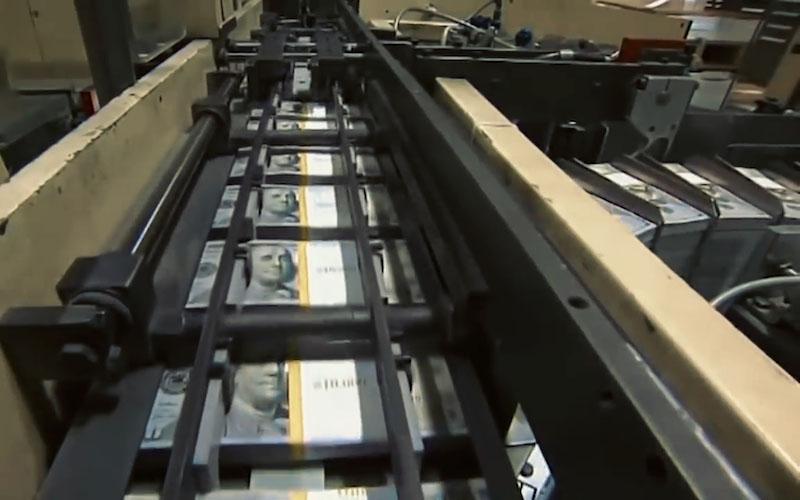 I. Current Situation: Five-Year Target Missed, Fed Finally Takes Real Action For the past five years, the Federal Reserve has failed to keep US inflation stably at the ideal level of 2%. Faced with persistently high prices, the Fed leadership has given a clear plan: by slightly raising market interest rates, inflation can be brought back to the 2% target range by 2029 at the latest. Unlike previous verbal statements, this time the market and professionals no longer doubt the Fed's sincerity. The vast majority of economists and financial practitioners agree: the Fed is serious about this round of inflation control. Gregory Daco, chief economist at EY Parthenon, directly predicted: "We will definitely achieve the 2% inflation target within two years." II . Key Turning Point: Warsh's Rate Hike Reverses Fortunes, Rebuilding Market Credibility The core turning point in this inflation control effort was the Fed's first interest rate hike in three years. This policy adjustment was led by the new chairman, Warsh, who was nominated by President Trump. It is worth noting that Trump had previously demanded that the Fed lower borrowing costs and loosen monetary policy; this rate hike completely reversed this stance, demonstrating the Fed's policy independence. Warsh will officially take over as Chairman of the Federal Reserve in May 2026. Initially, his policy stance was wavering, and the market generally lacked trust in him. However, this decisive interest rate hike completely reversed this impression, helping him regain crucial market credibility. But to truly suppress inflation, relying solely on Fed rate hikes is far from enough; multiple external risks remain the biggest obstacle. III. External Obstacles: Two Uncertain Factors Dragging Down Inflation Currently, two major external problems are continuously slowing the pace of inflation reduction in the United States, risks that the Fed cannot control. The first is the trade dispute. While the inflationary impact of the tariff policies introduced by the Trump administration in 2025 has largely subsided, renewed trade friction between the United States and Canada could generate new price fluctuations at any time, creating new obstacles to inflation reduction. The second is the energy price surge triggered by the Iranian conflict. The long-term conflict between the United States and Iran continues to escalate, leading to persistently high global oil and natural gas prices. This spring, the surge in energy prices directly caused US inflation to exceed 4% again, becoming the biggest challenge in suppressing inflation. Only when this conflict ends completely and energy prices fall back to pre-war lows can US inflation truly begin to cool down. IV. Market Confidence: Inflation Has a Basis for Self-Receding Many people believe that pushing inflation back to 2% in a short period is a pipe dream, but the market actually has ample reason for optimism. According to the official price index referenced by the Federal Reserve, US inflation had already fallen to 2.3% by April 2025, just one step away from the target. The subsequent rebound in inflation was primarily due to Trump's tariff policies disrupting the decades-long stable global trade system, not because the US economy itself had serious inflationary risks. Stephen Douglas, chief economist at NISA Investment Advisors, analyzed: "Before the tariffs were implemented, the Federal Reserve was already steadily on the path of declining inflation. In the next few years, even without strong policy intervention, inflation will naturally fall back to the low range of 2%." V. Reversal of Attitude: Wall Street From Skepticism and Observation to Full Trust Just a month ago, Wall Street was full of skepticism towards Warsh and the Federal Reserve. In the early days of his presidency, Warsh consistently stated his intention to return the US to the low-inflation era before the pandemic, but he consistently delayed implementing tightening policies, maintaining an ambiguous stance. The market widely perceived him as "all talk and no action." All doubts were dispelled at the end of August. Warsh delivered a public speech, directly expressing his extreme dissatisfaction with persistently high inflation, sending a clear signal of interest rate hikes to the market. Investors immediately grasped the key message: this time, the Fed was serious. Subsequently, the Fed officially implemented its policy: raising key short-term interest rates for the first time since mid-2023, while explicitly forecasting at least one more rate hike, not ruling out the possibility of multiple hikes. Interest rate hikes are a proven method of combating inflation, slowing economic activity and reducing market demand for goods, services, and labor by increasing borrowing costs for businesses and households, thus suppressing price increases at their source. While one or even two rate hikes are insufficient to completely eliminate the lagged inflationary effects of tariffs and high oil prices, the core value of this move was to convince Wall Street that Warsh would not allow high inflation to persist and was willing to pay the policy price for controlling inflation. FHN Financial Macro Strategist Will Compenauer summarized: "Whether the 2% inflation target can be achieved is secondary; the key is that Warsh demonstrated his determination through action, successfully convincing the market that he would do everything in his power to suppress inflation." VI. Policy Limitations: Interest Rate Hikes Can Control Demand, Not Supply The Fed's interest rate hike policy has inherent shortcomings, and its effectiveness is very limited. The logic behind this round of high inflation and the price surge during the pandemic is consistent; both are "supply shocks"—not due to overheated market demand, but rather to price increases caused by disruptions in external supply and rising costs. These are problems that the Fed cannot control at all. Warsh himself has publicly admitted: "We can't change the price of any commodity alone, whether it's oil or the price of food in supermarkets." Tariffs have increased the cost of raw materials for businesses, and the disruption of shipping in the Strait of Hormuz has tightened global oil supply; these are purely external supply issues. Interest rate hikes can only suppress market consumption and investment demand; they cannot eliminate tariffs, reopen shipping routes, or lower international oil prices. The Federal Reserve's core objective is clear: to cool demand through interest rate hikes, prevent localized inflation triggered by tariffs and energy price increases from spreading to all sectors, including food, clothing, housing, and transportation, and avoid a vicious cycle of widespread and sustained inflation. Simply put, it's about holding the line and preventing short-term price increases from becoming long-term inflation. VII. Market Divergence: How Many More Rate Hikes Are Needed? The biggest debate in the market is no longer whether the Fed can control inflation, but rather how many rate hikes are needed to achieve its goal. Significant differences of opinion exist among Wall Street stakeholders. The Fed's signals are very optimistic: only one more rate hike, at most two, is needed to successfully control inflation to 2%. Sal Guatieri, senior economist at BMO Capital Markets, agrees: "Currently, apart from external supply shocks, there is almost no inflationary pressure within the US, and one more rate hike would be sufficient." The core data supporting this optimistic view is very solid: Since the pandemic, labor costs—traditionally the main driver of inflation—have remained stable and have not become a price increase driver; commodity prices have stabilized and declined after the tariff shock, with core commodity inflation continuing to decline; service sector inflation has also slowed to pre-pandemic levels, and the growth rates of core consumer spending such as rent and housing prices have cooled significantly. Multiple data points demonstrate that endogenous inflationary pressures in the US have largely subsided. However, some institutions hold a cautiously aggressive view. Data from the Wall Street futures market shows that investors predict the Federal Reserve will raise interest rates three more times before April next year. Alex Peller, senior economist at Mizuho Securities, points out a hidden risk: US inflation is not only affected by external supply; overheated domestic economy and excessive demand are also important factors. Currently, US consumption and corporate investment are robust, especially the investment boom in the artificial intelligence industry, which continues to heat up the economy and indirectly push up prices. Simply raising interest rates a small amount is unlikely to completely suppress this endogenous inflation. VIII. Policy Style Debate: Moderate Waiting or Aggressive Quick Control? The market is also debating Warsh's policy style. Some analysts believe that given Warsh's past record of aggressive anti-inflation measures, coupled with his recent aggressive statements, he will not patiently spend two or three years slowly grinding down inflation. He is likely to adopt a more aggressive interest rate hike strategy to quickly achieve the 2% target. Stephen Stanley, chief economist at Santander Capital Markets, bluntly stated: "I don't believe Warsh will tolerate inflation above target for a long time; he will most likely accelerate the pace of policy." IX. Potential Risks: Aggressive Interest Rate Hikes May Trigger an Economic Recession While aggressive interest rate hikes can quickly suppress inflation, they also harbor significant economic risks, which is a core concern for many economists. Parthenon's Daco warned that the US economy, while seemingly strong, actually has limited resilience. If the Federal Reserve raises interest rates too aggressively and forcibly suppresses inflation, it will directly damage the real economy and even trigger a full-blown economic recession. In this extreme scenario, inflation would indeed fall rapidly to 2%, but at a devastating cost: numerous business failures and millions of Americans losing their jobs. Daco stated that the Federal Reserve has not publicly revealed the harsh reality of its policy: the core logic behind interest rate hikes is to proactively suppress overall societal demand, forcibly curbing inflation by cooling the economy. X. The Ultimate Variable: The Iranian Conflict is the Biggest Uncertainty Currently, all of the Fed's policy predictions and market projections are based on an uncertain premise—the trajectory of the Iranian conflict. Only if this conflict, which has lasted for over six months, ends quickly and oil prices fall sharply can the Fed avoid overly aggressive and excessive tightening of its policies. If the conflict continues and energy prices remain high, even numerous interest rate hikes will struggle to completely stabilize inflation. Guattieri concludes: "The situation in Iran is the biggest variable for the Fed's inflation control efforts, and a core risk that absolutely cannot be ignored."
I. Current Situation: Five-Year Target Missed, Fed Finally Takes Real Action For the past five years, the Federal Reserve has failed to keep US inflation stably at the ideal level of 2%. Faced with persistently high prices, the Fed leadership has given a clear plan: by slightly raising market interest rates, inflation can be brought back to the 2% target range by 2029 at the latest. Unlike previous verbal statements, this time the market and professionals no longer doubt the Fed's sincerity. The vast majority of economists and financial practitioners agree: the Fed is serious about this round of inflation control. Gregory Daco, chief economist at EY Parthenon, directly predicted: "We will definitely achieve the 2% inflation target within two years." II . Key Turning Point: Warsh's Rate Hike Reverses Fortunes, Rebuilding Market Credibility The core turning point in this inflation control effort was the Fed's first interest rate hike in three years. This policy adjustment was led by the new chairman, Warsh, who was nominated by President Trump. It is worth noting that Trump had previously demanded that the Fed lower borrowing costs and loosen monetary policy; this rate hike completely reversed this stance, demonstrating the Fed's policy independence. Warsh will officially take over as Chairman of the Federal Reserve in May 2026. Initially, his policy stance was wavering, and the market generally lacked trust in him. However, this decisive interest rate hike completely reversed this impression, helping him regain crucial market credibility. But to truly suppress inflation, relying solely on Fed rate hikes is far from enough; multiple external risks remain the biggest obstacle. III. External Obstacles: Two Uncertain Factors Dragging Down Inflation Currently, two major external problems are continuously slowing the pace of inflation reduction in the United States, risks that the Fed cannot control. The first is the trade dispute. While the inflationary impact of the tariff policies introduced by the Trump administration in 2025 has largely subsided, renewed trade friction between the United States and Canada could generate new price fluctuations at any time, creating new obstacles to inflation reduction. The second is the energy price surge triggered by the Iranian conflict. The long-term conflict between the United States and Iran continues to escalate, leading to persistently high global oil and natural gas prices. This spring, the surge in energy prices directly caused US inflation to exceed 4% again, becoming the biggest challenge in suppressing inflation. Only when this conflict ends completely and energy prices fall back to pre-war lows can US inflation truly begin to cool down. IV. Market Confidence: Inflation Has a Basis for Self-Receding Many people believe that pushing inflation back to 2% in a short period is a pipe dream, but the market actually has ample reason for optimism. According to the official price index referenced by the Federal Reserve, US inflation had already fallen to 2.3% by April 2025, just one step away from the target. The subsequent rebound in inflation was primarily due to Trump's tariff policies disrupting the decades-long stable global trade system, not because the US economy itself had serious inflationary risks. Stephen Douglas, chief economist at NISA Investment Advisors, analyzed: "Before the tariffs were implemented, the Federal Reserve was already steadily on the path of declining inflation. In the next few years, even without strong policy intervention, inflation will naturally fall back to the low range of 2%." V. Reversal of Attitude: Wall Street From Skepticism and Observation to Full Trust Just a month ago, Wall Street was full of skepticism towards Warsh and the Federal Reserve. In the early days of his presidency, Warsh consistently stated his intention to return the US to the low-inflation era before the pandemic, but he consistently delayed implementing tightening policies, maintaining an ambiguous stance. The market widely perceived him as "all talk and no action." All doubts were dispelled at the end of August. Warsh delivered a public speech, directly expressing his extreme dissatisfaction with persistently high inflation, sending a clear signal of interest rate hikes to the market. Investors immediately grasped the key message: this time, the Fed was serious. Subsequently, the Fed officially implemented its policy: raising key short-term interest rates for the first time since mid-2023, while explicitly forecasting at least one more rate hike, not ruling out the possibility of multiple hikes. Interest rate hikes are a proven method of combating inflation, slowing economic activity and reducing market demand for goods, services, and labor by increasing borrowing costs for businesses and households, thus suppressing price increases at their source. While one or even two rate hikes are insufficient to completely eliminate the lagged inflationary effects of tariffs and high oil prices, the core value of this move was to convince Wall Street that Warsh would not allow high inflation to persist and was willing to pay the policy price for controlling inflation. FHN Financial Macro Strategist Will Compenauer summarized: "Whether the 2% inflation target can be achieved is secondary; the key is that Warsh demonstrated his determination through action, successfully convincing the market that he would do everything in his power to suppress inflation." VI. Policy Limitations: Interest Rate Hikes Can Control Demand, Not Supply The Fed's interest rate hike policy has inherent shortcomings, and its effectiveness is very limited. The logic behind this round of high inflation and the price surge during the pandemic is consistent; both are "supply shocks"—not due to overheated market demand, but rather to price increases caused by disruptions in external supply and rising costs. These are problems that the Fed cannot control at all. Warsh himself has publicly admitted: "We can't change the price of any commodity alone, whether it's oil or the price of food in supermarkets." Tariffs have increased the cost of raw materials for businesses, and the disruption of shipping in the Strait of Hormuz has tightened global oil supply; these are purely external supply issues. Interest rate hikes can only suppress market consumption and investment demand; they cannot eliminate tariffs, reopen shipping routes, or lower international oil prices. The Federal Reserve's core objective is clear: to cool demand through interest rate hikes, prevent localized inflation triggered by tariffs and energy price increases from spreading to all sectors, including food, clothing, housing, and transportation, and avoid a vicious cycle of widespread and sustained inflation. Simply put, it's about holding the line and preventing short-term price increases from becoming long-term inflation. VII. Market Divergence: How Many More Rate Hikes Are Needed? The biggest debate in the market is no longer whether the Fed can control inflation, but rather how many rate hikes are needed to achieve its goal. Significant differences of opinion exist among Wall Street stakeholders. The Fed's signals are very optimistic: only one more rate hike, at most two, is needed to successfully control inflation to 2%. Sal Guatieri, senior economist at BMO Capital Markets, agrees: "Currently, apart from external supply shocks, there is almost no inflationary pressure within the US, and one more rate hike would be sufficient." The core data supporting this optimistic view is very solid: Since the pandemic, labor costs—traditionally the main driver of inflation—have remained stable and have not become a price increase driver; commodity prices have stabilized and declined after the tariff shock, with core commodity inflation continuing to decline; service sector inflation has also slowed to pre-pandemic levels, and the growth rates of core consumer spending such as rent and housing prices have cooled significantly. Multiple data points demonstrate that endogenous inflationary pressures in the US have largely subsided. However, some institutions hold a cautiously aggressive view. Data from the Wall Street futures market shows that investors predict the Federal Reserve will raise interest rates three more times before April next year. Alex Peller, senior economist at Mizuho Securities, points out a hidden risk: US inflation is not only affected by external supply; overheated domestic economy and excessive demand are also important factors. Currently, US consumption and corporate investment are robust, especially the investment boom in the artificial intelligence industry, which continues to heat up the economy and indirectly push up prices. Simply raising interest rates a small amount is unlikely to completely suppress this endogenous inflation. VIII. Policy Style Debate: Moderate Waiting or Aggressive Quick Control? The market is also debating Warsh's policy style. Some analysts believe that given Warsh's past record of aggressive anti-inflation measures, coupled with his recent aggressive statements, he will not patiently spend two or three years slowly grinding down inflation. He is likely to adopt a more aggressive interest rate hike strategy to quickly achieve the 2% target. Stephen Stanley, chief economist at Santander Capital Markets, bluntly stated: "I don't believe Warsh will tolerate inflation above target for a long time; he will most likely accelerate the pace of policy." IX. Potential Risks: Aggressive Interest Rate Hikes May Trigger an Economic Recession While aggressive interest rate hikes can quickly suppress inflation, they also harbor significant economic risks, which is a core concern for many economists. Parthenon's Daco warned that the US economy, while seemingly strong, actually has limited resilience. If the Federal Reserve raises interest rates too aggressively and forcibly suppresses inflation, it will directly damage the real economy and even trigger a full-blown economic recession. In this extreme scenario, inflation would indeed fall rapidly to 2%, but at a devastating cost: numerous business failures and millions of Americans losing their jobs. Daco stated that the Federal Reserve has not publicly revealed the harsh reality of its policy: the core logic behind interest rate hikes is to proactively suppress overall societal demand, forcibly curbing inflation by cooling the economy. X. The Ultimate Variable: The Iranian Conflict is the Biggest Uncertainty Currently, all of the Fed's policy predictions and market projections are based on an uncertain premise—the trajectory of the Iranian conflict. Only if this conflict, which has lasted for over six months, ends quickly and oil prices fall sharply can the Fed avoid overly aggressive and excessive tightening of its policies. If the conflict continues and energy prices remain high, even numerous interest rate hikes will struggle to completely stabilize inflation. Guattieri concludes: "The situation in Iran is the biggest variable for the Fed's inflation control efforts, and a core risk that absolutely cannot be ignored."
- Risk Warning and Disclaimer
- The market involves risk, and trading may not be suitable for all investors. This article is for reference only and does not constitute personal investment advice, nor does it take into account certain users’ specific investment objectives, financial situation, or other needs. Any investment decisions made based on this information are at your own risk.