The negative correlation between real interest rates and gold prices has weakened, which institutions say provides structural support for gold.
2026-09-22 11:16:15
For a long time, real interest rates have been considered the most crucial variable affecting gold prices, with the two typically showing a significant negative correlation. However, subtle changes are occurring in the market recently, and this traditional linkage is gradually weakening. Although rising US interest rates and a stronger dollar may still cause short-term fluctuations in gold prices, Standard Chartered Bank suggests that multiple structural forces will solidify a bottom for gold prices . In her latest precious metals report, Suki Cooper, Global Head of Commodities Research at Standard Chartered Bank, provides a comprehensive analysis of changes in the correlation between gold and real interest rates, fund flows, market positioning, and future market predictions, offering investors a new framework for assessing the future of gold.
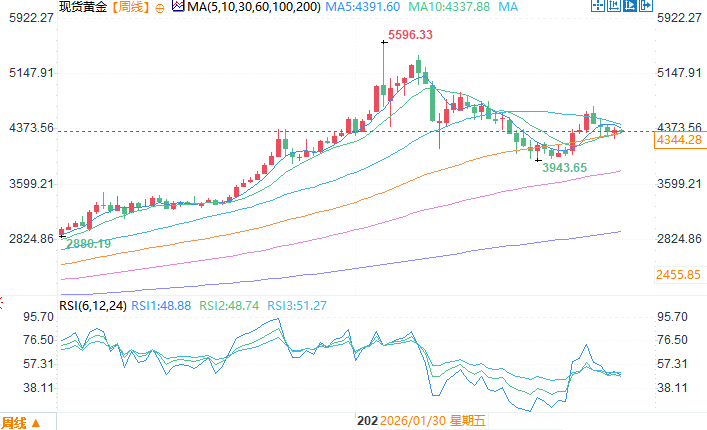 Spot gold weekly chart source: FX678. At 11:15 AM Beijing time on September 22, spot gold was trading at $4346.28 per ounce.
The traditional correlation logic is weakening, and gold prices are less sensitive to real yields.
Suki Cooper stated that following the Federal Reserve's 25 basis point rate hike last week, gold prices have digested the negative news and recovered their losses, currently seeking technical support at the 50-day moving average. Market focus is shifting from short-term monetary policy to broader long-term issues, including de-dollarization, currency devaluation risks, and the possibility of market intervention. The volatile gold price pattern is expected to continue, but official demand from central banks' ongoing gold purchases will provide sustained support. Various structural drivers remain, although the upward pace of gold prices may slow. Data directly confirms this shift in correlations. Cooper said, "The correlation coefficients between gold and the 10-year and 30-year US Treasury yields are approaching neutral levels, at -20% and -10% respectively. The negative correlation between gold and the 2-year and 5-year real yields has also weakened, with the correlation coefficients decreasing from -30% and -38% a month ago to -16% and -22%, respectively. However, these two sets of correlations still have reference value." Given the significant reversal in market expectations for monetary policy in 2026, this change is even more noteworthy. At the beginning of the year, the market bet that the Federal Reserve would cut interest rates twice, at which time the price of gold was around $4,500 per ounce. Now that the Fed has raised rates, and the market expects another rate hike by the end of the year, the price of gold has only fallen slightly, which is enough to demonstrate the resilience of gold.Investment funds continued to flow back, and speculative positions were not excessively crowded.
Even with US Treasury yields remaining high, investment demand for gold is rebounding. Inflows into gold ETFs are expected to match August's performance, with a net inflow of 121 tons in August, the highest monthly level since September 2025. Cooper stated that even with the 10-year US nominal Treasury yield exceeding 5%, funds continue to flow into gold ETFs, indicating that long-term structural factors are increasingly weighted in gold pricing. From a speculative perspective, the market is not currently experiencing overheating or congestion. Ahead of the September Fed meeting, short-term investors primarily reduced their gold exposure through profit-taking. In the two weeks leading up to the meeting, net long positions in funds decreased by 11,800 contracts, the largest drop since March of this year, with total long positions decreasing by 14,000 contracts. Cooper said, "Short-term funds tend to price in interest rate hike expectations in advance and react faster than they do to interest rate cut expectations. Therefore, the downside potential for gold prices is limited after the interest rate hike is implemented." Currently, the net long position of funds still accounts for as much as 34% of the total holdings, maintaining an overall positive trend. However, Standard Chartered Bank believes that the current positions are not overly crowded and there is no huge risk of a concentrated sell-off.The US dollar remains the main short-term risk, while fourth-quarter gold price expectations are emerging.
Standard Chartered economists predict the Federal Reserve will raise interest rates again in December and then keep rates unchanged throughout 2027. After raising its forecast for the Fed's terminal interest rate by 50 basis points, the bank also simultaneously raised its forecast for the US Treasury yield curve. While bullish on a year-end gold price recovery in the long term, gold still faces negative factors. Suki Cooper believes that a stronger dollar is a more significant short-term risk for gold than real interest rates . The three-month rolling negative correlation coefficient between gold and the dollar remains at 54%, a significantly stronger correlation than that between gold and real interest rates. The September rate hike has alleviated market concerns about dollar depreciation to some extent, enhancing the dollar's relative yield advantage. Therefore, further strengthening of the dollar will put downward pressure on gold prices in the short term. However, investors have already fully priced in the probability of a rate hike before the policy meeting, and the profit-taking rally after the rate hike will be relatively short-lived. Standard Chartered predicts that the average gold price in the fourth quarter of this year will be approximately $4,650 per ounce, while the current average spot gold price in the third quarter is approximately $4,350 per ounce. Institutions are optimistic about a year-end gold price recovery.Conclusion
The gold pricing framework is shifting. The influence of real interest rates, which once dominated market movements, is declining, while long-term structural factors such as de-dollarization and central bank gold purchases are gaining increasing weight. In the short term, a stronger dollar and expectations of further Fed rate hikes will cause volatility, limiting the upward momentum of gold prices. However, speculative positions are not crowded, and ETF inflows continue, providing a buffer for gold prices. Standard Chartered's analysis suggests that gold is no longer simply following interest rate fluctuations. Investors need to move beyond the old framework, considering both short-term dollar volatility and long-term structural support, and rationally assess the future performance of gold. Spot gold weekly chart source: FX678. At 11:15 AM Beijing time on September 22, spot gold was trading at $4346.28 per ounce.
- Risk Warning and Disclaimer
- The market involves risk, and trading may not be suitable for all investors. This article is for reference only and does not constitute personal investment advice, nor does it take into account certain users’ specific investment objectives, financial situation, or other needs. Any investment decisions made based on this information are at your own risk.