The UN General Assembly is being held this week, with no meetings scheduled between the US and Iranian leaders, making it difficult for oil price risk premiums to subside.
2026-09-22 12:16:11
Brent crude futures rebounded slightly in Asian trading on Tuesday (September 22), currently trading around $101.30 per barrel, but remain near their lowest levels since September 10. With oil prices hovering near recent lows, the latest developments in US-Iran diplomatic negotiations have become a key variable for the market to assess supply-side risks. A senior Qatari official said on Monday that Qatar is working to help the US and Iran reach a short-term agreement to restart negotiations and pave the way for broader regional dialogue, but the road to an agreement remains fraught with obstacles. Qatari Foreign Ministry spokesman Majed al-Ansari stated at the Concorde Summit in New York that any agreement at present would not be a final agreement, but merely an agreement to initiate negotiations. Qatar, along with Pakistan, has played a leading role in attempting to facilitate a diplomatic solution to the conflict between Iran and the United States. 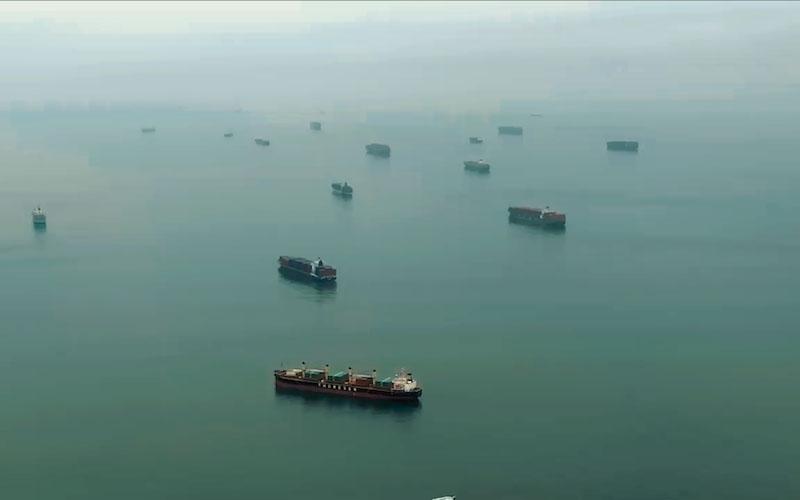
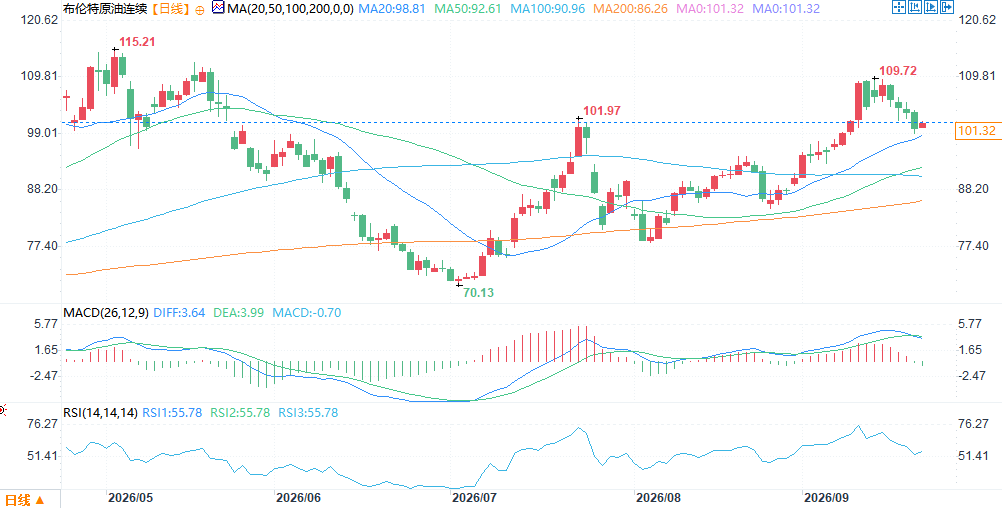 (Brent crude oil futures daily chart, source: EasyTrade) At 12:14 Beijing time, Brent crude oil futures were trading at $101.52 per barrel.
Both sides are waiting for the other to blink first.
Ansari bluntly stated, "Both sides expect the other to blink first." This statement accurately summarizes the essence of the current stalemate in the US-Iran game. Any agreement at this stage is merely a framework to initiate negotiations, not a final arrangement; neither side is willing to make substantial concessions on core interests first. Qatar and Pakistan have played a leading role in mediation, actively shuttling and coordinating, but their room for maneuver remains constrained by the deep-seated distrust between the US and Iran. This "who blinks first" mentality has slowed negotiations, and any sign of weakness from either side could be interpreted as a strategic retreat, further solidifying the stalemate.The reopening of the Strait of Hormuz and a ceasefire are prerequisites for dialogue.
Ansari clearly stated that the reopening of the Strait of Hormuz and a viable ceasefire in the region are necessary preconditions for dialogue between the US and Iran. A lasting peace agreement between the US and Iran requires restoring the pre-war status quo of the Strait of Hormuz and ensuring freedom and security of navigation. However, Tehran has made it clear that it seeks to retain some control over traffic in the Strait of Hormuz and may cooperate with Oman and other neighboring countries to safeguard its strategic interests. Iranian President Masoud Pezechzian and US President Trump both attended the UN General Assembly in New York this week, but no meeting has been scheduled between the two leaders so far, indicating that direct high-level contact still lacks a political foundation.Traffic volume in Hormuz remains far below pre-war levels.
Traffic through the Strait of Hormuz remains at only a fraction of pre-war levels, and the recovery of shipping is slow. The U.S. military has worked to allow oil tankers to pass through the strait, despite ongoing Iranian attacks on ships using the route, posing continued security risks. On September 19, Admiral Brad Cooper, the top U.S. military commander in the Middle East, claimed that U.S. efforts had resulted in the export of 1 billion barrels of crude oil and refined products in the past two months. This figure, equivalent to approximately 16 million barrels per day, is significantly higher than independent analysts' estimates and previous statements by other U.S. government officials, raising market concerns about the discrepancy between actual traffic data and official statements.The regional meeting was cancelled at the last minute.
Diplomats from Gulf states in the Middle East, along with Iraq, were scheduled to meet with an Iranian delegation in Oman on September 14 to discuss regional issues, including shipping arrangements in the Strait of Hormuz. However, the meeting was cancelled at the last minute. Ansari attributed the decision to a drone attack that forced Saudi Aramco to shut down its 7 million barrels per day east-west pipeline, directly impacting regional energy infrastructure. This incident vividly illustrates that the spillover effects of regional conflict are directly interfering with diplomatic processes, and the instability of the security situation makes multilateral coordination more difficult.Gulf states may turn to direct engagement with Iran
Former U.S. Ambassador to Saudi Arabia Michael Ratney said last week that if the Houthi attacks were to pause and the conflict were to de-escalate, it would likely begin with de-escalation with Iran. Speaking at a discussion hosted by the Gulf States Institute, a Washington think tank, Ratney noted that planned meetings between Iran and its Gulf neighbors might be postponed because Iran's neighbors need to develop a common position on "a range of very contentious issues." He further emphasized that many Gulf states may have abandoned expectations that U.S. diplomacy could resolve or satisfactorily end the war and are turning to direct engagement with Iran to seek more pragmatic arrangements that better serve their own security and economic interests.Diplomatic deadlock and the Taiwan Strait crisis have locked down supply, providing solid support for Brent crude oil prices.
Qatar's efforts to broker a deal with the US and Iran have made limited progress, with both sides waiting for the other to make the first move, meaning the reopening of the Strait of Hormuz is unlikely in the short term. Traffic through the strait remains only a fraction of pre-war levels. While US escorts have resulted in approximately 1 billion barrels of crude oil and refined products being exported in the past two months, this figure is far higher than independent analysts' estimates, raising questions about its credibility. The market is more likely to price data based on actual shipping figures rather than unilateral US statements. More importantly, Iran's explicit desire to retain control over strait traffic is fundamentally at odds with the US demand for a return to the pre-war status quo. This structural contradiction means that even if negotiations begin, the risk of supply disruptions will be difficult to eliminate quickly. Furthermore, the cancellation of the regional meeting due to the drone attack on the Saudi Aramco pipeline demonstrates that the spillover effects of the conflict are directly interfering with the diplomatic process, and any hope of de-escalation faces real obstacles. Gulf states may turn to direct engagement with Iran, but this path is also fraught with uncertainty. For Brent crude oil, the supply-side risk premium is thus continuously supported, limiting its downside potential. If any informal contact signals emerge between the US and Iran during the UN General Assembly, oil prices may give back some of the premium in the short term, but the bottom support for Brent crude oil remains solid until there is a substantial recovery in traffic through the Hormuz.Summarize
The prospects for a US-Iran agreement remain bleak. Qatar's mediation efforts focus on facilitating a short-term agreement to initiate negotiations, but both sides are waiting for concessions from the other, and the reopening of the Strait of Hormuz and a regional ceasefire, as preconditions, are unlikely to be achieved in the short term. Iran seeks to retain control over traffic in the strait, a fundamental disagreement with the US demand for a return to the pre-war status quo. The cancellation of the meeting may lead Gulf states to engage directly with Iran, reflecting declining confidence in the US's diplomatic capabilities. For the oil market, persistently low Hormuz traffic and the spillover effects of regional conflict disrupting diplomatic processes mean that supply-side risk premiums are unlikely to subside. Future attention should be paid to whether there will be informal contacts between US and Iranian leaders during the UN General Assembly, and whether direct dialogue between Gulf states and Iran can make progress. (Brent crude oil futures daily chart, source: EasyTrade) At 12:14 Beijing time, Brent crude oil futures were trading at $101.52 per barrel.
- Risk Warning and Disclaimer
- The market involves risk, and trading may not be suitable for all investors. This article is for reference only and does not constitute personal investment advice, nor does it take into account certain users’ specific investment objectives, financial situation, or other needs. Any investment decisions made based on this information are at your own risk.