International crude oil prices fluctuated and fell sharply, with market focus continuing to revolve around diplomatic developments.
2026-09-22 18:06:11
On Tuesday (September 22), during the European session, international crude oil prices reversed their earlier gains and fell, remaining in a state of high-level fluctuation and a battle between bulls and bears. It traded at $90 per barrel, a drop of 2.57%. Current market sentiment is divided: on the one hand, investors are hoping for constructive results from this week's UN General Assembly in New York, which could help de-escalate tensions in the Middle East; on the other hand, supply-side risks remain high, with concerns about production cuts in producing regions, shipping lane crises, and escalating sanctions continuing to disrupt the market. Oil prices are fluctuating, with short-term trends showing volatility.  US and Iran signaled a willingness to negotiate, causing oil prices to quickly erase gains . The recent market movements were primarily driven by geopolitical developments between the US and Iran. Iranian officials called for the resumption of negotiations and, through mediators, conveyed a proposal to the US: if the US ends its military blockade of Iranian ports and ceases related military operations around the Strait of Hormuz, Iran could reopen the Strait of Hormuz within seven days. Iran plans to use the UN General Assembly to meet and consult with the mediator, but Iranian President Pezechzian and US President Trump will not hold a bilateral meeting. Iranian officials stated that there is a possibility of moving towards an agreement, but diplomatic progress depends on the US demonstrating a serious attitude and fulfilling its commitments. Stimulated by the news of easing diplomatic tensions, international oil prices erased previous gains. However, this easing does not mean the end of confrontation. US official Bessant announced that all Iranian airline flights would be suspended starting Wednesday; any entity providing fuel, landing support, or selling tickets for Iranian flights will face sanctions, and violators will be excluded from the dollar settlement system. This new round of sanctions has further increased the risk of confrontation, causing instability in the Middle East and amplifying oil price volatility. Traffic in the Strait of Hormuz has shrunk dramatically, with frequent attacks on the waterway . Shipping data shows a sharp decline in traffic through the Strait of Hormuz. On Monday, only two commercial vessels transited the strait, down from 10 the previous day. This statistic does not include vessels that turned off their AIS transponders or passed covertly. Before the conflict, approximately 125 large merchant ships passed through the strait daily, supplying about 20% of the world's crude oil and liquefied natural gas. Shipping intelligence agencies have disclosed a series of recent attacks on ships in the strait. The Isle of Man-registered oil tanker "LRStephanie" was hit by an unidentified flying object, injuring two crew members slightly; the Liberian-registered LPG carrier "Al-Maria" was struck en route. Both vessels were able to continue their voyage without requiring tugboat assistance; the responsibility for the attacks is currently unclear, and the vessels involved are not on Iran's list of non-compliant vessels. In contrast, 26 vessels transited the Bab el-Mandeb Strait at the southern end of the Red Sea on Monday, the same number as the previous day. This divergence in performance between the two major energy shipping routes further exacerbates market disagreements. Physical Supply Supports Prices: Libyan Production Cuts, Russia Plans to Extend Diesel Export Ban On the supply side, there are still positive factors supporting oil prices. The Sharara oil field in Libya has had its pipelines leading to the Zawiya export terminal blocked by armed groups, reducing production from approximately 340,000 barrels per day to 127,000 barrels per day, resulting in a significant contraction in crude oil supply. Regarding refined products, the continued attacks on Russian energy facilities by Ukraine have limited the operating rate of Russian refineries. According to Bloomberg, Russia plans to extend most of its diesel export ban again. These export restrictions tighten global refined product supply, pushing up the crack spread between gas oil and gasoline in Europe and the US, indirectly supporting crude oil prices. While the US and Europe have called for an end to attacks on energy infrastructure, there has been no substantial breakthrough yet.
 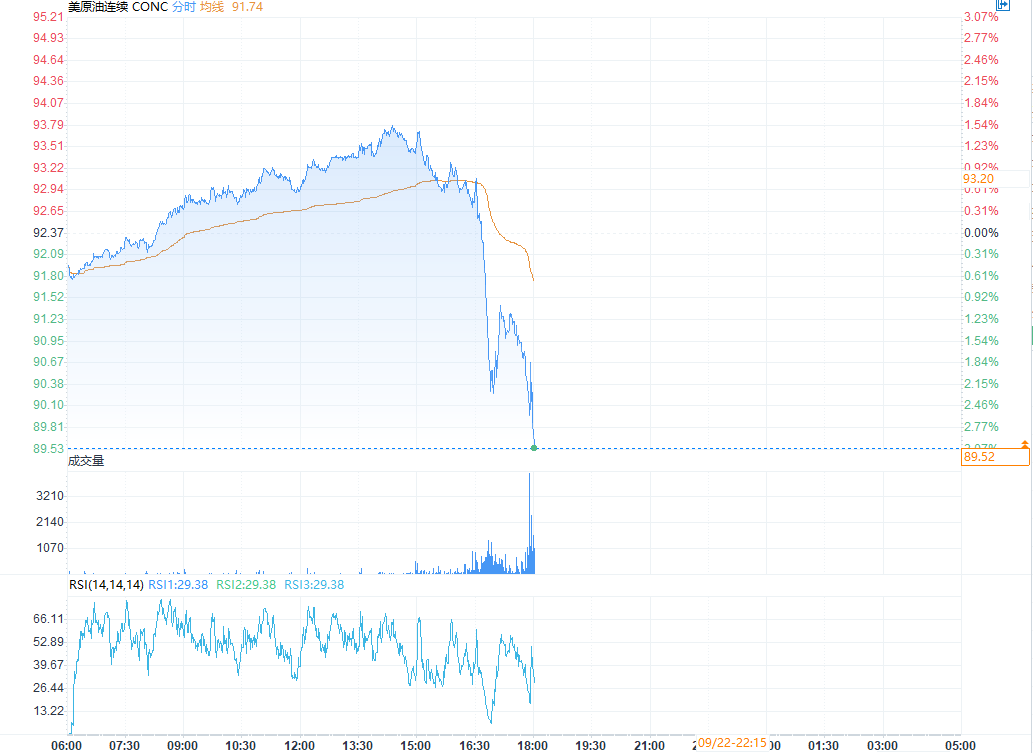 (COMEX Crude Oil Intraday Chart) A short-term shipping recovery was also observed over the weekend: Saudi Arabia shipped an average of 2.9 million barrels of crude oil per day through the Strait of Hormuz over the past six days; satellite images show that the total cargo capacity of supertankers docked at Saudi Gulf export terminals reached 14 million barrels, the highest tanker volume since at least June, temporarily alleviating market panic over a complete disruption of shipping routes. Institutional View: Diplomatic Progress May Bring Further Selling Pressure Deutsche Bank strategists noted that Brent crude oil has corrected recently, falling by 3.4%, as expectations for Middle East diplomatic reconciliation have increased. FXTM's Head of Market Research, Otunuga, believes that market focus will continue to revolve around diplomatic developments. If the US and Iran confirm the start of direct dialogue, regional crude oil supply expectations will improve, and oil prices may face a new round of selling pressure. Market Summary and Risk Warning Overall, the current crude oil market is characterized by a mix of bullish and bearish factors. Libyan production cuts, the Russian diesel export ban, and tight energy supply and demand throughout the year provide bottom support for oil prices; expectations of US-Iran negotiations and the short-term recovery of Saudi exports are limiting the potential for a price rebound. Meanwhile, new US aviation sanctions, reduced traffic in the Strait of Hormuz, and ship attacks are all potential contingencies that could impact the market at any time, making the situation highly volatile. There is no clear one-sided trend in the short term; key focus will be on the progress of diplomatic consultations at the UN General Assembly, the implementation of US-Iran sanctions, and the safety of navigation in the Middle East. Risk Warning: This article is for informational purposes only and does not constitute any investment advice. Frequent shifts in Middle East geopolitical news pose a significant risk of oil price volatility.
US and Iran signaled a willingness to negotiate, causing oil prices to quickly erase gains . The recent market movements were primarily driven by geopolitical developments between the US and Iran. Iranian officials called for the resumption of negotiations and, through mediators, conveyed a proposal to the US: if the US ends its military blockade of Iranian ports and ceases related military operations around the Strait of Hormuz, Iran could reopen the Strait of Hormuz within seven days. Iran plans to use the UN General Assembly to meet and consult with the mediator, but Iranian President Pezechzian and US President Trump will not hold a bilateral meeting. Iranian officials stated that there is a possibility of moving towards an agreement, but diplomatic progress depends on the US demonstrating a serious attitude and fulfilling its commitments. Stimulated by the news of easing diplomatic tensions, international oil prices erased previous gains. However, this easing does not mean the end of confrontation. US official Bessant announced that all Iranian airline flights would be suspended starting Wednesday; any entity providing fuel, landing support, or selling tickets for Iranian flights will face sanctions, and violators will be excluded from the dollar settlement system. This new round of sanctions has further increased the risk of confrontation, causing instability in the Middle East and amplifying oil price volatility. Traffic in the Strait of Hormuz has shrunk dramatically, with frequent attacks on the waterway . Shipping data shows a sharp decline in traffic through the Strait of Hormuz. On Monday, only two commercial vessels transited the strait, down from 10 the previous day. This statistic does not include vessels that turned off their AIS transponders or passed covertly. Before the conflict, approximately 125 large merchant ships passed through the strait daily, supplying about 20% of the world's crude oil and liquefied natural gas. Shipping intelligence agencies have disclosed a series of recent attacks on ships in the strait. The Isle of Man-registered oil tanker "LRStephanie" was hit by an unidentified flying object, injuring two crew members slightly; the Liberian-registered LPG carrier "Al-Maria" was struck en route. Both vessels were able to continue their voyage without requiring tugboat assistance; the responsibility for the attacks is currently unclear, and the vessels involved are not on Iran's list of non-compliant vessels. In contrast, 26 vessels transited the Bab el-Mandeb Strait at the southern end of the Red Sea on Monday, the same number as the previous day. This divergence in performance between the two major energy shipping routes further exacerbates market disagreements. Physical Supply Supports Prices: Libyan Production Cuts, Russia Plans to Extend Diesel Export Ban On the supply side, there are still positive factors supporting oil prices. The Sharara oil field in Libya has had its pipelines leading to the Zawiya export terminal blocked by armed groups, reducing production from approximately 340,000 barrels per day to 127,000 barrels per day, resulting in a significant contraction in crude oil supply. Regarding refined products, the continued attacks on Russian energy facilities by Ukraine have limited the operating rate of Russian refineries. According to Bloomberg, Russia plans to extend most of its diesel export ban again. These export restrictions tighten global refined product supply, pushing up the crack spread between gas oil and gasoline in Europe and the US, indirectly supporting crude oil prices. While the US and Europe have called for an end to attacks on energy infrastructure, there has been no substantial breakthrough yet. (COMEX Crude Oil Intraday Chart) A short-term shipping recovery was also observed over the weekend: Saudi Arabia shipped an average of 2.9 million barrels of crude oil per day through the Strait of Hormuz over the past six days; satellite images show that the total cargo capacity of supertankers docked at Saudi Gulf export terminals reached 14 million barrels, the highest tanker volume since at least June, temporarily alleviating market panic over a complete disruption of shipping routes. Institutional View: Diplomatic Progress May Bring Further Selling Pressure Deutsche Bank strategists noted that Brent crude oil has corrected recently, falling by 3.4%, as expectations for Middle East diplomatic reconciliation have increased. FXTM's Head of Market Research, Otunuga, believes that market focus will continue to revolve around diplomatic developments. If the US and Iran confirm the start of direct dialogue, regional crude oil supply expectations will improve, and oil prices may face a new round of selling pressure. Market Summary and Risk Warning Overall, the current crude oil market is characterized by a mix of bullish and bearish factors. Libyan production cuts, the Russian diesel export ban, and tight energy supply and demand throughout the year provide bottom support for oil prices; expectations of US-Iran negotiations and the short-term recovery of Saudi exports are limiting the potential for a price rebound. Meanwhile, new US aviation sanctions, reduced traffic in the Strait of Hormuz, and ship attacks are all potential contingencies that could impact the market at any time, making the situation highly volatile. There is no clear one-sided trend in the short term; key focus will be on the progress of diplomatic consultations at the UN General Assembly, the implementation of US-Iran sanctions, and the safety of navigation in the Middle East. Risk Warning: This article is for informational purposes only and does not constitute any investment advice. Frequent shifts in Middle East geopolitical news pose a significant risk of oil price volatility.
- Risk Warning and Disclaimer
- The market involves risk, and trading may not be suitable for all investors. This article is for reference only and does not constitute personal investment advice, nor does it take into account certain users’ specific investment objectives, financial situation, or other needs. Any investment decisions made based on this information are at your own risk.